



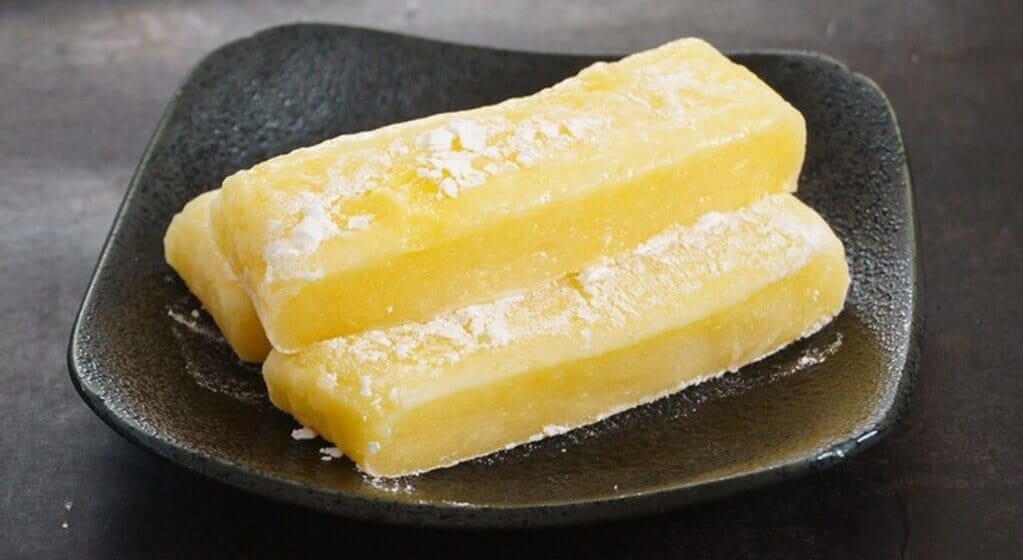
Nestled in the heart of Japan’s Akita Prefecture lies a culinary gem that shares its name with a global phenomenon: butter mochi. Today, the term “butter mochi” represents two distinct cultural clusters. One is a beloved Hawaiian baked dessert rooted in Japanese-American heritage, and the other is an ingenious survival food born from the freezing mountains of Akita. Join us as we explore the fascinating cultural evolution of butter mochi, comparing its regional Japanese origins as a practical “wisdom of life” with its global transmission across the Pacific Rim.
What is Butter Mochi? (Akita vs. Hawaii)

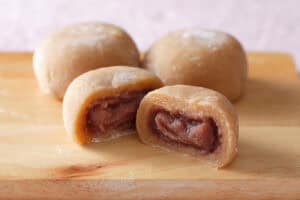
When searching for butter mochi, you will encounter two very different treats. In Kitaakita City, Akita Prefecture, it is a traditional confection created by kneading butter, egg yolks, and sugar directly into freshly pounded glutinous rice or mochi. In contrast, the Hawaiian version is an oven-baked dessert made from mochiko (sweet rice flour), coconut milk, and baking powder. While they share a name and core ingredients, their textures, flavors, and historical backgrounds offer a fascinating look into how food adapts to different environments.
The Science and History of Akita’s Butter Mochi
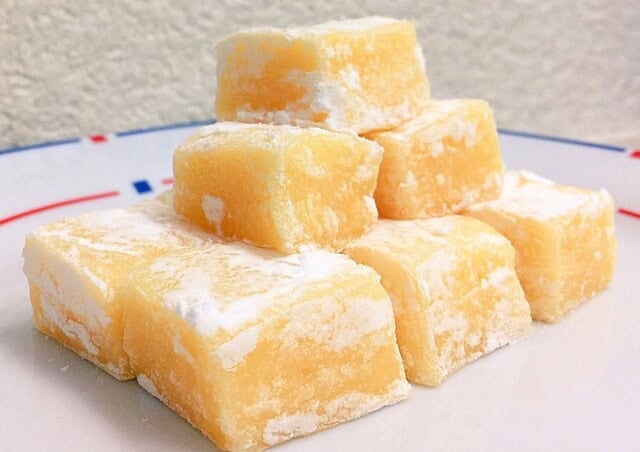
Akita’s butter mochi was not originally created as a luxury pastry, but as an essential survival tool. It originated over 40 years ago among the “Matagi,” the traditional winter hunters of northern Japan. Pounded mochi usually crystallizes and hardens into an inedible rock in freezing temperatures. However, the Matagi discovered a brilliant scientific workaround. By incorporating fats like butter and egg yolks into the hot mochi, they coated the starch molecules, effectively maintaining the mochi’s physical properties and preventing it from hardening in the snow. This “wisdom of life” provided a calorie-dense, soft, and chewy energy source during brutal winter expeditions.
The Global Evolution: Hawaiian Butter Mochi and Bibingka
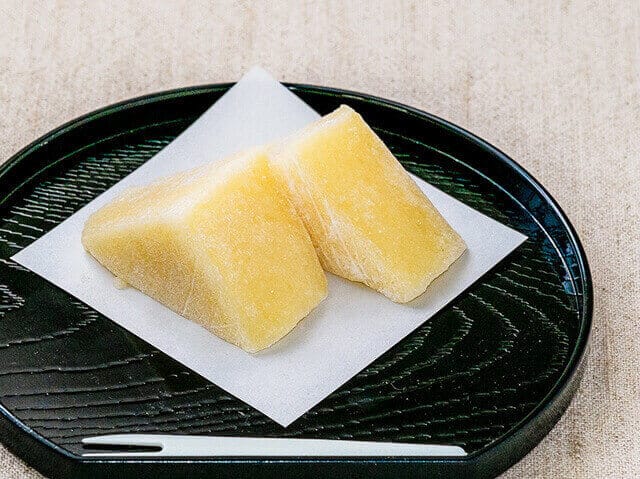
While Akita’s version relies on kneading fats into whole glutinous rice to survive the cold, the Hawaiian “Butter Mochi” represents a tropical adaptation. Japanese immigrants in Hawaii combined mochiko with local ingredients like coconut milk and evaporated milk. Instead of being pounded, the batter is poured into a pan and baked in an oven. This results in a cake-like structure with a crispy crust and a dense, chewy center, which is completely different from Akita’s ultra-stretchy texture.
This baked approach also shares deep culinary DNA with the Philippine “Bibingka,” a baked rice cake often made with coconut milk and butter. Examining these variations highlights how Pacific Rim cultures blended over centuries, explaining why “butter mochi” means something entirely different depending on your geographic location.
Calories and How to Eat
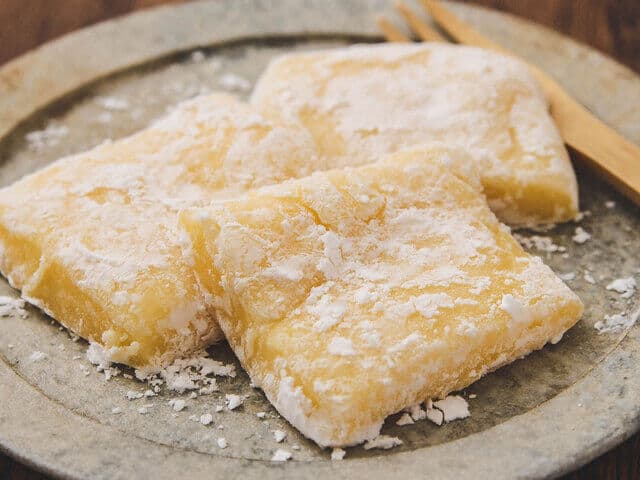
Because Akita’s butter mochi was explicitly designed as a survival food to provide immediate energy in freezing environments, it is naturally high in calories, containing approximately 244 kcal per 100g. A standard commercial piece weighs about 70g, totaling just under 180 kcal. While it remains perfectly soft at room temperature thanks to its unique fat content, locals highly recommend warming it slightly in a toaster oven before eating. The gentle heat revitalizes the butter, releasing a rich aroma and slightly crisping the outside while melting the inside into a stretchy delight.
Butter Mochi FAQ
- What is the taste and texture of Akita butter mochi?
-
It is characterized by an incredibly soft, stretchy texture that does not harden over time. The flavor is a comforting blend of subtle sweetness from the sugar and a rich, savory aroma from the butter and egg yolks, tasting almost like a hybrid between traditional Japanese mochi and Western pastry.
- How does the Hawaiian version differ from the Akita version?
-
The core difference lies in the cooking method and added ingredients. Makers pound and knead Akita butter mochi, resulting in a traditional stretchy pull. Hawaii’s version uses baking powder and coconut milk, and bakers bake it in an oven to create a crispy outer edge and a dense, chewy, cake-like center. It closely resembles the Philippine Bibingka.
Butter Mochi Recipe
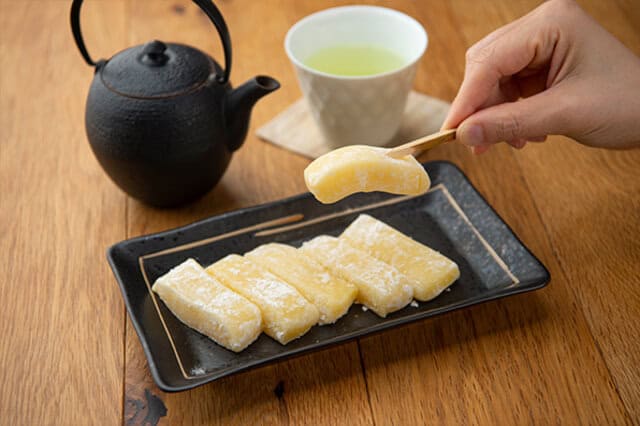
Butter Mochi Ingredients
| Ingredients of Butter Mochi for 3 persons | Measurements |
|---|---|
| Cut mochi blocks | 30g |
| Water | 28g |
| Sugar | 32g |
| Salt | 3g |
| Egg yolk | 11g |
| Butter | 6-7g |
| Potato starch | 14g |
How to make Butter Mochi?
Pour water over the cut mochi blocks and heat them in the microwave. When the mochi becomes soft, drain the excess water and mix well with a spoon. Once smooth, add the sugar, salt, and egg yolk, mixing quickly before the dough cools down.
Fold in the butter until the mochi is well-coated and glossy. Adding potato starch here helps the mixture bind together smoothly, instantly giving it the characteristic butter mochi texture.
Dust your hands with extra potato starch and knead the mochi slightly. Press the mochi into a square container dusted with starch. Let it cool down to set, making it easier to cut with a knife. Slice into squares and arrange on a plate.
Where to buy Authentic Butter Mochi (E-commerce & Local Shops)
For travelers visiting Japan or those looking to satisfy their cravings through e-commerce, purchasing directly from established Akita confectioners guarantees an authentic experience. Here are the top local brands driving the regional butter mochi market.
Miura-an (三浦庵)
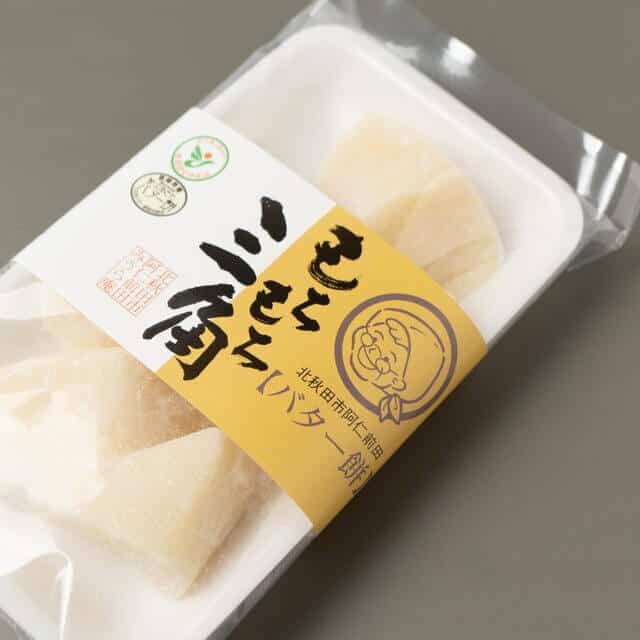
Miura-an is widely credited as the pioneer that sparked the national butter mochi boom after securing fourth place in the Japan National Snack Ranking. They refuse to blend rice varieties, using only premium glutinous rice from trusted local farmers. Their “golden recipe” uses zero artificial additives, delivering a pristine, nostalgic stretch. It is highly recommended for both in-person souvenirs and online e-commerce orders.
Seneido (泉栄堂)
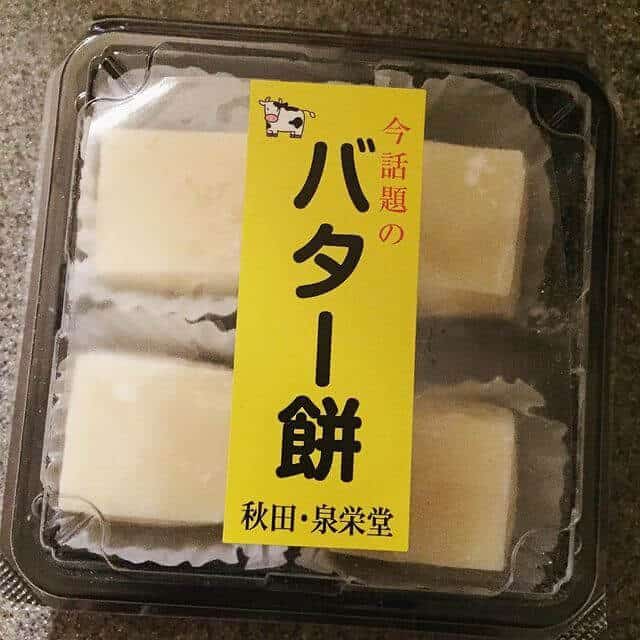
Founded in 1919, Seneido produces a distinctive square-shaped butter mochi. While it looks remarkably solid in its elegant packaging, the mochi is so extraordinarily soft that it gracefully bends under its own weight. Because of its refined presentation and stable shelf life, Seneido is a top choice for online gift orders and high-end regional souvenirs.
Fukugetsudou (蕗月堂)
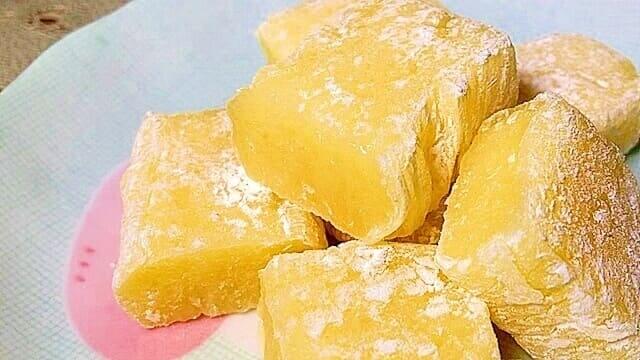
Fukugetsudou is renowned for a thinly sliced butter mochi that echoes the delicate texture of traditional Japanese sweets like “suama” or “gyuhi.” It is widely accessible in local supermarkets throughout Akita Prefecture, making it the beloved everyday choice for locals. It is perfect for those who want a lighter, refined texture.
Final Thoughts

In exploring the rich world of butter mochi, we uncover a fascinating narrative of survival and adaptation. From the freezing mountains of Akita Prefecture, where fats were used to maintain physical properties against the cold, to the tropical ovens of Hawaii, this treat proves that food is a living, evolving culture. Whether you order the traditional Akita version online or bake the Hawaiian version at home, the unique fusion of mochi and butter continues to captivate food lovers worldwide.
You can check some Japanese confectionery dishes that we know you would like to try too.



Comments