






Kobe has a way of surprising people. Most visitors arrive expecting Kobe beef. And yes, the steak is extraordinary. But tucked into gift shops at Sannomiya Station and Shin-Kobe is something far more portable, and arguably just as iconic. A small, unassuming cup of custard pudding. One taste and you understand why it has been Kobe’s most popular souvenir sweet for over three decades.
That is Kobe Pudding, or 神戸プリン in Japanese.
What Is Kobe Pudding?
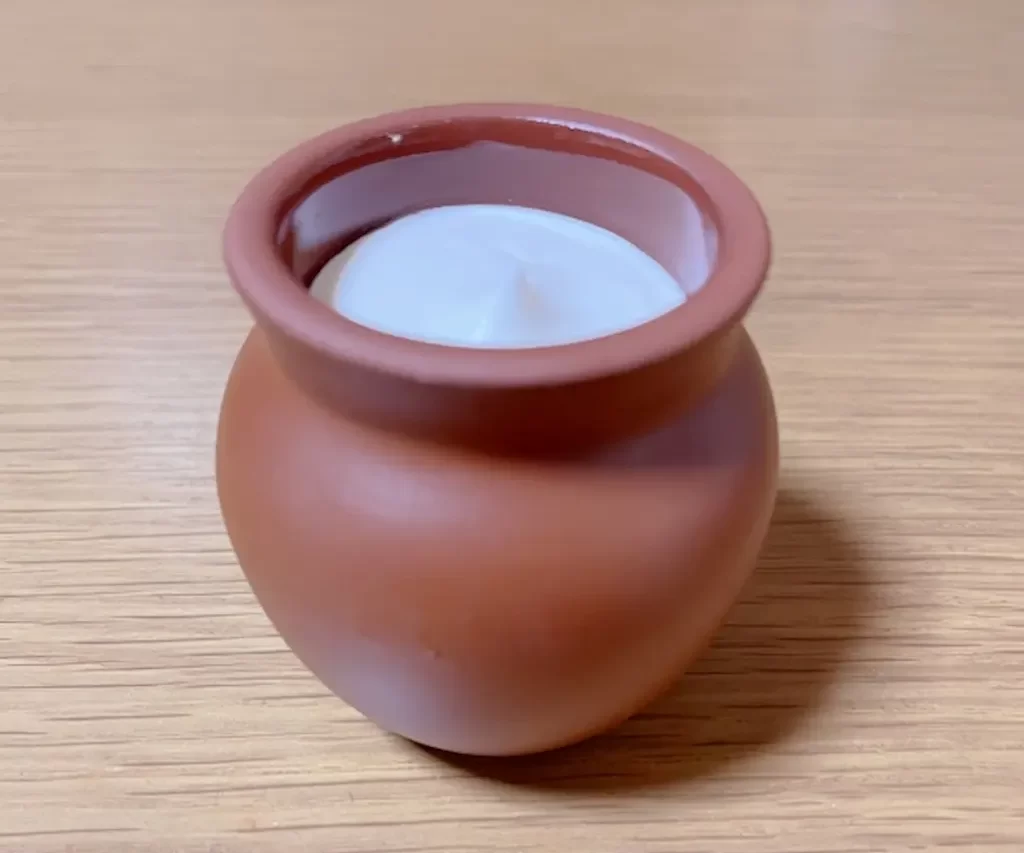
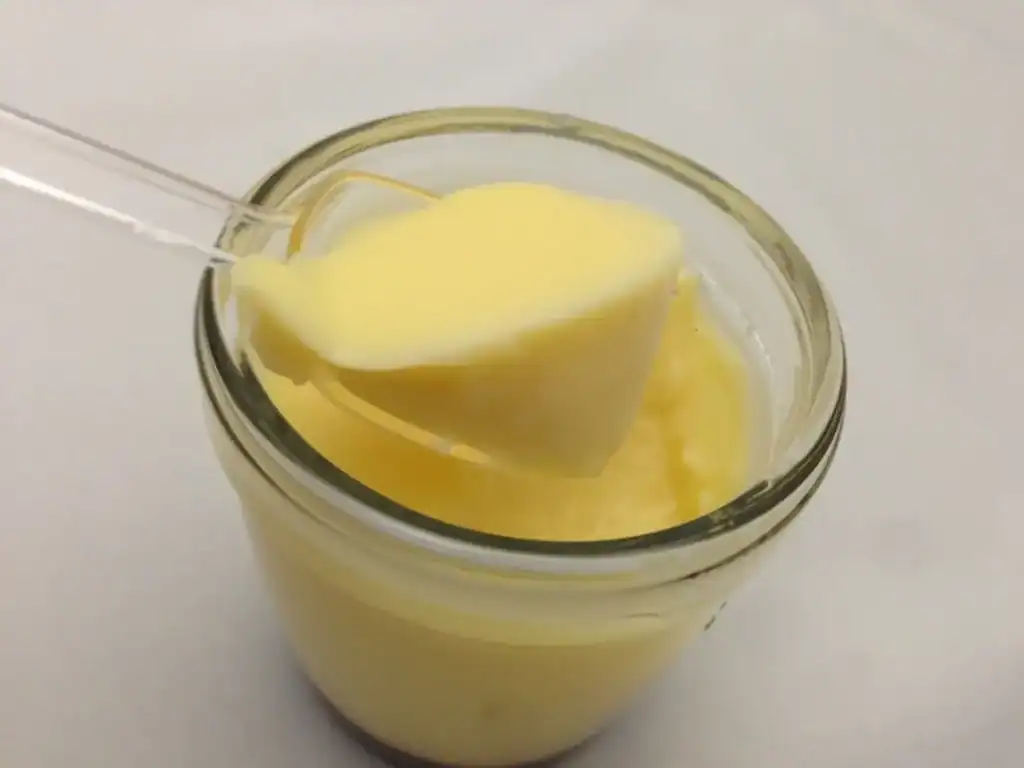
Kobe Pudding is a shelf-stable Japanese custard pudding made and sold by Toraku Foods Co., Ltd. It comes in a small cylindrical container. Inside is a smooth, dense custard made with eggs and fresh cream. A separate packet of caramel sauce comes with each cup. You pour it yourself before eating.
The texture is silky and compact. Not airy or spongy like some Japanese puddings. It settles firmly in the cup and holds its shape when turned upside down. That is actually one of its small pleasures. You flip the cup, peel back the lid, and the pudding stands perfectly intact on your plate.
The flavor is where it gets interesting. The base is classic custard: rich, eggy, gently sweet. But there is a faint citrus note underneath. This comes from a small amount of citrus liqueur added to the recipe. It is subtle. You might not identify it immediately. But it lifts the flavor and keeps things from feeling too heavy.
The separately packed caramel sauce is pleasantly bitter. It cuts through the creaminess in a clean, satisfying way.
Why Is Kobe Pudding So Famous?
The short answer: it tastes good, travels well, and looks right at home in Kobe.
The longer answer involves the city itself. Kobe has been shaped by Western culture since the port opened to foreign trade in 1868. Foreigners settled here. Bakeries and confectioneries followed. The city developed a deep tradition of Western-style sweets that locals call “yogashi.” That tradition includes baumkuchen, which first arrived in Japan through Kobe, and the Japanese soufflé cheesecake, which was also created by a confectioner based in the city.
Kobe Pudding fits naturally into that legacy. A Western dessert, refined for Japanese tastes, made with care in a city that has always taken pastry seriously.
Then there is the practical side. The pudding can be stored at room temperature for around six months from production. This is unusual for custard. Most puddings require refrigeration. Toraku achieves room-temperature stability by heating the pudding thoroughly during production and sealing each cup in airtight, light-blocking containers. The result is a dessert that can be packed in a suitcase or mailed to a relative without worry.
It also keeps its shape. That inverted-pudding moment might seem trivial, but it has genuinely become part of the experience. People enjoy it. It makes a modest dessert feel a little theatrical.
The Flavor in More Detail
You might wonder whether shelf-stable means compromised. It does not. The texture is noticeably denser than a fresh cup pudding, but that density is part of the appeal. Each bite has weight and substance. The egg flavor is present but not overwhelming.
The citrus liqueur plays a supporting role. It appears as a very faint brightness at the back of each spoonful. It keeps the richness in check. Without it, the pudding might feel one-dimensional. With it, there is a quiet complexity that makes you want another bite.
The caramel sauce deserves more attention than it usually gets. It is not just a topping. It changes the pudding when you add it. Suddenly the sweetness has depth. The slightly bitter roast of the caramel plays against the dairy richness of the custard. The combination is genuinely greater than either element alone.
Some people chill the pudding before eating. Toraku recommends this too. Cold, the texture firms up even further and the caramel takes on a thicker consistency. Worth trying both ways to see which you prefer.
History and How It Came to Be
Kobe Pudding went on sale in February 1993. The development took around three years of testing beforehand. The goal was to create a souvenir sweet that reflected Kobe’s confectionery tradition and could survive the journey home from the city.
The challenge was room-temperature preservation. Custard is delicate. Getting it shelf-stable without compromising flavor or texture required careful work on the recipe and the sealing process. Toraku eventually solved it by combining a specific heating method with purpose-built containers that block air and light.
The timing was right. Japan’s souvenir culture, known as “omiyage,” was well established, but quality options for Western-style dessert gifts were limited. Kobe Pudding filled that gap. It felt different from the traditional sembei crackers and wagashi sweets that dominated the gift market.
Growth was steady at first, then accelerating. The pudding won the Monde Selection gold award consistently across multiple years, which helped boost its international profile. By the 2000s, it was firmly established as one of the definitive things to buy before leaving Kobe.
Kobe already had other famous souvenir sweets. The tile-shaped kawara senbei had existed since the 19th century. But Kobe Pudding offered something softer, richer, and more modern. The two sweets now coexist as complementary parts of Kobe’s gift food identity.
How to Eat It
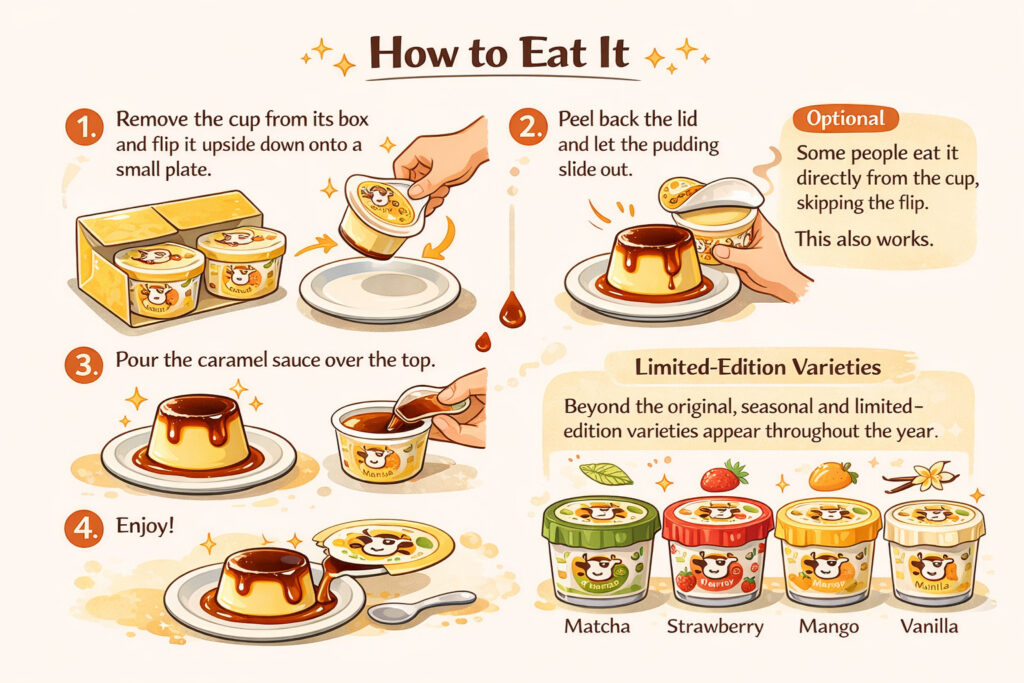
The most common way is straightforward. Remove the cup from its box, flip it upside down onto a small plate, peel back the lid, and let the pudding slide out. Then pour the caramel sauce over the top.
Some people eat it chilled, some at room temperature. Cold brings out a firmer texture. Room temperature makes the custard slightly softer and more yielding. Neither is wrong.
A few people eat it directly from the cup, skipping the flip. This also works, though you lose the small visual satisfaction of the pudding standing on its own.
Beyond the original, Toraku makes seasonal and limited-edition varieties. Matcha, strawberry, mango, and vanilla versions appear throughout the year. The original remains the most recognized, but the rotating flavors give repeat visitors something new to try.
Where to Buy Kobe Pudding
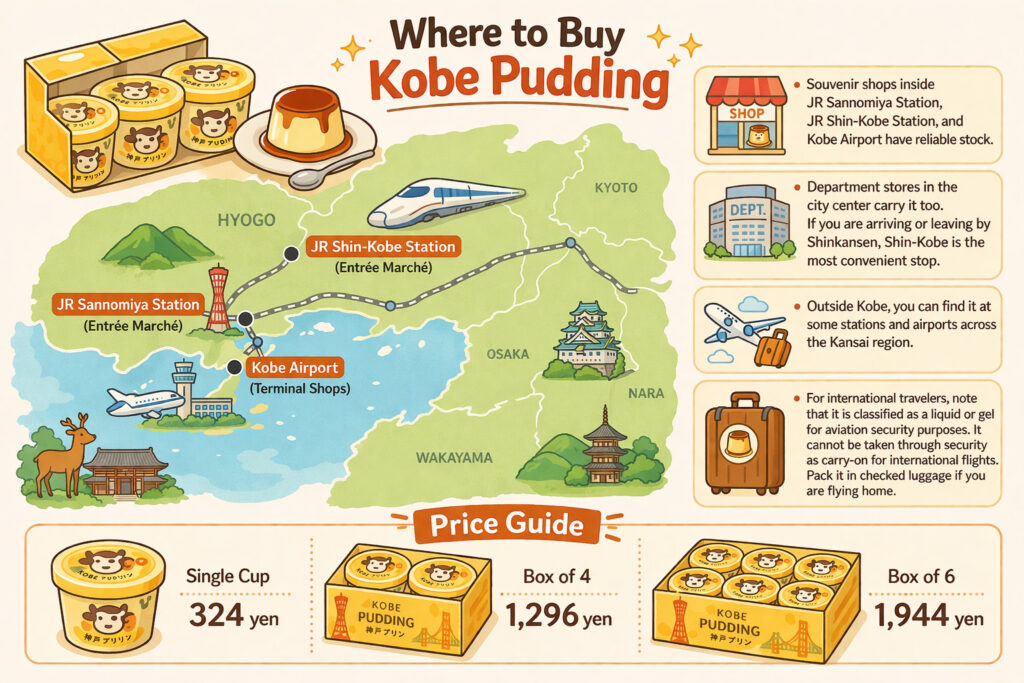
The easiest places are the souvenir shops inside JR Sannomiya Station and JR Shin-Kobe Station. Both have Entrée Marché stores right outside the ticket gates with reliable stock. Kobe Airport also carries it.
Department stores in the city center stock it too. If you are arriving or leaving by Shinkansen, Shin-Kobe is the most convenient stop. The shops there are well-stocked and easy to navigate.
Outside Kobe, you can find it at some stations and airports across the Kansai region. For international travelers, note that it is classified as a liquid or gel for aviation security purposes. It cannot be taken through security as carry-on for international flights. Pack it in checked luggage if you are flying home.
Prices are reasonable for a souvenir sweet. A single cup costs around 324 yen. A box of four is around 1,296 yen, and a box of six is around 1,944 yen.
References
- GOOD LUCK TRIP: The Go-To Kobe Souvenir! A Guide to the Charm and Enjoyment of Kobe Pudding
- TORAKU : History of Kobe Pudding
Comments