






When people in Japan think of premium melon, Hokkaido comes to mind first. Yubari melon has that kind of reputation. It shows up at auction for staggering prices. It makes the news every spring. But ask where most of Japan’s melons actually come from, and the answer is not Hokkaido at all. It is Ibaraki.
Ibaraki Prefecture has held the top position for melon production in Japan for over two decades. The volume alone is remarkable, somewhere around 40,000 tons per year. But what makes Ibaraki melon genuinely worth knowing is not just the quantity. It is the quality, the variety, and a ten-year breeding project that produced one of the most talked-about new melon varieties in recent memory.
What Is Ibaraki Melon?
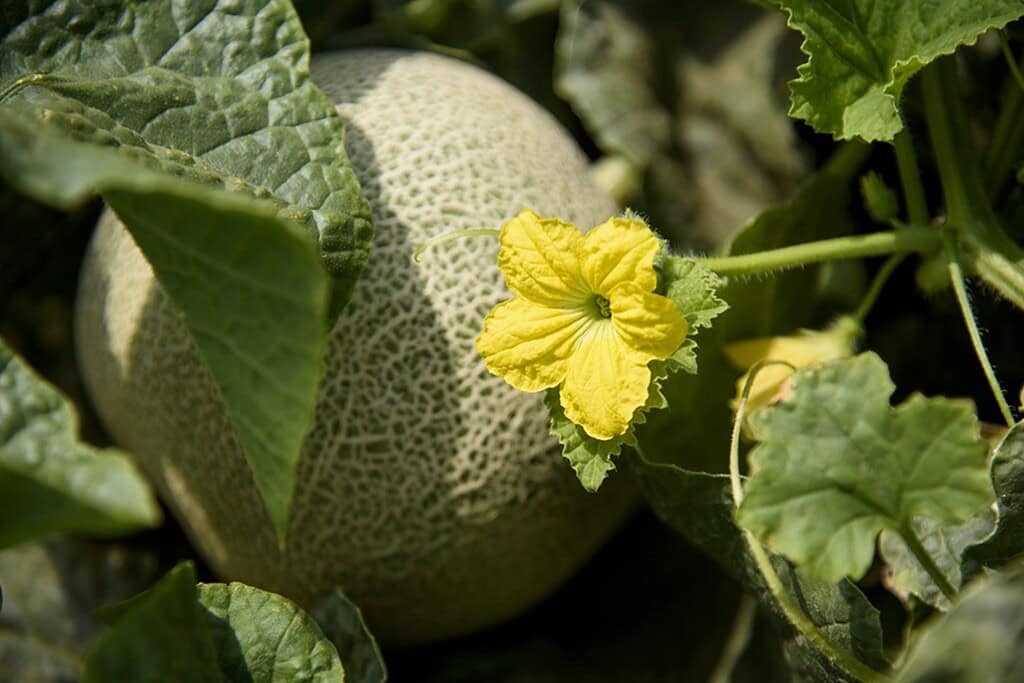
Ibaraki melon is not a single variety. It is a family of melons grown across the prefecture, particularly in the city of Hokota, which alone accounts for the largest municipal melon output in all of Japan. Around ten different varieties are cultivated in the region, covering a long season that runs from spring through early autumn.
The most prominent varieties are Ibaraking and Queenthy. But Andes melon, Earl’s melon, Otome melon, and Takami melon are also grown and valued. Green-fleshed and orange-fleshed types both appear, giving buyers real choices in flavor profile and appearance.
Because different varieties peak at different times, fresh Ibaraki melon is available from roughly April through October. That is nearly half the year. For a fruit that most people associate with a narrow summer window, that breadth is surprising.
Ibaraking: The Melon That Took Ten Years to Create
Ibaraking (イバラキング) is Ibaraki’s flagship variety and one of the most carefully developed melons in Japan. It went on sale in 2011, but the development process began a full decade earlier. Researchers at the prefecture tested more than 400 crossbreeding combinations before settling on the final variety. The male parent was a variety of Earl’s melon. The female parent was selected from a pool of 40,000 candidates.
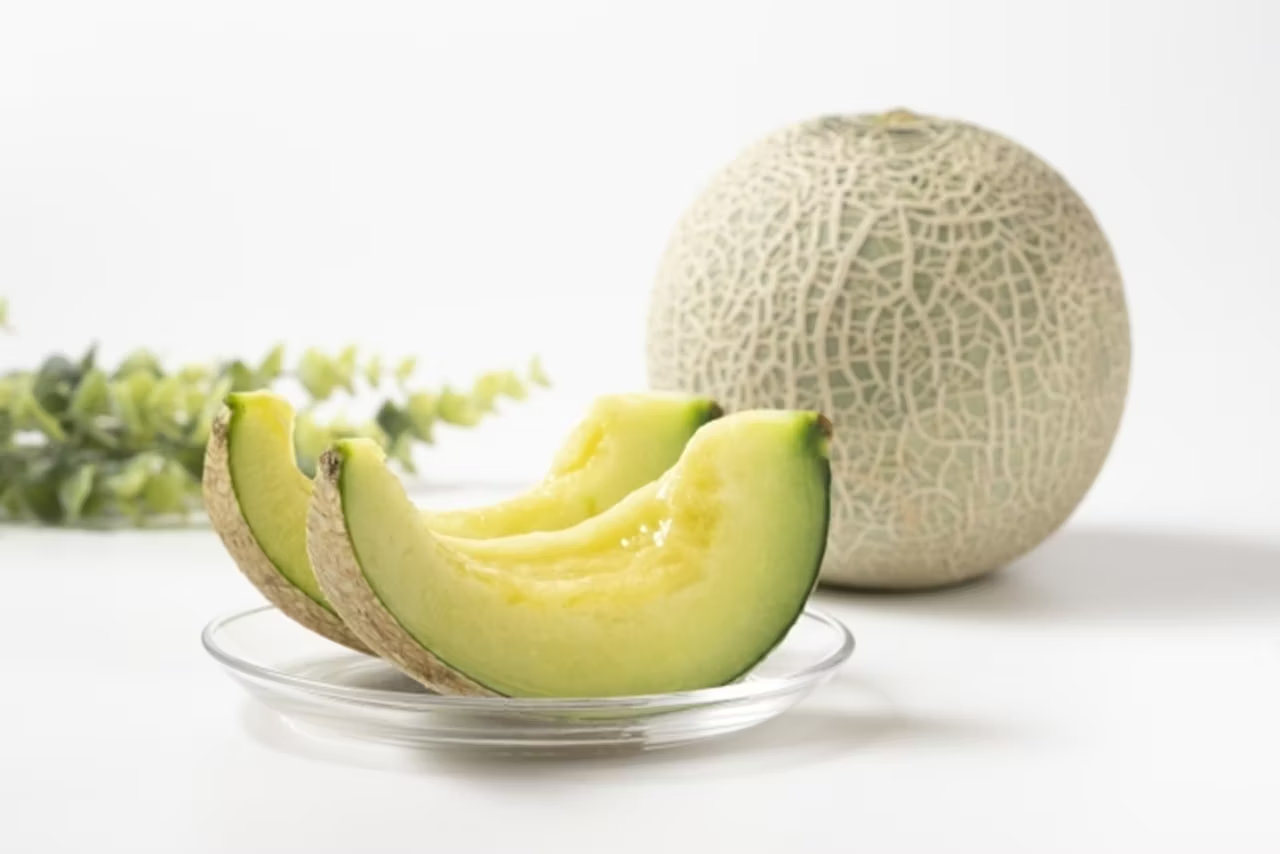
The result justifies the effort. Ibaraking is larger than standard spring melons, with flesh that runs roughly ten percent thicker than comparable varieties. The texture is smooth and dense. The flavor is sweet without being cloying, with a clean, refreshing aftertaste and a fragrance that fills the room when you cut into it.
The name carries a quiet ambition. “Ibaraking” was chosen with the explicit goal of making this variety the king of melons in Ibaraki. Whether or not it reaches that status nationally, among the people who have tried it, the name does not feel like overreach.
Ibaraking is in season from May to early June. High-quality certified versions are sold at department stores in the Tokyo metropolitan area. Shelf life is longer than many premium melons, which makes it more practical as a gift.
Queenthy: The Orange-Flesh Alternative
If Ibaraking is the green-flesh crown variety, Queenthy (クインシー) is its orange-flesh counterpart. Queenthy was developed in Japan and released commercially in 1989. The orange color of the flesh comes from a high beta-carotene content. It is nutritionally richer than most green-flesh melons.
The flavor of Queenthy is notably sweet and full. The aroma is stronger than Ibaraking. The flesh has a slight firmness that softens as the melon ripens. Its season overlaps with Ibaraking, running from May to early July.
Queenthy is widely sold across Japan and has become something of a national standard for orange-flesh melon. Ibaraki produces a significant portion of the national supply. Some people find the flavor more intense and complex than green-flesh varieties. Others prefer it specifically because the bright color makes it feel more celebratory on a plate.
The Flavor of Ibaraki Melon
Describing melon flavor is harder than it sounds. The obvious notes are there: sweetness, fragrance, a cool, watery texture. But good Ibaraki melon goes beyond those baseline impressions.
The sweetness in Ibaraking has a layered quality. It arrives clearly and then settles into something rounder. The flesh is juicy without being loose. It holds its shape when you cut it. The fragrance is the part that tends to catch people off guard. Opening a ripe Ibaraking in a small room is a genuinely arresting experience. The scent is concentrated and unmistakably melon, without any of the overripe softness that can tip a premium fruit into disappointment.
Queenthy offers a denser, almost honeyed sweetness. The beta-carotene note adds a subtle depth that is difficult to describe precisely. Some people taste a faint nuttiness behind the sweetness. Others describe it as richer and heavier than green-flesh varieties. Both impressions are accurate.
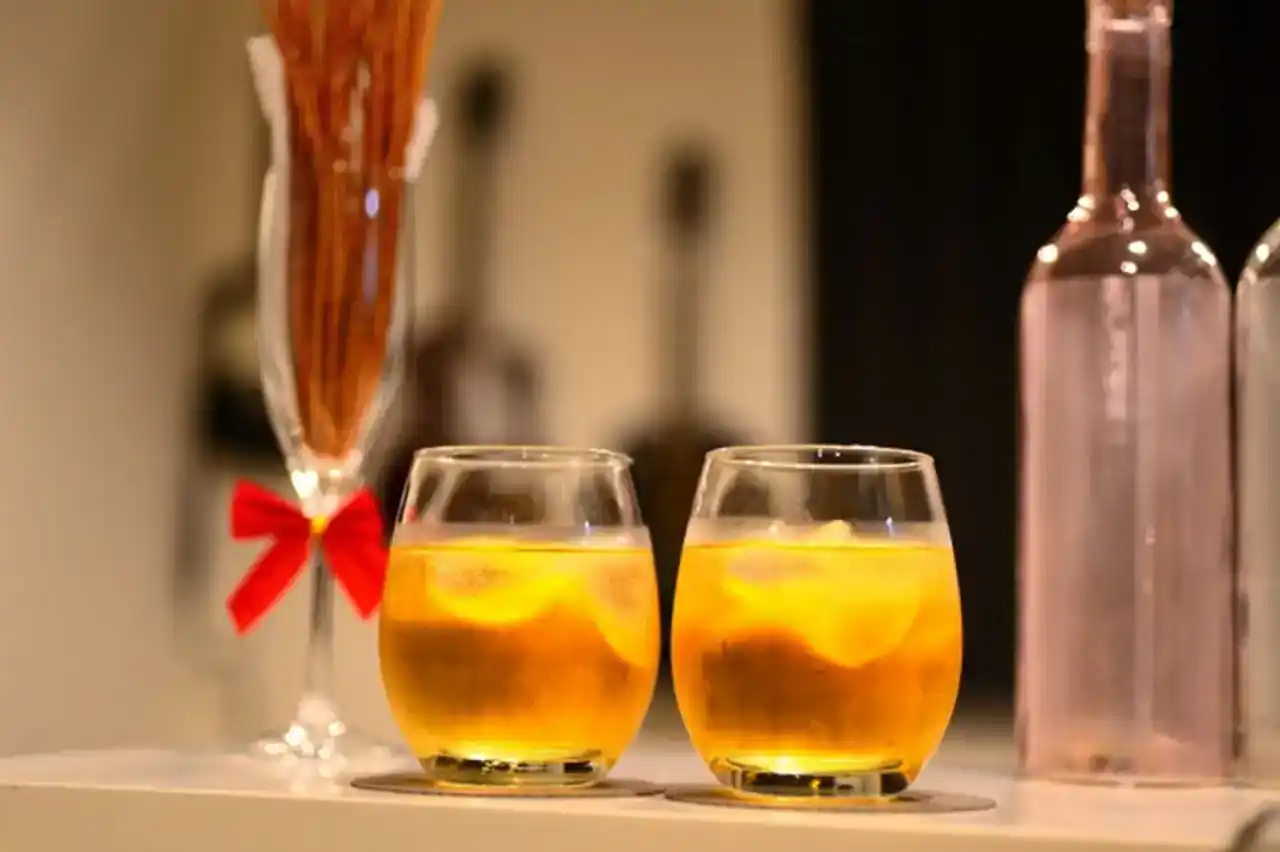
The best way to eat either variety is straightforward. Chill the melon well, cut it cleanly, and eat it at its peak ripeness. Some Ibaraki locals enjoy melon with dry-cured ham, leaning into the sweet-salty contrast. “Brandy melon,” made by pouring brandy directly into a halved melon, is another traditional local preparation that has gained renewed attention in recent years.
Why Ibaraki Produces Japan’s Best Melon
The geography explains a great deal. Hokota City sits on a narrow strip of land between the Pacific Ocean and a chain of coastal lakes including Lake Kitaura and Lake Kasumigaura. Sea breezes keep temperatures moderate year-round. The land does not get too hot in summer or too cold in winter. Melons are extremely sensitive to temperature fluctuation. Hokota’s climate suits them almost perfectly.
The soil adds another layer of advantage. The Kanto Plain’s loamy soil is well-drained but retains water effectively. It is naturally fertile and produces vegetables and fruit with strong flavor concentration. Ibaraki is sometimes called “the kitchen of the Kanto region,” and that reputation extends well beyond melon. Natto from Mito and stamina ramen from Hitachinaka are other examples of Ibaraki food that quietly outperforms its reputation.
Ibaraki’s melon cultivation began in earnest in the early 1960s. The Japan Agricultural Cooperative (JA Ibaraki) identified Hokota as an ideal growing zone and actively developed the region’s infrastructure. By the late 20th century, Ibaraki had captured the national top spot for melon production, a position it has not relinquished.
Today, the JA Hokota Melon Committee applies strict shipping standards to its premium Ibaraking label. Each melon is measured for sugar content, ripeness, and water saturation using optical sensors before it leaves the farm. Only fruit that meets the benchmark earns the “High Quality Ibaraking” certification. The rest is sold under standard labels.
This kind of quality control is part of what makes Japanese fruit gifting culture function. A boxed melon given as a gift carries an implicit promise of consistency. Ibaraki melon delivers on that promise reliably.
Melon as Omiyage and Seasonal Gift

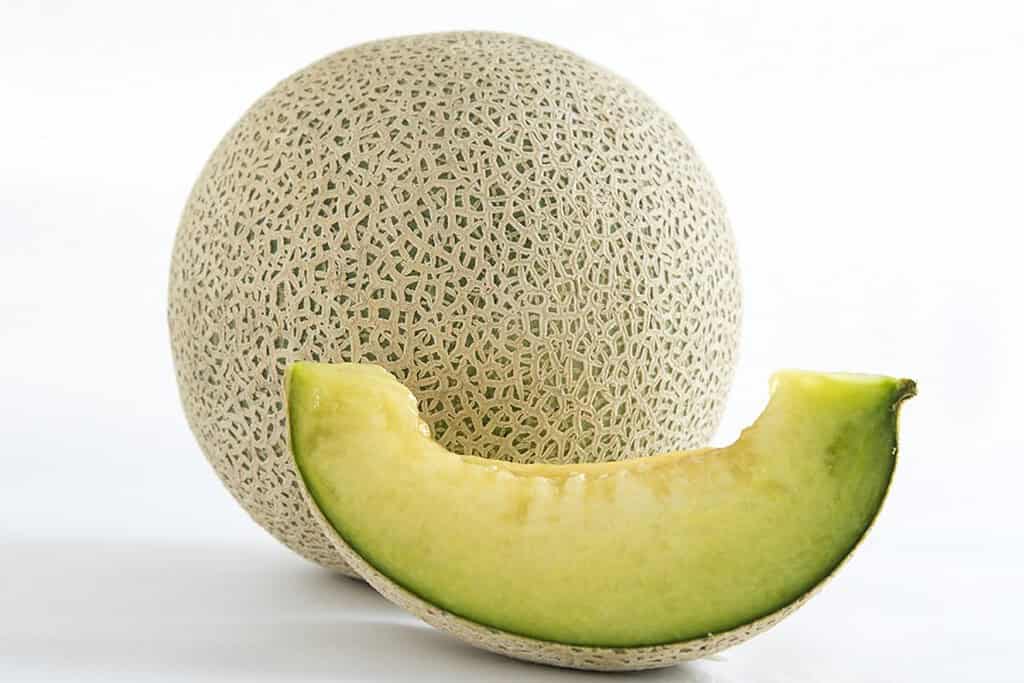
In Japan, premium fruit is a gift category unto itself. Department stores dedicate entire floors to beautifully boxed fruit. A single melon can cost anywhere from 1,000 yen for an everyday variety to well over 5,000 yen for a certified premium grade. The ritual of presenting fruit as a gift, known as omiyage, is deeply embedded in Japanese social life.
Ibaraki melon fits naturally into this tradition. It is transported easily, keeps well compared to softer fruits, and arrives in packaging that communicates care. Tokyo department stores stock it prominently during the May and June peak season. Visitors to Ibaraki can buy directly from farms, roadside stations, and local cooperatives, often at prices far below what Tokyo retailers charge for the same fruit.
Beyond fresh eating, melon-based products are everywhere in the prefecture. Melon pan, melon soft-serve ice cream, melon kakigori (shaved ice), melon-flavored drinks, and even melon curry appear as local novelties. The fruit has become an identity for the region in the way that soboro natto and other distinctly Ibaraki foods do, expressing something specific about the place and the people who produce it.
When and Where to Buy Ibaraki Melon
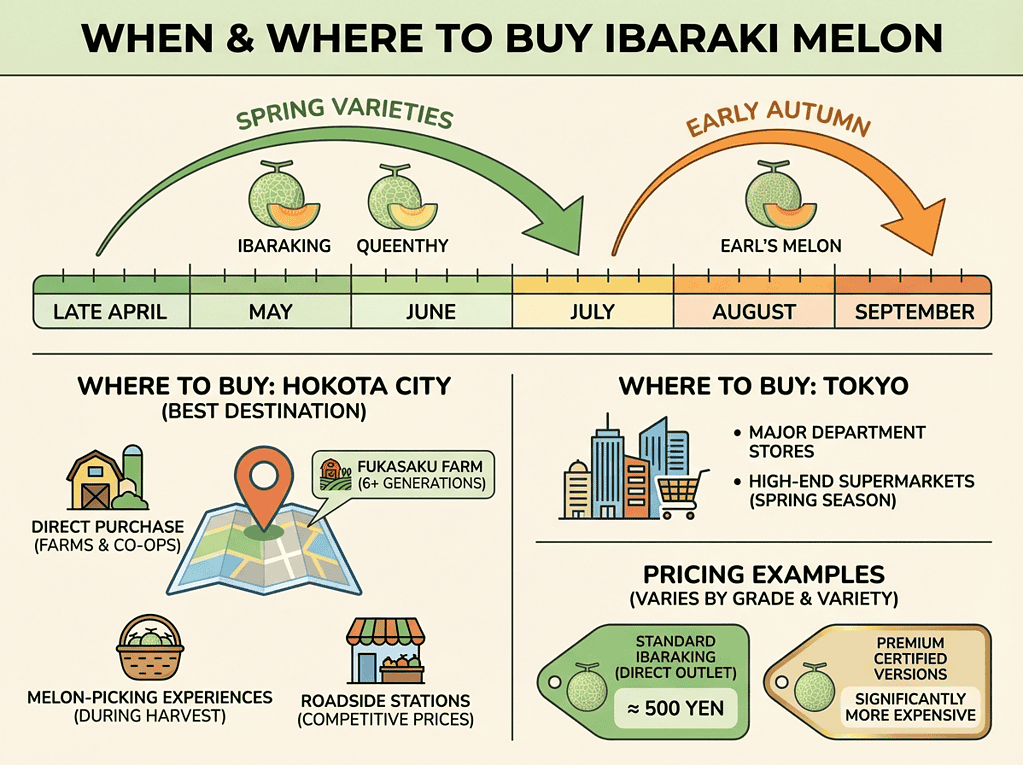
The main season runs from late April through July for spring varieties including Ibaraking and Queenthy. Earl’s melon extends the season into early autumn, typically August and September.
Hokota City is the best destination for direct purchase. Multiple farms and cooperative outlets operate there, and some offer melon-picking experiences during the harvest period. Fukasaku Farm, which has operated for over six generations, is among the more well-known options. Roadside stations throughout the Hokota area sell freshly harvested melon at competitive prices.
From Tokyo, Ibaraki melon is available at major department stores and high-end supermarkets throughout the spring season. Prices vary considerably by grade and variety. A standard Ibaraking typically retails for around 500 yen at direct outlets. Premium certified versions are significantly more expensive.
References
- Ibaraki Guide: Six Must-Try Fruits from Ibaraki, Japan’s Food Kingdom
- Ibaraki Guide: 5 Foods to Try in Ibaraki
- Ibaraki Shokusai: Melon – Ibaraki’s Specialty Products
- SHUNGATE: Hokota’s Melons – A New Challenge for Three Generations of Farmers
Comments