






Japan offers many varieties of noodles for hungry travelers. While many people enjoy ramen, soba holds a quiet, elegant charm. Have you heard of Hitachi Aki Soba? It comes from Ibaraki Prefecture and is truly special. I remember tasting it for the first time. The aroma was incredibly strong and earthy. It felt like a generous gift from the autumn fields. Many experts consider it the best buckwheat in Japan. I honestly wonder if any other variety can compare to this one.
What is Hitachi Aki Soba?
Hitachi Aki Soba is a premium brand of Japanese buckwheat noodles. The name literally means “Hitachi Autumn Soba.” Hitachi is actually the old name for the Ibaraki region. These noodles are an autumn specialty in Ibaraki. Farmers harvest the seeds in late October each year. The grains are larger and heavier than standard varieties. This specific size gives the noodles a unique, satisfying texture. It is a favorite among professional chefs across Tokyo. Perhaps the dedication of local farmers is the secret. Their hard work creates a product that stands above the rest.
Why Hitachi Aki Soba is so flavorful
Why Hitachi Aki Soba is so flavorful is a common question. The secret lies in the unique climate of the region. Northern Ibaraki has a large temperature gap between day and night. This natural stress makes the buckwheat produce more sugar. Therefore, the flour has a natural, subtle sweetness. It results in fragrant Japanese soba noodles that delight the senses. When you eat it, the scent fills your nose immediately. Even without dipping sauce, the flavor is quite deep and rich. It is almost like a fine wine for noodle lovers. You might find regular soba a bit plain after this.
The History of Ibaraki Buckwheat Noodles
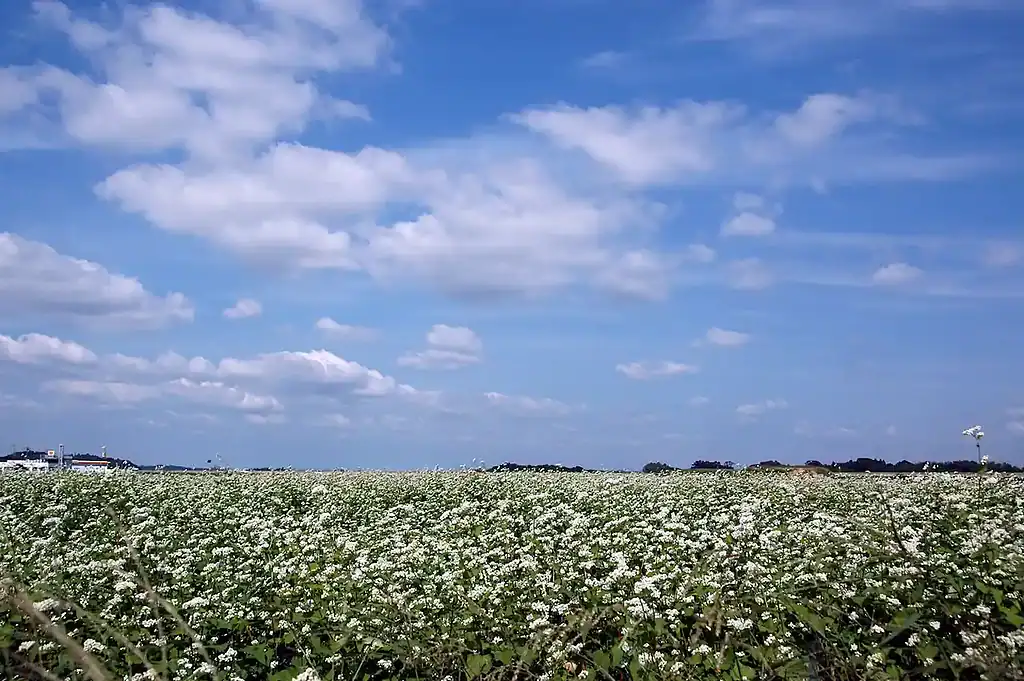
This variety did not appear by simple chance or luck. It was carefully developed in the late 1970s. Researchers selected the best native seeds from the Kanasago area. They spent many years perfecting the overall quality. By 1985, it became the official brand of the prefecture. Today, it is a symbol of traditional soba in northern Ibaraki. The cultivation methods are strictly controlled to maintain excellence. Local communities take great pride in this culinary heritage. It has helped put Ibaraki on the global food map. Modern farmers still use many traditional techniques to this day.
Traditional Ways to Enjoy Hitachi Aki Soba
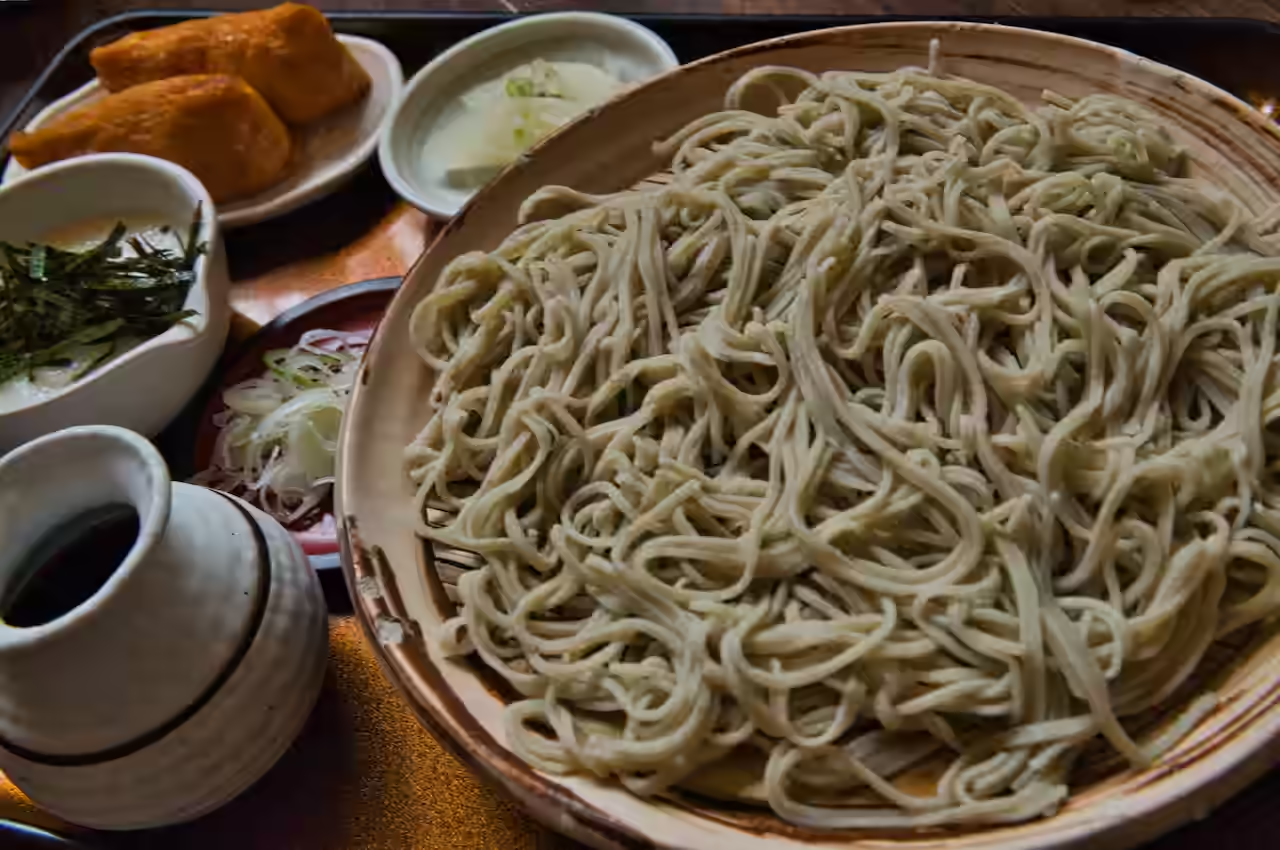
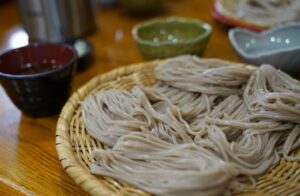
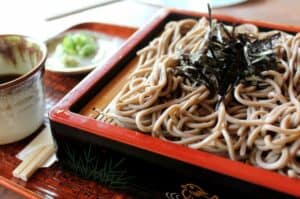
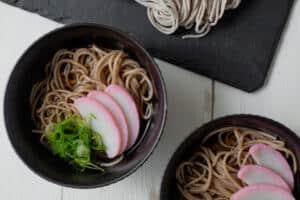
There are two main traditional ways to enjoy Hitachi Aki Soba. First, you should definitely try “Zaru Soba.” These are cold noodles served on a classic bamboo mat. Eating them cold lets you enjoy the firm texture. It also highlights the natural aroma of the fresh buckwheat. The second way is “Hot Soba” in a warm broth. This is perfect for chilly autumn or winter days. For more regional food insights, check the Ibaraki food guide. Both styles offer a very satisfying and authentic meal. I usually prefer the cold version for the intense scent. However, the hot soup is very comforting during a cold snap.
Local Specialty: Kenchin Soba from Ibaraki
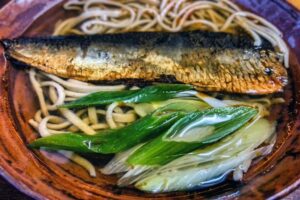
You cannot leave without trying kenchin soba from Ibaraki. This is a hearty, local soba (茨城名物のそば) dish. It features a rich soy-based soup with many fresh vegetables. You will find daikon, carrots, burdock, and tofu inside. Kenchin soba with Hitachi Aki Soba (けんちんそば) is a perfect match. The strong flavor of the noodles holds up well against broth. It is one of the most healthy Japanese noodle dishes available. You can learn more about this in our guide to Kenchin Soba. Many small shops in the countryside serve this rustic meal. It feels like eating a home-cooked meal from a grandmother.
Best Season and Where to Eat
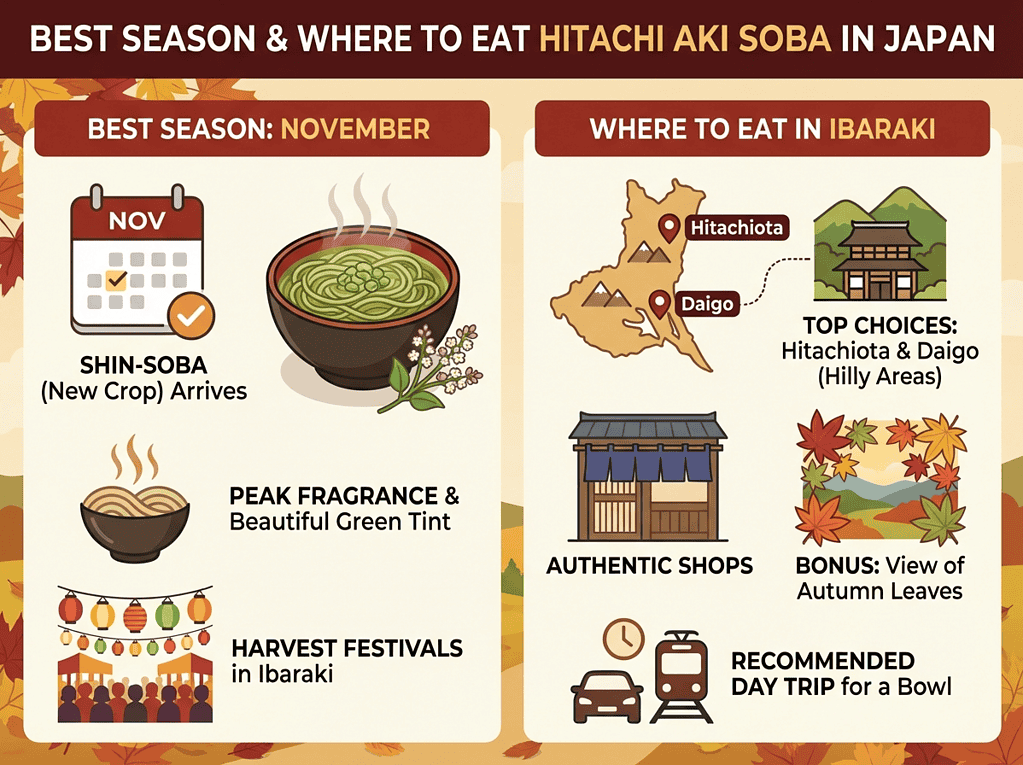
The best season to eat Hitachi Aki Soba in Japan is November. This is when the “Shin-soba” or new crop arrives. The green tint of the fresh flour is quite beautiful. The fragrance is at its peak during this specific month. Many festivals happen in Ibaraki to celebrate the annual harvest. Where to eat Hitachi Aki Soba in Ibaraki? Cities like Hitachiota and Daigo are the top choices. You can find many authentic shops in these hilly areas. The view of the autumn leaves is a great bonus. I highly recommend taking a day trip for a bowl.
How it Differs from Regular Soba
You might ask how Hitachi Aki Soba is different from regular soba. Most cheap soba uses a lot of wheat flour. This brand usually has a much higher buckwheat content. The milling process is also very careful and slow. This prevents heat from destroying the delicate natural oils. As a result, the noodles stay fresh and flavorful longer. It is a premium experience compared to fast-food versions. Once you try it, the difference is very clear. It truly represents the art of Japanese noodle making.
Comments