






Gunma is not always the first prefecture that comes to mind when people talk about Japanese food. That is honestly its loss. Because somewhere in the back streets of Maebashi, Takasaki, and Isesaki, someone is standing over a charcoal grill, brushing a thick, glossy miso sauce onto rows of soft steamed buns. The smell alone is enough to stop you in your tracks.
That dish is yaki manju. It is Gunma’s soul food, deeply loved by locals and almost entirely unknown everywhere else. Which might explain why first-time visitors feel a small shock of discovery when they try one.
What Is Yaki Manju?
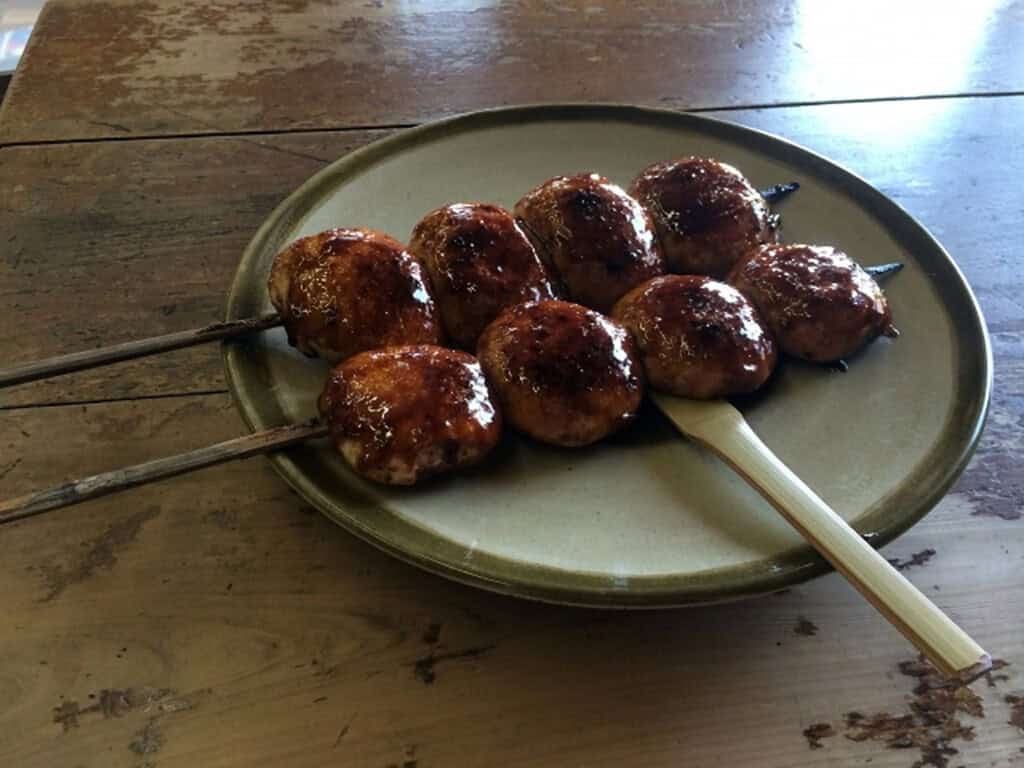
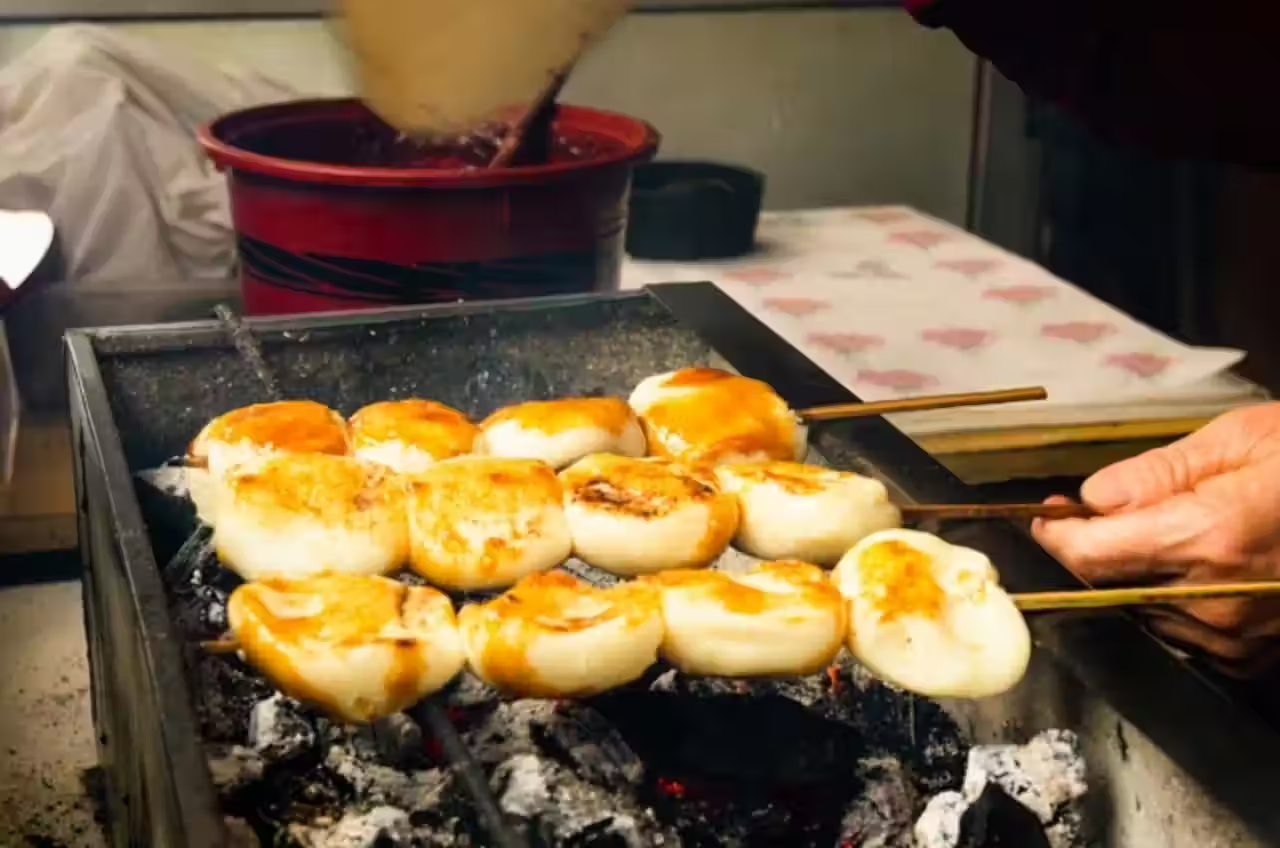
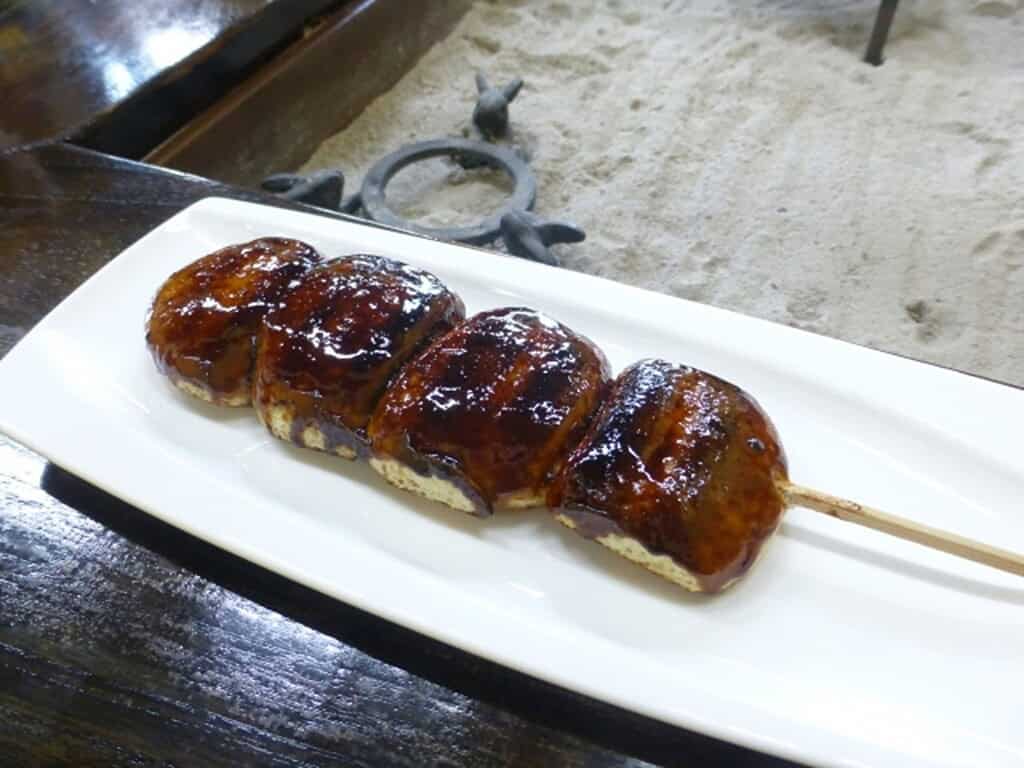
Yaki manju (焼きまんじゅう) is a steamed bun glazed with sweet miso sauce and grilled over charcoal. Vendors typically skewer four buns together on a bamboo stick. The outside chars slightly in the heat, turning fragrant and crisp. The inside stays soft and fluffy.
The name tells you exactly what it is. Yaki means grilled. Manju is the Japanese word for steamed bun. But unlike the manju you find across Japan, which generally come filled with sweet bean paste, yaki manju is traditionally plain. No filling. The entire experience comes down to the bun itself and the sauce.
That sauce is the key. It starts with red miso, which brings a deep, earthy saltiness. Cooks boil sugar, brown sugar syrup, and mizuame (starch syrup) down into it until it thickens into something glossy and clingy. The result is sweet and savory in equal measure, with a faint bitter edge from the miso that keeps the sweetness honest. Once you taste it, the combination is hard to forget.
The Flavor and Texture
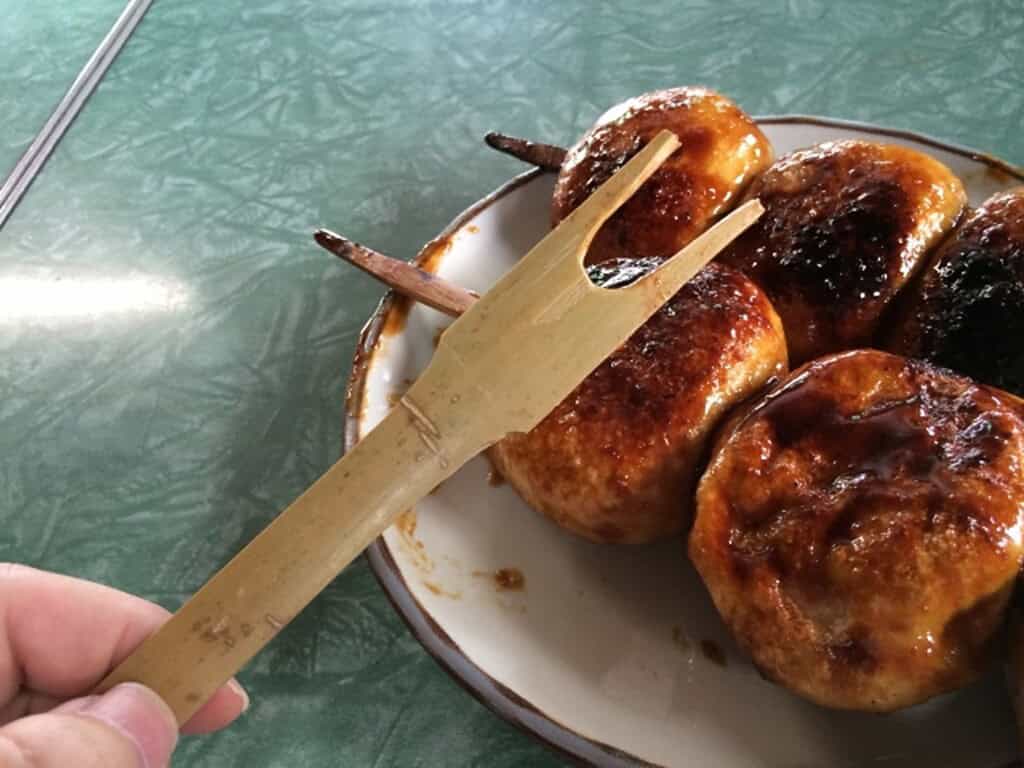
Eating yaki manju is a multisensory experience. You smell it before you see it. Charcoal smoke and caramelizing miso create a scent that fills the surrounding air. If you are walking through a market or festival ground in Gunma, the smell will find you first.
When you bite in, the outside gives a light crunch. Beneath that crust, the dough is airy and tender. The miso glaze clings to every surface. Sweet and smoky. Savory and faintly bitter. Warm through.
The bun cools quickly and firms up as it does. This is worth knowing. Yaki manju is best eaten immediately, standing near the grill. Many shops sell it to take home as a souvenir kit, complete with raw buns and separate miso sauce, but even the most devoted fans admit there is something irreplaceable about eating it fresh.
The ideal pairing, according to locals, is green tea. The slight astringency cuts through the sweetness of the sauce in a way that feels almost designed. It is a classic combination throughout Gunma.
Why Yaki Manju Is Gunma’s Food
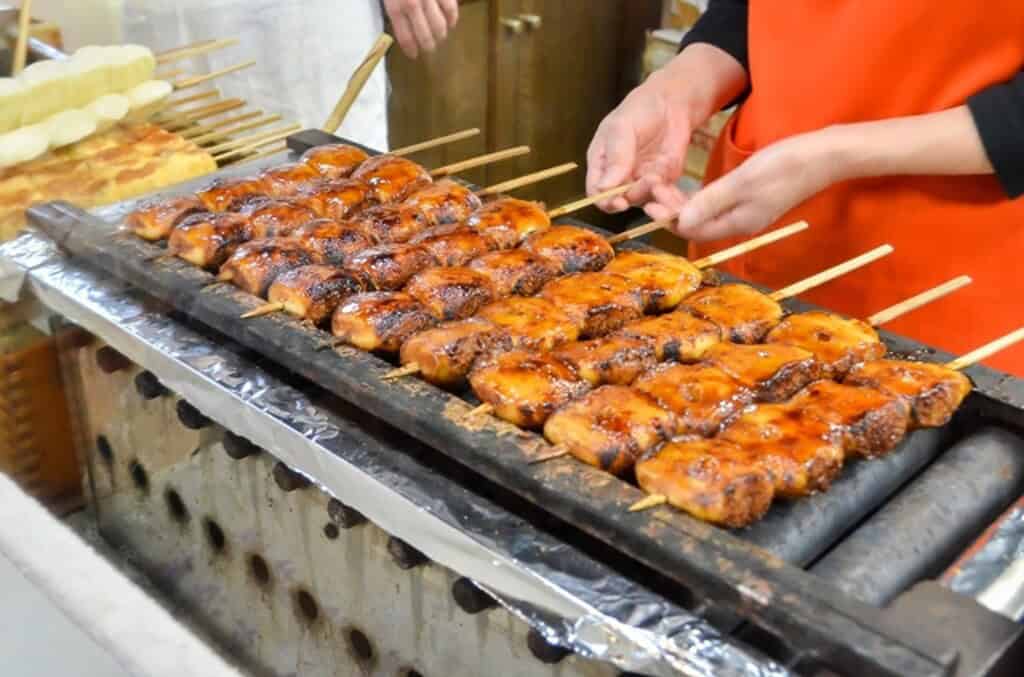
Yaki manju did not appear by accident. It grew from the agricultural character of the region.
Gunma’s flat central plains have long benefited from high sunshine hours and good growing conditions. Farmers historically practiced double cropping: rice in summer, wheat in winter, from the same fields. That cycle produced an abundance of wheat flour over generations. A “flour culture” developed naturally, expressed in dishes like okkirikomi (wide flat noodles simmered in broth), himokawa udon (extremely wide ribbon noodles), and the fermented steamed bun tradition that eventually became yaki manju.
When wheat flour is plentiful and affordable, you find ways to use it. Manju made with fermented wheat dough became a staple. And when those buns began hardening after cooling, people found that reheating them over a fire with miso sauce was not just a practical fix. It was genuinely better than the original.
History: From Miso-Dipped Bun to Regional Icon
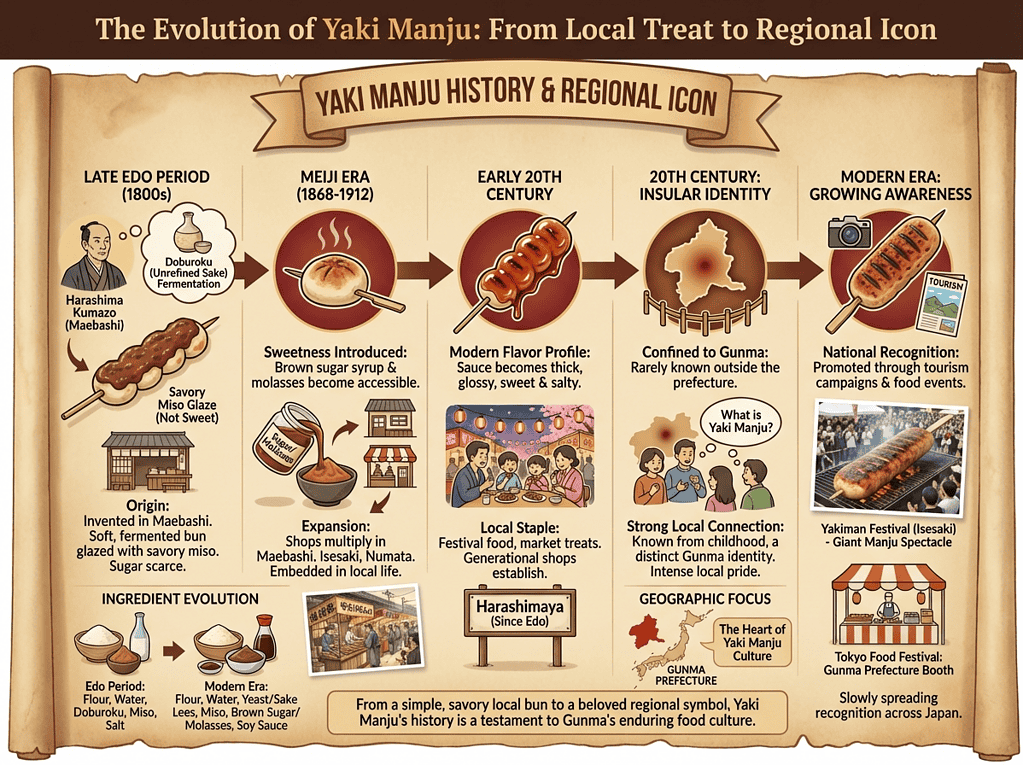
Enjoy the rich flavor of Yaki Manju, a popular Japanese street food with sweet, savory taste.
The origin of yaki manju is traced to the late Edo period. A man named Harashima Kumazo in Maebashi is widely credited as the inventor. His version used doburoku, unrefined homemade sake, as the fermentation agent for the dough. The result was a softer, slightly fermented bun that he skewered and glazed with miso.
The Sauce That Sweetened Over Time
At the time, the miso sauce was not particularly sweet. Sugar was expensive and not widely available in provincial Japan. The flavor profile was closer to salted miso on warm bread. The sweetness came later, gradually, as brown sugar syrup and molasses became accessible during the Meiji era. By the early twentieth century, the sauce had evolved into something close to what is served today: thick, glossy, and balanced between sweet and salty.
Through the Meiji and Taisho periods, yaki manju shops multiplied around Maebashi, Isesaki, and Numata. The dish became embedded in local life. Children grew up eating it at festivals. Families brought it home from market days. Specialty shops opened and stayed open for generations. Harashimaya, the shop descended from the original inventor, still operates in Maebashi today.
Gunma’s Best-Kept Secret
The dish remained almost entirely confined to Gunma for much of the twentieth century. It was simply not well-known outside the prefecture. Even within Japan, people from other regions had rarely heard of it. That insularity gave it a particular intensity as a local identity. Gunma people know it from childhood. Outside Gunma, it can feel like discovering something that was never meant to leave.
In recent decades, awareness has grown. Gunma actively promotes yaki manju through tourism campaigns and regional food events. At the annual Yakiman Festival in Isesaki, organizers grill an enormous manju measuring several meters long. The spectacle draws attention. Prefectural booths at major Tokyo food festivals now regularly feature the dish. Recognition is slowly spreading.
Yaki Manju and Gunma’s Wheat Food Culture
To understand yaki manju, it helps to understand Gunma’s relationship with flour-based food more broadly. The prefecture has one of the strongest wheat-cooking traditions in the Kanto region.
Okkirikomi is a thick, unboiled flat noodle simmered directly in miso or soy sauce broth with root vegetables. It is a winter staple. Mizusawa udon from the Ikaho Onsen area is counted among Japan’s three great udon styles. Himokawa udon from Kiryu, with its noodles up to 15 centimeters wide, is another local flour obsession. Yaki manju fits naturally into this landscape. It is not an outlier. It is one expression of a cooking culture built around wheat, fermentation, and fire.
The use of doburoku (unrefined sake) or rice koji as a leavening agent also reflects a regional tradition of fermentation. The dough for yaki manju is prepared in a similar way to sake manju, using natural fermentation to develop a soft, airy texture. That connection between fermented dough and steamed confectionery runs through the food culture of the broader Kanto and Koshin-etsu region.
Modern Versions and Variations
The classic yaki manju is plain, with no filling. But not every shop sticks to tradition.
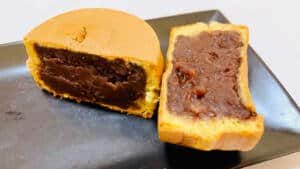
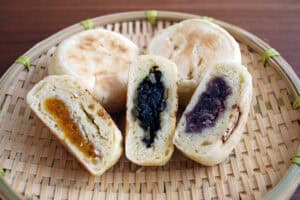
Some offer an-iri yaki manju: buns filled with sweet azuki bean paste before glazing and grilling. The red bean paste softens and sweetens as it heats, creating something richer than the plain version. Whether this counts as authentic is a debate among locals with no clear resolution.
More recently, creative variations have appeared alongside the classics. Cheese yaki manju replaces or supplements the miso glaze with melted cheese, which pairs surprisingly well with the savory-sweet sauce. Custard versions have emerged at certain shops, positioning yaki manju closer to a dessert experience. These newer styles attract younger customers without replacing the original.
Take-home sets are now widely sold. A package includes raw buns and a packet of miso sauce. You grill them at home in a pan or oven. The result is not quite the same as eating from a charcoal grill, but it gives a reasonable impression of the original. For visitors who want to bring something back from Gunma, a yaki manju kit has become one of the more distinctive souvenirs from the region.
Where to Try Yaki Manju in Gunma
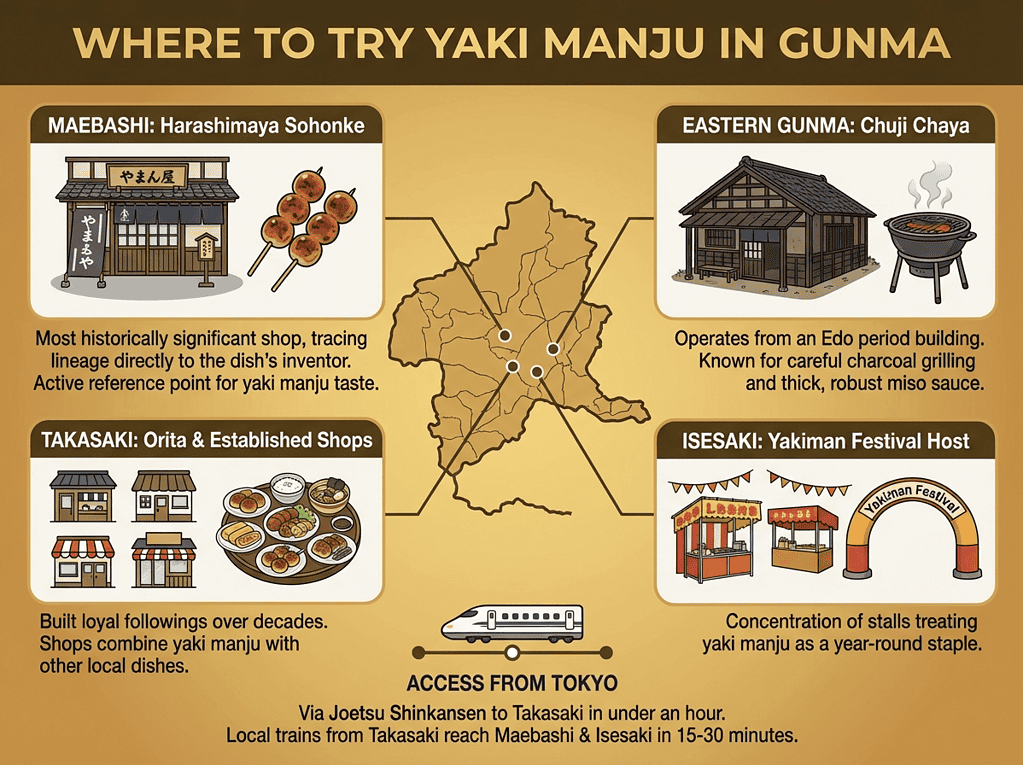
Harashimaya Sohonke in Maebashi is the most historically significant shop, tracing its lineage directly to the dish’s inventor. It remains active, and food lovers widely regard it as the reference point for what yaki manju should taste like.
Chuji Chaya in the eastern part of Gunma operates from a building with materials from the Edo period, creating an atmosphere that matches the food. The shop has earned a reputation for its careful charcoal grilling and a thick, robust miso sauce.
In Takasaki, Orita and several other established shops have built loyal followings over decades. The city also has shops that combine yaki manju with other Gunma specialties, making it easy to eat multiple local dishes in one visit.
Isesaki, which hosts the annual Yakiman Festival, has a concentration of stalls and shops that treat yaki manju as a year-round staple rather than a seasonal event item.
From Tokyo, Gunma is accessible via the Joetsu Shinkansen to Takasaki in under an hour. Local trains from Takasaki reach Maebashi and Isesaki in about fifteen to thirty minutes.
References
- Ministry of Agriculture, Forestry and Fisheries of Japan: Yakimanju – Our Regional Cuisines, Gunma
- The Chef Dojo: What is Yaki Manju? The Soul Food of Gunma

Comments