




Ask most people how they eat gyoza and they will say: soy sauce, rice vinegar, a drop of chili oil. That combination is standard across Japan. It works well. Nobody questions it. But in Kobe, the default is something different entirely. Here, the sauce is built around miso. It is thicker, deeper, and somehow more satisfying with the crispy underside of a pan-fried dumpling. Once you try it, the soy sauce version starts to feel a little thin by comparison.
This is miso dare gyoza (味噌だれ餃子). And it is one of Kobe’s most quietly beloved local foods.
What Is Miso Dare Gyoza?
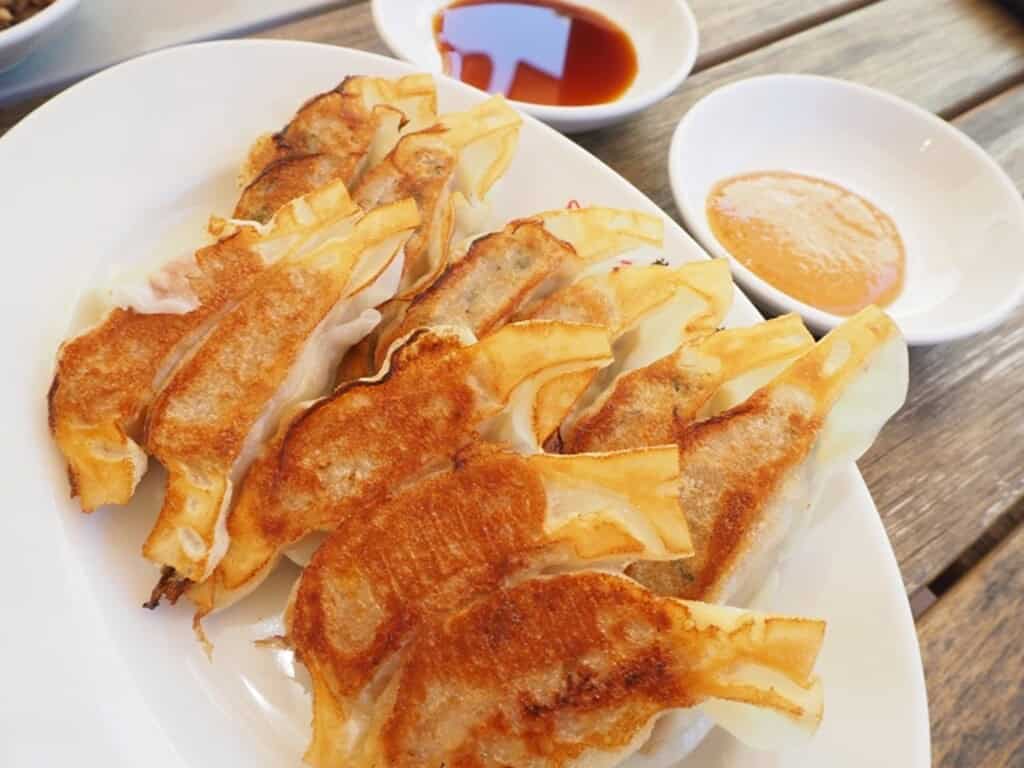
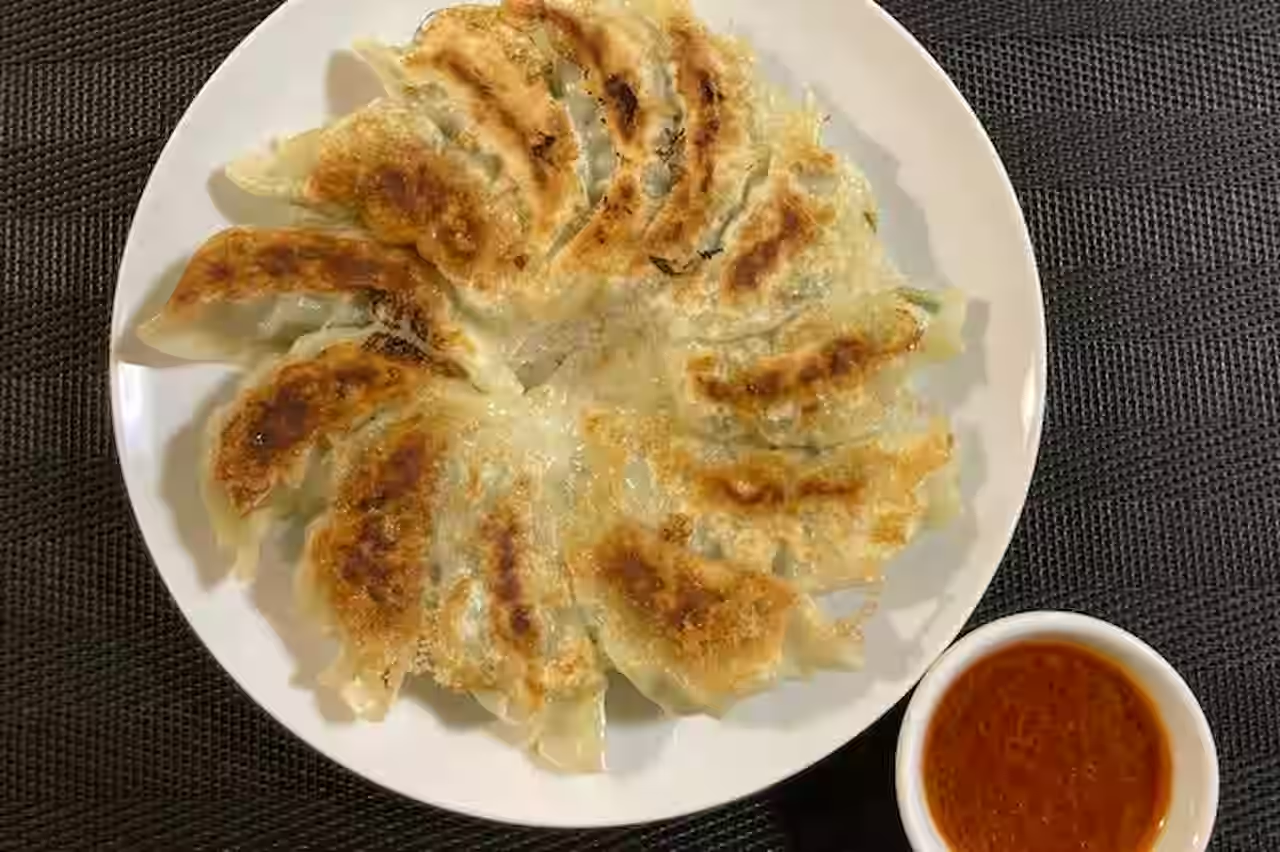
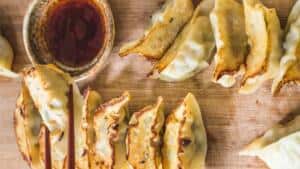
Miso dare gyoza is pan-fried gyoza served with a miso-based dipping sauce rather than the conventional soy sauce and vinegar combination. The base sauce combines miso paste with soy sauce, vinegar, sugar, and often a small amount of chili oil. Some shops add garlic or sesame. Each restaurant has its own proprietary recipe. No two sauces taste exactly the same.
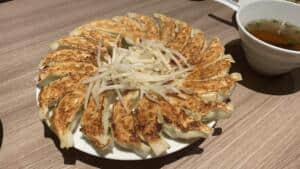
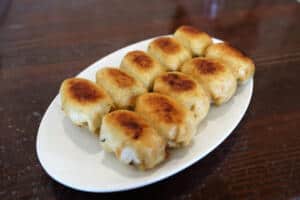
The gyoza themselves follow the standard yaki-gyoza format. The filling is typically pork and vegetables, wrapped in a thin flour-based skin. The dumplings are pan-fried until the bottoms are golden and slightly charred, and the tops remain soft and steamed.
What changes everything is the sauce. The miso brings umami depth and a round, slightly sweet richness that clings to the gyoza wrapper. Vinegar lifts it. The chili oil adds a low warmth. Together they create something more complex than a simple dipping condiment. It feels more like a pairing than an afterthought.
The Flavor Up Close
You will notice the texture of the sauce first. It is thicker than soy-based dips. It coats the gyoza rather than just wetting the surface. The flavor arrives in stages: first the savory miso, then the acid from the vinegar, then a lingering warmth.
The gyoza’s crispy base soaks up some of the sauce. The soft, steamed top stays clean. Each bite has both textures at once. Add a little more chili oil if you want heat. Leave it out and the miso’s natural sweetness comes forward.
At Ganso Gyozaen in Nankinmachi, the miso sauce is a guarded secret passed down through three generations. The gyoza there use no garlic or chemical seasoning. The filling is pork with a small amount of Kobe beef blended in. The wrappers are made by hand using a Manchurian-era technique. Each one stretches without tearing and holds the filling without folding the edges.
At Hyotan in Motomachi, the sauce uses hachomiso, a traditional miso made with 100 percent soy. They mix it with chili oil, vinegar, and garlic sauce. It is sharper and slightly earthier than most versions.
Every shop in Kobe interprets the base differently. Visiting several of them in one trip is not unusual. Locals often have a preferred shop and can tell you exactly why.
Why Kobe Developed This Style
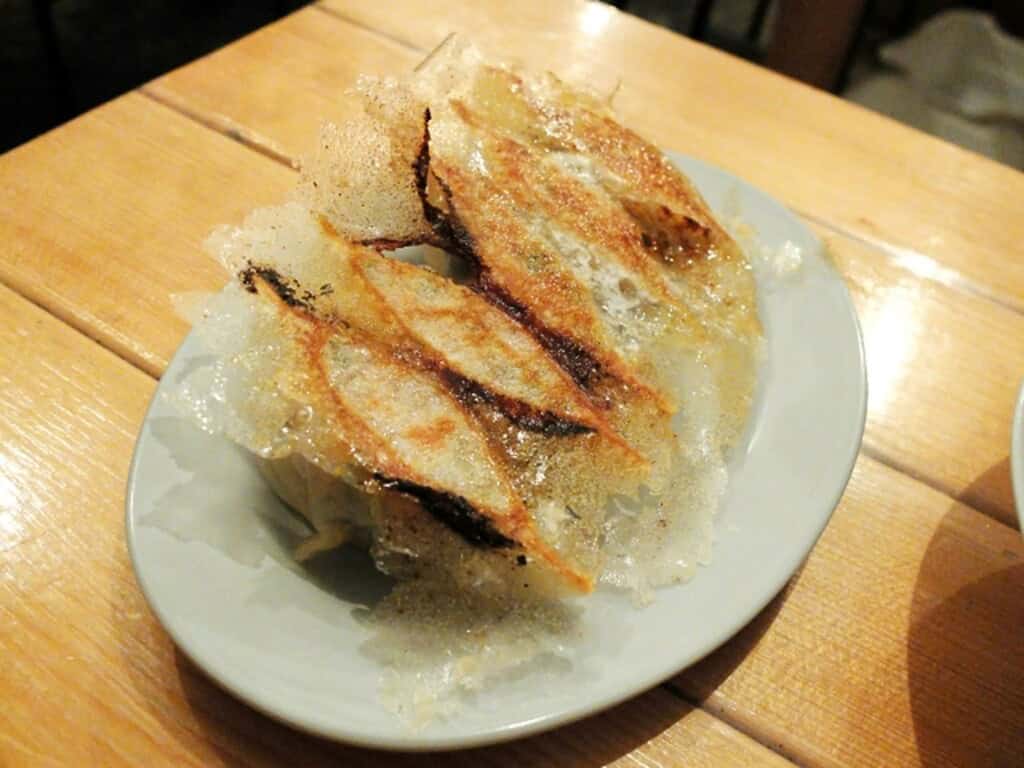
The story behind miso dare gyoza begins not in Kobe but in Manchuria, in what is now northeastern China. Before and during World War II, a large number of Japanese civilians lived there. They were exposed to jiaozi, Chinese water dumplings, but Japanese people adapted the style. They preferred pan-fried versions with thinner wrappers.
Many of these Japanese residents missed the miso flavors of home. They began pairing their pan-fried gyoza with improvised miso sauce as a reminder of Japanese cooking. The habit became familiar. It felt like home in a foreign place.
After the war, many of these returnees settled in Kobe. The city was a major port with an established infrastructure for returning civilians. One of them, the founder of Ganso Gyozaen, opened a restaurant in Nankinmachi in 1951. He served the gyoza with miso sauce, exactly as he had eaten them in Manchuria.
The dish was a hit. Other shops in Kobe’s Chinatown took notice. The miso sauce approach spread through the neighborhood and then through the wider city. It became the local default.
In 2014, Kobe miso dare gyoza was officially recognized as a “Five-Star Hyogo” product, a prefectural certification honoring regional specialty foods with cultural significance. That recognition formalized what locals had known for decades.
How It Compares to Other Regional Gyoza
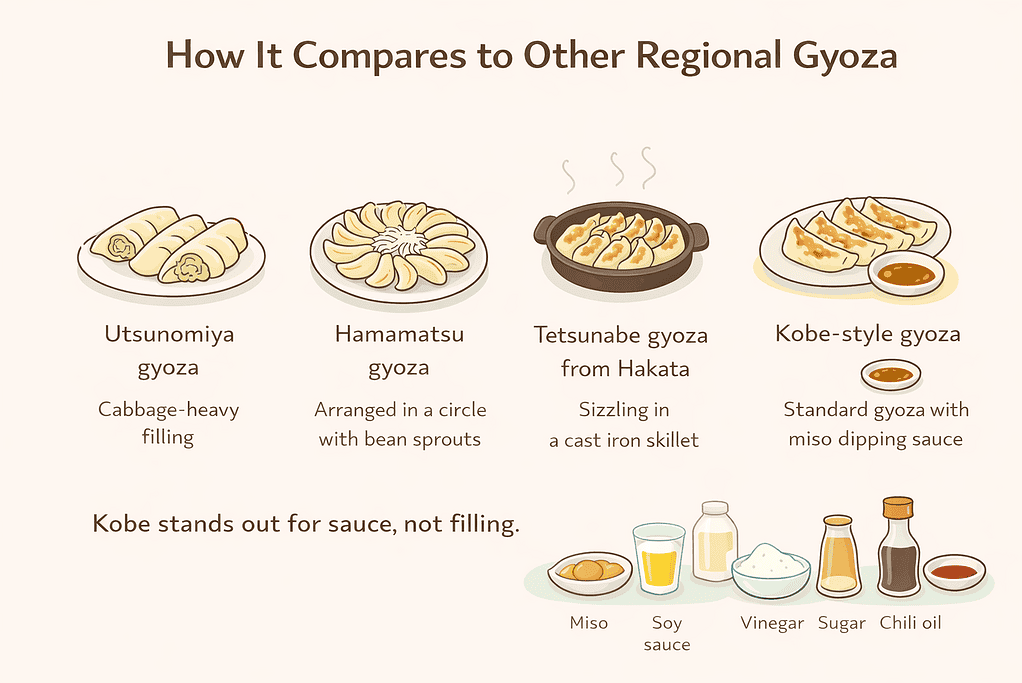
Japan takes regional gyoza seriously. Utsunomiya gyoza is famous for its vegetable-heavy filling and cabbage-first approach. Hamamatsu gyoza serves theirs in a circle around a pile of bean sprouts. Tetsunabe gyoza from Hakata arrives sizzling in a cast iron skillet.
Kobe’s version is defined not by the filling or the shape but by the sauce. The gyoza itself is close to a standard yaki-gyoza. It is the miso that sets it apart. That shift in the dipping component changes the entire flavor character of the meal.
This also makes miso dare gyoza unusually easy to recreate at home. The basic sauce formula is simple: miso, soy sauce, vinegar, sugar, and chili oil. Each ingredient is easy to find at any Japanese grocery store. The ratios are a matter of personal taste.
Where to Eat the Gyoza in Kobe
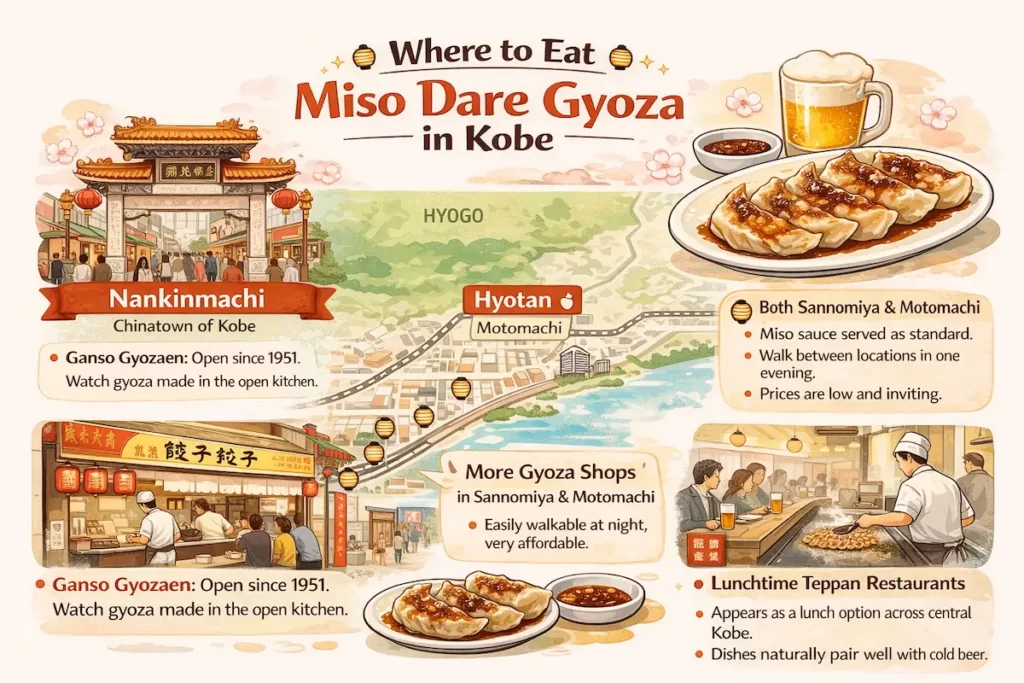
Nankinmachi, Kobe’s Chinatown, is the natural starting point. Ganso Gyozaen has operated there since 1951. The open kitchen allows you to watch the gyoza being made and fried. The sauce recipe has not been shared publicly in over 70 years.
Hyotan in the Motomachi shopping district is another long-standing option, open since 1957. The restaurant is small. The menu is simple. Some nights the only seat is at a counter for eight. The gyoza are the only item. That focus shows in the result.
Both Sannomiya and Motomachi have multiple gyoza shops serving miso sauce as standard. Walking between them in a single evening is entirely feasible. Prices are low enough that ordering multiple rounds is reasonable.
If you visit during the day, miso dare gyoza also appears as a lunchtime option at many teppan restaurants throughout central Kobe. The dish pairs naturally with cold beer and fits the city’s casual, unpretentious food culture.
References
- Official Kobe Tourism Guide: Not to be missed! Misodare Gyoza
- MAFF (Ministry of Agriculture, Forestry and Fisheries): Miso Dare Gyoza / Miso Dumplings – Our Regional Cuisines
- byFood: Kobe Chinatown Street Food Guide
Kobe Miso Gyoza FAQ
What is Kobe Miso Gyoza?
Kobe Miso Gyoza is a famous pan-fried dumpling from Kobe. Chefs make it with minced pork, cabbage, and garlic. Food lovers know it for its rich miso dipping sauce instead of regular soy sauce.
Where does Kobe Miso Gyoza come from?
Kobe Miso Gyoza originates from Kobe City. Locals have loved it as a regional specialty since the 1950s.
What does Kobe Miso Gyoza taste like?
Kobe Miso Gyoza has a savory, tangy, and sweet flavor. The texture feels crispy on the bottom and juicy inside. Diners often compare it to standard dumplings but with a much deeper, earthier punch.
Where can I eat Kobe Miso Gyoza in Japan?
You will find the best Kobe Miso Gyoza in Kobe City. Famous areas include the Motomachi and Sannomiya districts. Many local dumpling shops and Chinese restaurants also serve it.
How much does Kobe Miso Gyoza cost?
Kobe Miso Gyoza typically costs between 300 and 500 yen per serving. Prices vary slightly depending on the restaurant and your drink orders.
Is Kobe Miso Gyoza vegetarian or vegan friendly?
Traditional Kobe Miso Gyoza contains minced pork and lard. Vegans and vegetarians can easily cook plant-based versions at home using tofu and mushrooms instead of meat.
What are the main ingredients in Kobe Miso Gyoza?
The main ingredients in Kobe Miso Gyoza include minced pork, cabbage, garlic, wheat wrappers, and miso paste. The unique miso dipping sauce gives the dish its distinctive rich and tangy character.
Can I make Kobe Miso Gyoza at home?
Yes, you can easily make Kobe Miso Gyoza at home. Japanese grocery stores stock the key ingredients — gyoza wrappers, minced pork, and miso paste. Home cooks mix the signature miso sauce effortlessly with just a spoon.
What is the difference between Kobe Miso Gyoza and regular Gyoza?
The main difference involves the dipping sauce. Kobe Miso Gyoza features a thick, savory miso paste mixture, while regular Gyoza relies on a thin, simple soy sauce and vinegar dip.
Is Kobe Miso Gyoza popular outside Japan?
Kobe Miso Gyoza remains primarily a local specialty. You will rarely find it at Japanese restaurants in North America or Europe. This unique dipping style successfully delights visitors almost exclusively within Kobe City.
Comments