




Utsunomiya gyoza is a local dumpling specialty from Utsunomiya City in Tochigi Prefecture. The wrappers stay thin, the filling leans heavily on vegetables, and the flavour comes out light. Shops serve them pan-fried, boiled, or deep-fried, and many menus offer all three.
So why does one city get this much attention for a dish eaten all over Japan? Utsunomiya has spent more than thirty years turning gyoza into a civic identity. Today the city has its own gyoza cooperative with 145 member shops, an annual festival, and a stone statue outside the station.
What Is Utsunomiya Gyoza?
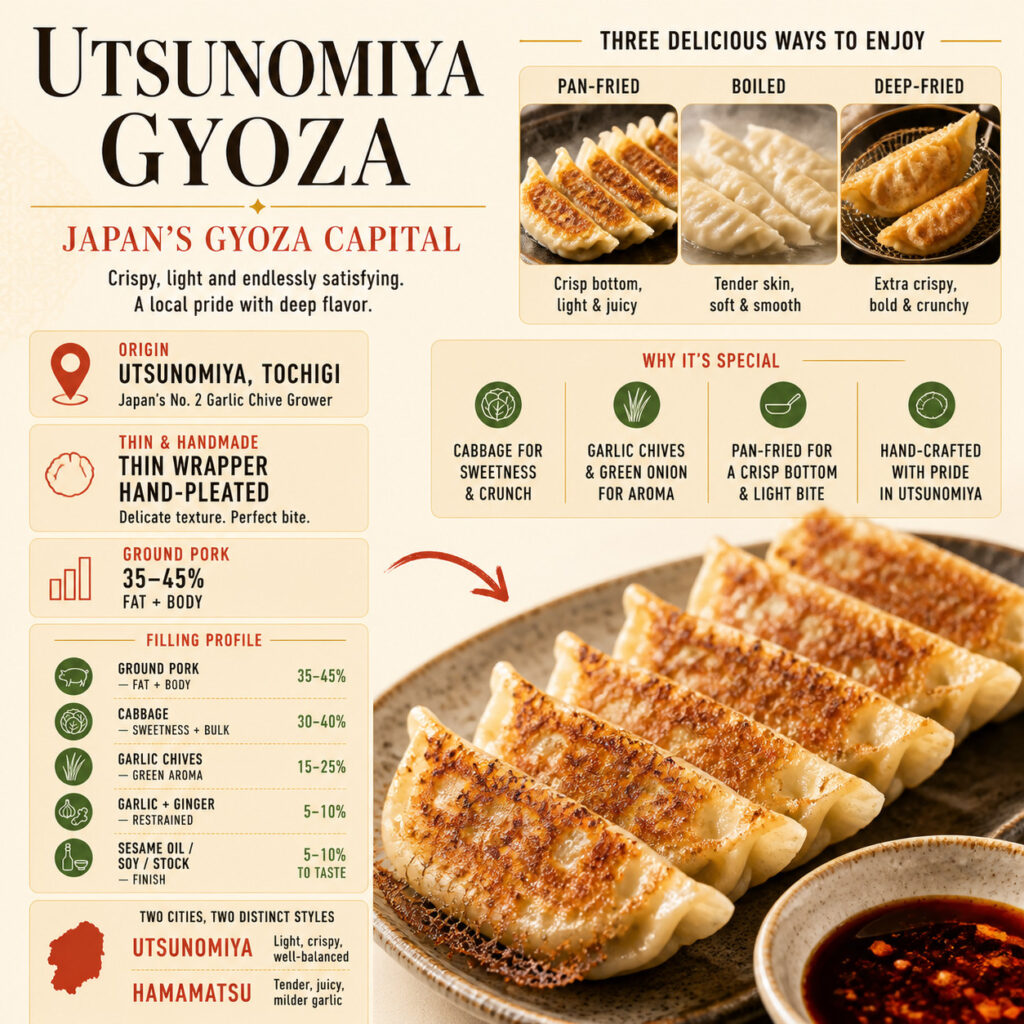
Utsunomiya gyoza is not one fixed recipe. Instead, it works as a city-wide style and a registered regional brand, trademarked by the local cooperative in 2002. Shops therefore share habits rather than a formula, so no two versions taste quite the same.
The wrapper stays thin, so the base crisps quickly in the pan. Fillings lean towards vegetables, and the Utsunomiya Gyoza Association defines its “vegetable-heavy” label as seventy percent vegetables or more. One member shop even publishes exact specs: a 7:3 vegetable-to-meat ratio, a 0.75 mm wrapper, and roughly 20 g per piece.
Those numbers explain the eating experience better than any adjective. Because meat sits in the minority, the dumplings taste lighter than the garlic-forward versions many visitors expect. Not every shop follows that ratio, though, and a few lean richer on purpose.
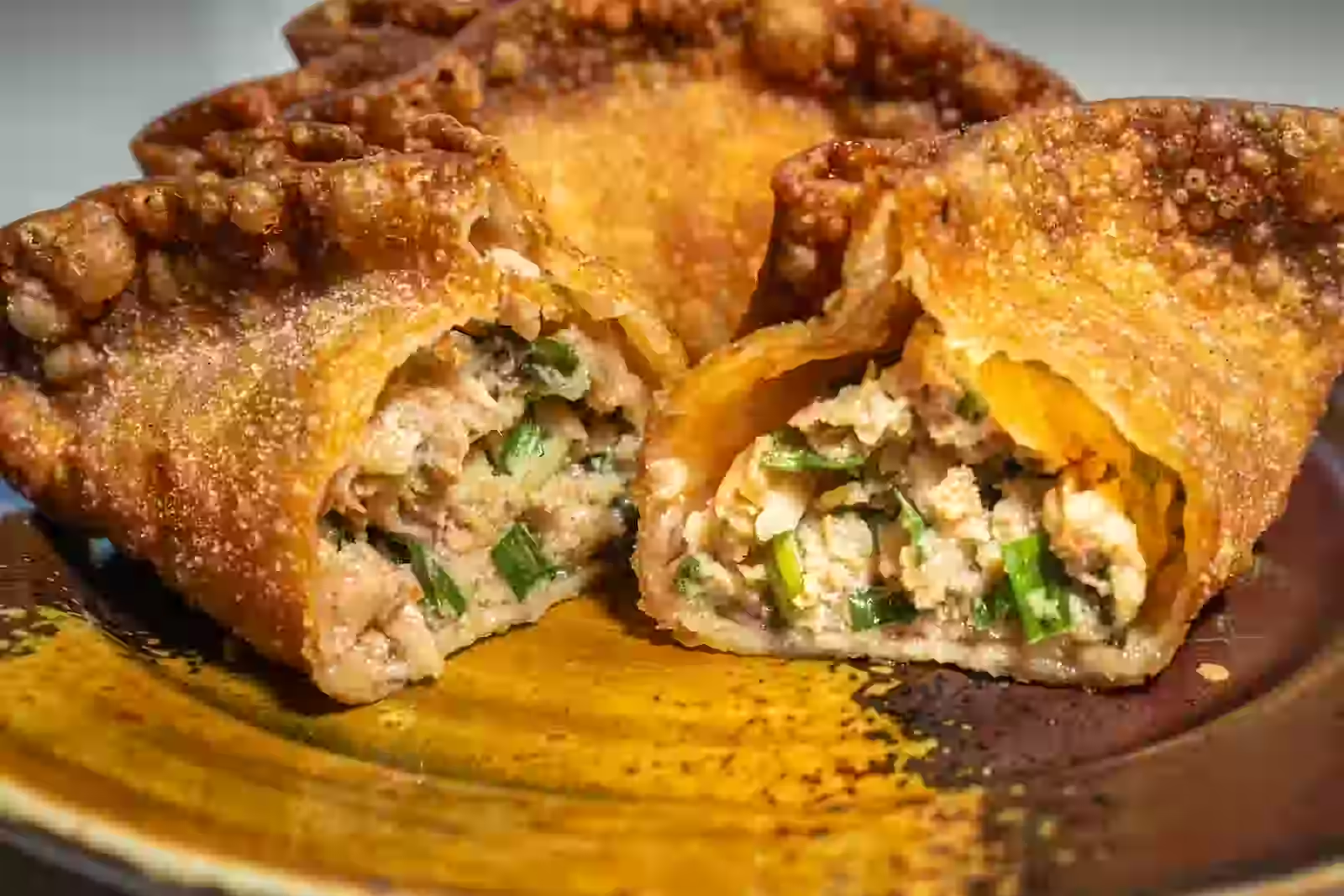
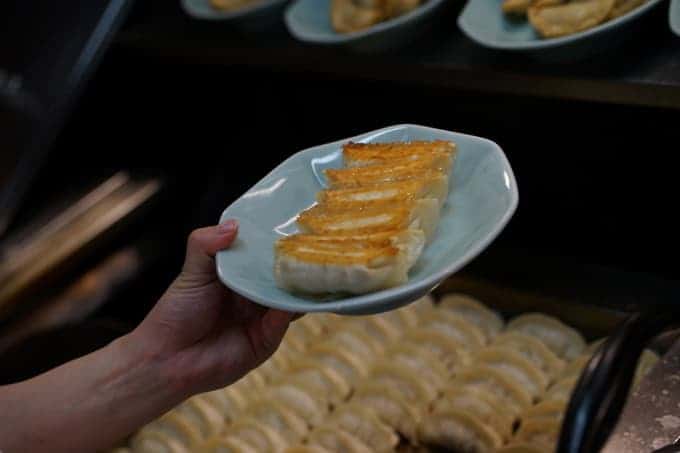
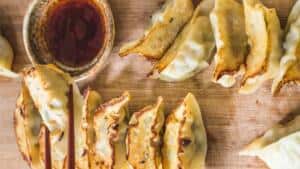
Three cooking styles appear on almost every menu. Yaki-gyoza arrive pan-fried and crisp along one side. Sui-gyoza come boiled, either floating in broth or served plain with ponzu. Age-gyoza go into hot oil until the skin blisters and turns golden.
Portions stay small on purpose. One plate holds roughly six pieces, and locals treat that as a unit rather than a meal. Consequently, ordering two or three plates across different styles feels completely ordinary here. For the wider national picture, our Japanese gyoza guide covers the dish from the beginning.
Common Ingredients in Utsunomiya Gyoza
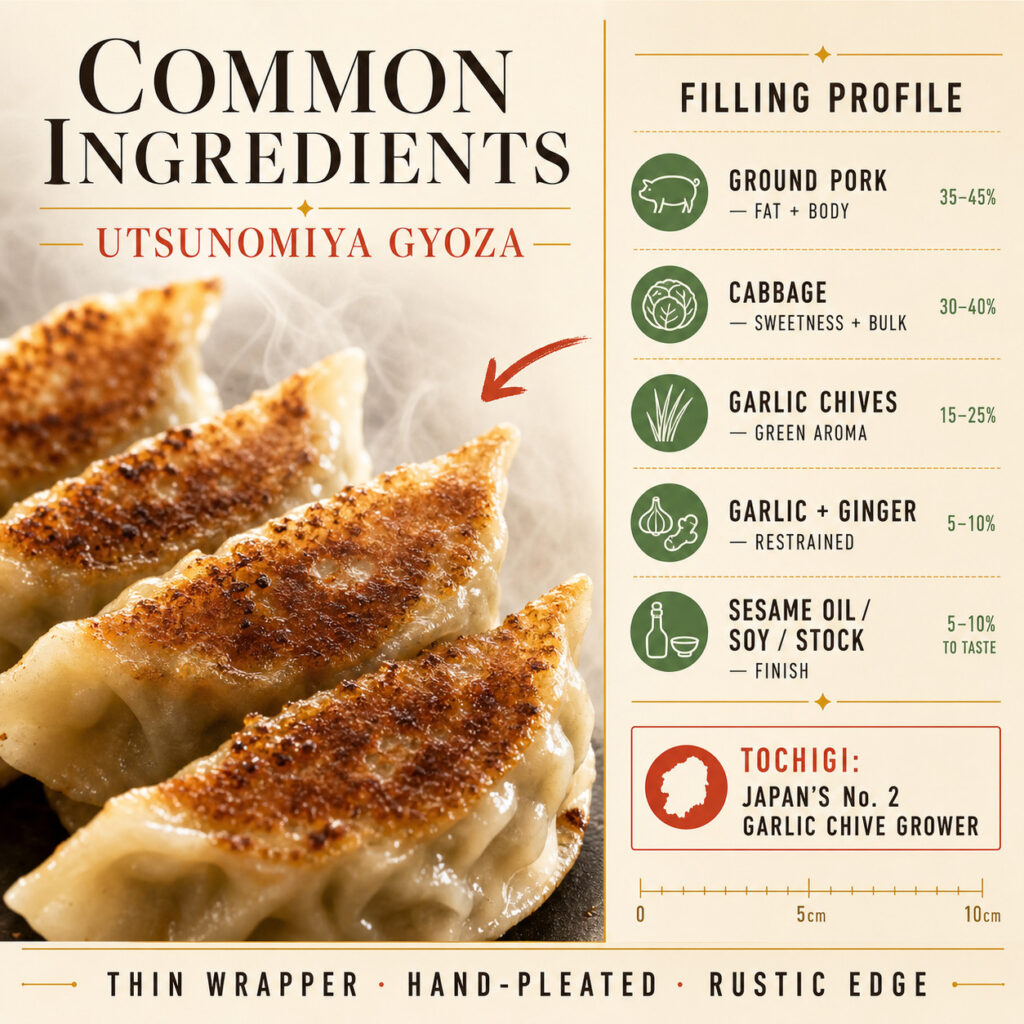
Most fillings start from the same short list. Ground pork supplies fat and body, while cabbage or Chinese cabbage adds bulk and a quiet sweetness. Garlic chives, called nira in Japanese, give the green, slightly sharp note that defines the aroma.
That ingredient list is not accidental. According to national crop statistics, Tochigi ranks second in Japan for garlic chive production, behind Kochi Prefecture. Farmers here also grow plenty of cabbage and leeks, which kept the raw materials cheap and close to the kitchen.
Garlic and ginger appear in smaller amounts than you might guess. In fact, several well-known shops extract only the savoury element of garlic, so the smell fades quickly afterwards. Sesame oil, soy sauce, and a little chicken stock usually finish the mixture.
The wrapper deserves its own note. Cooks roll it thin, then pleat each piece by hand. As a result the edges look uneven and a bit rustic, which is part of the charm.
What Does Utsunomiya Gyoza Taste Like?
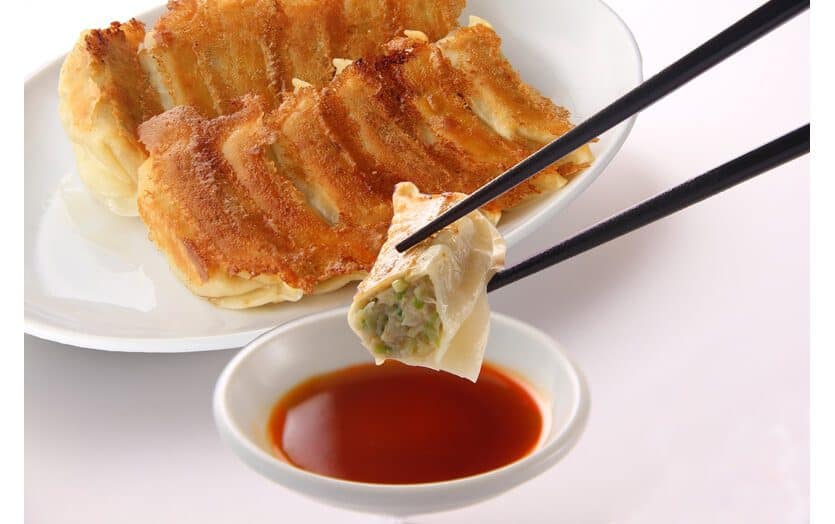
The first bite should feel crisp on the bottom and juicy inside. Steam escapes fast, so give it a moment before committing. Almost everyone burns their tongue at least once, and I am no exception.
Aroma comes mostly from the nira and the sesame oil hitting the pan. It smells savoury rather than heavy. Meanwhile the filling itself tastes surprisingly clean, almost vegetal, with pork sitting somewhere in the background.
Texture is where opinions split. Thin skin gives a light snap at the base, then turns soft along the pleats. Some visitors want a thicker, chewier dumpling and feel a little let down. Others polish off two plates without thinking about it.
Boiled gyoza change the experience completely. The skin turns slippery, the flavour softens, and vinegar does most of the work. Ordering one fried plate and one boiled plate shows that gap best. I still argue with myself about which should come first.
History of Utsunomiya Gyoza
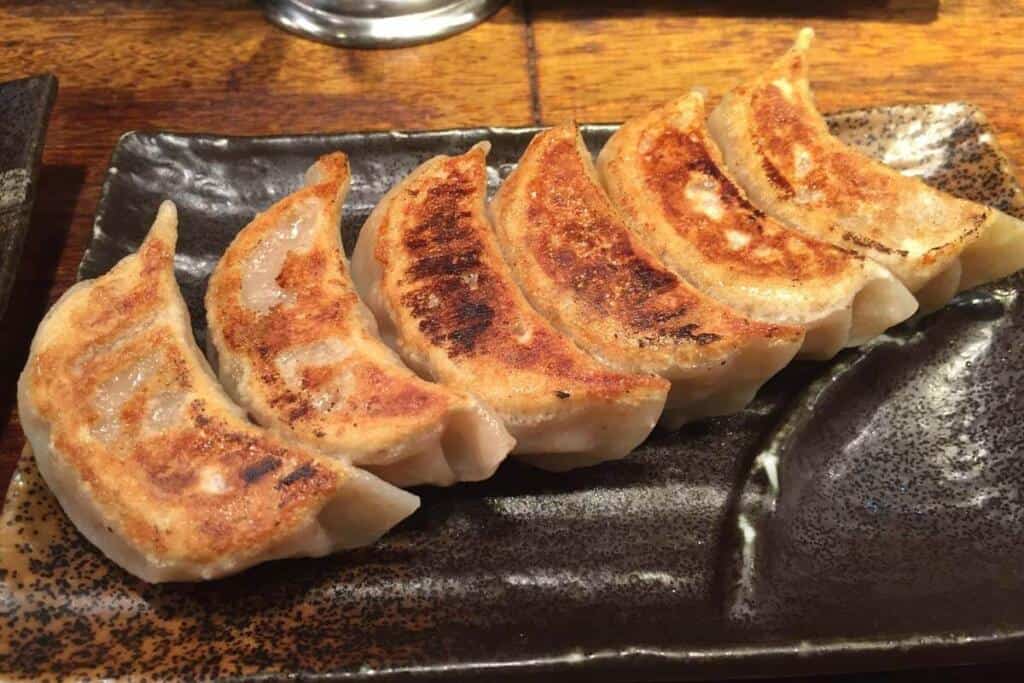
Gyoza reached Japan from China, where jiaozi have been eaten for centuries. How the dish took root in Utsunomiya is less certain. Utsunomiya City states plainly that several explanations exist, so treat the popular story as an account rather than a settled fact.
That popular story runs like this. The Imperial Japanese Army’s 14th Division was based in Utsunomiya and deployed to China, and returning soldiers brought dumpling techniques home. A second explanation points to the inland climate, with hot summers and cold winters encouraging stamina food. Both versions circulate locally, and the city presents them side by side.
The branding story is much better documented. In December 1990, a study group of mid-career city employees presented research on promoting Utsunomiya through gyoza. They had noticed that the city topped national household spending data for dumplings, year after year.
Momentum built quickly after that. The tourism association published a gyoza map in 1991, and 38 shops formed a voluntary Utsunomiya Gyoza Association in 1993. The gyoza statue followed in February 1994, and the first Utsunomiya Gyoza Festival ran in November 1999. Finally, in February 2001, the group was authorised as a formal cooperative.
Recognition has kept arriving since then. In 2022 the Agency for Cultural Affairs certified Utsunomiya gyoza as a “100 Year Food”. That category covers postwar dishes intended to last a century. Researchers who study regional food branding also cite the case, since it began with civil servants rather than an advertising budget.
Is Utsunomiya Still Number One?
Not right now, and the answer deserves care. Utsunomiya led the national household survey for 15 straight years through 2010, then again in 2013, 2017, and 2019. For 2025, however, Hamamatsu led with 4,046 yen per household. Utsunomiya took second at 3,575 yen, with Miyazaki third at 3,418 yen.
One caveat matters enormously. The survey counts supermarket and takeaway purchases only, so restaurant meals never enter the figures. In a city with 145 cooperative member shops, that leaves a lot of gyoza uncounted.
Utsunomiya Gyoza vs Hamamatsu Gyoza
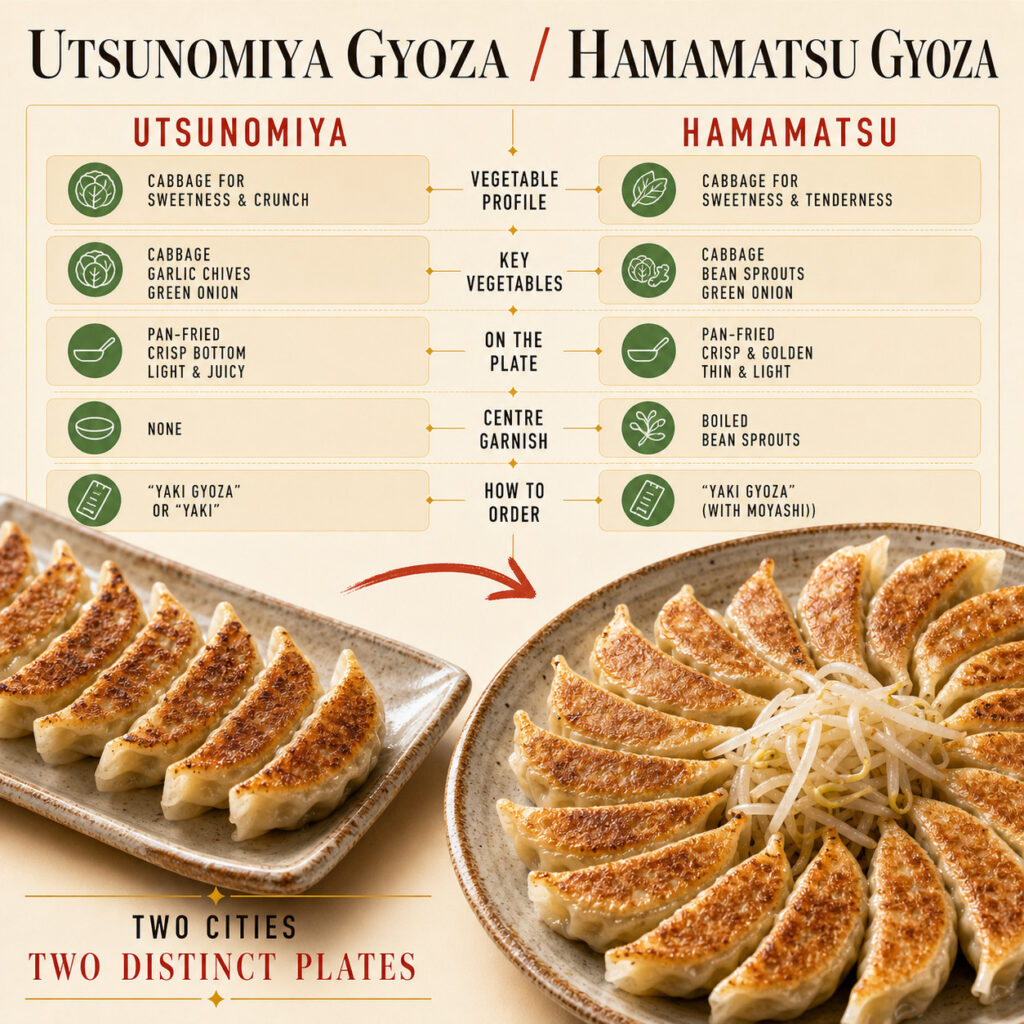
Visitors often ask which city truly deserves the crown. Both make excellent dumplings, yet the two styles differ in ways you can see on the plate.
| Point | Utsunomiya gyoza | Hamamatsu gyoza |
|---|---|---|
| Vegetable ratio | Often 70% or more, a label defined by the local cooperative | Also vegetable-heavy, with cabbage leading |
| Main vegetables | Cabbage, Chinese cabbage, garlic chives | Cabbage and onion |
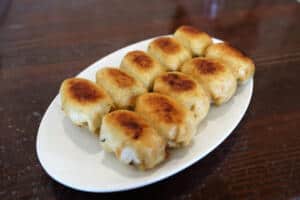
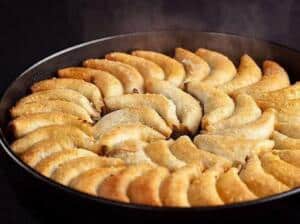
| Plating | Straight rows on a small plate | Arranged in a circle |
| Garnish | None, sauces mixed at the table | Boiled bean sprouts in the centre |
| Typical order | Several plates in different cooking styles | One circle with beer, or takeaway |
| City character | Dense cluster of shops around the station and city centre | Strong takeaway and home-eating culture |
In short, Hamamatsu leans sweet and arrives with bean sprouts, while Utsunomiya leans savoury and offers variety. For the full picture from the other side, read our Hamamatsu gyoza comparison.
How to Eat Utsunomiya Gyoza
Every table carries the same three bottles. Soy sauce, rice vinegar, and chili oil, or rayu, sit together in a small rack. You mix them yourself in the little dish provided.
A useful starting ratio is one part soy sauce to two parts vinegar. Add a few drops of chili oil after that. Because the filling already carries seasoning, several shops suggest vinegar on its own first. That sounds odd, yet it works.
Local variations are worth chasing. Aogen pours a sweet miso sauce over the top, while Gyotendo recommends mayonnaise mixed with ichimi chili powder. Ponzu also turns up alongside boiled gyoza at several shops.
How to Order in Three Steps
- Choose a cooking style. Pan-fried is the default, but boiled and deep-fried appear on most menus.
- Pick your sauce. Mix soy sauce and vinegar first, then adjust the chili oil.
- Order one more plate in a different style before you leave. Portions are small, so this is normal rather than greedy.
Rice and beer are optional. Many locals skip rice entirely and treat gyoza as a snack with a cold drink.
Where to Eat Utsunomiya Gyoza
The Utsunomiya Gyoza Association counts 145 member shops, and plenty of non-member restaurants serve gyoza too. That is a lot of choice for one afternoon. Fortunately the shops below sit in two easy clusters, one at the station and one along Baba-dori in the city centre.
| Shop | Known for | Access | Typical price |
|---|---|---|---|
| Kirasse Main Store | Tasting plates from 30+ member shops | About 20 min walk from JR west exit | Around 300 to 500 yen per plate |
| Utsunomiya Minmin | The city’s oldest gyoza specialist, founded 1958 | 15 to 20 min walk from JR west exit | Around 330 yen per plate of six |
| Utsunomiya Gyoza-kan Kenta Gyoza | Seven varieties, large tables, English menu | East exit side, near Higashi-Shukugo | 310 to 610 yen per plate of six |
| Aogen Paseo Store | Miso-sauce gyoza inside the station | Inside Paseo, right at the station | Around 400 to 600 yen per plate |
| Gyotendo Symbol Road | Round, chewy “mochitto” gyoza with mayonnaise | 4 min walk from Tobu Utsunomiya Station | 360 yen for three, 480 yen for four |
| Menmen | Winged gyoza with a lacy crust | About 15 min walk, on Baba-dori | Around 350 to 450 yen per plate |
Kirasse Main Store
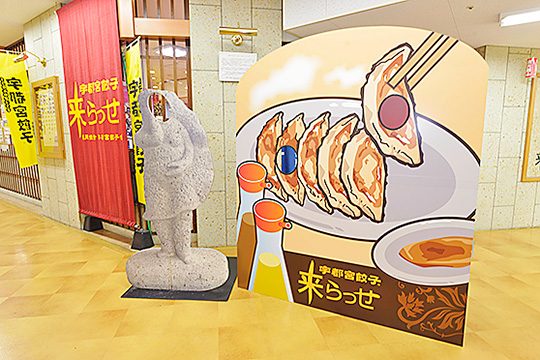
If you only have one meal, start here. The cooperative runs Kirasse directly, and it works like a small gyoza theme park. Five permanent counters sit alongside a rotating zone offering dumplings from more than thirty member shops.
The name comes from the Tochigi dialect and roughly means “come on in”. Besides the food, a souvenir corner sells frozen gyoza and cheerfully silly merchandise.
Utsunomiya Minmin
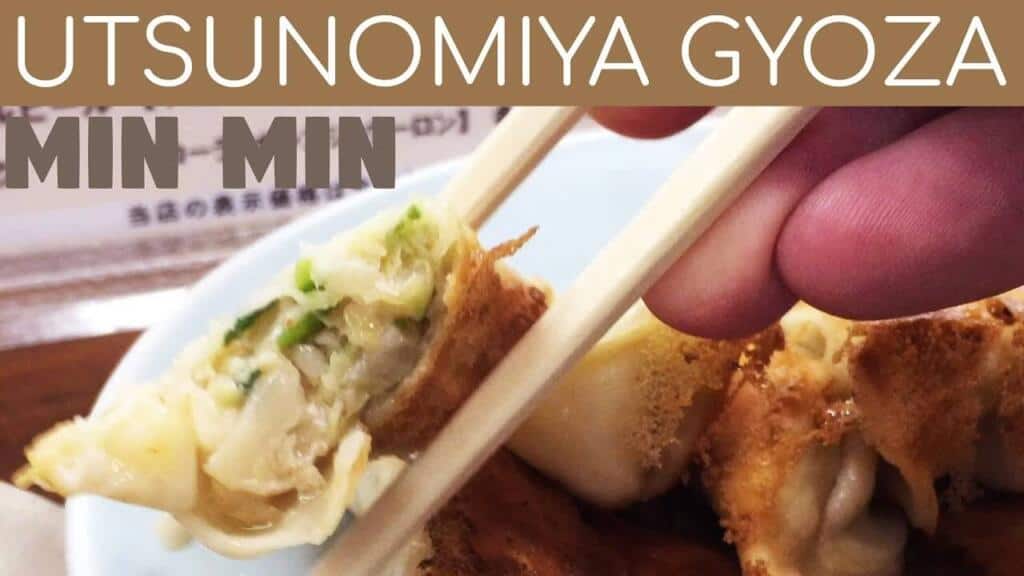
Minmin opened in 1958 and remains the oldest gyoza specialist still trading in the city. Red tables and round stools fill a deliberately plain room. Queues form constantly, though a ticket machine makes the wait bearable.
Chinese cabbage dominates the filling, so the flavour stays light, and the garlic is treated to reduce its smell. The menu is famously short: fried, boiled, deep-fried, rice, beer. Order the boiled version too, since it contrasts nicely with the fried plate.
Utsunomiya Gyoza-kan Kenta Gyoza
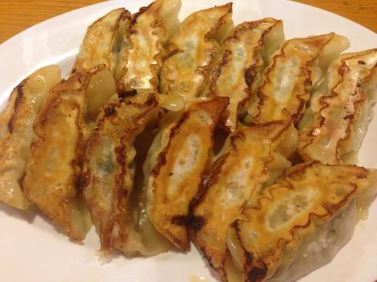
This branch opened in 2019 on the east side and seats 92 people, so groups fit easily. Sharing platters of 30 or 36 pieces make comparison simple. An English menu, free parking, and step-free access also help visitors from abroad.
Varieties run beyond the basic version. Shiso, nira, cheese, stamina, and prawn fillings all appear, priced between 310 and 610 yen for six.
Aogen Paseo Store
Aogen sits inside the Paseo building at the station, so it barely counts as a walk. The house speciality is miso-glazed gyoza covered in spring onion. It tastes richer and sweeter than the usual soy and vinegar route.
Aogen is a long-established Utsunomiya miso maker, which explains the angle. Gyoza served in miso soup also appears here, and that surprises most first-timers.
Gyotendo Symbol Road Store
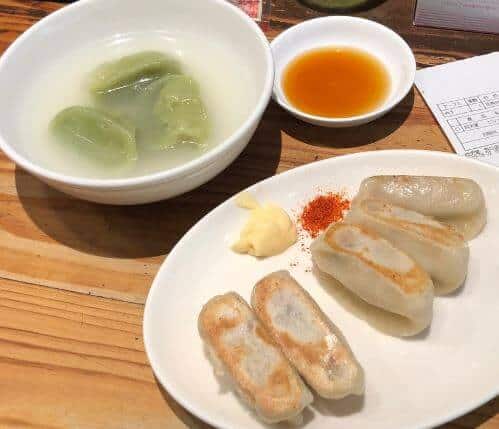
Gyotendo breaks the local mould. The dumplings come out round and plump, with a chewy skin the shop calls “mochitto”. One bite releases a lot of hot juice, so be careful.
House style means mayonnaise mixed with ichimi chili powder rather than vinegar. Admittedly that raised my eyebrows, yet it suits the thicker skin. The boiled version arrives a pale jade green, which photographs beautifully.
Note that the old station-front branch closed in January 2022 during redevelopment. The Symbol Road store, open since October 2021, is the one to visit now.
Menmen
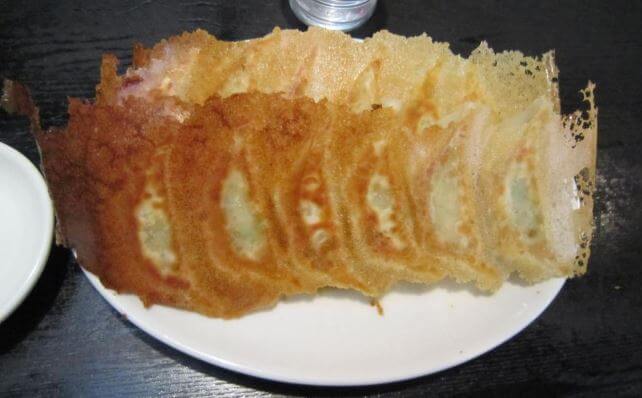
Menmen builds its reputation on hanetsuki gyoza, the version with a golden lace skirt. Shaoxing wine and chicken stock jelly go into the filling. Consequently the juice runs hot and rich the moment you bite.
Regulars start with vinegar alone, since the seasoning already runs strong. A branch inside Kirasse helps when the main shop looks full.
Planning a Gyoza Trip to Utsunomiya
Getting There
Tohoku Shinkansen trains reach Utsunomiya from Tokyo Station in about 50 minutes. Local trains on the Utsunomiya Line take roughly 100 minutes and cost considerably less. Either way, a day trip works comfortably.
Once you arrive, orientation is simple. Station-side shops sit inside Paseo or a short walk from either exit. The older gyoza street runs along Baba-dori near Tobu Utsunomiya Station. Reaching it takes 15 to 20 minutes west on foot, or a short ride on a city circulator bus.
Avoiding the Queues
Famous shops queue hard at weekends, and an hour’s wait is common at Minmin. Arriving before 11:30 or after 14:00 helps a lot. Several shops now use ticket machines or a LINE waiting system, so you can register and wander off.
Kirasse spreads the load nicely, since one visit covers several shops. Weekday afternoons stay noticeably calmer than Saturday lunchtime.
Frozen Gyoza to Take Home
Frozen raw gyoza is the standard Utsunomiya souvenir. Most shops sell packs to go, often with dry ice for the journey. The Kirasse souvenir counter inside Paseo gathers several brands in one place, which saves walking.
The cooperative also runs a mail-order service with mixed sets from different shops. If your hotel has no freezer, buy on the way out rather than at the start.
Utsunomiya Gyoza Festival and the Gyoza Statue
The Utsunomiya Gyoza Festival runs on the first Saturday and Sunday of November. Utsunomiya Castle Ruins Park has hosted it since 2011, and around twenty-five member shops set up stalls. Every plate costs a flat 200 yen, holding three to five pieces depending on the shop.
The event began in 1999 and now draws roughly 150,000 people across the two days. Pan-fried, boiled, and deep-fried options all appear side by side. Because queues build quickly, arriving near opening time makes a real difference.
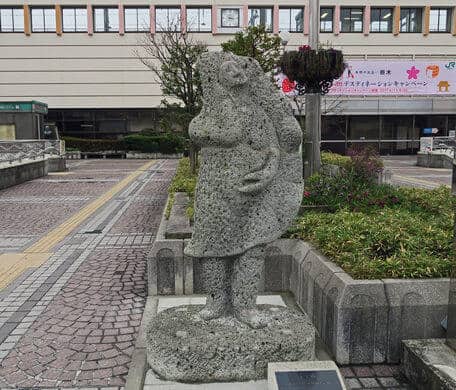
The gyoza statue is the other landmark worth a photo. Carved in 1994 from local Oya stone, it shows the goddess Venus wrapped in a gyoza skin. The block weighs roughly 1.7 tonnes, which explains the trouble it has caused.
Originally it stood at the east exit. A 2008 relocation famously cracked the body in half, and repairs followed. Since October 2014 it has stood on the pedestrian deck at the west exit. Locals now use it as a meeting point.
Simple Utsunomiya Gyoza Recipe Idea
You cannot copy a shop exactly at home, but you can get close. The key is the ratio: keep vegetables high and meat low. Aim for roughly seventy percent vegetables by weight, then squeeze out the excess water.
Ingredients for about 24 pieces
- 24 thin gyoza wrappers
- 300 g cabbage or Chinese cabbage, finely chopped
- 60 g garlic chives (nira), chopped
- 120 g ground pork
- 1 small clove garlic and a thumb of ginger, both grated
- 1 tbsp soy sauce, 1 tsp sesame oil, a pinch of salt
Method
- Salt the chopped cabbage, rest it for ten minutes, then squeeze hard. Wet filling ruins the crust.
- Mix everything except the wrappers until the paste turns slightly sticky.
- Spoon a small amount onto each wrapper, wet the edge, and pleat one side only.
- Fry in a hot oiled pan until the bases brown, roughly two minutes.
- Add 60 ml water, cover immediately, and steam for five minutes.
- Remove the lid and let the water boil off so the bottoms crisp again.
Serve straight from the pan with soy sauce, vinegar, and chili oil. Frankly the first batch usually sticks. Mine did, and the second batch improved once the pan was properly hot.
Conclusion
Utsunomiya gyoza rewards a slow afternoon rather than a quick stop. Thin skins, vegetable-heavy fillings, and small plates make it easy to try three shops in a row. Meanwhile the festival, the statue, and a 145-shop cooperative give the food a story beyond the plate.
If you have one afternoon, the simplest plan works best. Start at Kirasse to compare styles, then walk down Baba-dori for a second plate. Pick up frozen packs at Paseo before your train. For more of the region, browse our Tochigi food guide, or explore more gyoza articles from around the country.
Utsunomiya Gyoza FAQ
What is Utsunomiya gyoza?
Utsunomiya gyoza is the local dumpling style of Utsunomiya City in Tochigi Prefecture. Cooks wrap a vegetable-heavy filling in a thin skin, then serve it pan-fried, boiled, or deep-fried. The local cooperative has held the name as a registered regional brand since 2002. Because vegetables dominate the filling, the flavour stays lighter than many visitors expect.
How is Utsunomiya gyoza different from Hamamatsu gyoza?
Hamamatsu arranges its dumplings in a circle and piles boiled bean sprouts in the middle. Utsunomiya serves straight rows without a garnish, and diners mix their own sauce. Both cities keep the vegetable ratio high, though Hamamatsu tastes slightly sweeter thanks to cabbage and onion. The two have competed for the title of Japan’s gyoza capital since the 1990s.
Where can I eat Utsunomiya gyoza near JR Utsunomiya Station?
Aogen sits inside the Paseo station building, so it needs no walking at all. Utsunomiya Gyoza-kan Kenta Gyoza serves large groups on the east side, roughly ten minutes away. For a comparison meal, walk about twenty minutes west to Kirasse, where more than thirty member shops rotate. Minmin and Menmen sit nearby on Baba-dori in Tochigi’s best-known gyoza street.
How much does a plate of Utsunomiya gyoza cost?
A plate of six Utsunomiya gyoza usually costs 300 to 450 yen, and specialty fillings reach about 610 yen. Minmin charges roughly 330 yen for six, while Gyoza-kan starts at 310 yen. During the November festival every shop sells a flat 200 yen plate of three to five pieces. Prices in Tochigi rise gradually, so treat these figures as a guide.
Does Utsunomiya gyoza contain allergens, and are vegetarian options available?
Standard Utsunomiya gyoza contain pork, so they are not vegetarian. One member shop lists wheat, sesame, pork, egg, dairy, soy, and prawn among its allergens, and recipes vary between shops. Chicken stock also appears in many fillings. Ask staff directly before ordering, since some shops in Tochigi offer English menus and detailed allergen information.
When is the Utsunomiya Gyoza Festival?
The Utsunomiya Gyoza Festival takes place on the first Saturday and Sunday of November. Utsunomiya Castle Ruins Park in Tochigi Prefecture has hosted it since 2011. Around twenty-five member shops sell plates at a flat 200 yen each, and roughly 150,000 people attend. Check the Utsunomiya Gyoza Association website before travelling, since opening times occasionally shift.
Is Utsunomiya still Japan’s number one gyoza city?
Not by the household spending measure, at least recently. Utsunomiya led that survey for fifteen straight years through 2010, and again in 2013, 2017, and 2019. Hamamatsu topped the 2025 figures at 4,046 yen per household, while Utsunomiya followed at 3,575 yen. The survey excludes restaurant meals and frozen products, so it captures only part of Tochigi’s gyoza culture.
Can I buy Utsunomiya gyoza to take home?
Yes, frozen raw gyoza is the standard souvenir from Utsunomiya. Most shops sell packs to take away, and many add dry ice for the journey. The Kirasse souvenir counter inside Paseo at JR Utsunomiya Station gathers several brands together. The cooperative also ships mixed sets by mail order within Japan.
References
- Utsunomiya Gyoza Association, About the Association and Chronology, https://www.gyozakai.com/about/ (Surveyed: August 2026)
- Kirasse Main Store (Utsunomiya Gyoza Association), Facility Guide, https://www.gyozakai.com/kirasse/ (Surveyed: August 2026)
- Gyoza Festival Official Page (Utsunomiya Gyoza Association), Event Overview, https://www.gyozakai.com/gyozafest2025/ (Surveyed: August 2026)
- Utsunomiya City, The Town of Gyoza, https://www.city.utsunomiya.lg.jp/citypromotion/1007188.html (Surveyed: August 2026)
- Member shop listings (Utsunomiya Gyoza Association), Minmin, Kenta Gyoza and Gyotendo pages, https://www.gyozakai.com/shop/ (Surveyed: August 2026)
- Utsunomiya Convention and Visitors Bureau, Gyoza Statue, https://www.utsunomiya-cvb.org/tourist_data/12465.html (Surveyed: August 2026)
- Agency for Cultural Affairs, 100 Year Food Certification Programme, https://www.bunka.go.jp/seisaku/shokubunka/foodculture/hyakunenfood/ (Surveyed: August 2026)
- Statistics Bureau of Japan, Family Income and Expenditure Survey, Ranking by Item, https://www.stat.go.jp/data/kakei/5.html (Surveyed: August 2026)
- Nikkei, Hamamatsu Tops Gyoza Spending in the 2025 Household Survey, https://www.nikkei.com/article/DGXZQOCC062RQ0W6A200C2000000/ (Surveyed: August 2026)
- Tochigi Prefecture Tourism Association, Kirasse Main Store and Minmin Main Store, https://www.tochigiji.or.jp/spot/s8182 (Surveyed: August 2026)
- Otani, N. (2020). Utsunomiya as a Gyoza Town from the Perspective of Regional Branding. Annals of the Japan Association of Urban Studies, 53, 197-206. J-GLOBAL, https://jglobal.jst.go.jp/detail?JGLOBAL_ID=202002276889557159 (Surveyed: August 2026)
- Tsutsui, T. (2012). Regional Revitalization through Food Culture. Rippo to Chosa, House of Councillors of Japan, https://www.sangiin.go.jp/japanese/annai/chousa/rippou_chousa/backnumber/2012pdf/20120308106.pdf (Surveyed: August 2026)
- Mizuho Research Institute, Two Tochigi Cities That Succeeded in Attracting Visitors, https://www.mizuho-rt.co.jp/publication/mhri/research/pdf/region-insight/EEI070425.pdf (Surveyed: August 2026)
Related Articles
- Gyoza (餃子) (Surveyed: August 2026)
- Hamamatsu Gyoza (浜松餃子) (Surveyed: August 2026)
- White Gyoza (ホワイト餃子) (Surveyed: August 2026)
- Tetsunabe Gyoza (鉄鍋餃子) (Surveyed: August 2026)
- Kobe Miso Gyoza (味噌だれ餃子) (Surveyed: August 2026)
- Tochigi Food Guide (Surveyed: August 2026)
- More Gyoza Articles (Surveyed: August 2026)




Comments