


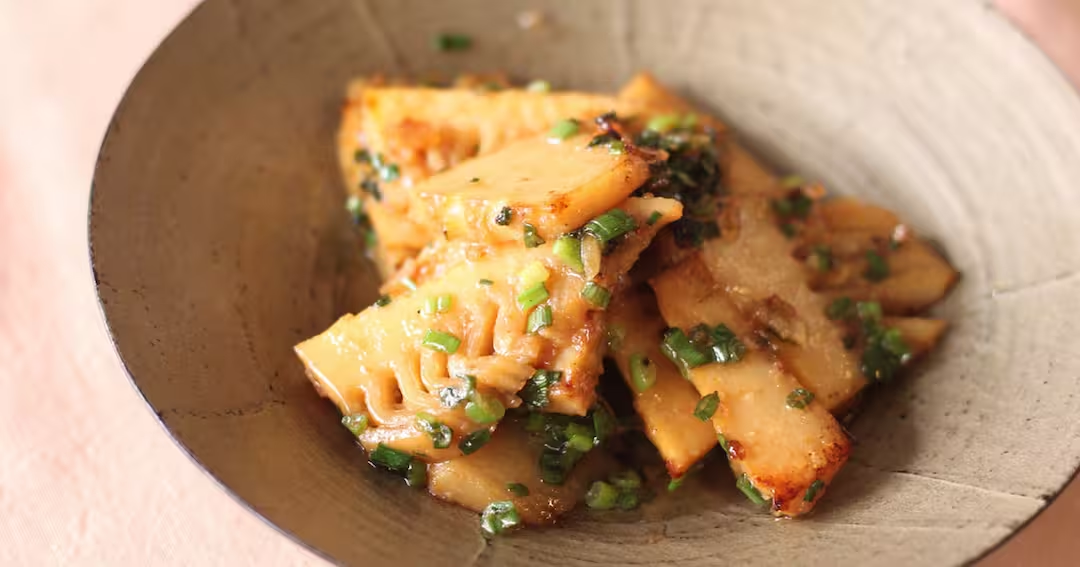







Sakura may be the visual symbol of Japanese spring, but takenoko (たけのこ) is its flavor. Bamboo shoots appear in markets across Japan from late March, and their arrival signals a shift in home kitchens and restaurant menus that people genuinely look forward to. The season is short. Fresh takenoko is available for only a few weeks each year, and that scarcity is part of what makes it special.
This guide covers everything: what takenoko is, the main varieties and their seasons, which regions produce the best shoots, how to prepare and cook them, and where to experience them when visiting Japan.
What Is Takenoko?
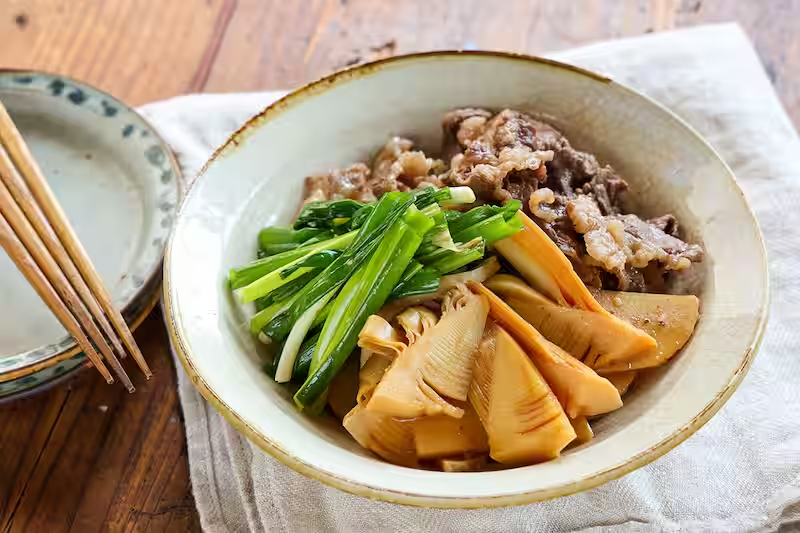
Takenoko (たけのこ) literally means “child of bamboo.” It is the edible young shoot that pushes up from the underground stem of a bamboo plant in spring, before it has a chance to harden and grow into a full stalk.
The kanji for takenoko, 筍, tells the story clearly. The upper half is 竹 (take, bamboo), and the lower half is 旬 (jun), which refers to a ten-day period. This reflects the narrow window during which the shoot is tender enough to eat. Once exposed to sunlight, the shoot begins converting its sugars and the flesh grows fibrous and bitter within days.
The best takenoko are harvested before the tip breaks the soil surface. The earlier they are dug, the milder and sweeter they taste. Farmers who take their crops seriously go out before dawn to find and pull shoots that have not yet seen daylight.
Takenoko is known for its crunchy texture and fresh, earthy taste. Since it grows quickly, it stands for energy and new beginnings. People in Japan have enjoyed it for centuries. Long ago, farmers in Tokyo and Kyoto depended on the bamboo harvest to pay for important family events. They even had a term, “Bamboo Accounting,” because the spring crop was so valuable. You can look it up even more and try it out yourself.
Varieties and Season
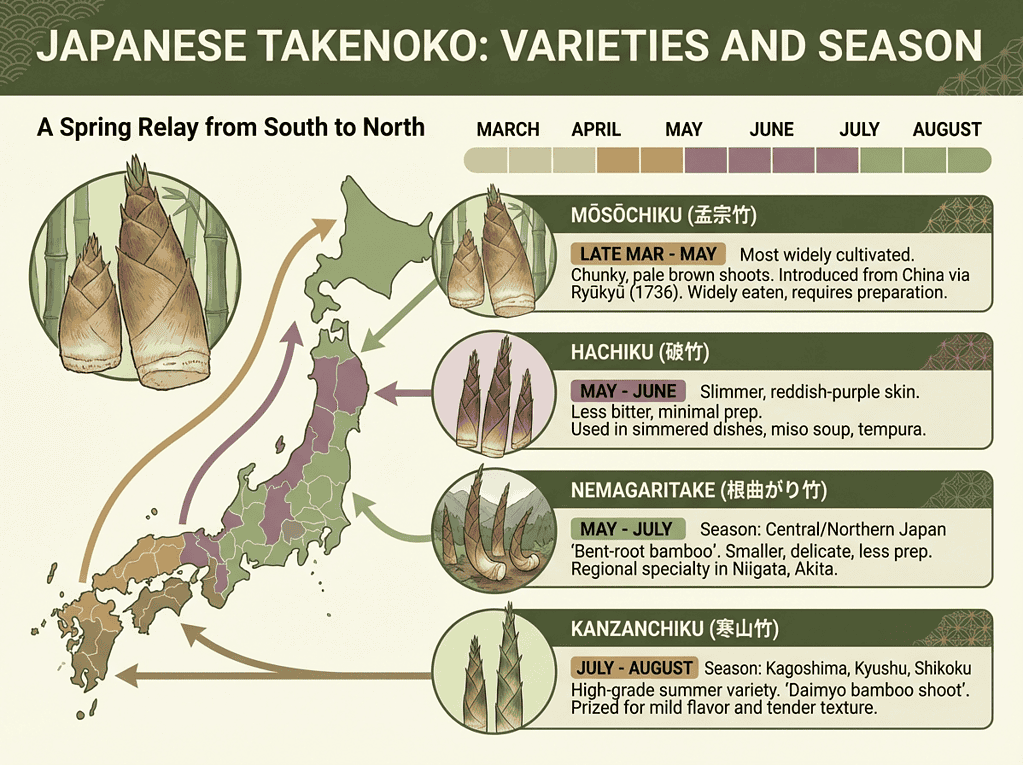
Japan has several edible bamboo species, and each comes into season at a slightly different time. This creates a spring relay of takenoko that moves from south to north over the course of a few months.
Mōsōchiku (孟宗竹)
The most widely cultivated and eaten variety in Japan. These large, chunky shoots with pale brownish skin are what most people picture when they think of takenoko. Mōsōchiku was introduced to Japan from China via the Ryūkyū Islands around 1736 and spread northward over the following century. Its season runs from late March through May, starting in Kyushu and gradually moving up to Kansai and the Kanto region as temperatures rise.
Hachiku (破竹)
A slimmer shoot with a reddish-purple outer skin that comes into season in May and June, after mōsōchiku has passed. Hachiku is less bitter than mōsōchiku and can sometimes be eaten with minimal preparation. It appears in simmered dishes, miso soup, and as tempura.
Nemagaritake (根曲がり竹)
A wild mountain variety that grows in the mountainous regions of central and northern Japan, including Niigata, Nagano, and parts of Tohoku and Hokkaido. Its root curves at the base, giving it the name “bent-root bamboo.” The season is May through July. Nemagaritake is smaller and more delicate than mōsōchiku, and it requires less preparation time. In Niigata and Akita, it appears in local miso soups and simmered dishes as a regional specialty.
Kanzanchiku (寒山竹)
A high-grade summer variety grown primarily in Kagoshima and parts of Kyushu and Shikoku. It comes into season in July and August, long after the spring varieties have finished. Historically called the “daimyo bamboo shoot” because of its association with feudal lords, it is prized for its mild flavor and tender texture.
| Variety | Season | Region | Character |
|---|---|---|---|
| Mōsōchiku | Late March to May | Kyushu → Kansai → Kanto | Large, chunky, mild sweet |
| Hachiku | May to June | Nationwide | Slim, reddish skin, less bitter |
| Nemagaritake | May to July | Niigata, Tohoku, Hokkaido | Small, wild, delicate |
| Kanzanchiku | July to August | Kagoshima, Kyushu | Summer variety, tender |
Regional Takenoko: Where in Japan to Find the Best
Kyoto (Kansai)
Kyoto’s Kyo-takenoko (京たけのこ) is considered the finest mōsōchiku in Japan and is designated as a Kyoto brand product. It is grown in the Nishiyama area west of the city, particularly around Nagaokakyo, Oyamazaki, and Oharano. What distinguishes it is the cultivation method: farmers spend the entire year managing the grove, pruning parent bamboo in spring, weeding in summer, and laying straw and clay soil over the grove floor in autumn to create a deep, soft layer of insulating earth. Shoots grown through this thick underground layer emerge with unusually pale, cream-colored skin (called shirako, meaning “white child”), minimal bitterness, and a refined sweetness that other regions cannot replicate. The season runs from late March to mid-May. Shirako takenoko, the deepest-dug premium shoots, are rare even in Kyoto itself and appear mainly at specialist restaurants.
Fukuoka (Kyushu)
Fukuoka is one of Japan’s major takenoko production areas and where the mōsōchiku season begins each year. Kyushu’s warmer climate means shoots emerge several weeks ahead of Kansai and Kanto. Fukuoka’s bamboo forests grow in red soil, which gives the shoots a particularly mild sweetness with low bitterness. Tokyo restaurants that serve takenoko in early March are typically sourcing from Fukuoka or elsewhere in Kyushu while Kyoto’s season has not yet started. Fukuoka takenoko is widely available at local markets and supermarkets throughout the prefecture during the season.
Kagoshima (Kyushu)
Kagoshima has some of the densest bamboo forests in Japan. Locals forage wild takenoko in spring, and the practice of community bamboo shoot hunting is common throughout the prefecture. The region is also the primary producer of kanzanchiku, the summer luxury variety. Kagoshima’s takenoko culture is embedded in everyday rural life in a way that feels distinct from the refined kaiseki context of Kyoto.
Setouchi Region
Nearly 60 percent of Japan’s cultivated bamboo shoots are harvested in the Setouchi region, which spans the coastal areas around the Seto Inland Sea in western Honshu and northern Shikoku. Every March, farmers’ markets fill with fresh takenoko and locals forage early in the morning before the sun triggers rapid growth. The region’s mild climate and fertile coastal soil support both large-scale cultivation and wild foraging. Setouchi takenoko is widely available throughout the area during spring.
Niigata (Hokuriku / Chubu)
Niigata is home to nemagaritake, the wild mountain variety that grows in the hills and forests of the region. Unlike mōsōchiku, which requires cultivation and careful preparation, nemagaritake can be eaten relatively simply. In Niigata, it is a classic ingredient in spring miso soup, where its clean, slightly green flavor pairs naturally with the region’s mild miso. Wild foraging for nemagaritake is a beloved spring activity in mountain communities throughout northern Honshu.
Health Benefits
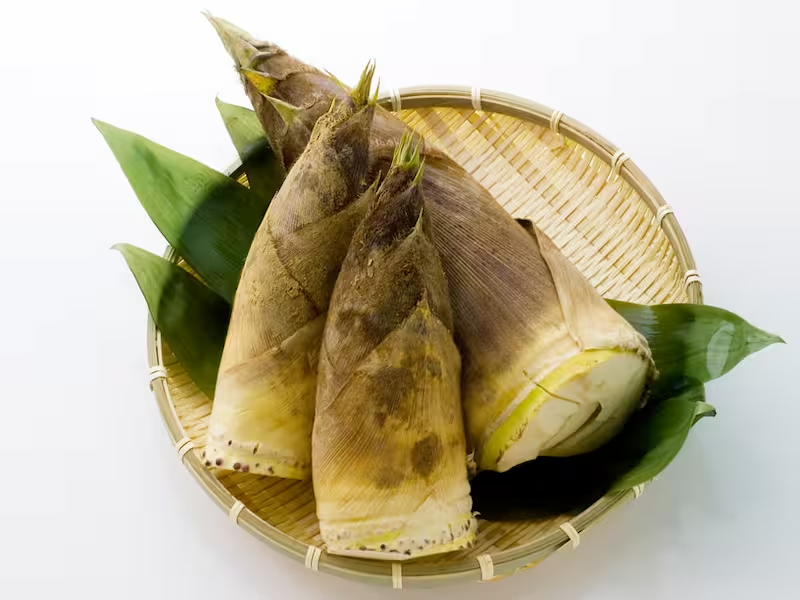
This vegetable is great for your health, especially your heart. It is low in calories but packed with nutrients your body needs to stay strong:
- Fiber: It has plenty of fiber, which helps with digestion and keeps your stomach working well.
- Potassium: It is high in potassium, which helps keep your heart healthy and reduces swelling in your body.
- Protein: For a plant, it has a surprising amount of protein to help build and repair your muscles.
- Tyrosine: When you boil takenoko, you might notice a white powder inside. This is tyrosine, which helps your brain stay focused and feel good.
How to Prepare Takenoko at Home
Fresh takenoko requires one essential preparation step: removing the aku, or bitter astringency. This is done through a process called aku-nuki.
Takenoko deteriorates quickly. Bitter compounds begin building again as soon as the shoot is dug. Buy the freshest available, ideally the same day it was harvested, and complete the aku-nuki process immediately. Pre-boiled takenoko sold in vacuum packs is a convenient alternative outside of season.
How to Eat Takenoko: Classic Japanese Dishes
Takenoko Gohan (たけのこごはん)
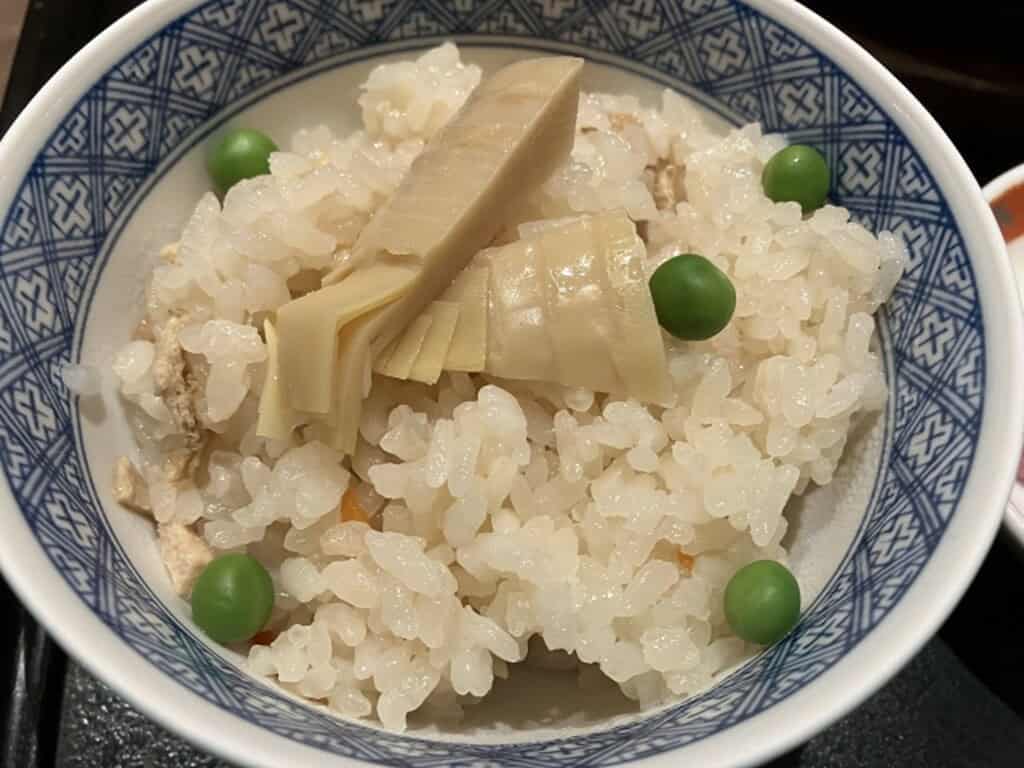
The most essential spring dish in Japanese home cooking. Sliced takenoko is cooked together with rice in dashi broth seasoned with soy sauce and mirin. The result is fragrant, lightly earthy rice with a gentle sweetness. A garnish of kinome, the young leaves of the sansho pepper plant, adds a fresh citrus note that is especially associated with Kyoto-style preparation. This dish appears across Japan every spring and is considered the taste of the season.
Wakatake-ni (若竹煮)
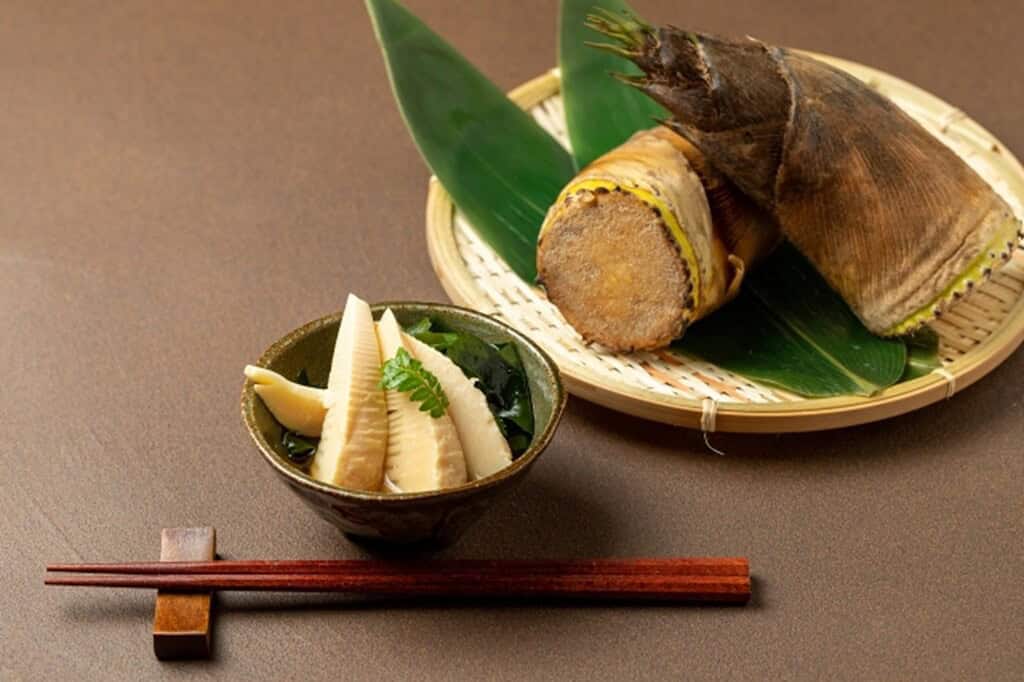
A classic simmered dish pairing takenoko with wakame seaweed in a clear, light dashi broth. Both ingredients share the same spring season, and together they create one of Japanese cuisine’s most beloved flavor pairings. Wakatake-ni appears frequently in kaiseki menus and home cooking throughout the takenoko season.
Takenoko no Kinome-ae (たけのこの木の芽和え)
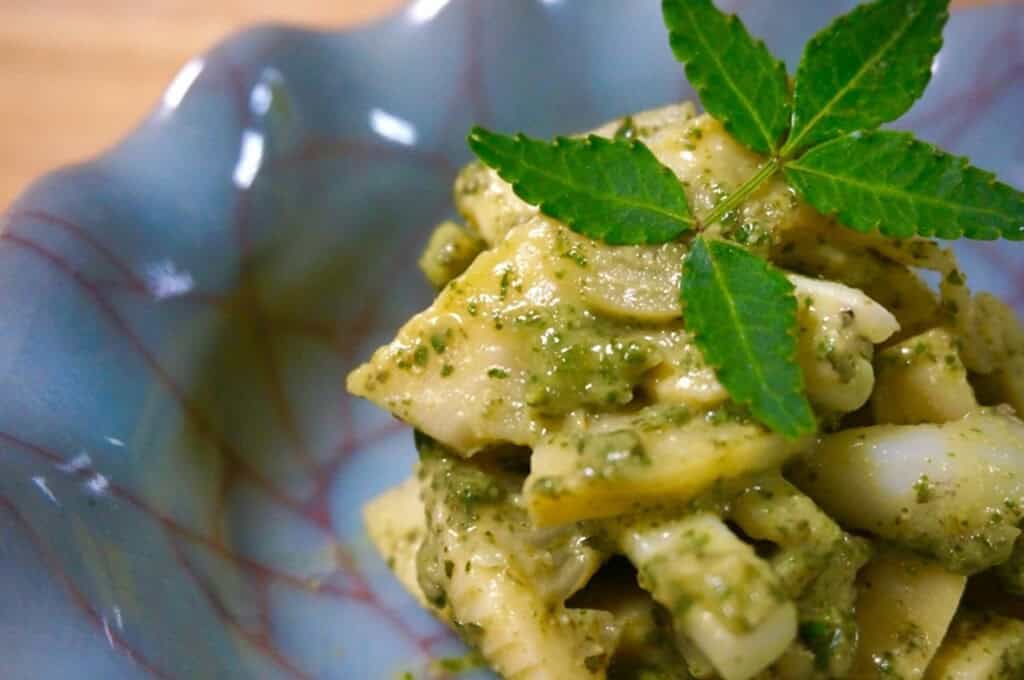
Boiled takenoko slices dressed with a paste of kinome leaves, white miso, sugar, and dashi. This is a classic Kyoto dish that exemplifies the spring kaiseki style: seasonal ingredient, minimal seasoning, maximum fragrance. The kinome paste adds a bright, slightly numbing quality that contrasts with the mild sweetness of the takenoko.
Chikuzen-ni (筑前煮)
A simmered dish of chicken, takenoko, lotus root, gobo (burdock), konjac, and other vegetables in a soy-mirin broth. A standard home-cooking dish throughout Japan. Chikuzen-ni is associated with Fukuoka (Chikuzen was the old name for northern Kyushu) and reflects the region’s tradition of using takenoko in everyday cooking.
Takenoko Tempura
Sliced takenoko in light batter, fried until crisp. The inside stays soft while the outside provides a clean crunch. Served with salt or tentsuyu dipping sauce. Particularly popular in Kyoto-style kaiseki and in tempura specialty restaurants during spring.
Takenoko Sashimi
Freshly harvested takenoko sliced raw and served with soy sauce and wasabi. This can only be done with asa-bori (morning-dug) shoots that show no bitterness. It is a rare preparation available only near the production area, typically in Kyoto or parts of Kyushu, during the peak of the season.
Menma (メンマ)
A fermented bamboo shoot preparation made from hachiku or machiku (a different variety), dried and fermented before being seasoned and sliced. Menma is the familiar bamboo topping found in ramen across Japan. It has a different texture and flavor from fresh takenoko but shares the same plant family.
Takenoko and Japanese Food Culture
Takenoko sits at the heart of the Japanese concept of shun (旬): eating ingredients at the precise moment they are at their best. Because the season is short and the window of peak freshness narrow, fresh takenoko carries a sense of occasion that extends well beyond the vegetable itself.
In washoku, Japan’s traditional food culture, spring is defined by a cluster of seasonal ingredients. Takenoko, warabi (bracken fern), sansai (mountain vegetables), and kinome all appear together in spring menus, both at home and in restaurants. The philosophy of showcasing seasonal ingredients simply, with minimal seasoning, reaches its fullest expression in kaiseki cuisine, where a dish of wakatake-ni or takenoko no kinome-ae may represent the entire spirit of the season in a single bowl.
Kyoto cuisine in particular has developed some of the most refined takenoko preparations. The tradition of Kyo-kaiseki, the multi-course banquet food of the old capital, places seasonal spring ingredients at the center of the meal from late March onward.
Where to Experience Takenoko in Japan
Kyoto
The Nishiyama area west of the city is the natural destination for takenoko culture. Restaurants in Nagaokakyo, Oyamazaki, and the Nishikyo Ward of Kyoto City serve takenoko kaiseki during the season. Kinsuitei in Nagaokakyo manages its own bamboo grove and serves dishes made exclusively from its own harvest. Uoka in Oharano, established in 1872, specializes in takenoko kaiseki using shoots from the Nishiyama hills. Nishiki Market in central Kyoto stocks fresh and pre-boiled Kyo-takenoko during the season.
Kinsuitei (高雄錦水亭)
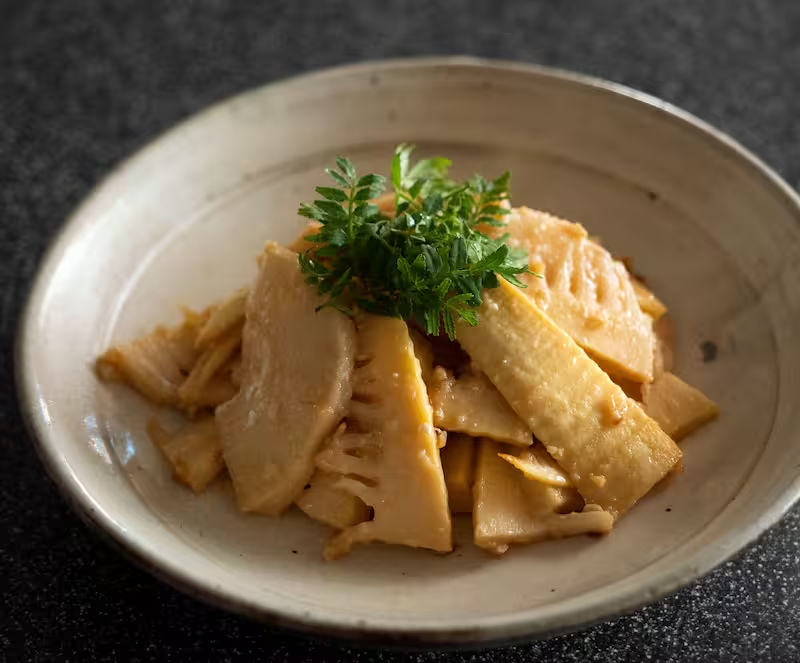
For the best experience, visit Kinsuitei, a well-known restaurant in Kyoto. Open since 1881, it sits beside a quiet, historic pond. Kinsuitei is famous for its full-course meals, with every dish featuring fresh, local bamboo shoots. This special menu is only available in spring, when the shoots are at their sweetest.
Fukuoka
Local izakayas and restaurants throughout the city feature takenoko prominently from March onward. Fukuoka’s hakata area has deep roots in chikuzen-ni culture, and seasonal takenoko appears in everything from set lunches to market stalls.
Setouchi / Hiroshima area
Spring farmers’ markets throughout the Setouchi coastal zone are among the best places to buy freshly harvested takenoko directly from producers at reasonable prices during March and April.
Niigata (mountain areas)
Nemagaritake wild foraging experiences are available through agricultural tourism operators in the mountainous parts of the prefecture during May and June. Local restaurants in mountain towns serve nemagaritake in miso soup and simple simmered dishes throughout the season.
A Seasonal Tradition
Eating takenoko is a wonderful way to enjoy the changing seasons with your family. It encourages people to slow down and appreciate nature’s simple gifts. Takenoko remains a favorite because of its long history and its tasty, healthy crunch. So I believe you should go and get one as it is a seasonal tradition only and you won’t regret buying it.
If you enjoy these shoots, you might also like dishes such as Chikuzenni, bamboo tempura, takenoko sashimi, clear bamboo soup, grilled shoots, or marinated bamboo.
References
- Nippon.com: Takenoko: Bamboo Shoots in Japanese Cuisine
- SHUNGATE: The Vegetable of Spring, The Bamboo Shoot
- The Setouchi Cookbook: Fresh Bamboo Shoots
- Highlighting Japan: Refined “Kyo” Bamboo Shoot Cuisine
Comments