




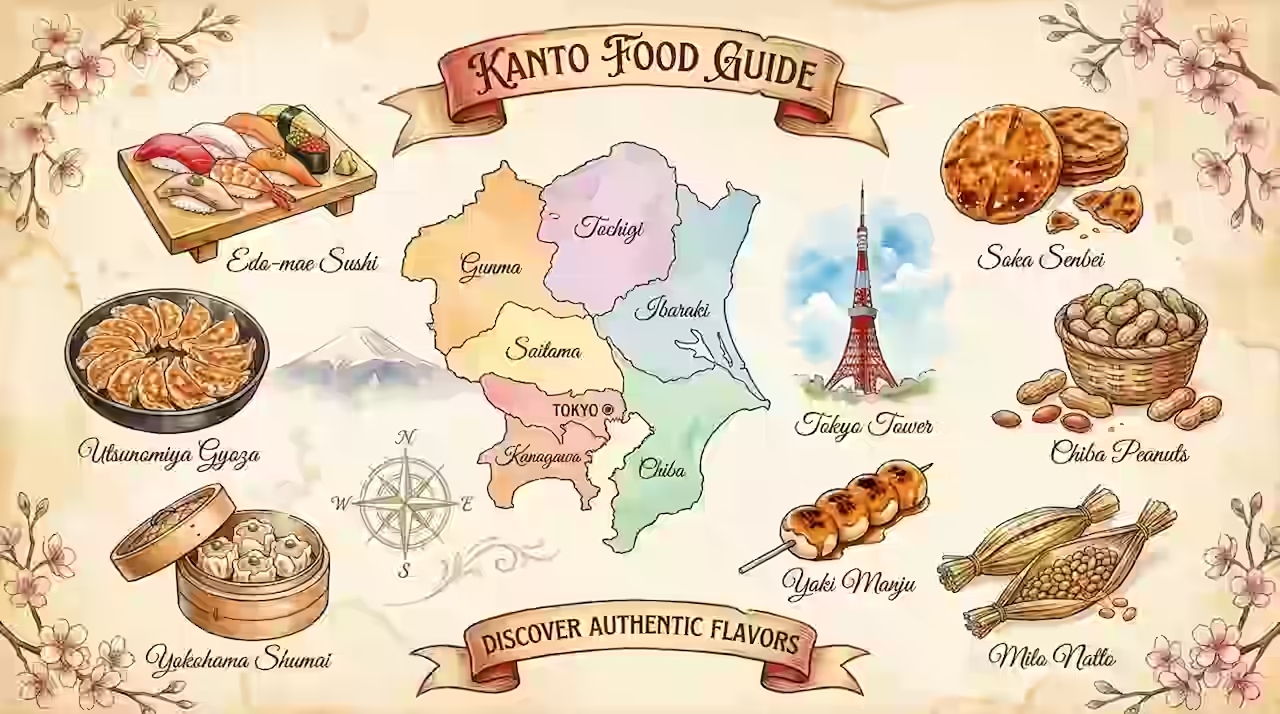
Kanto food ranges from Tokyo’s Edomae sushi, tempura, soba, and monjayaki to Yokohama’s iekei ramen, Utsunomiya’s gyoza, Ibaraki’s natto, and Gunma’s wheat-based noodle dishes. Shaped by Edo-period street food, Pacific seafood, and the agricultural food traditions of the inland Kanto Plain, the region offers far more than Tokyo cuisine alone. This guide introduces the essential dishes of Kanto’s seven prefectures, where to try them, typical prices, and the history behind them.
What Is Kanto Food?
Kanto food is the regional cuisine of Tokyo and the six surrounding prefectures: Kanagawa, Chiba, Saitama, Ibaraki, Tochigi, and Gunma. Tokyo’s traditional cooking is known for Edomae sushi and seafood preparation techniques, koikuchi soy sauce, Japan’s standard full-bodied, dark-colored soy sauce, and quick counter meals, while the other prefectures contribute dumplings, noodles, fermented foods, and coastal fish dishes. Rather than one single flavor, Kanto cuisine reflects three overlapping food cultures: old Edo street food, the international influence of port cities like Yokohama, and the wheat, vegetable, and farmhouse food traditions of the inland Kanto Plain.
Kanto Food at a Glance
- Region: Kanto (Eastern Japan)
- Prefectures: Tokyo, Kanagawa, Chiba, Saitama, Ibaraki, Tochigi, Gunma
- Main Cities: Tokyo, Yokohama, Utsunomiya, Mito, Kamakura
- Tokyo Specialties: Monjayaki, Tokyo Ramen, Tempura, Edomae Sushi
- Beyond Tokyo: Iekei Ramen (Kanagawa), Utsunomiya Gyoza (Tochigi), Soboro Natto (Ibaraki), Mizusawa Udon (Gunma)
- Common Seasonings: Koikuchi soy sauce, bonito dashi, miso, and regional variations by prefecture
- Food Culture Keyword: Edo-mae — Tokyo’s proud Edo-period culinary tradition
Must-Try Kanto Dishes
These dishes span all seven prefectures, from Edo traditions in Tokyo to regional specialties in the surrounding areas, and together they answer the question of what food Kanto is actually famous for.
Edomae Sushi (Tokyo)
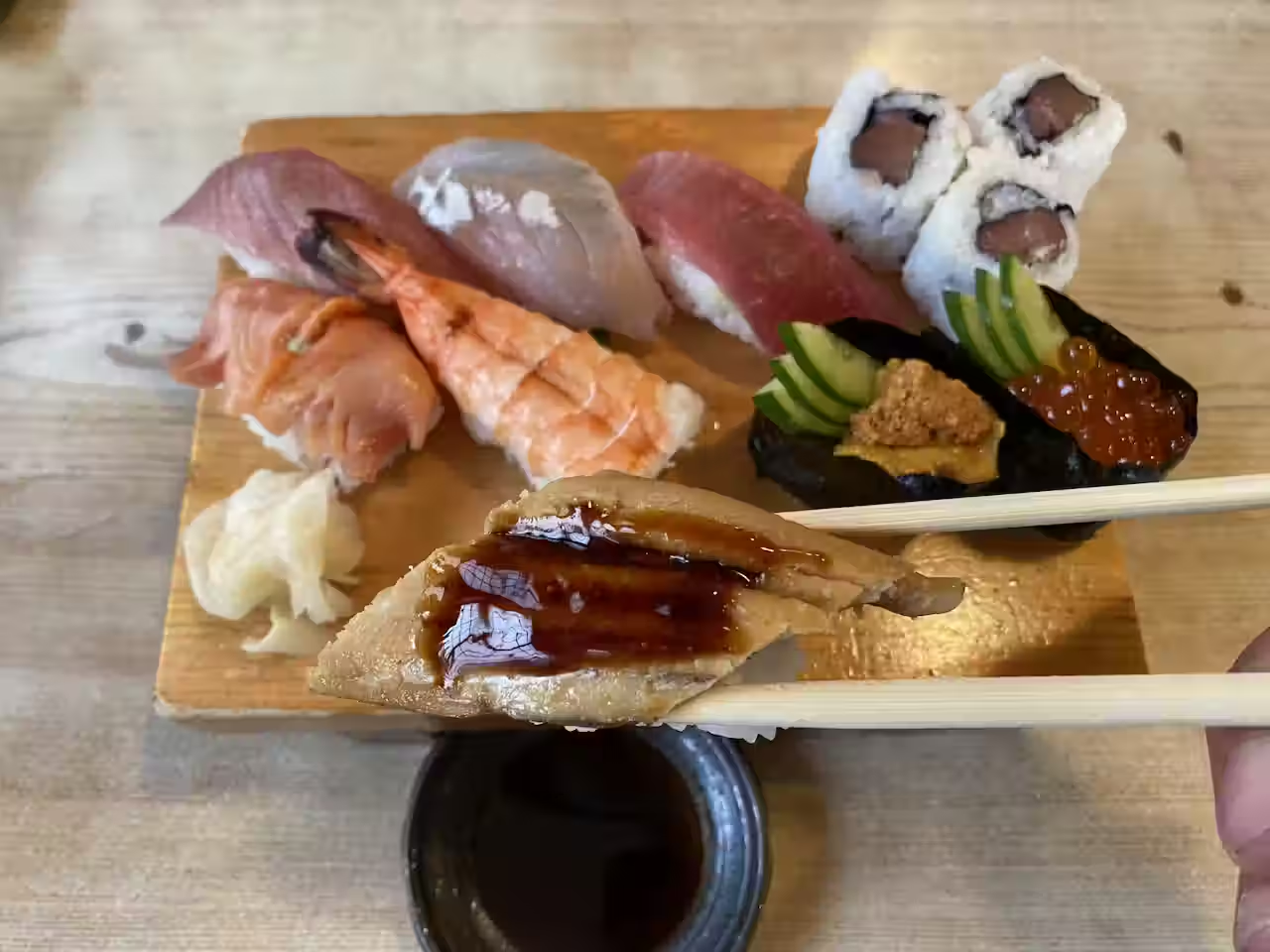
What it is: A Tokyo style of nigiri sushi using seafood used without long fermentation and prepared through techniques such as marinating, curing, simmering, or serving soon after the catch.
Why try it: It reflects the preservation techniques and fast-paced dining culture that shaped Edo-period Tokyo.
Where to eat it: Toyosu, Ginza, Nihonbashi, and neighborhood sushi counters across the city.
Typical price: ¥1,500–¥4,000 for a casual lunch set; ¥10,000–¥40,000+ for omakase.
Good to know: High-end counters usually require a reservation, sometimes weeks in advance. Learn more about Edomae sushi.
Iekei Ramen (Kanagawa)
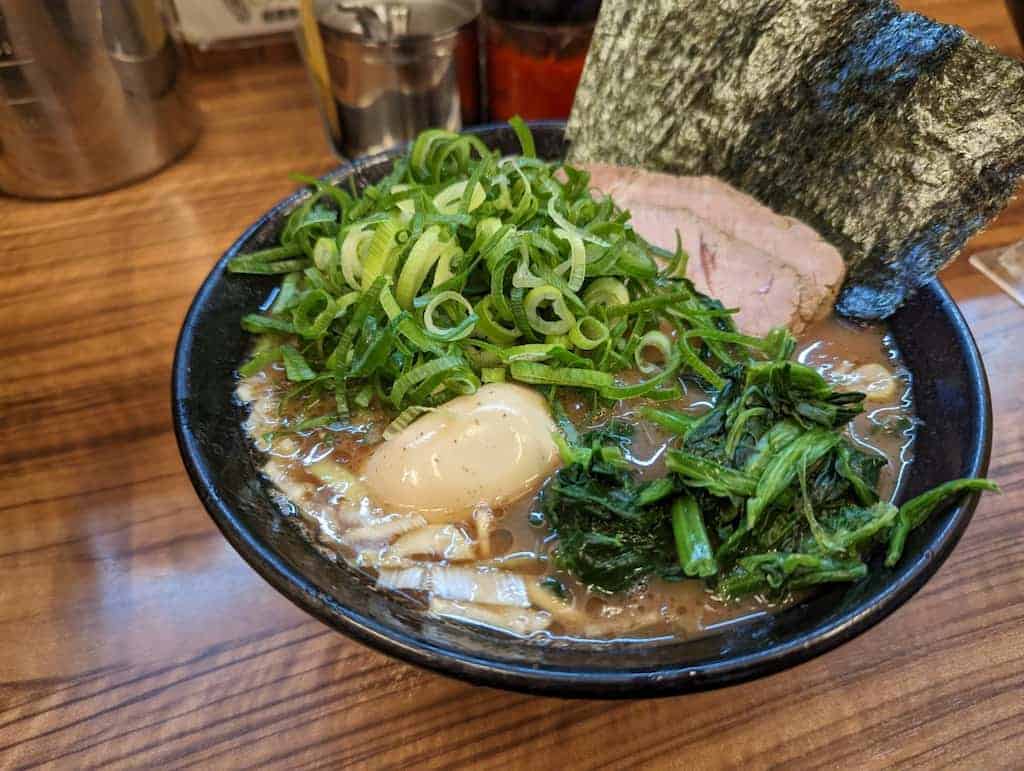
What it is: A Yokohama-born ramen style blending pork bone (tonkotsu) broth with a soy sauce tare, invented in 1974.
Why try it: It has inspired hundreds of shops across Japan, many of whose names end in “-ya” or include the character 家, reflecting the style’s “iekei” family lineage.
Where to eat it: Across Yokohama, especially around major stations and neighborhood shopping streets.
Typical price: ¥900–¥1,300 per bowl.
Good to know: You can usually choose noodle firmness, oil richness, and broth strength when ordering. See our iekei ramen guide.
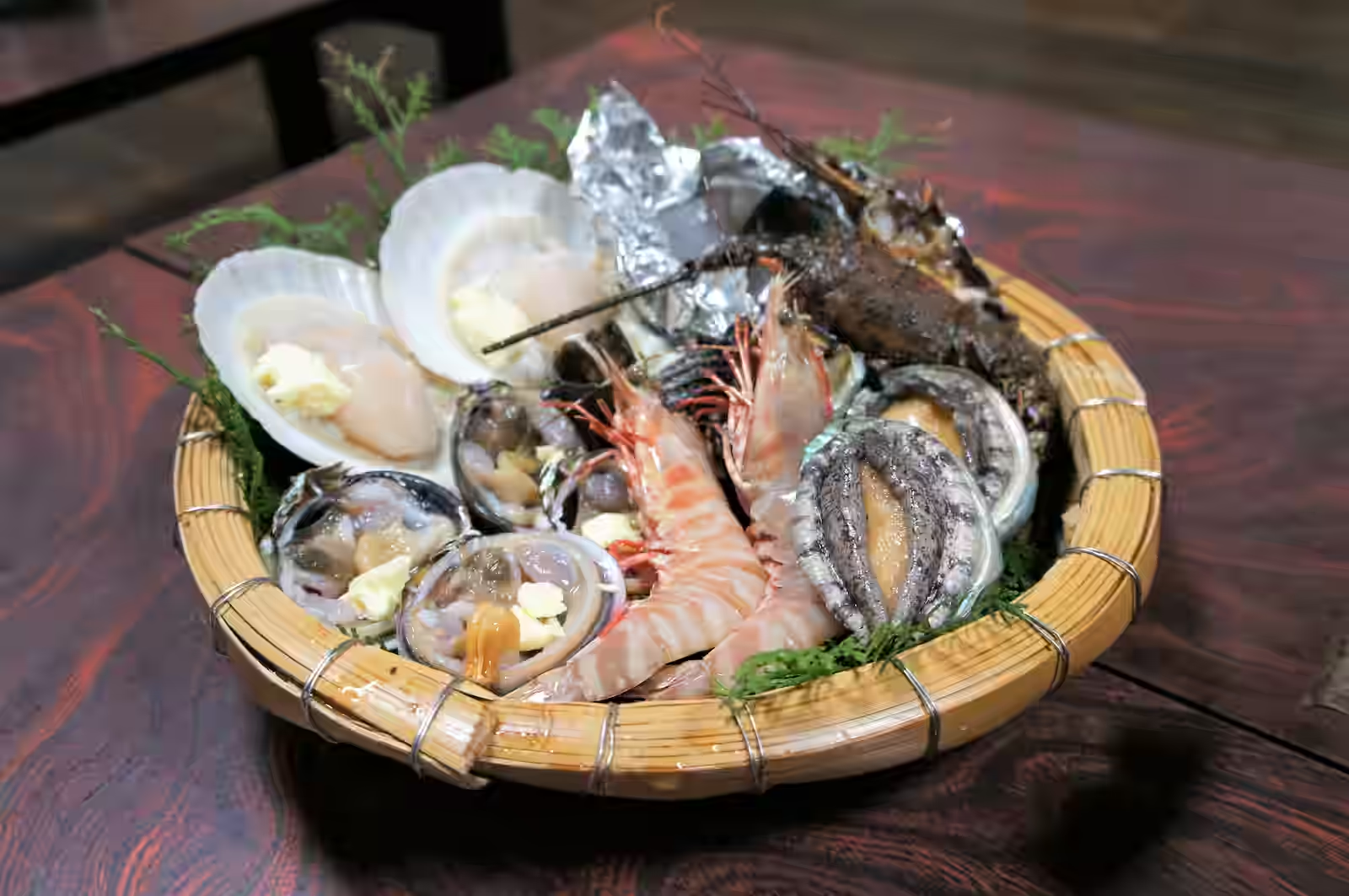
Namero (Chiba)
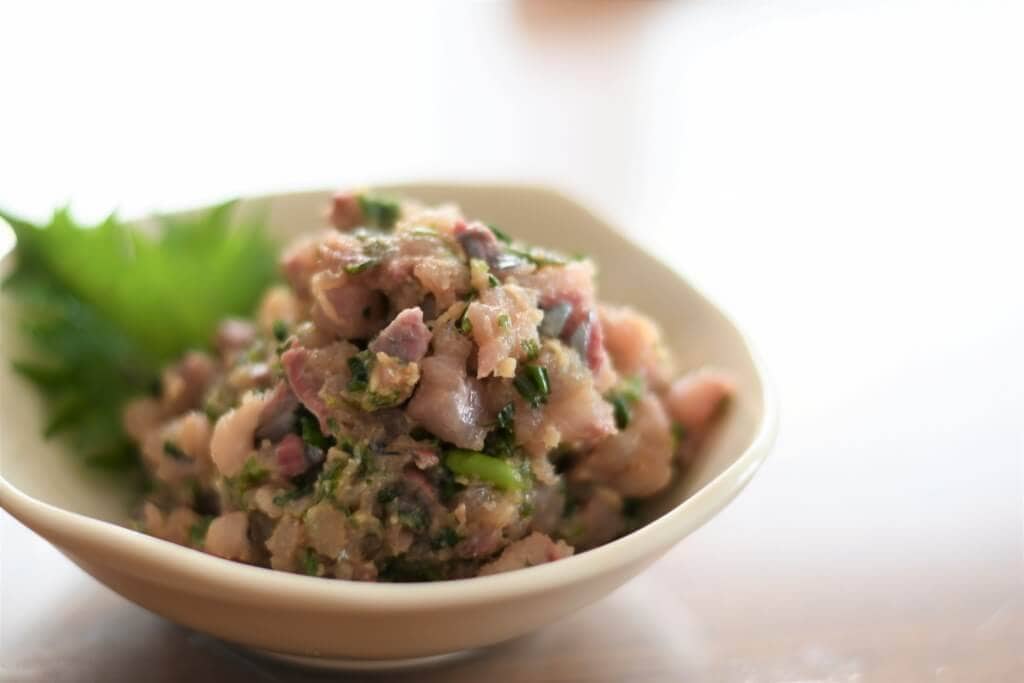
What it is: Fresh fish, typically horse mackerel, minced with miso, ginger, and scallions into a coarse, savory paste.
Why try it: It reflects the fishing-village ingenuity of Chiba’s Boso coastline.
Where to eat it: Coastal towns such as Katsuura and Choshi, often at small seafood izakaya.
Typical price: ¥600–¥1,200 per portion.
Good to know: Ask for san-ga-yaki if you’d prefer it grilled inside a scallop shell rather than served raw. More in our namero guide.
Musashino Udon (Saitama)
What it is: Thick, chewy udon noodles served separately from a hot, sweet-savory pork and vegetable dipping broth.
Why try it: It represents Saitama’s farming-region noodle culture, distinct from Tokyo’s soup-based noodle styles.
Where to eat it: Western Saitama, particularly around Kawagoe and Sayama.
Typical price: ¥800–¥1,300 per bowl.
Good to know: The noodles are meant to be dipped, not submerged, so don’t expect a traditional soup-style bowl.
Anko Nabe (Ibaraki)
What it is: A winter hot pot built around monkfish (anko), simmered with tofu, vegetables, and a miso or soy-based broth.
Why try it: It’s a coastal Ibaraki tradition tied closely to the winter monkfish season.
Where to eat it: Coastal Ibaraki towns and Mito-area restaurants, roughly November through March.
Typical price: ¥3,000–¥6,000 per person.
Good to know: Availability is seasonal, so confirm ahead of a winter visit.
Utsunomiya Gyoza (Tochigi)
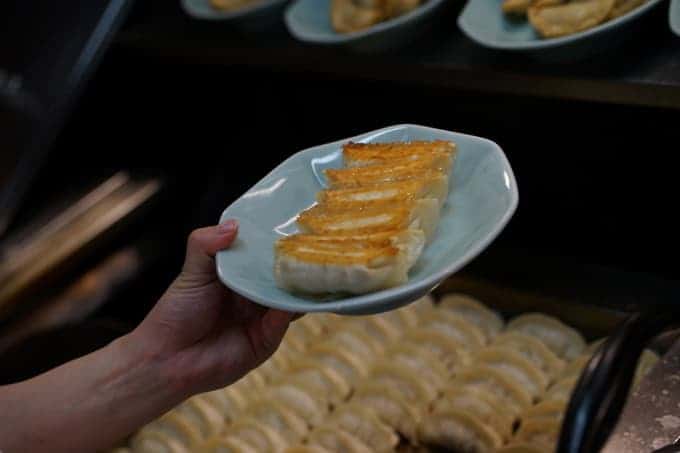
What it is: Pan-fried, boiled, or deep-fried dumplings filled with pork and vegetables.
Why try it: Utsunomiya is widely known as one of Japan’s leading gyoza cities, and many local residents eat gyoza several times a week.
Where to eat it: Gyoza Street in central Utsunomiya, plus restaurant clusters around JR Utsunomiya Station.
Typical price: ¥350–¥700 per plate of six.
Good to know: Most shops offer a simple vinegar and chili oil dip rather than heavier sauces. Read more about Utsunomiya gyoza.
Mizusawa Udon (Gunma)
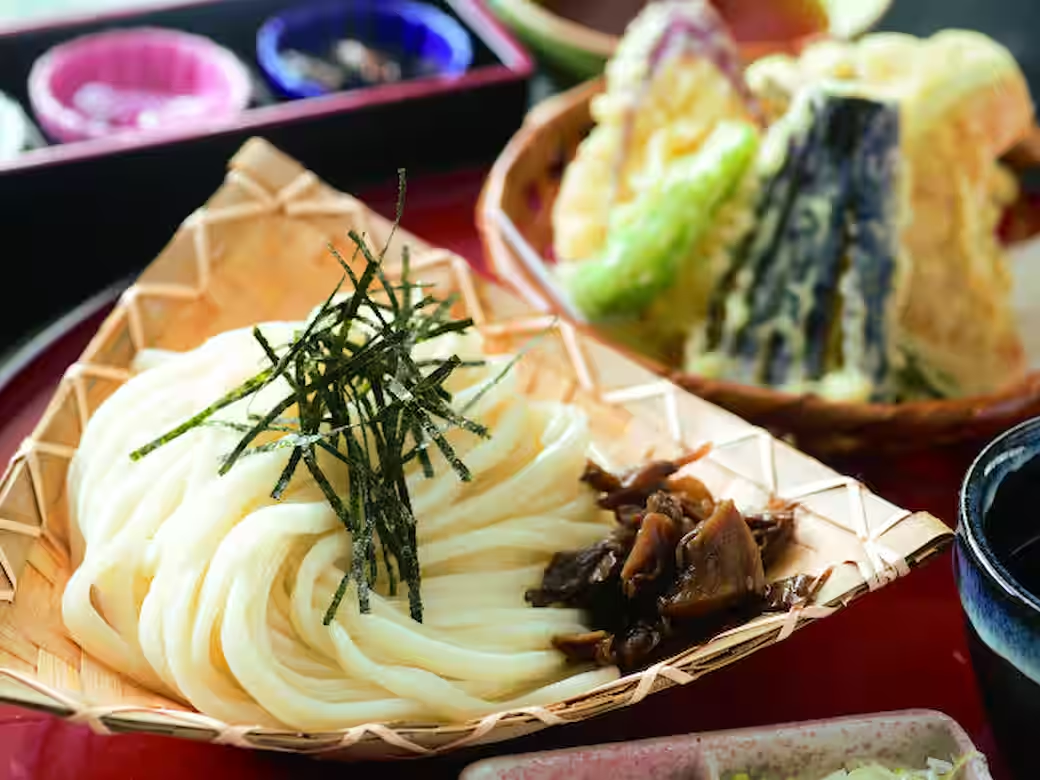
What it is: One of Japan’s “Three Great Udons,” made from just wheat flour, water, and salt, served cold with a soy or sesame dipping sauce.
Why try it: It carries a 400-year history tied to pilgrims visiting nearby Mizusawa Kannon temple.
Where to eat it: Mizusawa Udon Kaido near Ikaho Onsen in Gunma.
Typical price: ¥850–¥1,500 per bowl.
Good to know: Many shops are seasonal or close early, so an early lunch visit is safest. See our Mizusawa udon guide.
Tempura (Tokyo)
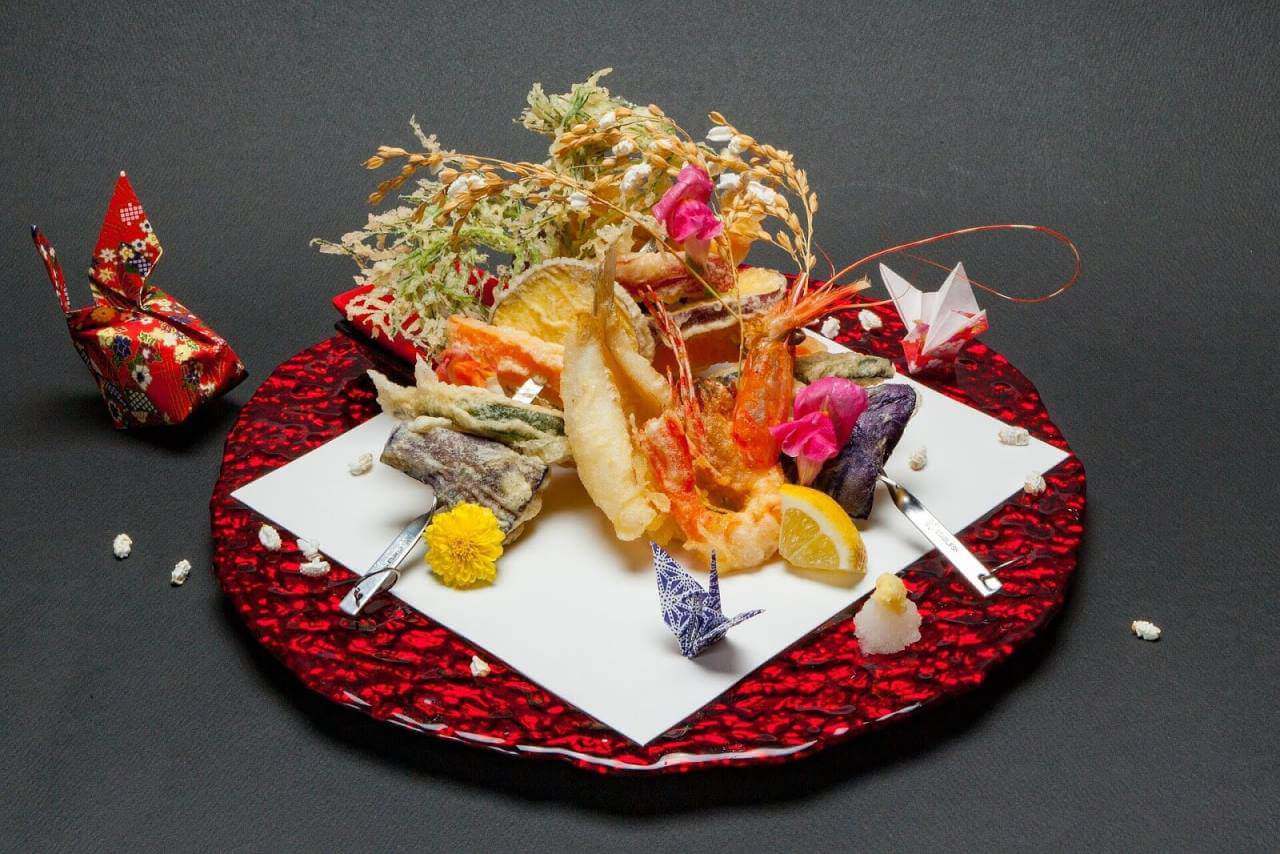
What it is: Battered, deep-fried seafood and vegetables, traditionally fried in sesame oil in the Edo style.
Why try it: The sesame oil gives Tokyo tempura a darker color and nuttier flavor than tempura found elsewhere in Japan.
Where to eat it: Asakusa, Ningyocho, and standalone tempura counters throughout central Tokyo.
Typical price: ¥1,200–¥3,000 for tendon or a casual lunch set; ¥8,000–¥25,000+ for a specialist counter course.
Good to know: Set lunches are often far cheaper than dinner courses at the same restaurant. Details in our tempura guide.
Monjayaki (Tokyo)
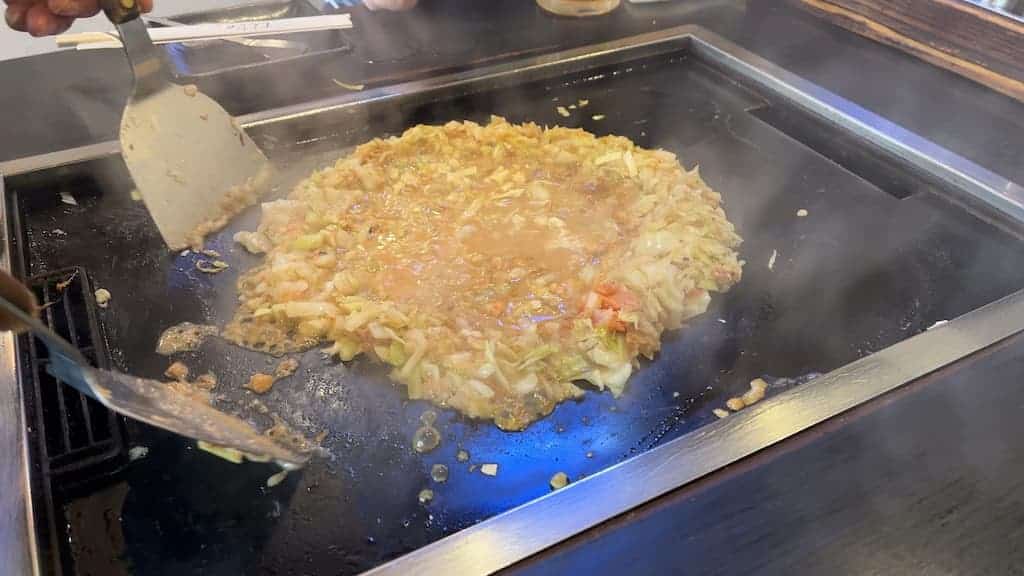
What it is: A savory, runny pan-fried batter mixed with cabbage, meat, and seafood, cooked at the table.
Why try it: It’s an interactive, casual meal that locals genuinely eat, not just a tourist novelty.
Where to eat it: Tsukishima Monja Street in Tokyo, home to dozens of dedicated shops.
Typical price: ¥1,000–¥2,000 per dish; around ¥2,000–¥4,000 per person for a fuller meal with drinks or side dishes.
Good to know: Staff usually help first-timers with the cooking and eating technique. More in our monjayaki guide.
Tokyo Ramen (Tokyo)
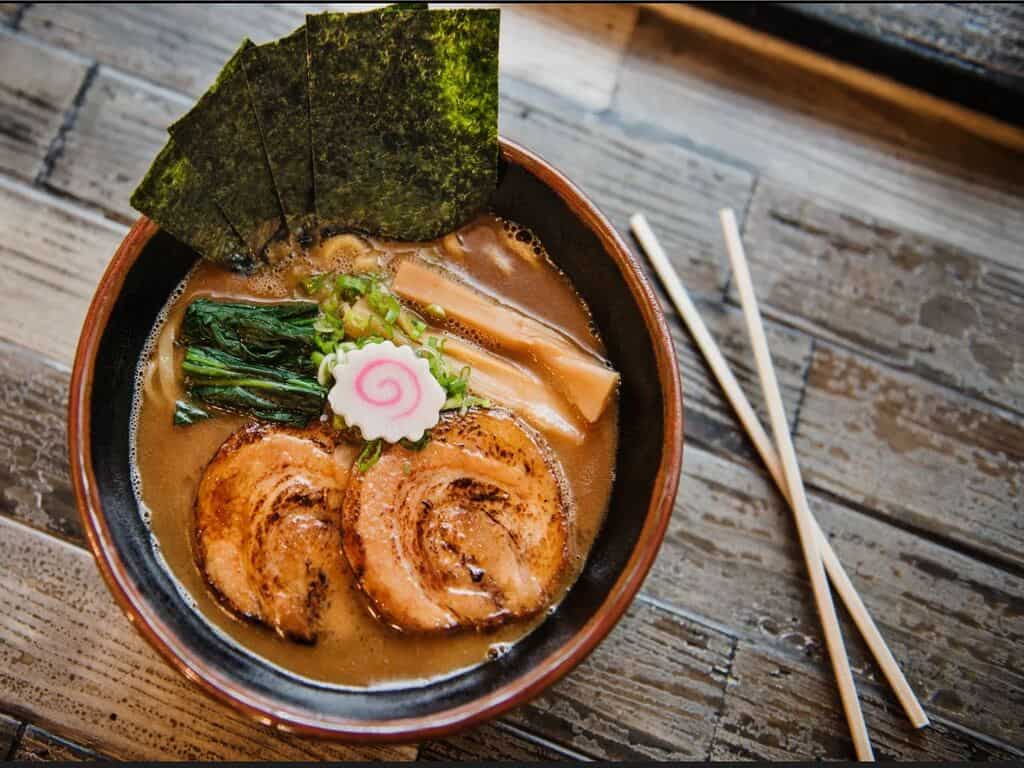
What it is: The classic Tokyo ramen style typically features a clear, soy sauce-seasoned broth, curly noodles, sliced pork, bamboo shoots, and scallions.
Why try it: It’s the ramen style most associated with Tokyo, dating back to the early twentieth century.
Where to eat it: Shinjuku, Ikebukuro, and around Tokyo Station.
Typical price: ¥800–¥1,200 per bowl.
Good to know: Most shops use ticket machines, so having small bills or coins ready helps. Full details in our Tokyo ramen guide.
Beyond these ten, Kanto has dozens more regional specialties, including sushi more broadly, chanko nabe, Sano ramen, Nikko yuba, Hitachi beef, and Fukagawa meshi, covered in more detail in our prefecture-by-prefecture guides below.
Kanto Food by Prefecture
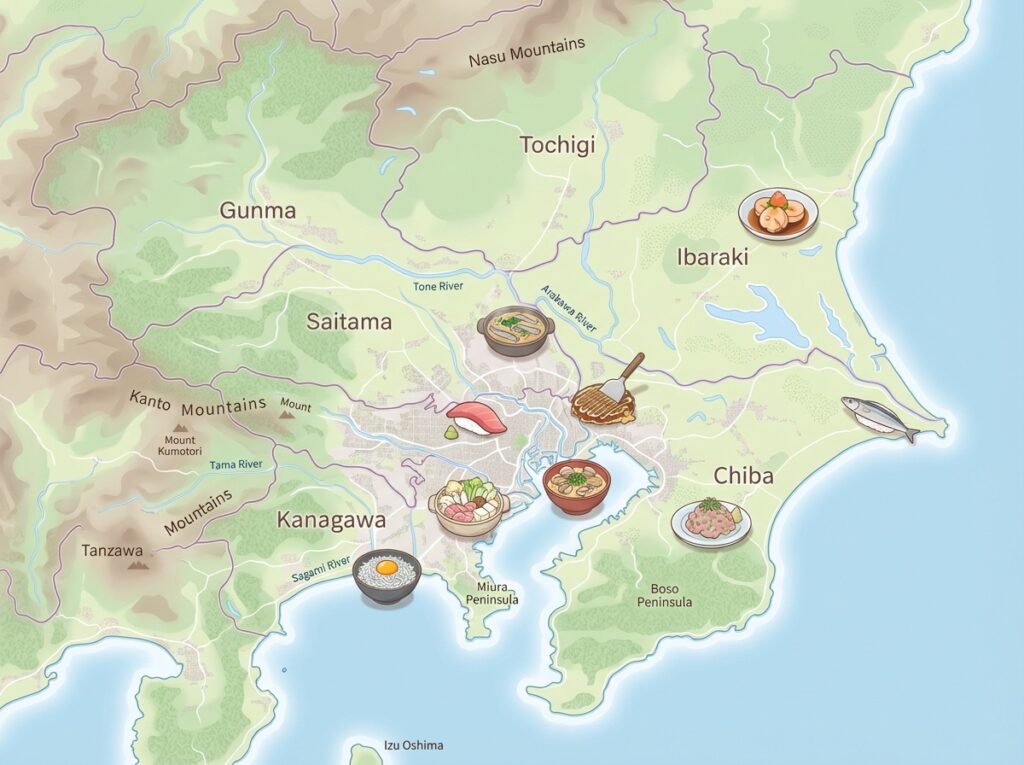
Tokyo gets most of the attention, but each of Kanto’s other six prefectures has its own distinct food identity worth knowing before you plan a trip.
Tokyo
Tokyo remains Japan’s culinary capital. The Michelin Guide Tokyo 2026 lists 160 starred restaurants, including 12 with three stars, more than any other city in the world. Several dishes now closely associated with Japanese cuisine overall, including Edomae nigiri sushi, Edo-style tempura, and Tokyo-style soba, were popularized or refined here during the Edo period. Ramen fans gravitate toward Shinjuku, Ikebukuro, and Tokyo Station, where dense clusters of shops compete for loyal regulars. See the full Tokyo food guide.
Kanagawa
Kanagawa sits just south of Tokyo and carries a food identity shaped heavily by its port history. Yokohama’s Chinatown, one of the largest in the world, blends steamed buns and dim sum with Japanese sensibilities. The city’s iekei ramen pairs rich pork bone broth with thick noodles and a hit of spinach. Yokosuka adds navy curry, a legacy of the Imperial Japanese Navy, while coastal towns serve fresh shirasu (whitebait) over rice and shumai bento remains a popular train-station staple. Full details in the Yokohama food guide.
Chiba
Chiba wraps around Tokyo Bay and quietly supplies much of the capital’s seafood and vegetables. Kogane aji, a golden-skinned horse mackerel, appears as sashimi in coastal restaurants, while namero and its grilled cousin san-ga-yaki reflect fishermen’s ingenuity across the prefecture. Futomaki-zushi, thick decorative sushi rolls, also has deep roots in Chiba’s farming communities, traditionally made for festivals and celebrations.
Saitama
Saitama’s food culture runs deeper than it gets credit for. Musashino udon, described above, comes from the prefecture’s western farming areas. Waraji katsudon, named for its sandal-like shape, stacks two oversized pork cutlets over rice at diner-style restaurants. Miso potato, a Chichibu specialty, wraps deep-fried potatoes in a sweet-savory miso glaze that locals treat as everyday comfort food.
Ibaraki
Ibaraki is practically synonymous with natto in Japan. Mito, the prefectural capital, has produced fermented soybeans for generations, and soboro natto mixes it with salted daikon for extra texture. The prefecture is also known for Hitachi beef, a premium wagyu brand, alongside anko nabe, described above. If natto’s smell has ever put you off, Ibaraki might change your mind.
Tochigi
Tochigi holds several distinct food identities worth knowing. Utsunomiya’s gyoza culture, described above, is the prefecture’s best-known export, while Sano, further north, has its own devoted ramen tradition built on a light soy broth and hand-crumpled noodles. Nikko’s temple towns serve delicate yuba, a soy-based tofu skin, and the prefecture also produces prized Tochiotome strawberries.
Gunma
Gunma sits further inland, away from Kanto’s coastal seafood culture, and its food reflects that. Wheat grows well here, which explains why noodle dishes dominate local menus. Mizusawa udon, described above, is the prefecture’s signature dish, while okkirikomi simmers thick noodles directly in a miso or soy broth with root vegetables. Sauce katsudon, a pork cutlet drizzled with a tangy Worcestershire-style sauce, is another regional favorite, along with konnyaku dishes made from the prefecture’s mountain-grown konjac root.
Typical Food Prices in Kanto
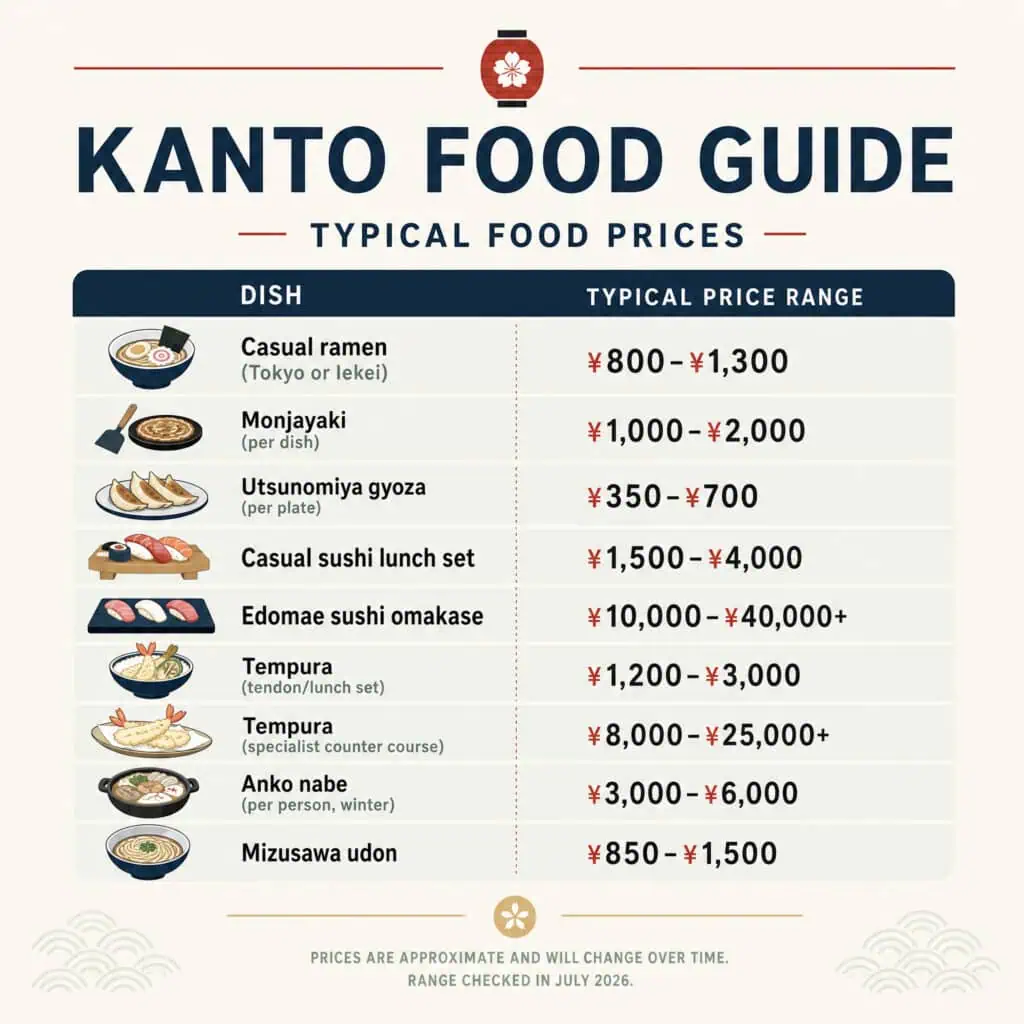
Prices vary by restaurant, season, and location, but this table gives a realistic starting point for budgeting a Kanto food trip.
| Dish | Typical Price Range |
|---|---|
| Casual ramen (Tokyo or Iekei) | ¥800–¥1,300 |
| Monjayaki (per dish) | ¥1,000–¥2,000 |
| Utsunomiya gyoza (per plate) | ¥350–¥700 |
| Casual sushi lunch set | ¥1,500–¥4,000 |
| Edomae sushi omakase | ¥10,000–¥40,000+ |
| Tempura (tendon/lunch set) | ¥1,200–¥3,000 |
| Tempura (specialist counter course) | ¥8,000–¥25,000+ |
| Anko nabe (per person, winter) | ¥3,000–¥6,000 |
| Mizusawa udon | ¥850–¥1,500 |
Prices are approximate and will change over time. Range checked in July 2026.
Best Food Cities and Areas in Kanto
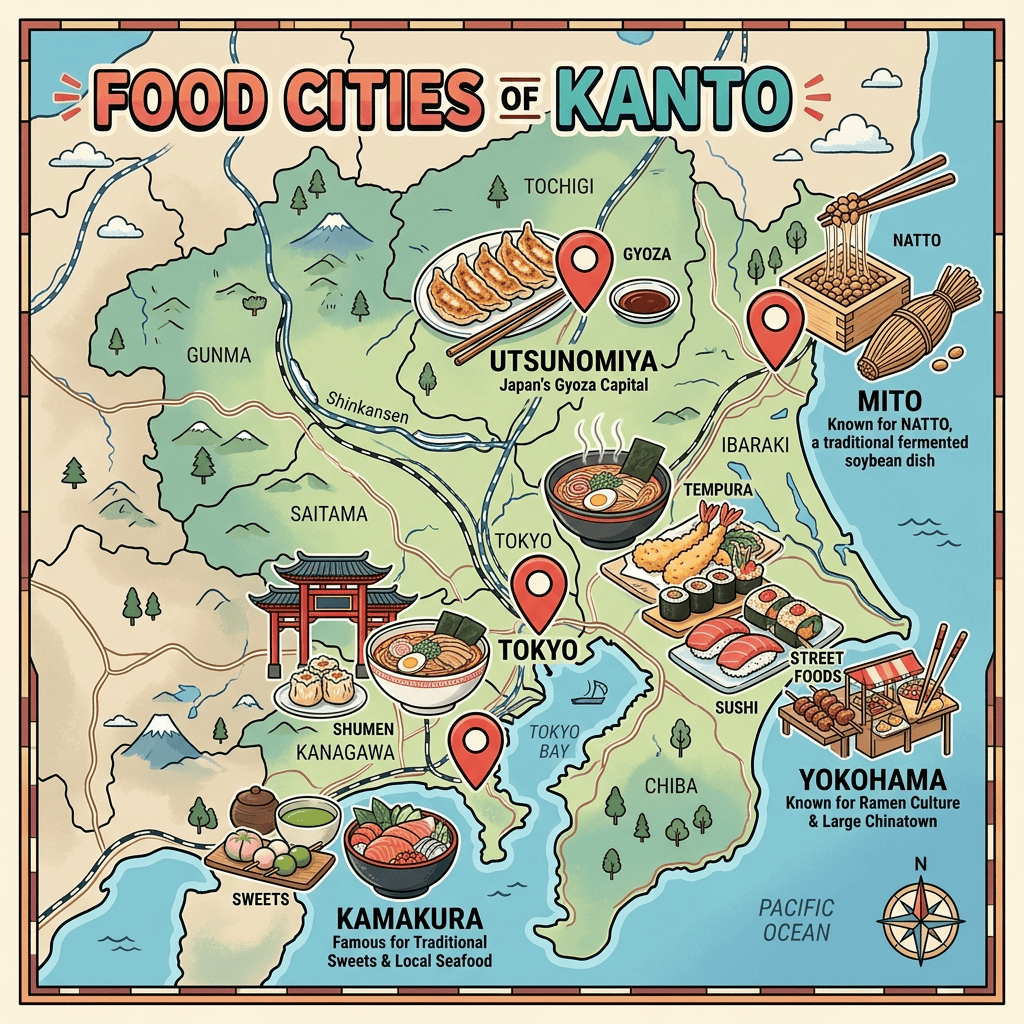
- Tsukishima, Tokyo: Known as Monja Street, lined with monjayaki restaurants side by side
- Tsukiji Outer Market, Tokyo: Great for seafood bowls, rolled omelets, and quick sushi bites
- Asakusa, Tokyo: Traditional sweets, tempura, and Edo-era snacks near Senso-ji Temple
- Yokohama Chinatown, Kanagawa: Steamed buns, dim sum, and iekei ramen shops
- Gyoza Street, central Utsunomiya: Dozens of gyoza specialty shops within walking distance
- Nikko, Tochigi: Yuba specialty restaurants near the historic shrine district
- Mizusawa, Gunma: A cluster of udon shops along Mizusawa Udon Kaido near Ikaho Onsen
Best Kanto Dish for Every Type of Traveler
With so many options across seven prefectures, it helps to know which dish fits your travel style. Here’s a quick editorial pick based on typical visitor priorities.
| Traveler Type | Recommended Dish | Why |
|---|---|---|
| First-time visitor | Edomae Sushi | Represents Tokyo’s most iconic food tradition in one sitting |
| Budget traveler | Utsunomiya Gyoza | A full, satisfying meal for well under ¥1,000 |
| Winter visitor | Anko Nabe | Warming hot pot only widely available November through March |
| Vegetarian traveler | Nikko Yuba | Yuba itself is soy-based, but broths and sauces may contain fish dashi, so confirm before ordering |
| Adventurous eater | Natto | Divides opinion, but eating it is a genuine local experience in Ibaraki |
| Noodle lover | Mizusawa Udon | One of Japan’s three most celebrated udon styles, with a 400-year history |
| Street food fan | Monjayaki | An interactive, cook-it-yourself experience unique to Tokyo |
What Makes Kanto Food Unique?
Bold, soy-forward, and built for a fast-moving city. Those qualities describe much of traditional Edo cooking, and they still influence Kanto food today.
Kanto cuisine developed during the Edo period, when Tokyo was still called Edo and had just become Japan’s political center. Rapid population growth created demand for fast, flavorful meals that vendors could prepare quickly. Street stalls answered that need with soba, tempura, and eventually sushi, all of which started as working-class fast food rather than fine dining.
Koikuchi soy sauce gives many Tokyo dishes their distinctive color and rich umami flavor, a habit that took hold during the Edo period and never really let go. Away from Tokyo, though, the picture looks different. Ibaraki leans on fermented soybeans, Gunma leans on wheat noodles, and Chiba leans on Pacific seafood. Kanto food isn’t one flavor. It’s several regional traditions that happen to share a border.
What Is the Difference Between Kanto and Kansai Food?
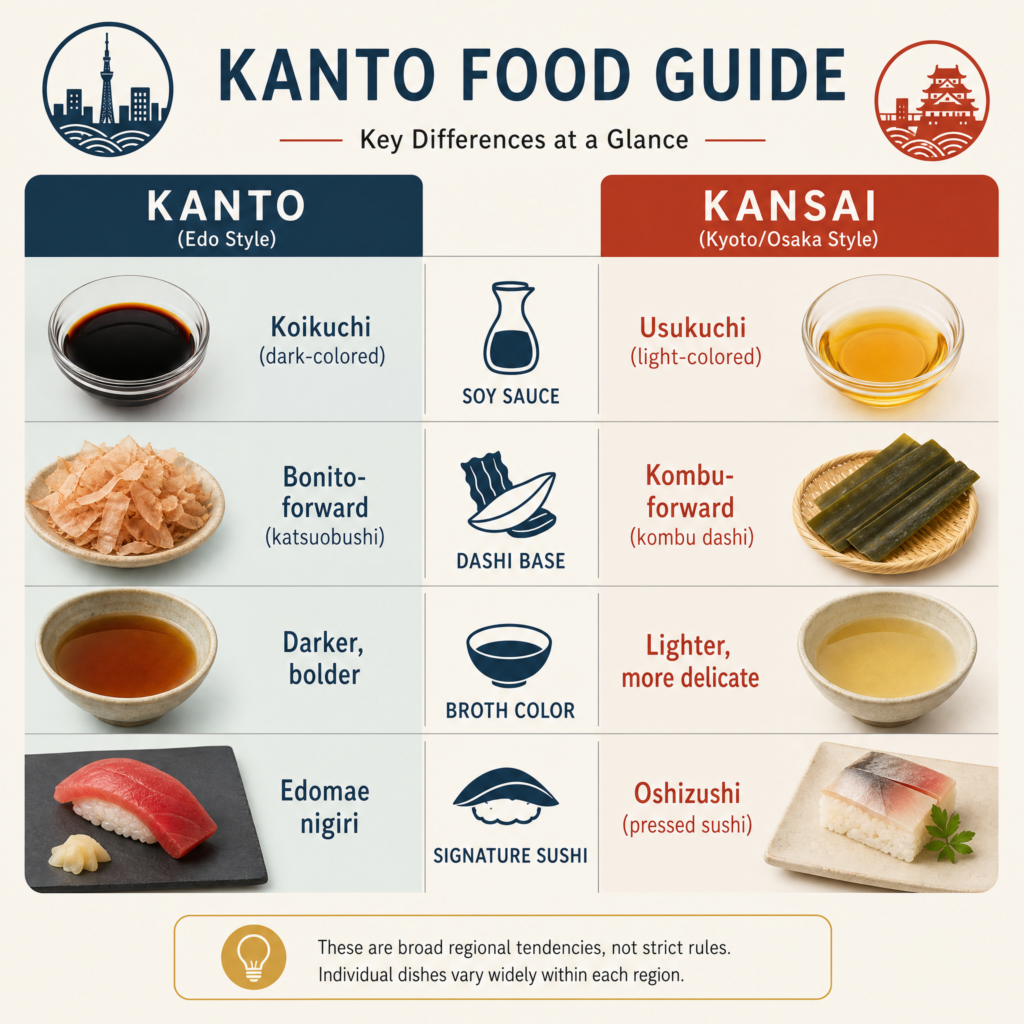
Kanto cooking generally uses darker broths, koikuchi soy sauce, and bonito-forward seasoning, while Kansai cooking is often associated with lighter-colored broths, kombu dashi, and usukuchi (light-colored) soy sauce. These are broad regional tendencies rather than strict rules, and individual dishes vary considerably within each region.
One detail worth noting: usukuchi soy sauce is lighter in color, not necessarily lower in salt. It often tastes just as salty as koikuchi, so “light soy sauce” describes appearance more than intensity. Water is sometimes cited as a factor too, since parts of Kanto tend to have slightly higher mineral content than Kyoto or Osaka, though Japanese water overall is generally soft by international standards. Trade routes, ingredient availability, and long-established cooking habits likely matter just as much as water chemistry.
| Feature | Kanto | Kansai |
|---|---|---|
| Soy sauce | Koikuchi (dark-colored) | Usukuchi (light-colored) |
| Dashi base | Bonito-forward (katsuobushi) | Kombu-forward |
| Broth color | Darker, bolder | Lighter, more delicate |
| Signature sushi | Edomae nigiri | Oshizushi (pressed sushi) |
Kanto Food History: From Edo to Today
Edo Becomes a Street-Food City
Kanto’s food story begins in the 1600s, once Edo became the seat of the shogunate. Workers poured into the city to build roads, castles, and canals, and feeding them quickly became a real challenge. Soba stalls appeared first, since buckwheat noodles cooked fast and traveled well. Tempura followed soon after, likely influenced by Portuguese frying techniques introduced roughly a century earlier and adapted by Edo’s street vendors.
The Rise of Edomae Sushi
Sushi changed most dramatically. A chef named Hanaya Yohei is widely credited with popularizing nigiri sushi near Ryogoku Bridge around the 1820s, though the exact inventor remains debated among food historians. Rather than relying on long fermentation, his style paired vinegared rice with seafood used without long fermentation, prepared through techniques such as marinating, curing, simmering, or serving soon after the catch. Fishermen brought their morning catch straight to market, and by noon it had often become someone’s lunch. By the late Edo period, soba, sushi, tempura, and grilled eel had all become some of the city’s best-known foods.
Yokohama and New Food Cultures
After the Meiji Restoration, Western and Chinese influence arrived through port cities like Yokohama. Curry rice and cutlets entered Japanese kitchens, and in the early twentieth century, Tokyo cooks began adapting Chinese-style wheat noodles into what eventually became shoyu ramen, combining them with soy sauce seasoning and Japanese-style broth. Restaurants in Asakusa were among those that helped establish this early Tokyo ramen style.
Postwar Ramen and Modern Dining
Ramen exploded in popularity during the 1950s and 60s, while regional specialties like Yokohama’s iekei ramen and Utsunomiya’s gyoza culture developed their own devoted followings later in the century. Kanto never really stopped evolving, and between Michelin-starred dining and neighborhood ramen counters, it hasn’t slowed down since.
Popular Ingredients in Kanto Cuisine
A handful of ingredients define different corners of Kanto’s kitchens, and they vary more by prefecture than people expect.
- Koikuchi soy sauce: The seasoning behind Tokyo ramen broth, sushi, and dipping sauces
- Katsuobushi (dried bonito flakes): Used for dashi, giving Tokyo-area broths a smoky, robust base
- Fresh seafood from Tokyo Bay and the Pacific coast: Central to sushi, namero, and kogane aji
- Natto: Fermented soybeans, especially associated with Mito in Ibaraki
- Wheat: Grown across Saitama and Gunma, forming the base of regional udon styles
- Strawberries: Tochigi’s Tochiotome variety ranks among Japan’s most prized
Best Seasons for Kanto Food
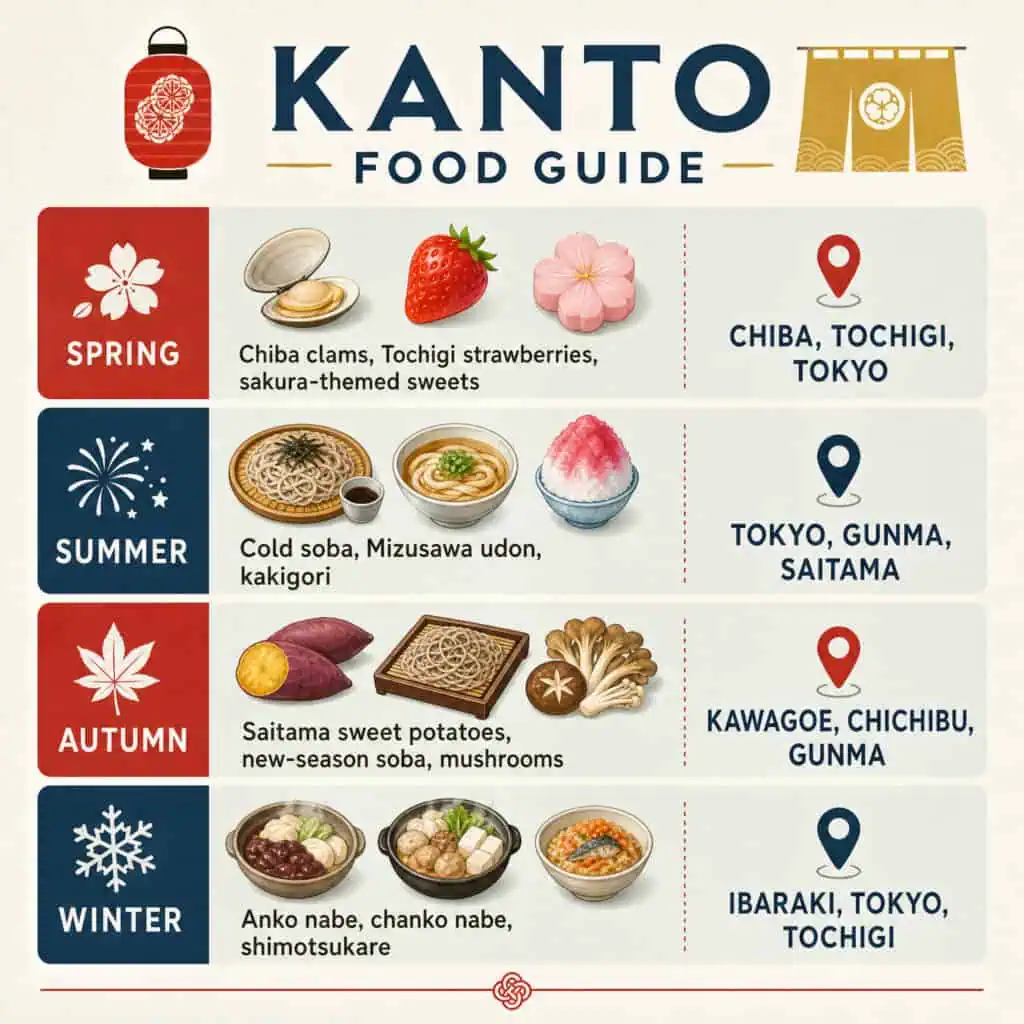
| Season | Kanto Foods to Look For | Best Areas |
|---|---|---|
| Spring | Chiba clams, Tochigi strawberries, sakura-themed sweets | Chiba, Tochigi, Tokyo |
| Summer | Cold soba, Mizusawa udon, kakigori | Tokyo, Gunma, Saitama |
| Autumn | Saitama sweet potatoes, new-season soba, mushrooms | Kawagoe, Chichibu, Gunma |
| Winter | Anko nabe, chanko nabe, shimotsukare | Ibaraki, Tokyo, Tochigi |
Vegetarian-Friendly Kanto Foods
Several Kanto specialties can be vegetarian-friendly, but preparation matters because fish-based dashi, bonito flakes, gelatin, and shared frying oil are common. Always confirm ingredients directly with restaurant staff before ordering.
- Sukeroku sushi: A combination of inari-zushi and kanpyo maki that is often vegetarian-friendly, although the seasoning broth may contain fish dashi
- Nikko yuba: The tofu skin itself is soy-based, but dishes served with yuba, such as simmered or noodle preparations, may use fish-based dashi
- Miso potato: Saitama’s fried potato snack, though some shops use fish-based dashi in the glaze, so it’s worth asking
- Zaru soba: Cold buckwheat noodles, though the dipping sauce often contains bonito dashi
Explore Other Japanese Food Regions
- Hokkaido Food Guide – Discover seafood, ramen, and dairy specialties from Japan’s northern island.
- Tohoku Food Guide – Discover hearty winter dishes and regional specialties from northern Honshu.
- Chubu Food Guide – Discover Nagoya meshi, Kanazawa food, and the diverse cuisine of central Japan.
- Kansai Food Guide – Taste iconic dishes like takoyaki, kaiseki, and Osaka street food.
- Kyushu Food Guide – Enjoy rich ramen, fresh seafood, and southern Japanese specialties.
- Shikoku Food Guide – Discover Sanuki udon, katsuo no tataki, and island cuisine from Shikoku.
- Chugoku Food Guide – Explore Hiroshima okonomiyaki, fugu, and the diverse cuisine of western Honshu.
Kanto’s food story keeps writing itself, one street stall and ramen shop at a time. Whether you’re chasing centuries-old sushi traditions in Tokyo or a bowl of gyoza in Utsunomiya, this region rewards curiosity across all seven prefectures.
Ready to dig deeper? Explore More Kanto Foods and find your next favorite dish.
Kanto Food Guide FAQ
What food is Kanto famous for?
Kanto is famous for Edomae sushi, tempura, and monjayaki in Tokyo, plus Utsunomiya gyoza, iekei ramen from Yokohama, and Ibaraki natto. Most of these dishes reflect either Edo-period street food or a specific prefecture’s local ingredients.
Which prefectures are part of the Kanto region?
The Kanto region consists of Tokyo, Kanagawa, Chiba, Saitama, Ibaraki, Tochigi, and Gunma. Each prefecture has its own regional dishes and ingredients, so a Kanto food trip can look very different depending on which prefectures you visit.
What is the difference between Kanto and Kansai food?
Kanto cooking generally favors dark-colored soy sauce and bonito-forward dashi, while Kansai cooking favors light-colored soy sauce and kombu dashi. These are broad tendencies, not fixed rules, and plenty of exceptions exist on both sides.
Is Kanto food expensive for tourists?
Casual meals like ramen or gyoza usually cost under ¥1,500 per person. High-end sushi omakase, on the other hand, can run well beyond ¥10,000 depending on the shop. Street food and standing bars offer the cheapest way to try several dishes in one day.
Do I need a reservation to eat Kanto specialties?
Casual shops serving ramen, gyoza, or monjayaki rarely require reservations. High-end sushi counters and kaiseki restaurants, however, often need booking weeks in advance, so it helps to plan ahead for those.
Is Kanto food vegetarian-friendly?
Some Kanto foods, such as plain yuba and certain vegetable dishes, can be vegetarian-friendly. However, fish-based dashi, bonito flakes, gelatin, and shared cooking oil are common, so travelers should confirm ingredients directly with the restaurant.
What is the easiest Kanto food day trip from Tokyo?
Yokohama is the easiest option for iekei ramen, Chinatown food, and shumai. Utsunomiya is another convenient choice for gyoza, while Kawagoe offers sweet potatoes and traditional snacks in a historic setting.
References
- GO TOKYO – Official Tokyo Travel Guide (Accessed July 2026)
- Kanagawa Prefecture Tourism – Travel and Food Information (Accessed July 2026)
- Yokohama Official Visitors’ Guide (Accessed July 2026)
- Saitama Prefecture Tourism Information (Accessed July 2026)
- Chiba Prefecture Tourism Information (Accessed July 2026)
- Tochigi Prefecture Travel Guide (Accessed July 2026)
- Ibaraki Prefecture Tourism Information (Accessed July 2026)
- Gunma Prefecture Tourism Information (Accessed July 2026)
- Gunma Official Tourist Guide – Mizusawa Udon (Accessed July 2026)
- Japan National Tourism Organization – Ibaraki’s Local Flavours (Accessed July 2026)
- Japan National Tourism Organization – Saitama’s Local Flavours (Accessed July 2026)
- Kikkoman Food Forum – Ibaraki Anko-nabe (Accessed July 2026)
- University of Kansas Libraries – Food and Dining Culture in Edo Period Japan (Accessed July 2026)
- Ministry of Agriculture, Forestry and Fisheries of Japan – Edo Tempura (Accessed July 2026)
- Michelin Guide Tokyo 2026 – Stars Reveal (Accessed July 2026)
- Mizkan Sushi Lab – Edo’s Sushi Culture and Hanaya Yohei (Accessed July 2026)
- Ninben – Differences Between Kanto and Kansai Dashi (Accessed July 2026)
- Visit Nikko – Yuba: Nikko’s Local Delicacy (Accessed July 2026)
- Utsunomiya City – Gyoza City Promotion (Accessed July 2026)
- Japan National Tourism Organization – Gyoza Street, Utsunomiya (Accessed July 2026)
Related Articles
- Edomae Sushi (Surveyed: July 2026)
- Tokyo Ramen (Surveyed: July 2026)
- Tempura (Surveyed: July 2026)
- Monjayaki (Surveyed: July 2026)
- Iekei Ramen (Surveyed: July 2026)
- Namero (Surveyed: July 2026)
- Utsunomiya Gyoza (Surveyed: July 2026)
- Sano Ramen (Surveyed: July 2026)
- Nikko Yuba (Surveyed: July 2026)
- Hitachi Beef (Surveyed: July 2026)
- Mizusawa Udon (Surveyed: July 2026)
- What to Eat in Yokohama (Surveyed: July 2026)
- Kansai Food Guide (Surveyed: July 2026)