'/%3E%3Cpath%20fill='%23b2b2b2'%20d='M241%20382q0%2016%2017%2026%2017%2011%2042%2011t42-11q16-11%2017-26V269H241'/%3E%3Cpath%20fill='%239f7e00'%20d='M241%20379q0%2014%208%2023%209%209%2021%209%2014%200%2021-9%209-9%209-23V269h-59'/%3E%3Cpath%20d='M241%20339v-70h59v110q0%2014-9%2023l-6%205v-68h-15v72q-8%200-14-4v-68zm59%2040c0%2022%2015%2032%2029%2032%2021%200%2030-18%2030-32v-40h-59'/%3E%3Cpath%20fill='%239f7e00'%20d='M266%20277v5h2v12h-3v-5h2v-5h-9v5h2v5h-4v9h3v18h-5v10h34v-10h-5v-18h3v-9h-4v-5h2v-5h-9v5h2v5h-3v-12h2v-5zm42%20101q0%2010%206%2017%206%206%2015%207%2010-1%2016-7%206-7%206-17v-29h-43'/%3E%3Ccircle%20fill='%230044ad'%20cx='329.5'%20cy='372'%20r='6'/%3E%3Cellipse%20fill='%230044ad'%20cx='300'%20cy='340'%20rx='16'%20ry='21'/%3E%3C/svg%3E)


'%3E%3Cpath%20stroke='%23000'%20stroke-width='4'%20d='m-35-37-13%2020m5%203%2013-20m5%203-13%2020m63%2042%206-9m1-2%206-9m5%203-6%209m-1%202-6%209m5%203%206-9m1-2%206-9m-96%200%2013%2020m5-3-6-9m-1-2-6-9m5-3%2013%2020m63-42-6-9m-1-2-6-9m5-3%2013%2020m5-3-6-9m-1-2-6-9'/%3E%3Ccircle%20r='24'%20fill='%23cd2e3a'/%3E%3Cpath%20fill='%230047a0'%20d='M0%200a12%2012%200%201%201%2020%2013%2024%2024%200%201%201-40-26A12%2012%200%201%200%200%200'/%3E%3C/g%3E%3C/svg%3E)



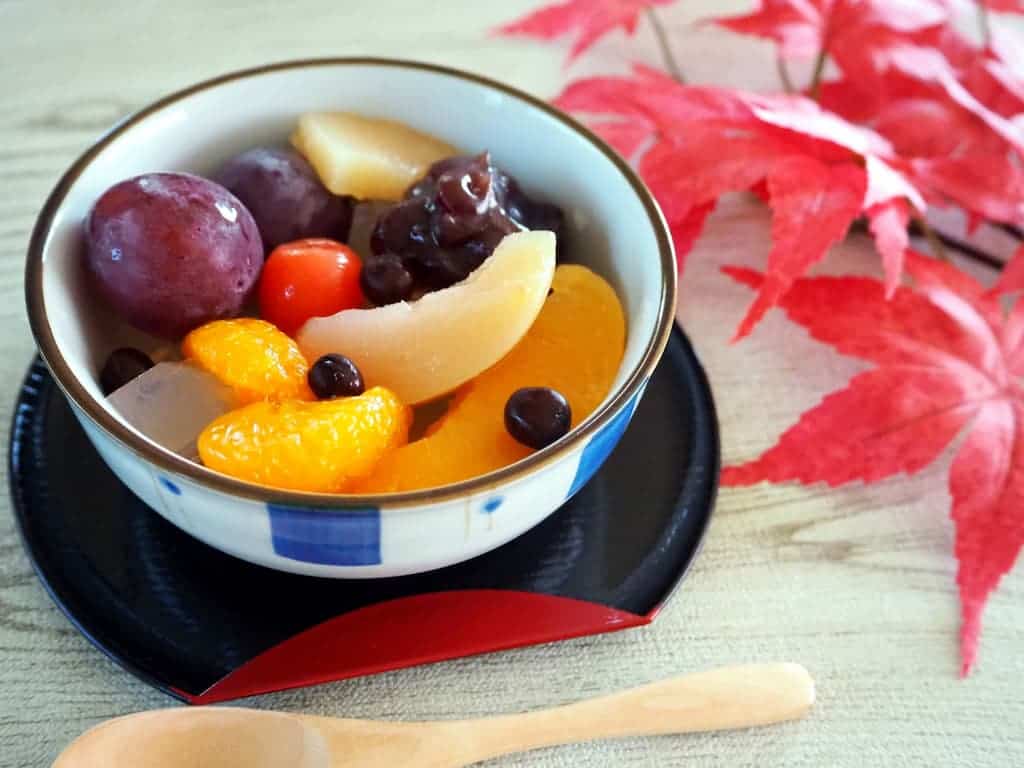
Anmitsu is a Japanese traditional dessert made with kanten jelly, sweet red bean paste, fruit, shiratama dango, and kuromitsu syrup. It is usually served chilled, so many people enjoy it during summer. The dessert is popular in traditional cafés, wagashi shops, and department-store restaurants across Japan.
Today, we introduce anmitsu, a traditional Japanese dessert often enjoyed on hot summer days. It looks simple in the bowl, yet every spoonful mixes several textures at once.
- What it is: chilled kanten jelly with anko, fruit, and black sugar syrup.
- Key difference: mitsumame becomes anmitsu once you add red bean paste.
- Where to try it: old-style cafés in Asakusa, Ueno, and Ginza.
Anmitsu at a Glance
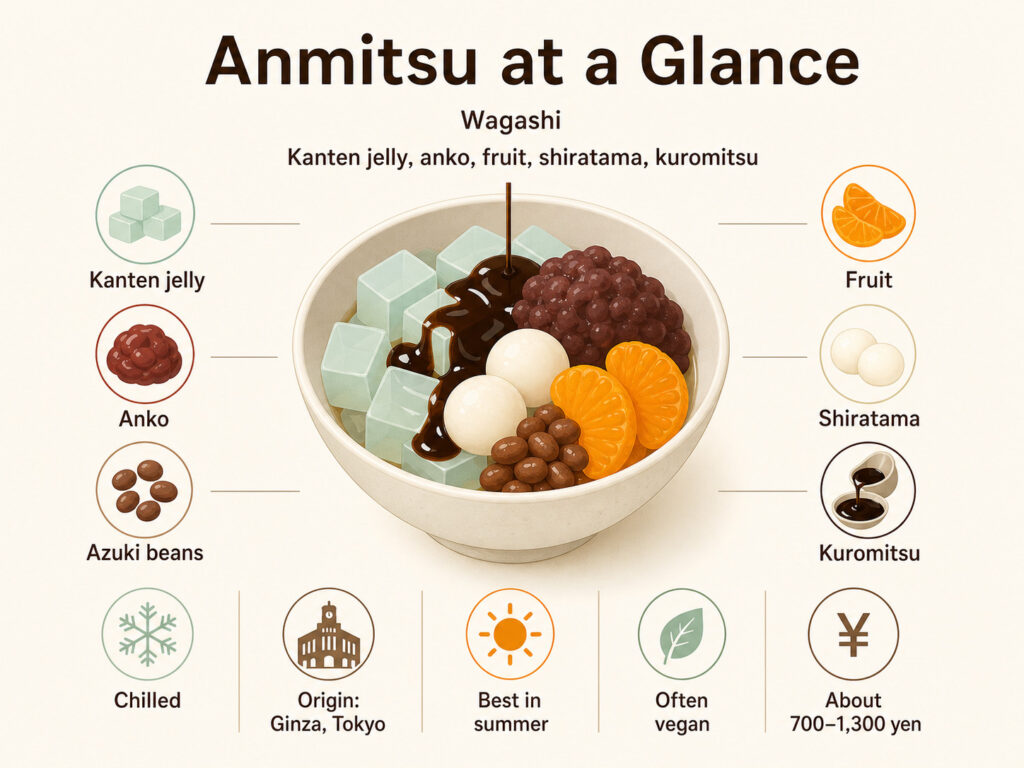
| Type | Wagashi, a traditional Japanese sweet |
| Core ingredients | Kanten jelly, anko, fruit, shiratama dango, kuromitsu |
| Served | Chilled, usually in a small bowl |
| Origin | Ginza, Tokyo, around 1930 |
| Best season | Summer, though shops serve it year-round |
| Price | About 700 to 1,300 yen at a café (July 2026) |
| Vegan? | Often yes, but cream and ice cream versions are not |
What Is Anmitsu?
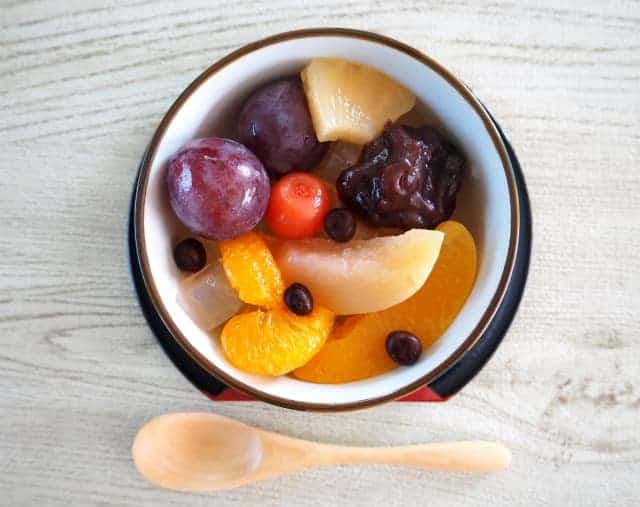
Anmitsu (あんみつ) is a chilled dessert built on cubes of kanten jelly. Cooks top the jelly with sweet red bean paste, fruit, and small rice-flour dumplings. A jug of kuromitsu, or black sugar syrup, arrives alongside.
The dish belongs to the wider family of traditional Japanese sweets. Its closest relative is mitsumame, and the two look almost identical. In other words, anmitsu is a variation of mitsumame with sweet red bean paste.
- Kanten jelly: firm cubes made from seaweed, with almost no flavor of their own.
- Anko: sweet red bean paste, usually smooth koshian.
- Fruit: mikan, peach, cherry, kiwi, or pineapple.
- Shiratama dango: chewy dumplings made from glutinous rice flour.
- Kuromitsu: dark syrup made from Japanese black sugar, often from Okinawa, Amami, or Tanegashima.
Mitsumame (みつまめ) combines kanten, fruit, gyuhi, and shiratama dumplings. It began as a summer confection and still appears as a seasonal word in haiku. People now eat mitsumame throughout the year.
What Does Anmitsu Taste Like?
Each ingredient has a different taste. Together, they create a refreshing and balanced dessert. The red bean paste adds gentle sweetness to the dessert. The light taste of kanten jelly and dumplings balances the sweetness.
Texture carries the experience. Kanten snaps cleanly between your teeth, while shiratama turns soft and chewy. Kuromitsu tastes deeper than plain sugar, with a faint smoky edge. Sour fruit like kiwi or pineapple cuts through the sweetness, and I will admit I prefer those bowls. Sweeter fruit, such as banana, blends into the anko instead.
Key Ingredients of Anmitsu
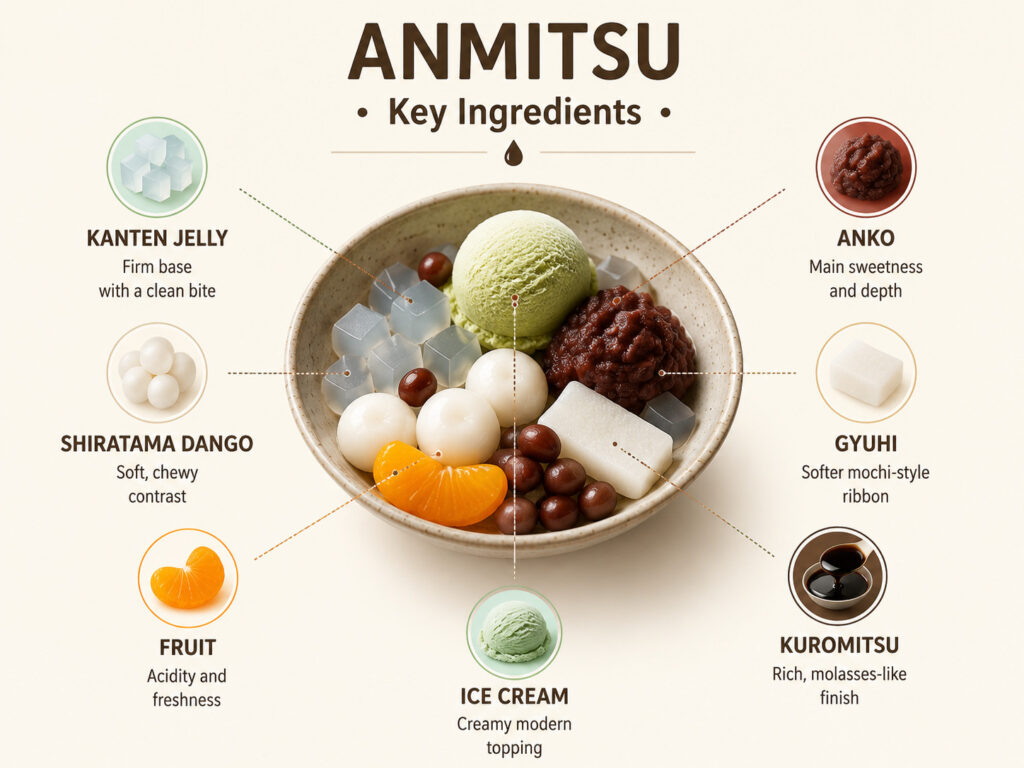
The list is short, yet each part plays a clear role. Shops vary the details freely, so treat this as a starting point.
| Ingredient | Role in the bowl | Substitute or tip |
|---|---|---|
| Kanten jelly | Firm base with a clean bite | Agar powder works; gelatin sets too soft |
| Anko (red bean paste) | Main sweetness and depth | Canned anko saves hours of cooking |
| Shiratama dango | Soft, chewy contrast | Shiratamako flour plus water only |
| Gyuhi | Softer mochi-style ribbon | Often skipped at home |
| Fruit | Acidity and freshness | Canned mikan for fresh citrus |
| Kuromitsu | Rich, molasses-like finish | Brown sugar syrup as a close swap |
| Ice cream | Creamy modern topping | Matcha or vanilla both suit it |
Anmitsu vs Mitsumame
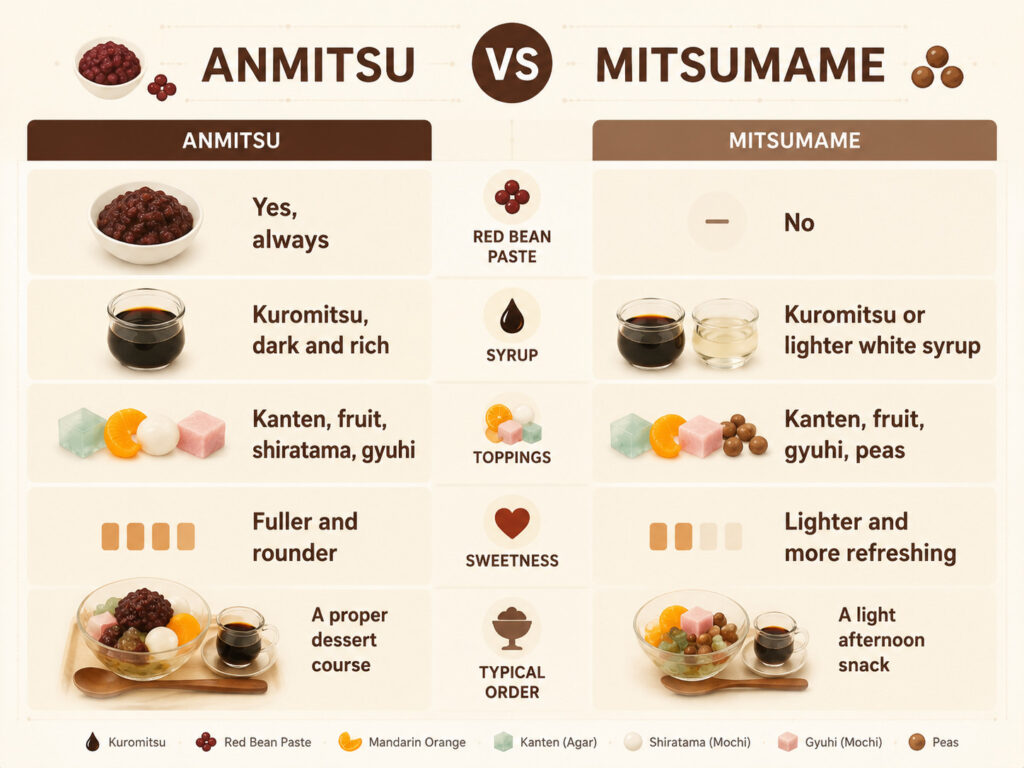
Menus list both, and the difference confuses many first-timers. The table below sorts it out quickly.
| Anmitsu | Mitsumame | |
|---|---|---|
| Red bean paste | Yes, always | No |
| Syrup | Kuromitsu, dark and rich | Kuromitsu or lighter white syrup |
| Toppings | Kanten, fruit, shiratama, gyuhi | Kanten, fruit, gyuhi, peas |
| Sweetness | Fuller and rounder | Lighter and more refreshing |
| Typical order | A proper dessert course | A light afternoon snack |
Types of Anmitsu
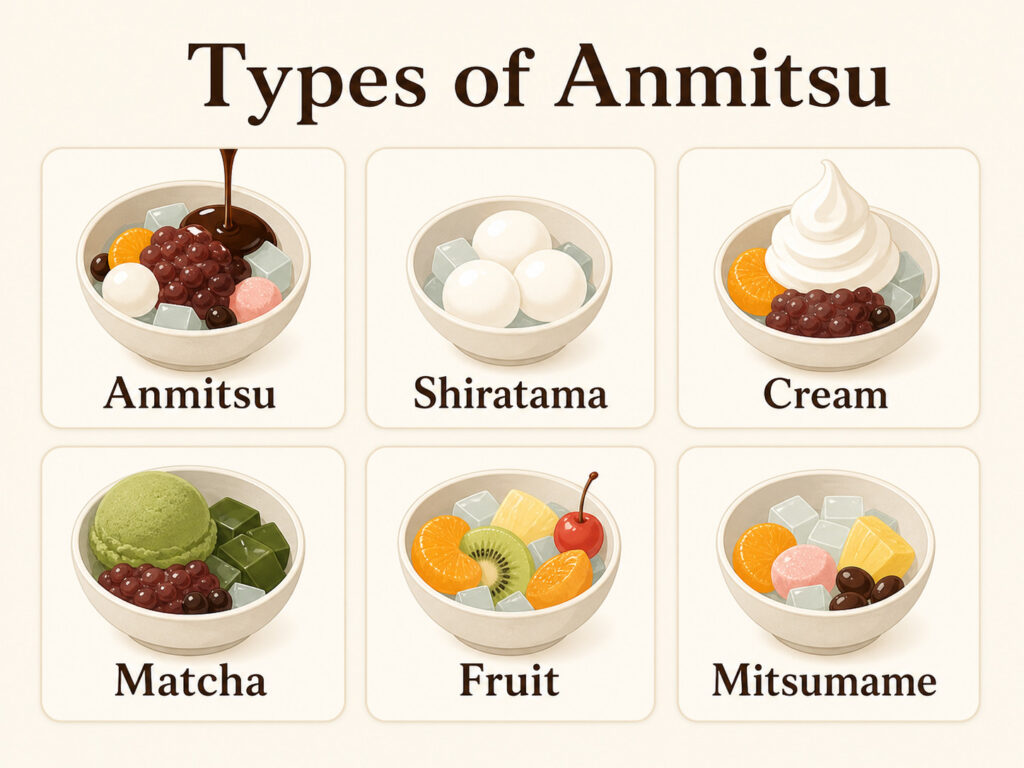
Almost every shop offers several versions. The table helps you choose before the menu arrives.
| Version | What is added | Best for |
|---|---|---|
| Anmitsu | The classic set | First-timers |
| Shiratama anmitsu | Extra rice-flour dumplings | Fans of chewy textures |
| Cream anmitsu | Whipped cream or ice cream | Anyone wanting a richer bowl |
| Matcha anmitsu | Matcha jelly or matcha ice cream | Green tea lovers |
| Fruit anmitsu | Generous fresh or canned fruit | Hot summer afternoons |
| Mitsumame | No red bean paste | Lighter appetites |
Shiratama anmitsu doubles down on chew, which children tend to love. Cream anmitsu softens the whole bowl, so the kanten feels less austere. Matcha anmitsu balances pleasant bitterness against the syrup, and it remains one of the most popular types in cafés. Cream shiratama anmitsu simply combines two of these ideas.
Besides the popular versions, shops sell seasonal bowls with strawberry, sakura, peach, or chestnut. Many wagashi shops also sell omiyage anmitsu, a gift-wrapped set you can carry home. It travels well, since the jelly and syrup arrive sealed separately.
History of Anmitsu
The story starts long before the dessert had a name. Edo-period street stalls sold simple sweets made from kanten and boiled red peas. Vendors poured syrup over them for children, and that snack grew into mitsumame during the Meiji period. One account credits the Asakusa shop Funawa with serving the first mitsumame in 1903.
The next step came in the early Showa era. Many sources credit Ginza Wakamatsu with creating modern anmitsu in 1930. Customers kept asking for something sweeter, so the second-generation owner Hanjiro Mori added strained red bean paste and black syrup to mitsumame. That small change turned a light snack into a full dessert.
Other versions of the story exist, however. Some researchers point instead to the poet Mudo Hashimoto at the Ginza sweet shop Tsukigase, around 1938. Either way, the idea spread quickly across Tokyo and then the country.
Wakamatsu itself closed in December 2023, when its Ginza Core building was scheduled for redevelopment. The shop had opened in 1894 and used adzuki beans from Tokachi in Hokkaido. Its closure marked the end of 130 years of business, though the dessert it popularized is now served nationwide.
How to Eat Anmitsu
The syrup usually arrives on the side, which surprises visitors. There is a simple order to follow.
- Pour the kuromitsu. Add about half at first, then taste before adding more.
- Mix gently. Turn the jelly once or twice, but avoid crushing the dumplings.
- Eat in combinations. Take jelly, fruit, and anko together in one spoon.
Most cafés serve green tea alongside. The tea resets your palate between bites, so the sweetness never becomes tiring.
Best Season to Eat Anmitsu
Summer is the classic season. Japanese summers turn humid and heavy, so chilled sweets fit the weather better than baked ones. Kanten needs no oven, and it stays cool in the bowl for a long time. Seasonal fruit does the rest of the work.
- Spring: strawberry and sakura versions appear, often in pale pink.
- Summer: peach, melon, and citrus dominate the menus.
- Autumn: chestnut and sweet potato bring a warmer flavor.
- Winter: shops keep serving it, sometimes beside hot oshiruko red bean soup.
This seasonal rhythm sits at the heart of wagashi culture. Sweets are meant to mark the month, not just satisfy a craving. For another chilled example, look at Okinawa zenzai, a shaved ice dessert built on sweet beans.
Is Anmitsu Vegan or Vegetarian?
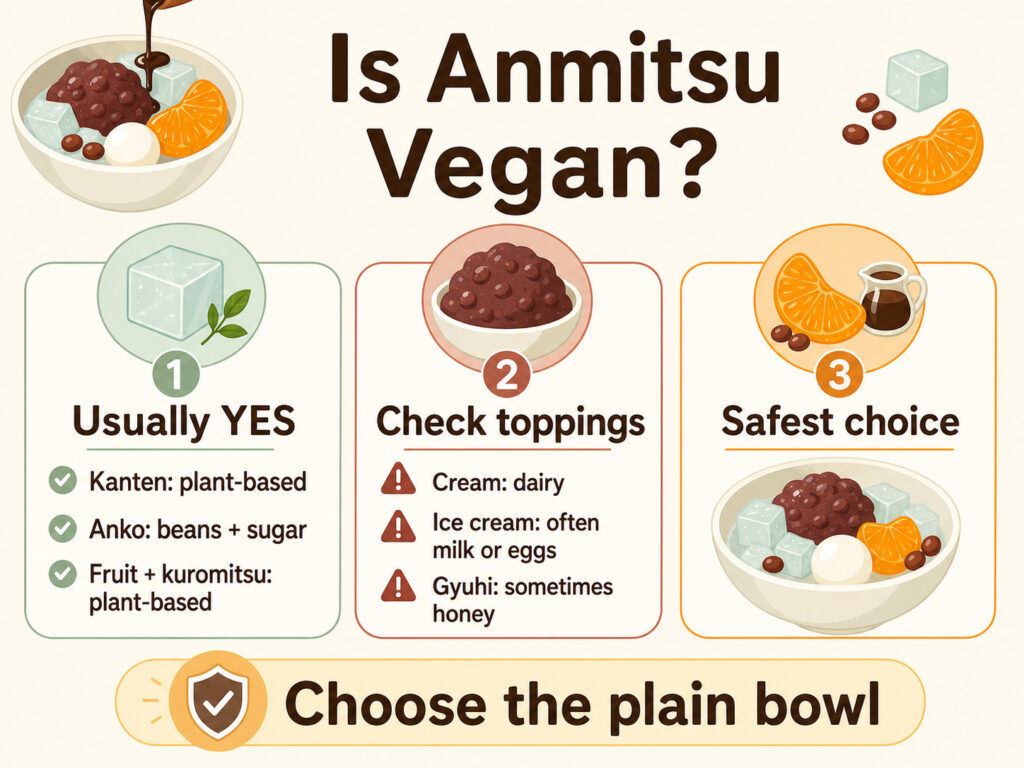
The basic version usually works for both. Kanten comes from seaweed, not animal gelatin, and anko contains only beans and sugar. Kuromitsu, fruit, and shiratama are plant-based too.
Problems appear with the toppings. Cream anmitsu uses dairy, and most ice cream contains milk and eggs. Some shops brush gyuhi with honey, which vegans may avoid. Ask before ordering, or simply choose the plain bowl to stay safe.
How to Make Anmitsu at Home
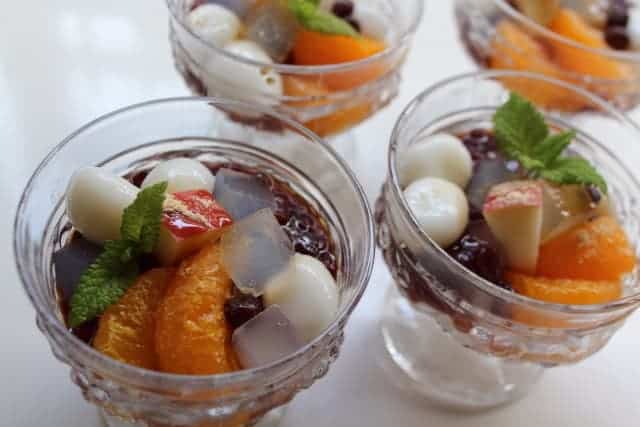
Anmitsu suits beginners well. Nothing needs baking, and the jelly does most of the work while you wait.
Original Anmitsu Recipe
| Ingredient | Amount | Substitute or tip |
|---|---|---|
| Kanten (stick form) | 1/2 stick | 4 g agar powder, no soaking needed |
| Water | 250 ml | Use less for firmer cubes |
| Caster sugar | 10 g | Optional; the syrup adds sweetness |
| Boiled adzuki beans | To taste | Canned anko works well |
| Kuromitsu | To taste | Brown sugar syrup as a swap |
Soak the stick kanten in plenty of water for 10 minutes. Squeeze out the water, then tear it into small pieces so it dissolves evenly.
Boil the kanten in the water until it melts completely. Add the sugar and stir until it disappears. Undissolved kanten leaves gritty spots, so check carefully here.
Pour the liquid into a flat container. Refrigerate for at least one hour, until it sets firmly.
Cut the jelly into 2 cm cubes and place them in bowls. Top with adzuki beans and pour kuromitsu over everything.
You can also add cream, ice cream, or fruit at this point. Nobody will mind if you build the bowl your own way.
Matcha Anmitsu Recipe
Matcha turns the jelly faintly bitter, which suits the sweet paste nicely. The method barely changes.
| Ingredient | Amount | Substitute or tip |
|---|---|---|
| Agar powder | 4 g | Powder dissolves faster than sticks |
| Water | 400 ml | Warm water helps the matcha blend |
| Matcha powder | 1 tsp | Sift it first to avoid lumps |
| Sugar (jelly) | 3 tbsp | Reduce for a sharper matcha taste |
| Red bean paste | 1-2 tbsp per bowl | Tsubuan adds more texture |
| Sugar and water (syrup) | 2 tbsp and 50-80 ml | Kuromitsu also works here |
Dissolve the agar powder in water over medium heat. Whisk in the sifted matcha and sugar until smooth.
Pour the mixture into a container and cool it slightly. Refrigerate for 2 to 3 hours, until firm.
Boil 50 to 80 ml of water with 2 tablespoons of sugar. Once the sugar dissolves, turn off the heat and let it cool.
Cut the matcha jelly into cubes and place them in bowls. Add red bean paste, then pour the syrup on top.
Where to Buy Ingredients Outside Japan
Sourcing is easier than it sounds. Asian supermarkets usually stock agar in both stick and powder form, often labelled agar-agar. Japanese grocery stores carry canned anko, shiratamako flour, and bottled kuromitsu. Online shops ship all of these, though syrup bottles push up the postage.
Substitutions work fine when something is missing. Agar powder replaces kanten sticks directly, so skip the soaking step. Canned mikan segments stand in for fresh citrus, and dark brown sugar syrup mimics kuromitsu closely. Gelatin, however, sets far too soft and melts on the tongue. That change alters the dessert completely, so agar really is worth hunting down.
Where to Eat Anmitsu in Tokyo
Prices sit at a comfortable level. A classic bowl costs roughly 700 to 1,000 yen, while cream or fruit versions run 900 to 1,300 yen. Takeaway and gift sets start around 500 yen per serving. These ranges reflect menus surveyed in July 2026, so check each shop before visiting.
Asakusa Umezono
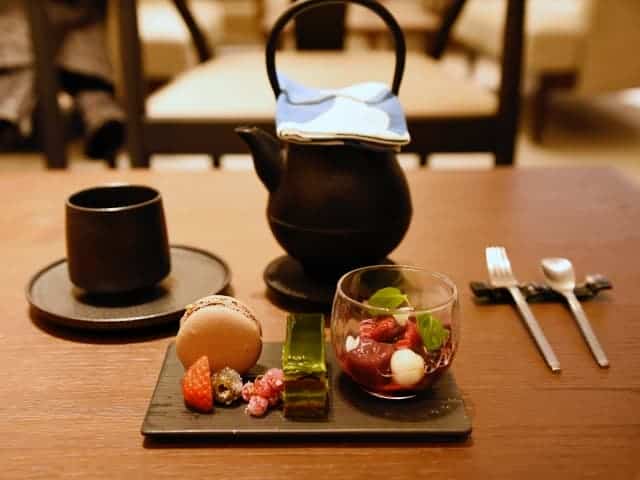
Umezono balances firm kanten against smooth Hokkaido bean paste. The kuromitsu tastes rich without turning cloying, so the bowl never feels heavy. Shiratama cream anmitsu is the order to remember, with its red and white dumplings. The room keeps an old Asakusa mood, which suits a break after visiting Senso-ji.
Anmitsu Mihashi
Mihashi treats sourcing seriously. The beans come from Tokachi, the black sugar from Hateruma Island, and the kanten from Amakusa seaweed. Its plain anmitsu shows that care best, with mikan and gyuhi against firm jelly. More than ten versions fill the menu, including seasonal fruit cream bowls. Founded in 1948 near Ueno Park, it makes an easy stop after the zoo or museums.
Anya (Seijo)
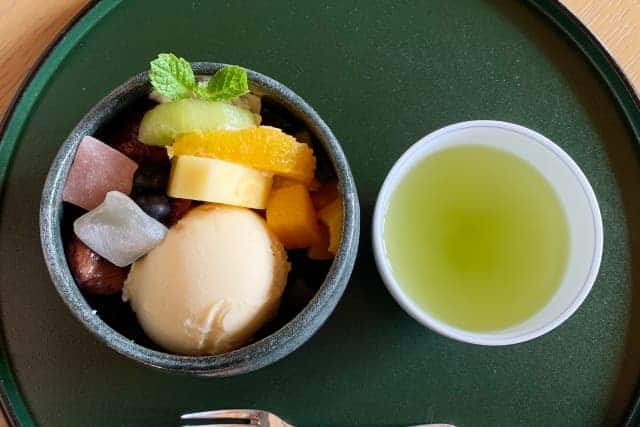
Anya opened in 2004 under Seijo Fugetsudo, a wagashi shop founded in 1918. The kitchen boils its kanten fresh rather than using pre-set jelly, and the syrup uses Tanegashima black sugar. Shiratama dumplings are made to order, so expect a short wait. The quiet teahouse setting rewards that patience, especially away from central Tokyo crowds.
Takeaway
Anmitsu rewards attention. The bowl looks plain, yet it layers firm jelly, soft dumplings, sweet paste, and dark syrup in one spoonful. Summer suits it best, though seasonal fruit keeps it interesting all year.
If you visit Tokyo, order a classic bowl first before trying cream or matcha versions. At home, the recipe asks for patience rather than skill. Either way, this dessert offers a gentle introduction to Japanese sweets.
If you are a fan of Japanese sweets, do not forget to check out the articles below.
Anmitsu Videos
Anmitsu FAQ
What is anmitsu made of?
Anmitsu combines kanten jelly, sweet red bean paste, fruit, and black sugar syrup. Many bowls also include shiratama dumplings or soft gyuhi. Cooks cut the jelly into cubes and arrange the toppings over it. The syrup usually arrives separately, so you control the sweetness.
Is anmitsu the same as mitsumame?
They are close relatives, not twins. Mitsumame skips the red bean paste, which makes it lighter and more refreshing. Adding anko turns the same bowl into this dessert. Most shops list both on the menu.
Is anmitsu served hot or cold?
Shops always serve it chilled. The kanten jelly needs refrigeration to hold its firm shape. That cold texture explains why the dish suits humid summers so well. Some cafés serve hot green tea alongside for balance.
Can you make anmitsu vegan?
Yes, quite easily. Kanten comes from seaweed rather than animal gelatin, and red bean paste uses only beans and sugar. Skip the ice cream and whipped cream toppings. Check the gyuhi too, since a few shops glaze it with honey.
Where can I eat anmitsu in Tokyo?
Traditional sweet shops offer the best versions. Umezono in Asakusa and Mihashi near Ueno Park are long-standing favorites. Anya in Seijo makes its dumplings to order, away from the crowds. Department store restaurant floors also serve reliable bowls.
Who invented anmitsu?
Many sources credit Hanjiro Mori of Ginza Wakamatsu, who added red bean paste to mitsumame in 1930. A competing account names the poet Mudo Hashimoto at the shop Tsukigase around 1938. Wakamatsu closed in December 2023 after 130 years. The dessert itself remains available across Japan.
How much does it cost?
Expect roughly 700 to 1,000 yen for a classic bowl. Cream, fruit, and matcha versions cost a little more, up to about 1,300 yen. Gift-wrapped sets sold as souvenirs start near 500 yen per serving. Prices vary by neighborhood and shop age.
Can I take anmitsu home as a souvenir?
Yes, and many shops sell gift sets for exactly that. Producers pack the jelly, beans, and syrup separately so nothing goes soggy. These omiyage boxes keep for several days at room temperature. Department store basements carry the widest selection.
References
- Ginza Wakamatsu, Official Site (Origin of Anmitsu; closure notice dated November 2023), http://ginza-wakamatsu.co.jp/ (Surveyed: July 2026)
- Anmitsu Mihashi, Official Site (Ingredients and Shops), https://www.mihashi.co.jp/ (Surveyed: July 2026)
- Asakusa Umezono, Official Site, https://www.asakusa-umezono.co.jp/ (Surveyed: July 2026)
- Japan Agar Association (Nihon Kanten Kogyo Kumiai), About Kanten, https://kanten.or.jp/ (Surveyed: July 2026)
Related Articles
- Japanese Sweets (Wagashi) (Surveyed: July 2026)
- Okinawa Zenzai (沖縄ぜんざい) (Surveyed: July 2026)
- Oshiruko (お汁粉) (Surveyed: July 2026)
- Kuzu Mochi (くず餅) (Surveyed: July 2026)
- Mochi Ice Cream (Surveyed: July 2026)




Comments