




Some foods punch above their weight. The Kobe beef croquette is one of them.
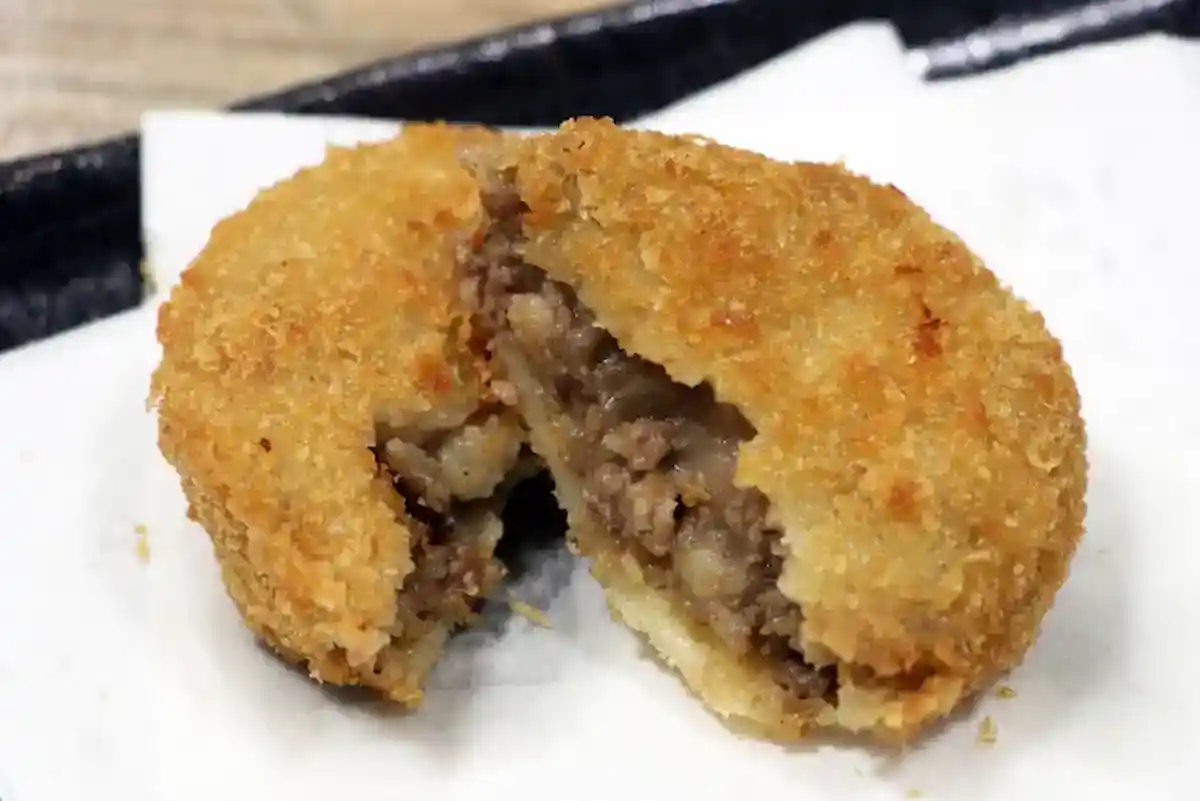
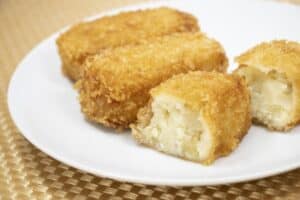
On the outside, it looks simple. A golden, panko-crusted oval. Crispy. Unpretentious. You can hold it in one hand and eat it standing on a street corner in Kobe. But inside is something that stops you mid-bite. The filling is rich, buttery, and unmistakably beefy in a way that regular croquettes simply are not.
This is 神戸牛コロッケ. And it deserves more attention than it gets.
What Is a Kobe Beef Croquette?
A korokke (コロッケ) is Japan’s take on the French croquette. The basic version uses mashed potato mixed with minced meat, shaped into an oval, coated in panko breadcrumbs, and deep-fried until golden. It is a staple of Japanese home cooking and convenience store shelves alike.
The Kobe beef version follows the same structure. The difference is what goes into the filling. Instead of ordinary ground beef, cooks use minced Kobe beef (神戸牛), one of the most prized types of wagyu in the world. That one substitution changes everything. The fat content of Kobe beef is extraordinary. When it cooks into the mashed potato, the filling becomes silky, savory, and deeply satisfying in a way that is hard to describe accurately.
You might wonder: if Kobe beef is so expensive, how is a croquette affordable? That is actually the point. Using minced trimmings and smaller cuts makes it accessible. It is Kobe beef on a budget, and Japanese street food culture embraced that idea completely.
What Does It Taste Like?
The first thing you notice is the crunch. The panko coating fries up light and crisp. It shatters rather than bends. That texture contrast with the soft interior is part of what makes it satisfying.
Then comes the filling. It is potato-based, so there is that familiar creaminess. But the Kobe beef fat has melted into it during cooking. The result is richer than standard korokke. There is a subtle sweetness from the wagyu marbling. It is savory without being salty. The umami lingers after you swallow.
Some versions add a little caramelized onion to the filling. Others keep it minimal. Either way, the Kobe beef does most of the talking. Dipping sauces sometimes accompany it, usually tonkatsu sauce or a light Worcestershire-based blend. Honestly, a good Kobe beef croquette does not really need them.
It is Japanese comfort food at its most refined. And it costs a fraction of what a Kobe beef steak would run you.
Why Is It Famous?
Kobe has been synonymous with premium beef since the Meiji era. When Japan opened its ports to foreign trade in the mid-1800s, Kobe became the main gateway. Western merchants arrived. They brought a taste for beef. Japanese cattle from the region, raised in the mountains of Hyogo Prefecture, turned out to produce meat of extraordinary quality.
The reputation of Kobe beef grew steadily. By the 20th century, it had become one of Japan’s most iconic food exports. Restaurants serving Kobe beef teppanyaki and steak became destinations in themselves.
But not everyone visiting Kobe could afford a full wagyu dinner. The croquette emerged as a solution. It put real Kobe beef into something portable, affordable, and deeply delicious. Shops near the harbor and along Kitano-cho began selling them. Tourists discovered them. Word spread.
Today the Kobe beef croquette is considered one of the essential Kobe food experiences. It sits alongside Kobe pudding and Kobe bokkake as something locals are genuinely proud of.
A Brief History of kobe beef korokke
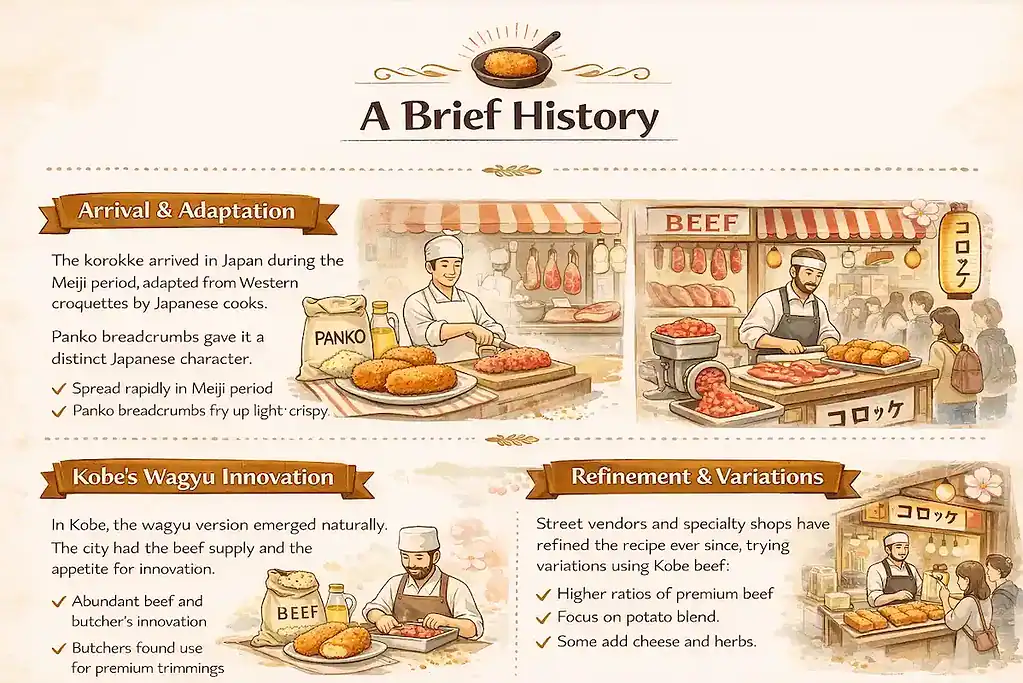
The korokke itself arrived in Japan during the Meiji period, adapted from Western croquettes by Japanese cooks. It spread rapidly because it suited Japanese tastes and cooking techniques. Panko breadcrumbs, which fry up lighter than Western breadcrumbs, gave it a distinctly Japanese character.
In Kobe specifically, the wagyu version developed naturally. The city had both the beef supply and the appetite for innovation. Butchers who processed Kobe beef had access to trimmings that were too small for steak but too good to waste. Mincing them into korokke filling made perfect sense.
The dish gained wider recognition in the late 20th century as domestic food tourism grew in Japan. Visitors to Kobe began seeking out local specialties beyond the famous steak. The croquette fit perfectly. It was quick, satisfying, and genuinely connected to the region’s identity.
Street vendors and specialty shops have refined the recipe ever since. Some use higher ratios of Kobe beef. Others focus on the potato blend. A few add cheese or herbs. The core idea remains the same: premium wagyu, elevated by simplicity.
Where to Try It
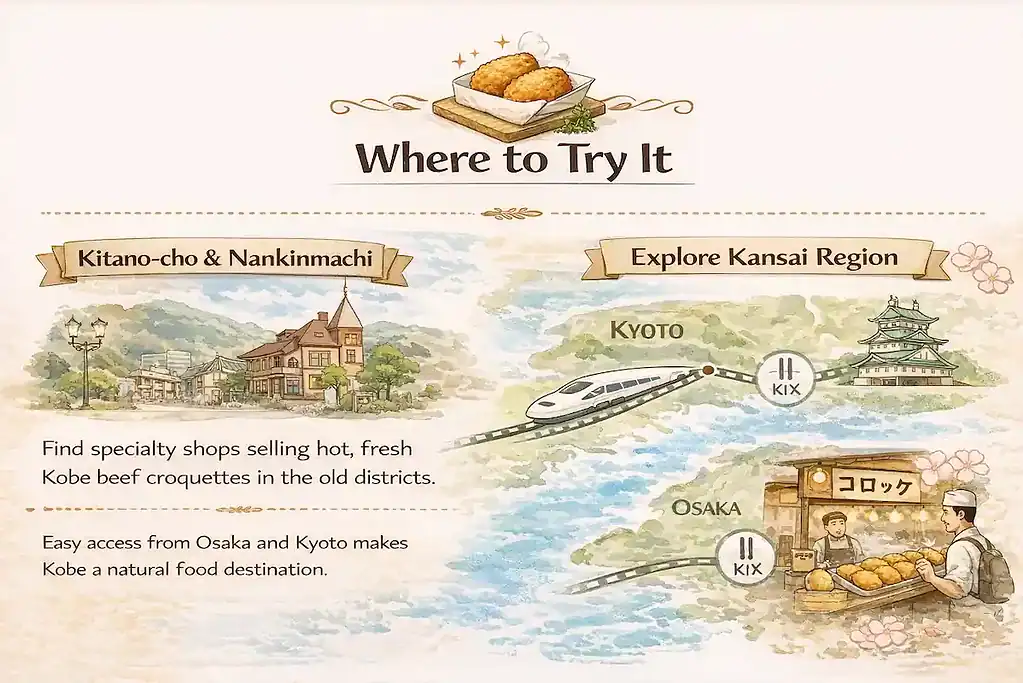
Most visitors find Kobe beef croquettes near Kitano-cho, the old foreign settlement district, or around the Nankinmachi area. Specialty butcher shops often sell them fresh and hot. The smell alone will find you before you find the shop.
If you are exploring the broader Kansai region, the croquette pairs well with a wider tasting itinerary. Kobe is easily reached from Osaka and Kyoto. A half-day visit focused on local food makes complete sense. You will likely want more than one.
References
Shogayaki FAQ
What is Shogayaki?
Shogayaki is a classic pork dish from Japan. Chefs make it with thin slices of pork and grated ginger. Food lovers know it for its sweet, savory, and zesty flavor profile.
Where does Shogayaki come from?
Shogayaki originates from Tokyo. Restaurants developed this quick, energy-rich meal during the Showa period to feed busy workers.
What does Shogayaki taste like?
Shogayaki has a sweet, savory, and spicy flavor. The texture feels tender and juicy. Diners often compare it to sweet teriyaki beef but with a sharp, refreshing ginger kick.
Where can I eat Shogayaki in Japan?
You will find excellent Shogayaki everywhere in Japan. Famous places include local diners (shokudo) and standard izakaya pubs. Many popular chain restaurants also serve it as an affordable set meal.
How much does Shogayaki cost?
Shogayaki typically costs between 700 and 1,200 yen per serving. Prices vary slightly depending on the restaurant and the included side dishes.
Is Shogayaki vegetarian or vegan friendly?
Traditional Shogayaki contains sliced pork. Vegans and vegetarians can easily cook plant-based versions at home using thick tofu or soy meat instead of pork.
What are the main ingredients in Shogayaki?
The main ingredients in Shogayaki include thinly sliced pork, grated ginger, soy sauce, and sweet mirin. The fresh ginger gives the dish its distinctive refreshing zing.
Can I make Shogayaki at home?
Yes, you can easily make Shogayaki at home. Grocery stores everywhere stock the key ingredients — sliced pork and fresh ginger. Home cooks master this quick stir-fry recipe effortlessly in under ten minutes.
What is the difference between Shogayaki and Teriyaki?
The main difference involves the primary flavor. Shogayaki features a strong, spicy ginger presence, while Teriyaki relies purely on a sweet soy sauce glaze.
Is Shogayaki popular outside Japan?
Shogayaki enjoys great popularity outside Japan. You will easily find it at Japanese restaurants in North America, Europe, and Asia. Home cooks worldwide love this delicious dish because it requires no rare ingredients.



Comments