





This Kansai food guide spans seven prefectures — Osaka, Kyoto, Hyogo, Nara, Shiga, Wakayama, and Mie — and explores one of the most diverse and celebrated food cultures in the country. From the vibrant street food scene of Osaka to the refined kaiseki cuisine of Kyoto and the world-famous beef of Kobe, Kansai delivers an extraordinary range of flavors and dining experiences.
Unlike the seafood-driven cuisine of Hokkaido or the hearty preserved foods of Tohoku, Kansai cooking is defined by its devotion to dashi — a deeply flavored stock made from kelp and bonito — which forms the foundation of nearly every dish in the region. This results in a lighter, more delicate flavor profile than the cuisine found in eastern Japan, a distinction that locals proudly describe as kuidaore, meaning “eat until you drop.”
This complete guide explores the most iconic Kansai foods, the cities where they were born, and the culinary traditions that have made western Japan a must-visit destination for food lovers around the world.
Quick Facts About Kansai Food
- Region: Kansai (Kinki)
- Prefectures: Osaka, Kyoto, Hyogo, Nara, Shiga, Wakayama, Mie
- Main Cities: Osaka, Kyoto, Kobe
- Famous Foods: Takoyaki, Okonomiyaki, Kaiseki, Kobe Beef
- Signature Flavor: Dashi-based, light and umami-forward
- Food Culture Keyword: Kuidaore (eat until you drop) — Osaka
- Famous Ingredients: Kelp (konbu), tofu, wagyu beef, fresh seafood from Seto Inland Sea
What Makes Kansai Cuisine Unique?
Kansai cuisine stands apart from the rest of Japan for one fundamental reason: the quality and centrality of its dashi. The region has historically had access to some of Japan’s finest konbu seaweed, sourced from Hokkaido and traded through the ancient port city of Osaka. This ingredient forms the backbone of Kansai-style broth, which tends to be lighter in color and more delicate in taste compared to the soy sauce-heavy broths favored in eastern Japan.
This lighter approach to seasoning means that the natural flavors of each ingredient are allowed to shine. Kyoto’s refined temple cuisine and kaiseki tradition exemplify this philosophy — every element on the plate is chosen to highlight the season and the ingredient itself. In contrast, Osaka’s street food culture pushes in a bold, festive direction, where rich sauces and toppings layer flavor upon flavor.
Another defining characteristic is the region’s geographical variety. Osaka sits at the center of the Seto Inland Sea trade routes, giving it access to extraordinary seafood. Kyoto, surrounded by mountains, developed a vegetable-centered cuisine based on tofu, yuba, and carefully grown local produce. Kobe became a gateway to Western food after Japan’s opening to the world in the 19th century, giving rise to a unique blend of Japanese and European culinary influences.
Together, these overlapping traditions create a food culture of remarkable depth and contrast.
Famous Kansai Foods You Must Try
Kansai has given Japan — and the world — some of its most recognizable dishes. Many of these foods originated in specific neighborhoods or cities before spreading across the country.
Takoyaki
Takoyaki is perhaps the most iconic food to come out of Osaka. These round, golden balls of batter are filled with tender pieces of octopus, tenkasu (tempura scraps), pickled ginger, and green onion, then cooked in a special molded iron pan until crispy on the outside and soft within. Finished with takoyaki sauce, Japanese mayonnaise, aonori seaweed powder, and dancing bonito flakes, they are one of the most satisfying and photogenic street foods in Japan. Takoyaki was invented in Osaka in the 1930s and remains the city’s most beloved culinary symbol.
Osaka-Style Okonomiyaki
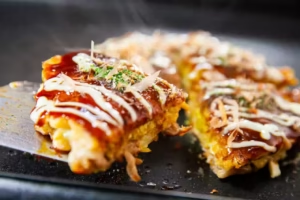
Okonomiyaki translates roughly as “grilled as you like it,” and Osaka’s version is a thick, savory pancake made from a batter of flour, grated yam, dashi, shredded cabbage, and a variety of fillings including pork, seafood, or cheese. Cooked on a flat iron griddle and topped with the same iconic combination of sweet-savory sauce, mayonnaise, aonori, and bonito flakes, Osaka-style okonomiyaki is a cornerstone of the city’s casual dining culture. It differs notably from Hiroshima-style okonomiyaki, which layers its ingredients rather than mixing them.
Kaiseki Cuisine
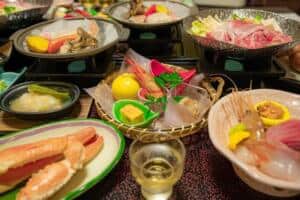
Kaiseki is Kyoto’s most prestigious culinary tradition — a multi-course meal that follows the rhythm of the seasons and the principles of Japanese aesthetics. Each course is carefully composed to balance flavor, color, texture, and temperature, drawing on locally grown Kyoto vegetables (Kyo-yasai), fresh river fish, and premium tofu. Kaiseki evolved from the tea ceremony tradition and remains the pinnacle of Japanese fine dining, with Kyoto home to many of Japan’s top-rated restaurants.
Kobe Beef
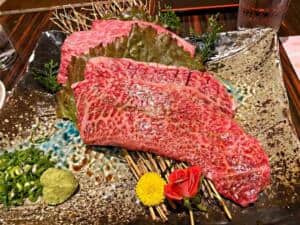
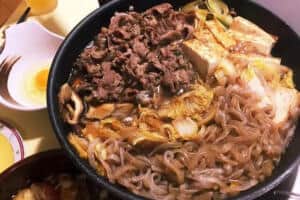
Kobe beef is one of the most famous foods in Japan and arguably one of the most celebrated beef products in the world. Produced exclusively from Tajima-strain Wagyu cattle raised in Hyogo Prefecture, Kobe beef is known for its extraordinary marbling, buttery texture, and intense umami flavor. It is typically served as teppanyaki, shabu-shabu, or sukiyaki at specialist restaurants in Kobe, and its strict certification standards make it one of the most regulated and premium food products in Japan.
Kushikatsu
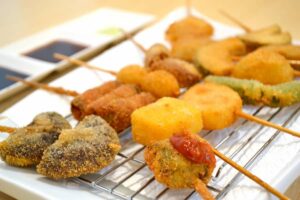
Kushikatsu is a deep-fried skewer dish that originated in the working-class neighborhoods of Osaka’s Shinsekai district. Meat, seafood, and vegetables are threaded onto bamboo skewers, coated in a light panko breadcrumb batter, and fried until golden. They are served with a communal dipping sauce, accompanied by a famous rule: no double-dipping. Kushikatsu restaurants are casual, lively, and quintessentially Osaka.
Yudofu
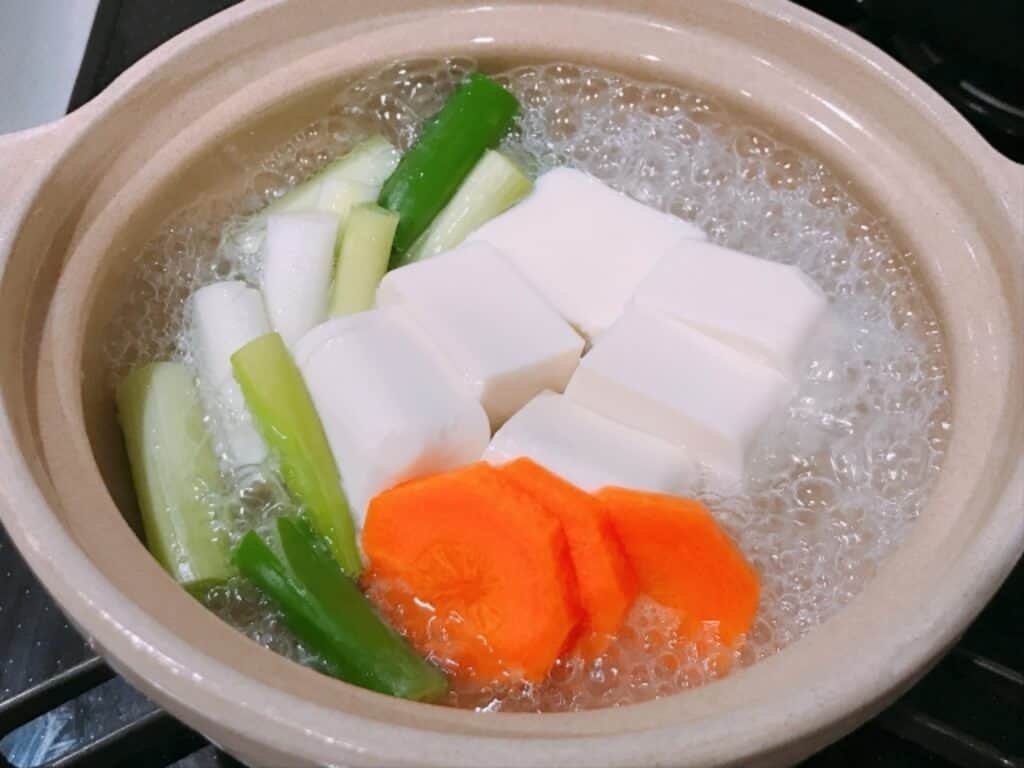
Yudofu is a simple Kyoto hot pot dish in which silken tofu is gently simmered in a delicate konbu broth and served with light condiments such as grated ginger, ponzu, and chopped green onion. It reflects Kyoto’s deep tradition of shojin ryori (Buddhist vegetarian cuisine) and the city’s reverence for high-quality tofu made with mineral-rich local water. The result is a dish of quiet elegance that highlights ingredient quality above all else.
Oshizushi (Pressed Sushi)
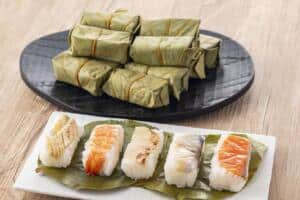
Unlike the hand-formed nigiri sushi of Tokyo, Kansai has its own ancient sushi tradition rooted in oshi-zushi — pressed sushi made by layering vinegared rice with toppings such as mackerel, shrimp, or sea bream in a wooden mold. Battera, a pressed mackerel sushi wrapped in thin kelp, is one of Osaka’s most traditional foods and reflects the city’s long history as a trading hub for seafood and rice.
Must-Try Kansai Dishes
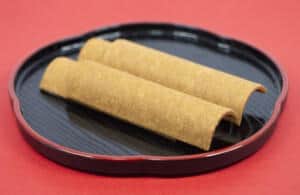
Famous Ingredients from Kansai
The ingredients that define Kansai cuisine reflect both its geography and its history as Japan’s ancient commercial and cultural center.
Konbu (Kelp) is arguably the most important ingredient in the entire region. Osaka developed as the main distribution hub for konbu brought by trading ships from Hokkaido, and the city’s cooks learned to extract extraordinary depth of flavor from it. Kansai-style dashi, made primarily from konbu rather than the bonito-forward blends of eastern Japan, gives the region’s soups, sauces, and simmered dishes their characteristic lightness and sweetness.
Kyo-yasai (Kyoto Vegetables) are a group of traditional heirloom vegetable varieties that have been cultivated in and around Kyoto for centuries. Varieties such as Kamo eggplant, Manganji pepper, Shogoin turnip, and Kujo green onion are prized for their superior flavor, delicate texture, and visual beauty. They appear throughout kaiseki menus and in the traditional home cooking of the city.
Wagyu Beef — particularly from Hyogo Prefecture — sets the standard for premium Japanese beef. The Tajima cattle of the region produce the marbled, buttery meat sold as Kobe beef, which has influenced the global image of Japanese wagyu.
Seafood from the Seto Inland Sea provides Kansai chefs with an abundance of high-quality fish, shellfish, and crustaceans. Sea bream (tai), sea urchin, and fresh oysters from this enclosed, calm sea are among the most prized ingredients in the region’s cooking.
Sake and Mirin from the Nada district of Kobe — known as Nada no ki-ippon — are considered some of Japan’s finest, owing to the region’s exceptional water quality. They are used not only for drinking but as essential seasoning in Kansai cooking.
The History of Food Culture in Kansai
Kansai’s culinary history stretches back more than a thousand years. For much of Japanese history, the region served as the political, cultural, and economic capital of the country. Nara was Japan’s first permanent capital in the 8th century, followed by Kyoto, which remained the imperial capital for over a millennium. This long history of aristocratic and imperial culture gave rise to highly refined cooking traditions.
Kyoto’s cuisine evolved under the influence of the imperial court, Buddhist temple culture, and the tea ceremony. The principles of shojin ryori — vegetarian temple food — placed deep emphasis on seasonal ingredients, elegant presentation, and mindful preparation. These values eventually shaped kaiseki, the structured multi-course dining tradition that remains Kyoto’s greatest culinary legacy.
Osaka, by contrast, developed as a merchant city and trading hub. Known historically as the tenka no daidokoro, or “kitchen of the nation,” Osaka was the central market through which rice, seafood, vegetables, and goods from across Japan flowed. This commercial energy created a bold, generous food culture that celebrated abundance and accessibility — the spirit behind Osaka’s famous kuidaore motto.
Kobe’s food story took a different turn after 1868, when the city opened its port to foreign trade. The influx of Western merchants and diplomats introduced new ingredients, cooking methods, and dining concepts. Kobe became the birthplace of yoshoku — Japanese-style Western food — and innovations such as teppanyaki steak dining.
Food Cities of Kansai
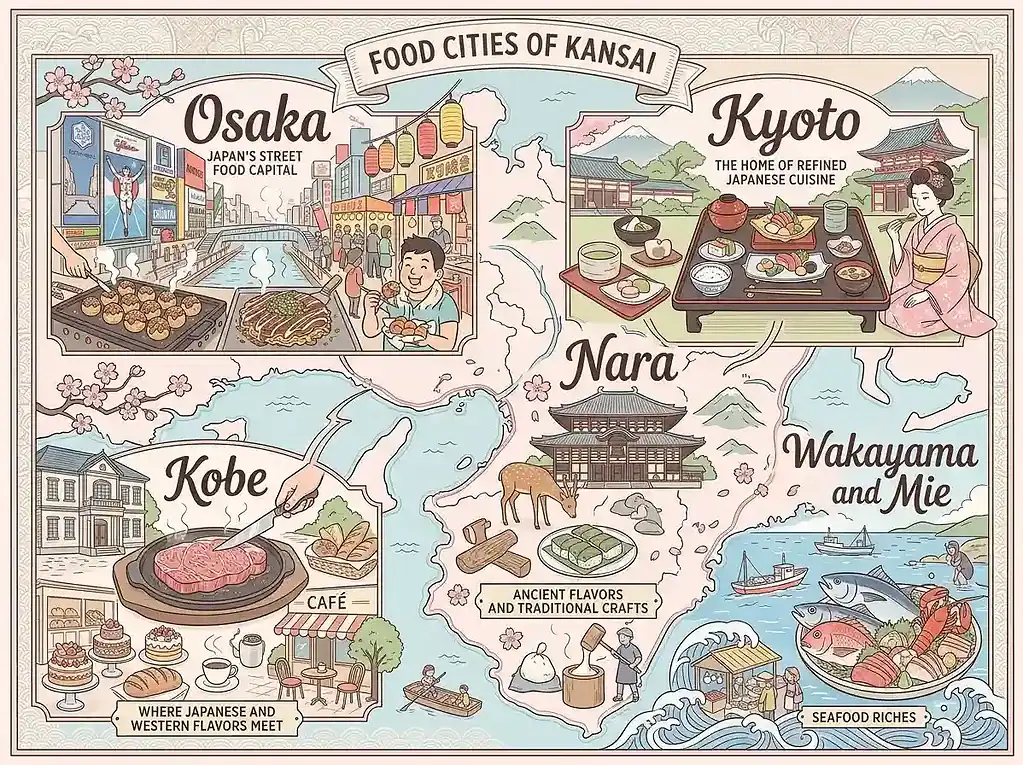
Kansai is home to some of Japan’s most celebrated food cities, each with a distinct culinary identity shaped by its history, geography, and culture.
Osaka — Japan’s Street Food Capital
Osaka is the undisputed capital of Japanese street food and casual dining. The city’s famous Dotonbori entertainment district is lined with restaurants, stalls, and food vendors serving everything from takoyaki and okonomiyaki to kushikatsu and ramen. Osaka’s food culture is defined by generosity, boldness, and the pure pleasure of eating. The phrase kuidaore — eat until you drop — perfectly captures the city’s relationship with food. Osaka is also home to Kuromon Ichiba Market, known as “Osaka’s kitchen,” where fresh seafood, produce, and street snacks have been sold for nearly 200 years.
Kyoto — The Home of Refined Japanese Cuisine
Kyoto represents the quiet, contemplative side of Kansai food culture. As the former imperial capital, the city developed cooking traditions deeply rooted in seasonality, aesthetics, and restraint. Kaiseki, the multi-course seasonal meal, reached its highest form here, and the city’s many Michelin-starred restaurants continue to set the standard for Japanese fine dining. Kyoto is also famous for its tofu and yuba dishes, its traditional wagashi sweets, and its Nishiki Market — a narrow covered arcade known as “Kyoto’s kitchen” — where shoppers can taste pickles, fresh tofu, grilled skewers, and seasonal specialties.
Kobe — Where Japanese and Western Flavors Meet
Kobe is a cosmopolitan port city with a uniquely international food culture. Its most famous export is Kobe beef, served in high-end teppanyaki and steakhouse restaurants throughout the city’s central Kitano and Sannomiya districts. But Kobe also gave Japan yoshoku — Western-influenced dishes such as beef stew, cream croquettes, and pudding — reflecting the city’s history as a gateway for foreign culture. Kobe’s Chinatown (Nankinmachi) and its classic European-style buildings (Ijinkan) add further layers to a distinctly multicultural dining scene.
Nara — Ancient Flavors and Traditional Crafts
Nara, Japan’s earliest capital, offers a quieter, more contemplative food experience rooted in ancient tradition. The city is best known for kakinoha sushi, a pressed sushi wrapped in fragrant persimmon leaves, which was developed as a way to preserve fresh fish transported inland from the coast. Miwa somen — thin, hand-stretched wheat noodles — is another ancient Nara specialty that dates back over 1,300 years. The city’s proximity to temples and shrines also means that shojin ryori vegetarian cuisine plays an important role in the local food culture.
Wakayama and Mie — Seafood Riches
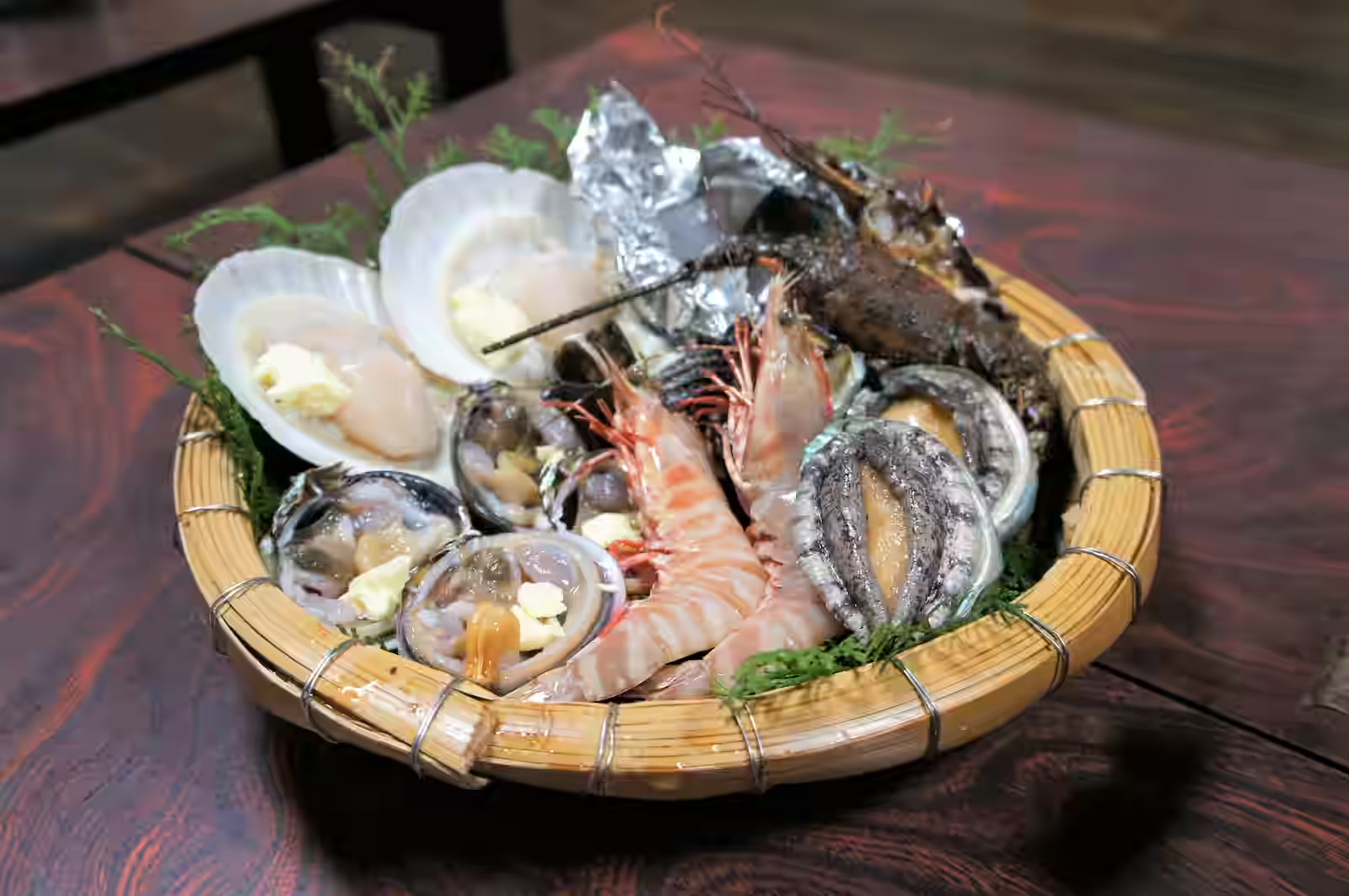
The southern and eastern edges of Kansai are defined by the sea. Wakayama Prefecture is home to a beloved regional ramen style with a distinctive soy-tonkotsu broth, as well as premium mandarin oranges (mikan) and umeboshi (pickled plum). Mie Prefecture, bordering the Pacific coast, is famed for its Ise lobster (Ise-ebi), abalone, and oysters — and as the home of the sacred Ise Grand Shrine, one of Japan’s most important religious sites. Seafood caught in the waters off the Kii Peninsula features heavily in the regional cuisine of both prefectures.
Kansai Food Map
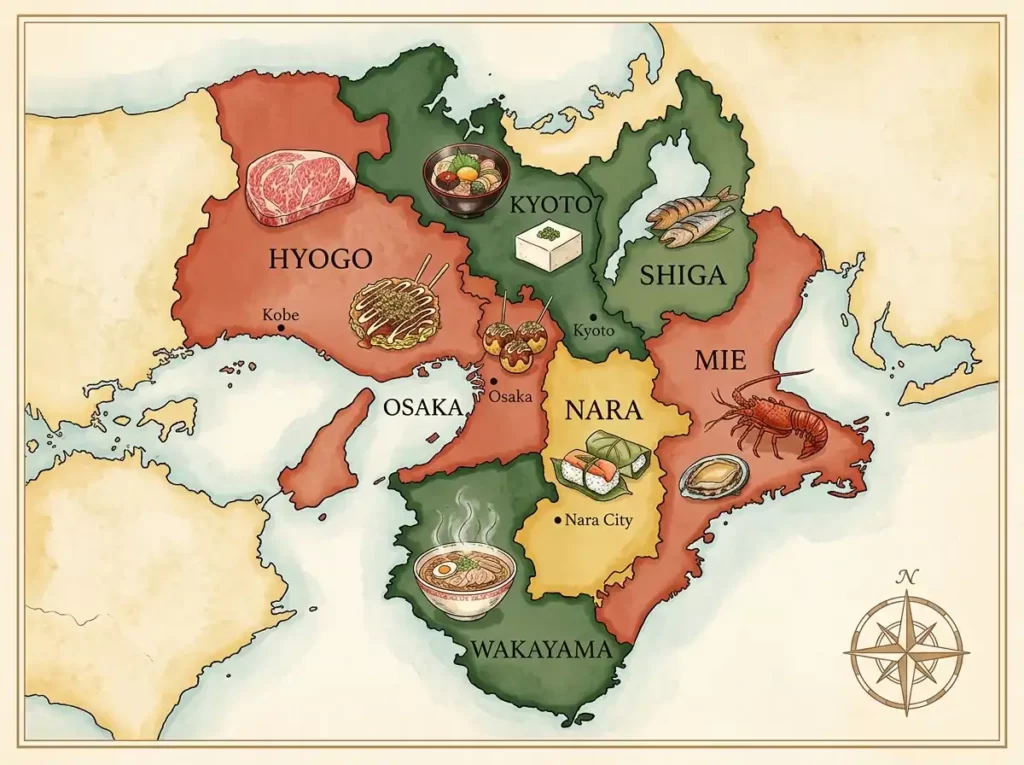
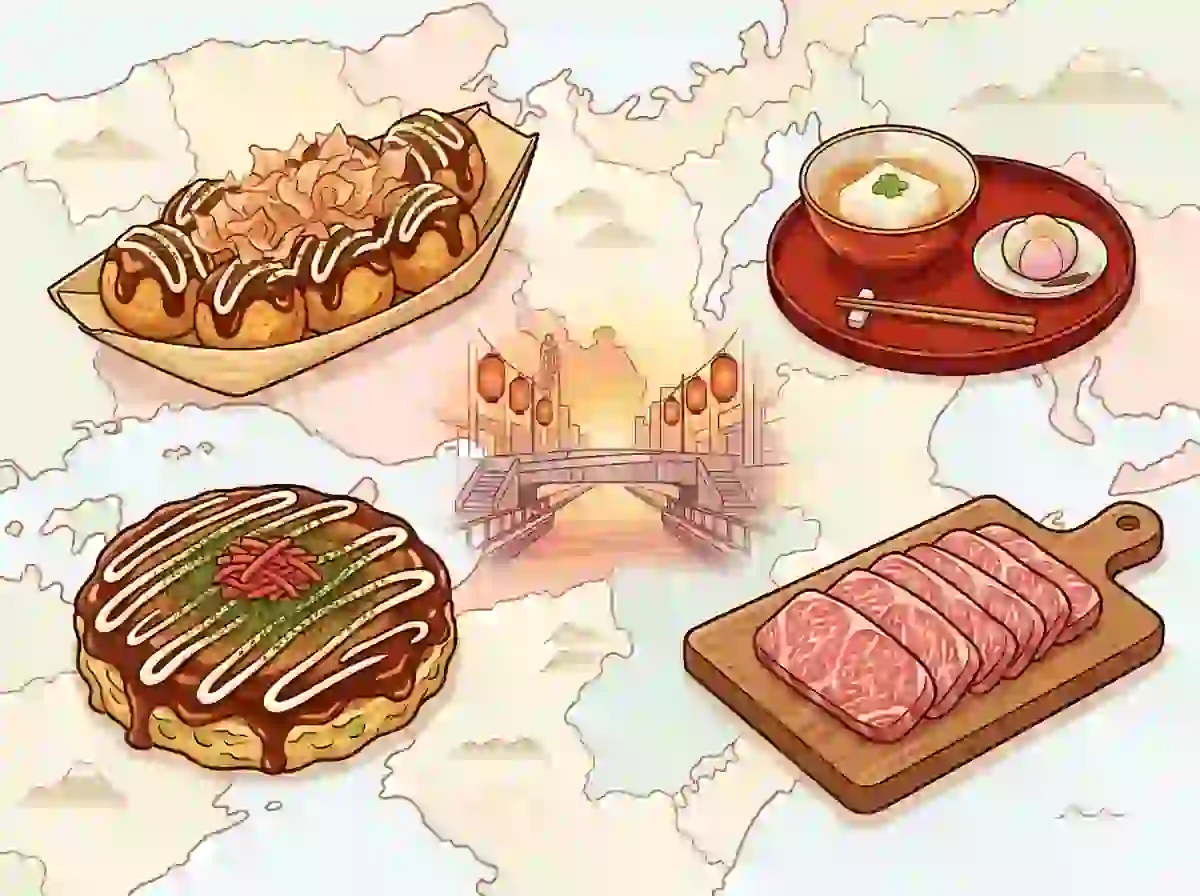
Kansai’s culinary landscape reflects its rich history and geographical diversity. Osaka sits at the center as the region’s food capital, celebrated for its vibrant street food culture and bold flavors. To the northeast, Kyoto offers refined kaiseki cuisine and delicate tofu dishes rooted in centuries of imperial and temple culture. Kobe to the west is home to the world-famous Kobe beef and a unique fusion of Japanese and Western dining. Nara to the south holds some of Japan’s oldest food traditions, including pressed persimmon-leaf sushi and hand-stretched somen noodles. The coastal prefectures of Wakayama and Mie bring exceptional seafood — Ise lobster, abalone, and fresh oysters — while Shiga Prefecture, home to Japan’s largest lake, contributes funazushi, one of the oldest forms of fermented sushi in the country.
Why Kansai Is a Paradise for Food Lovers
Few regions in the world can match Kansai for the sheer range and quality of its food culture. Within a single day, a visitor can eat freshly made takoyaki in Osaka’s Dotonbori, take the train to Kyoto for a refined kaiseki lunch in a traditional machiya townhouse, and end the evening at a Kobe teppanyaki restaurant searing some of the world’s most prized beef.
What makes Kansai truly special is that outstanding food exists at every price point. The region’s street food culture in Osaka means that some of the most memorable meals cost just a few hundred yen, while Kyoto’s world-class fine dining scene represents the pinnacle of Japanese culinary artistry. This democracy of deliciousness — the idea that great food is for everyone — is perhaps the most enduring legacy of Kansai’s food culture.
For anyone serious about understanding Japanese cuisine, a visit to Kansai is not optional. It is essential.
Explore More Kansai Foods
- Takoyaki — Osaka’s iconic octopus balls.
- Okonomiyaki — Savory grilled pancake with endless variations.
- Kobe Beef — The world’s most famous wagyu.
- Kaiseki — Kyoto’s multi-course seasonal feast.
- Kushikatsu — Deep-fried skewers from Osaka’s Shinsekai.
- Sukiyaki — Sweet and savory beef hot pot.
- Kakinoha Sushi — Ancient pressed sushi from Nara.
Explore More Japanese Regional Foods
Japan’s regional cuisines vary widely depending on climate, history, and local ingredients. If you enjoyed learning about Kansai food, explore dishes from other regions of Japan.
- Hokkaido Food Guide – Discover seafood, ramen, and dairy specialties from Japan’s northern island.
- Tohoku Food Guide – Discover hearty winter dishes and regional specialties from northern Honshu.
- Kanto Food Guide – Explore Tokyo’s vibrant food culture and famous regional dishes.
- Chubu Food Guide – Discover Nagoya meshi, Kanazawa food, and the diverse cuisine of central Japan.
- Kyushu Food Guide – Enjoy rich ramen, fresh seafood, and southern Japanese specialties.
- Shikoku Food Guide – Discover Sanuki udon, katsuo no tataki, and island cuisine from Shikoku.
- Chugoku Food Guide – Explore Hiroshima okonomiyaki, fugu, and the diverse cuisine of western Honshu.
Kansai Food Guide FAQ
What food is Kansai famous for?
The region boasts famous flour-based dishes like Takoyaki and Okonomiyaki, refined Kyoto Kaiseki, and world-class Kobe beef.
Which prefectures are part of the Kansai region?
The region includes Osaka, Kyoto, Hyogo (Kobe), Nara, Wakayama, and Shiga prefectures.
What is the difference between Kansai food and Kanto food?
Kansai chefs prefer light-colored, kelp-based dashi broth, while Kanto (Tokyo) chefs use dark, strong bonito and soy sauce broths.
Is Kansai the best region in Japan for food?
Many people think so. Locals proudly call Osaka the “Kitchen of the Nation” due to its rich, diverse, and accessible food culture.
What are the must-try street foods in Osaka?
You must eat Takoyaki (octopus balls), Okonomiyaki (savory pancakes), and Kushikatsu (deep-fried skewers).
What is takoyaki and where should I eat it in Osaka?
It is a hot, round batter ball filled with diced octopus. You find the best stalls along the Dotonbori canal.
What is Osaka-style okonomiyaki?
Chefs mix cabbage, meat, and batter together before grilling the mixture into a thick, savory pancake.
What is kushikatsu and what are the rules for eating it?
It features deep-fried meat and vegetable skewers. You must never double-dip your skewer into the communal sauce container.
What does “kuidaore” mean in Osaka food culture?
It means “to eat until you drop” or go bankrupt from eating, reflecting Osaka’s immense passion for food.
What is the best area in Osaka to eat street food?
Dotonbori and Shinsekai provide the most vibrant and famous street food experiences in the city.
What is Kyoto cuisine (Kyo-ryori)?
It represents highly refined, elegant cooking that highlights seasonal vegetables, tofu, and beautiful presentations.
What is kaiseki and how much does it cost?
It is a traditional multi-course dining experience. Prices usually range from 10,000 JPY to over 30,000 JPY per person.
What traditional sweets are famous in Kyoto?
Artisans craft delicate Wagashi (traditional sweets), Yatsuhashi (cinnamon mochi), and various Uji Matcha desserts.
What is yudofu and where can I try it in Kyoto?
It is a simple, warming tofu hot pot. You find the best specialized restaurants around the Arashiyama and Nanzen-ji areas.
What is tofu culture in Kyoto?
High-quality ground water and Buddhist vegetarian traditions allowed Kyoto monks to perfect the art of making fresh, delicate tofu.
What is Kobe beef and why is it so expensive?
Farmers raise these premium Tajima cattle under strict rules to produce meat with unmatched, melt-in-your-mouth fat marbling.
What is Kobe-style Western food (Ijinkan cuisine)?
Chefs in Kobe adapted early Western recipes into Japanese “Yoshoku,” creating famous dishes like beef croquettes and hashed beef.
What food is Nara famous for?
Visitors love Nara for Kakinoha Sushi, Miwa Somen noodles, and traditional mochi pounded rapidly by local masters.
What is kakinoha sushi from Nara?
Makers press salted mackerel or salmon onto vinegared rice and wrap it tightly in a fragrant persimmon leaf.
What seafood is famous in Wakayama or Mie?
Wakayama offers premium tuna and giant tooth grouper (Kue), while Mie boasts world-famous Ise lobsters and oysters.
Why is dashi so important in Kansai cooking?
Cooks rely on the rich umami of kombu (kelp) dashi to flavor dishes deeply without adding heavy soy sauce or salt.
What is the difference between Osaka-style and Hiroshima-style okonomiyaki?
Osaka chefs mix all ingredients into the batter. Hiroshima chefs layer the ingredients separately and add yakisoba noodles.
What Kansai foods make good souvenirs?
You should buy Kyoto’s Yatsuhashi, Osaka’s Takoyaki-flavored snacks, and Uji Matcha powder.
When is the best season to visit Kansai for food?
Autumn provides the best harvest ingredients and comfortable weather, while winter offers excellent crab and warm hot pots.
What are famous Kansai sweets and desserts?
Locals love Mitarashi Dango (sweet soy glaze dumplings), Matcha parfaits, and fluffy Rikuro Ojisan cheesecakes in Osaka.
What does Kansai Udon taste like?
Chefs serve it in a light, transparent broth made from kelp, differing greatly from Tokyo’s dark, salty soy sauce broth.
How do Kansai chefs prepare Unagi (eel)?
Kansai chefs slice the eel along the belly and grill it directly over charcoal to create a crispy texture.
What is Uji Matcha?
Farmers in Uji, south of Kyoto, grow Japan’s highest quality green tea leaves, processing them into vibrant, premium matcha powder.
What drink pairs best with Osaka street food?
Diners universally pair heavy, savory foods like Takoyaki and Kushikatsu with cold draft beer or crisp whisky highballs.
Is Kansai food vegetarian-friendly?
Kyoto offers excellent Buddhist vegetarian meals (Shojin Ryori), but you must watch out for invisible fish broth (dashi) in everyday dishes.
References
Osaka Convention & Tourism Bureau: https://osaka-info.jp/en/
Kyoto City Tourism: https://kyoto.travel/en/
Kobe Tourism: https://www.feel-kobe.jp/en/