Fukuoka punches well above its weight as a food city. Situated at the southwestern tip of Japan’s main islands, it sits closer to Seoul than Tokyo, and its cuisine reflects centuries of trade with China and Korea. The result is food that is bold, unpretentious, and relentlessly satisfying: the birthplace of Hakata ramen, the home of karashi mentaiko, and the city with more yatai outdoor food stalls per capita than anywhere in Japan. This guide covers 20 essential dishes with prices, the best areas, and insider tips.
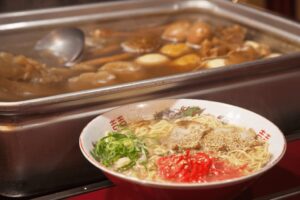
Hakata ramen is the dish that put Fukuoka on the world’s food map: a rich, milky-white tonkotsu broth simmered for hours until thick and intensely savory, served with ultra-thin straight noodles, chashu pork, green onions, and pickled ginger. The signature system is kaedama: when you finish your noodles, order a fresh serving dropped into your remaining broth for ¥100 to ¥150 extra. The yatai stalls along the Naka River serve the most atmospheric bowls.
Order kata (firm) or harigane (very firm) noodles — the local preference. Use the garlic press on the counter freely. Add sesame seeds and beni shoga (red pickled ginger) to taste.
Nagahama ramen originated at Fukuoka’s Nagahama fish market in the 1960s, where workers needed a fast, filling meal between shifts. The broth is lighter and cleaner than Hakata ramen, with a subtler pork bone base and a more delicate flavor. The noodles are the thinnest of any ramen style in Japan and cook in under 30 seconds. Nagahama ramen shops are known for being fast, no-frills, and extraordinarily good value.
The Nagahama area near the waterfront in central Fukuoka has the original cluster of shops. Many are open 24 hours, making them ideal for late-night eating after the yatai stalls close.
Kurume ramen is the direct ancestor of all tonkotsu ramen, originating in Kurume City in 1945. The broth is darker, thicker, and more intensely porky than Hakata’s version, with a stronger aroma and deeper umami. Many shops use a perpetually replenished pot called kaedare, meaning the broth grows more complex with every passing year. Ramen historians consider Kurume the most important stop on any tonkotsu pilgrimage.
Kurume City is 40 minutes from Hakata Station by express train. Taiho Ramen and Nankin Senryo are the most celebrated shops. Well worth the day trip.
Yaki ramen is a Fukuoka invention found almost nowhere else: tonkotsu ramen noodles and pork stir-fried on a hot iron plate with Worcestershire sauce and tonkotsu broth, producing a yakisoba-like dish with a distinctly ramen flavor. It was created in 1968 at a Tenjin yatai stall when customers found the soup too hot in summer. The result is crispy outside, soft inside, with a caramelized, smoky finish. Also pair this with yaki udon, the stir-fried udon version invented in the same Kitakyushu yatai culture.
Best experienced at a yatai in the Tenjin or Nakasu areas. Look for stalls with an iron griddle visible from the street. Most open from around 6pm.
🐟
Seafood and Mentaiko
Fukuoka’s access to the Genkai Sea and Hakata Bay makes its seafood hyper-fresh
Karashi mentaiko is Fukuoka’s most famous ingredient: plump sacs of walleye pollack roe marinated in red chili, sake, and spices. Originally adapted from Korean culture in 1949 by Fukuoka company Fukuya, it is now a national obsession with over 300 producers in Fukuoka alone. Eat it over rice, as pasta sauce, stuffed in onigiri, or raw as a side dish. It is Fukuoka’s most popular souvenir by a large margin.
Fukuya (est. 1949, the original producer) and Yamaya are the most celebrated brands. Buy directly from their Hakata shops for the freshest product. Try it on hot rice with a raw egg for the ultimate Fukuoka breakfast.
Raw mackerel marinated in soy sauce, sesame oil, sesame seeds, green onions, and ginger, served as sashimi over rice or on its own. Mackerel is usually avoided raw in Japan due to spoilage concerns, but Fukuoka’s hyper-fresh catch from Hakata Bay makes goma saba possible and extraordinary. The sesame coating adds nuttiness that perfectly complements the rich, oily fish. Found almost exclusively in Fukuoka.
Order at izakaya and seafood restaurants in Nakasu and Tenjin. Always confirm the mackerel is fresh-caught that day — reputable restaurants will confirm this readily. Eat immediately.
Kashiwa udon is one of Fukuoka’s most beloved everyday dishes: soft udon noodles in a light chicken broth topped with sweet-soy-simmered chicken (kashiwa means chicken in Kyushu dialect). It is Fukuoka’s iconic platform food, sold at standing counters on train station platforms across Kitakyushu. Featured in the famous food manga Cooking Papa, it holds a deep place in local food culture far beyond its modest price.
The most famous version is at Platto Pit on Kokura Station’s platforms, operating since 1958. At ¥390, it is one of Japan’s best-value meals. Buy a ticket from the vending machine before sitting.
🍲
Hot Pots
Fukuoka’s nabe culture is among the richest in Japan
Motsunabe is Fukuoka’s signature hot pot: beef and pork offal (motsu) simmered in a rich miso or soy sauce broth with mountains of cabbage, garlic chives (nira), tofu, and garlic. The motsu becomes meltingly tender while the vegetables absorb the fatty, deeply savory broth. Originally a post-war working-class dish, it exploded into a nationwide trend in the 1990s and remains one of Fukuoka’s most celebrated dishes. A pot of motsunabe with champon noodles added at the end to finish the broth is a Fukuoka essential.
The Nakasu and Tenjin areas have dozens of dedicated motsunabe restaurants. Rakutenchi and Hakata Motsunabe Yamaya are two of the most reliable. Best in autumn and winter.
¥¥¥ to ¥¥¥¥ · ¥3,000 to ¥8,000 per person (~$20 to $53)
Mizutaki is Hakata’s most elegant hot pot and one of Japan’s four great chicken nabe dishes. Whole chicken on the bone is simmered for hours in a pure water broth until the stock turns rich and milky, then vegetables, tofu, and chicken pieces are added and cooked at the table. It is eaten with a ponzu citrus dipping sauce and a side of spicy condiments. Unlike motsunabe, mizutaki is a refined dining experience that reflects Fukuoka’s connection to Chinese cooking techniques brought via trade.
Hakata Mizutaki Hanamidori and Toriden are the two most celebrated restaurants. Toriden’s lunch course (from ¥2,750) offers exceptional value. Reserve ahead, especially for dinner.
Yaki curry was invented in Mojiko Retro in Kitakyushu in the 1950s: Japanese curry rice topped with a raw egg and cheese, then baked in an oven until bubbling and golden. The baking caramelizes the curry, deepens the flavors, and creates a crusty, crispy edge around the dish. Kitakyushu City has actively promoted yaki curry as a regional specialty, and dozens of restaurants in the Mojiko harbor area now serve it, each with their own unique recipe.
Mojiko Retro, a preserved Meiji-era harbor area 45 minutes from Hakata, is the original home of yaki curry. The harbor district has over 30 yaki curry restaurants to compare.
🍢
Grills and Gyoza
Fukuoka’s yakitori and gyoza traditions are distinctly its own
Tori kawa is Fukuoka’s most beloved yakitori specialty: chicken skin wrapped tightly around a skewer and grilled over charcoal repeatedly, basting each time with tare sauce, until the outside is shatteringly crispy while the inside remains chewy and rich with rendered fat. A single skewer goes through 30 to 40 minutes of repeated grilling. The technique was invented in Hakata and produces a texture unlike standard chicken skin anywhere else in Japan.
The Yakitori Alley under the Shinkansen tracks near Hakata Station is the best concentration of tori kawa specialists. Most require minimum orders of 5 skewers. Always order extra.
Tetsunabe gyoza is Fukuoka’s signature gyoza style: small, delicate dumplings cooked in a round cast iron pot that creates an extraordinary crispy base while steaming the tops. Unlike Tokyo’s flat-pan gyoza, these are served directly in the iron pot, making the entire bottom a connected sheet of golden crisp. The filling tends toward lighter and juicier than standard gyoza, with a higher proportion of vegetables and a thinner skin.
Shin Shin in Tenjin is Fukuoka’s most celebrated gyoza restaurant and also serves exceptional Hakata ramen. The combination of gyoza and ramen in one sitting is the ideal Fukuoka meal.
Gameni is Fukuoka’s version of chikuzen-ni: chicken and root vegetables including burdock, lotus root, carrot, and konjac simmered together in a sweet soy sauce and mirin broth. It originated during the Toyotomi Hideyoshi invasions of Korea in the 16th century, when soldiers cooked whatever was available in a pot together. The name comes from “gamekuri” (frog-catching), reflecting the eclectic mix of ingredients. Today it is a beloved home-cooking staple and festival food in Fukuoka Prefecture.
Gameni is found at traditional izakaya, home-style restaurants, and during festivals throughout Fukuoka. It is particularly common during New Year celebrations as an osechi (traditional holiday food).
🍱
Local Specialties
Dishes unique to Fukuoka that rarely appear outside the prefecture
14Yatai Experience
屋台 · Outdoor Food Stalls
¥¥ · ¥1,500 to ¥3,000 per person (~$10 to $20)
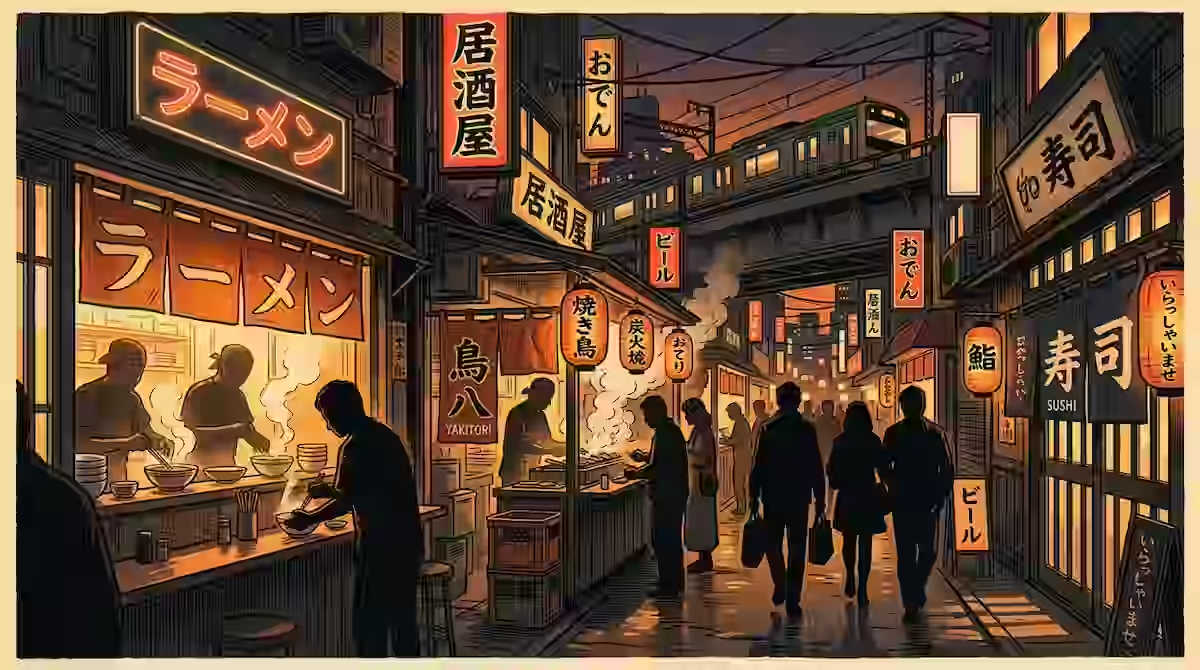
The yatai outdoor food stall is Fukuoka’s most iconic food experience and largely unique to this city in modern Japan. Roughly 100 licensed yatai operate across the city each evening, serving ramen, yakitori, oden, yaki ramen, and drinks from intimate covered counters that seat 8 to 10 people. The atmosphere is convivial and cramped in the best way — locals and tourists sit side by side. The yatai stalls along the Tenjin and Nakasu riverside are UNESCO-recognized as part of Japan’s intangible cultural heritage.
Go after 7pm when the stalls are fully set up. The Tenjin area near Showa Dori has the largest concentration. Bring cash — most stalls do not accept cards. A minimal Japanese phrase like “sumimasen” (excuse me) goes a long way.
15Mentaiko Dishes
明太子料理 · Mentaiko in Everything
¥¥ · ¥700 to ¥1,500 (~$5 to $10)
Beyond eating karashi mentaiko on its own, Fukuoka has developed an entire cuisine built around the ingredient. Mentaiko pasta (spaghetti with butter and mentaiko sauce) is served at dozens of dedicated restaurants. Mentaiko toast, mentaiko-stuffed onigiri, mentaiko cream croquettes, mentaiko pizza, and mentaiko tamagoyaki are all staples of Fukuoka cafes and lunch spots. For a broader introduction to both types, the mentaiko and tarako guide explains the difference and how each is used.
The Fukuya Mentaiko Museum in Hakata offers free tastings and shows the production process. The museum shop sells gift sets that travel well as souvenirs.
16Hakata Oden
博多おでん
¥¥ · ¥150 to ¥400 per piece (~$1 to $2.70)
Hakata oden uses a lighter, cleaner dashi broth than the darker Tokyo version, built on a kelp and bonito base that shows the Kansai influence on Fukuoka’s cooking. Distinctive local ingredients include gobo ten (burdock and fish cake), hakata mentaiko-stuffed tofu, and chicken pieces. Oden in Fukuoka is served at yatai stalls alongside ramen, at izakaya counters, and at specialist oden restaurants throughout the city. It is particularly popular in autumn and winter.
Yatai stalls are the best place to experience hakata oden in Fukuoka. Point at what you want from the pot and order drinks alongside. The broth can be requested as a warm soup at the end of the meal.
Yaki udon was born in Kokura, Kitakyushu in 1945 when a ramen shop ran out of ramen noodles and substituted dried udon noodles instead. The chef stir-fried them with whatever vegetables and meat were available, seasoned with soy sauce. The result became a Kitakyushu staple and later spread nationwide as a comfort food dish. Fukuoka’s version uses thicker, chewier udon than the Osaka style and tends toward a soy sauce base rather than the Worcestershire-heavy versions found elsewhere.
Best tried at the original style restaurants in Kokura, Kitakyushu, about 1 hour from Hakata by local train. The Tanukimachi shopping street near Kokura Station has several yaki udon specialists.
🍡
Sweets and Fruit
Fukuoka’s dessert culture and exceptional agricultural produce
Hakata Torimon is Fukuoka’s most beloved souvenir sweet: a soft European-style butter cookie filled with smooth white bean paste and cream. It has won Japan’s national confectionery award (Monoyomi Grand Prix) for over 20 consecutive years and is one of Japan’s top-selling regional sweets. The texture is cloud-soft, the filling is mildly sweet, and the buttery pastry is extraordinarily delicate. Also worth trying is kuri manju, the chestnut-filled wagashi that holds a searching ranking position on this site.
Available at shops throughout Hakata Station and Fukuoka Airport. Buy on the day of departure as they have a shelf life of about 10 days. The standard box of 10 pieces is the most popular gift size.
The Amaou strawberry is Japan’s most celebrated strawberry variety and one of Fukuoka’s greatest agricultural achievements. The name is an acronym of its four qualities in Japanese: amai (sweet), marui (round), okii (large), and umai (delicious). The berries are enormous, intensely sweet, and startlingly red throughout the flesh. Available from December to May, they are served as fresh fruit, in parfaits, in daifuku mochi, and as matcha-and-strawberry desserts throughout Fukuoka’s cafes.
Peak season is February and March. Strawberry picking farms (ichigo gari) in rural Fukuoka Prefecture offer all-you-can-eat sessions from ¥1,500 to ¥2,500. Book ahead in February as spots fill quickly.
Kuri manju is a traditional Japanese wagashi made with a soft baked dough filled with sweet bean paste and chestnut, shaped to resemble a chestnut. It is one of Japan’s most popular souvenir sweets, especially associated with Fukuoka and the Kyushu region. The baked version has a golden, slightly crispy exterior that gives way to a gently sweet, earthy filling. It holds a strong search ranking on this site, reflecting its national popularity as a gift sweet from the region.
Available at souvenir shops throughout Hakata Station. The best versions are freshly baked and still warm. Chikugoya and Nishitetsu Grand Hotel shops are among the most celebrated producers.
📍
Where to Eat by Area
Fukuoka’s food is concentrated in a few key neighborhoods within easy walking distance of each other
🏮 Nakasu
Yatai stalls (riverside, evenings)
Hakata ramen shops
Goma saba izakaya
Motsunabe restaurants
🏙️ Tenjin
Yatai stalls (Showa Dori)
Tetsunabe gyoza (Shin Shin)
Mentaiko pasta restaurants
Department food halls
🚉 Hakata Station Area
Yakitori alley (tori kawa)
Nagahama ramen (nearby)
Souvenir shopping (Torimon, Kuri Manju)
Mentaiko shops
🐟 Nagahama
Nagahama ramen (24hr)
Fresh seafood market
Early morning fish auctions
🏯 Mojiko Retro (Kitakyushu)
Yaki curry (30+ restaurants)
Retro harbor atmosphere
45 min from Hakata by train
🍜 Kurume City
Original tonkotsu ramen
Kurume ramen pilgrimage
40 min from Hakata by express
Budget Breakdown: A Day of Eating in Fukuoka
Meal
Dish
Cost (¥)
Cost (USD)
Breakfast
Mentaiko rice set at a cafe
¥600 to ¥1,000
~$4 to $7
Lunch
Hakata ramen with kaedama
¥800 to ¥1,100
~$5 to $7
Afternoon snack
Kashiwa udon at station
¥390
~$2.60
Dinner (yatai)
Yatai: ramen, yakitori, beer
¥2,000 to ¥3,000
~$13 to $20
Dinner (restaurant)
Motsunabe course for 2
¥4,000 to ¥7,000
~$27 to $47
Day total (casual)
~¥3,800 to ¥5,500
~$25 to $37
💡
Practical Tips for Eating in Fukuoka
What to know before your first bowl
The key to eating in Fukuoka: Eat at the yatai at least once. It is one of Japan’s most irreplaceable food experiences and exists almost nowhere else in the country in this form.
🕐 Hours and Access
Yatai stalls open from around 6pm and close around midnight or later. Most ramen shops open from 11am and many run 24 hours. Hakata Station is the central transport hub with Shinkansen connections to Osaka (2h 15min) and Tokyo (5h). Fukuoka Airport is only 2 stops from Hakata by subway.
💳 Cash vs. Card
Yatai stalls and smaller ramen shops are cash-only. Most larger restaurants and shops at Hakata Station accept cards. Bring ¥5,000 to ¥10,000 in cash for a day of eating. ATMs at 7-Eleven and Japan Post accept international cards reliably.
🌿 Dietary Restrictions
Fukuoka is challenging for vegetarians due to the dominance of pork-based tonkotsu broth. Vegetarian ramen exists but requires searching. Apps like HappyCow and Gurunavi English can help locate suitable restaurants. Seafood options are plentiful for pescatarians.
🚇 Getting Around
Fukuoka City is compact and walkable between Hakata Station, Nakasu, and Tenjin. The Fukuoka City Subway connects all key areas. A day pass (¥640) covers unlimited rides and is worthwhile if visiting Mojiko or multiple neighborhoods.












Comments