





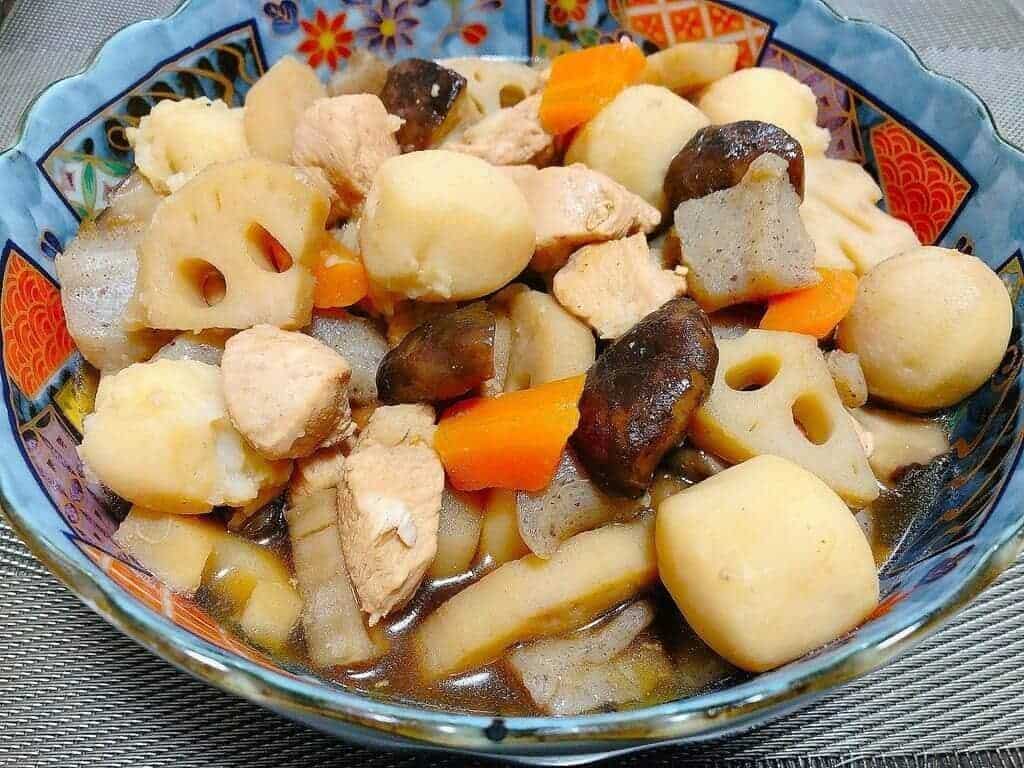
Gameni is Fukuoka’s chicken and root vegetable stew, a New Year dish similar to Chikuzenni with an easy home recipe.
Gameni is a Fukuoka local dish where cooks simmer chicken, burdock root, lotus root, konnyaku, and other vegetables in seasoned dashi. They often stir-fry the ingredients first, then braise them gently, so the stew tastes rich yet homey. Outside Fukuoka, many people know this chicken and root vegetable stew as Chikuzenni, although the name Gameni comes from the Hakata dialect word “gamekurikomu.”
This article explains what Gameni is, the Chikuzenni difference, its history, recipe, and where to eat it in Fukuoka. You will also see when locals serve this celebratory New Year dish, how to adapt the recipe at home, and how Gameni fits beside other Fukuoka favorites such as mizutaki, motsunabe, kashiwa udon, and Hakata ramen.
What Is Gameni?
Overview of this Fukuoka local dish
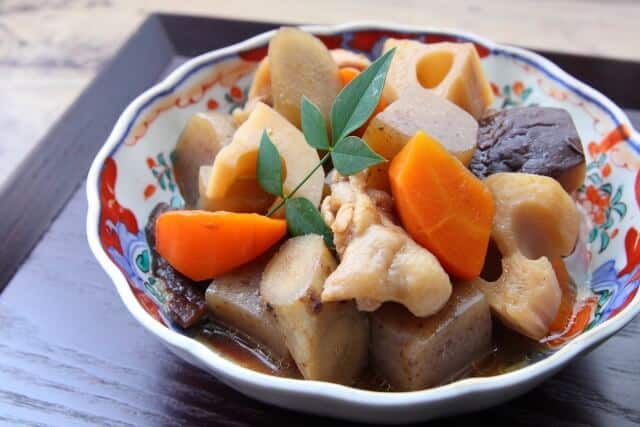
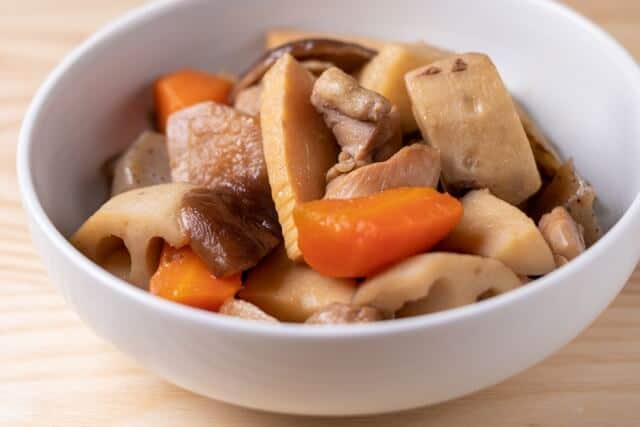
Gameni is a simmered chicken and root vegetable stew from Fukuoka Prefecture in northern Kyushu. The name comes from the Hakata dialect word “gamekurikomu,” which means to gather or mix many things together in one pot. That image fits the dish well, because cooks combine several roots, konnyaku, and chicken, then season everything in a single pan.
Flavor, ingredients, and local role
Typical ingredients include chicken, burdock root, lotus root, carrot, taro or potato, konnyaku, shiitake mushrooms, and green beans or peas. Many families briefly stir-fry the chicken and vegetables in oil before simmering them in dashi with soy sauce, mirin, and sugar. Others start with simmering and rely more on the chicken fat instead of added oil. Today, many people outside Fukuoka call similar dishes Chikuzenni, but in Fukuoka the local name Gameni remains strong.
Locals treat Gameni as one of the representative Fukuoka local dishes. It appears at New Year as part of festive spreads and also on everyday dinner tables. The stew shares ingredients with other Fukuoka favorites that use burdock and chicken, such as mizutaki hot pot and gobo-rich udon, so it feels very rooted in the region.
People in Fukuoka sometimes rank this stew alongside mizutaki among the prefecture’s best-known rural local dishes. Statistics also show that Fukuoka City has some of the highest burdock root consumption in Japan, and Gameni uses generous amounts of burdock. That connection probably helped the stew become a symbol of the area’s home cooking.
History and Origin of Gameni
From Chikuzen to modern Fukuoka
Gameni developed in the old Chikuzen domain, which broadly corresponds to modern Fukuoka Prefecture. Because of this origin, people sometimes call the dish Chikuzenni, especially outside Kyushu. Several stories exist about how the Gameni name itself started.
Origin stories and name meaning
One explanation links Gameni directly to the Hakata word “gamekurikomu,” meaning to gather or mix many things together. Another story says hunters and farmers simmered “mud turtles” caught in local rivers with vegetables, and over time “kameni” or “game” became Gameni. These tales show how strongly people tie the dish to local dialect and everyday life, even if the exact path is hard to prove.
Another popular origin story connects Gameni to the Bunroku campaign under Toyotomi Hideyoshi. According to this account, soldiers in Hakata stewed soft-shelled turtle with whatever vegetables they had on hand. Over the years, chicken gradually replaced turtle as a more practical and acceptable everyday ingredient. Many local accounts treat this episode as an early origin story of Gameni rather than a precise recipe.
Why it became a celebratory dish
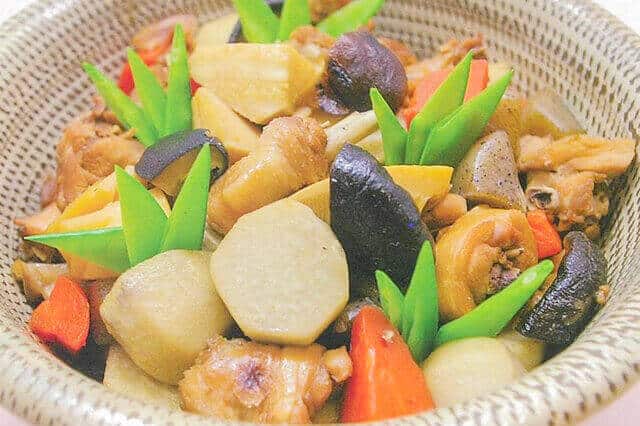
Historically, households in rural Kyushu raised chickens in their yards and treated them as valuable food. Families usually kept those birds for special days such as Obon, New Year, weddings, and other important gatherings. When people cooked Gameni with that home-raised chicken, the stew naturally took on the role of celebratory food.
Root vegetables like burdock root, lotus root, carrot, and taro store well through winter. They also stand up to long simmering in sweet-salty broth. Because of that, Gameni matched the needs of New Year and festival cooking, when people wanted dishes that could be prepared in advance and served over several days. These practical reasons helped Gameni become a central part of Fukuoka’s festive meals.
Gameni vs Chikuzenni
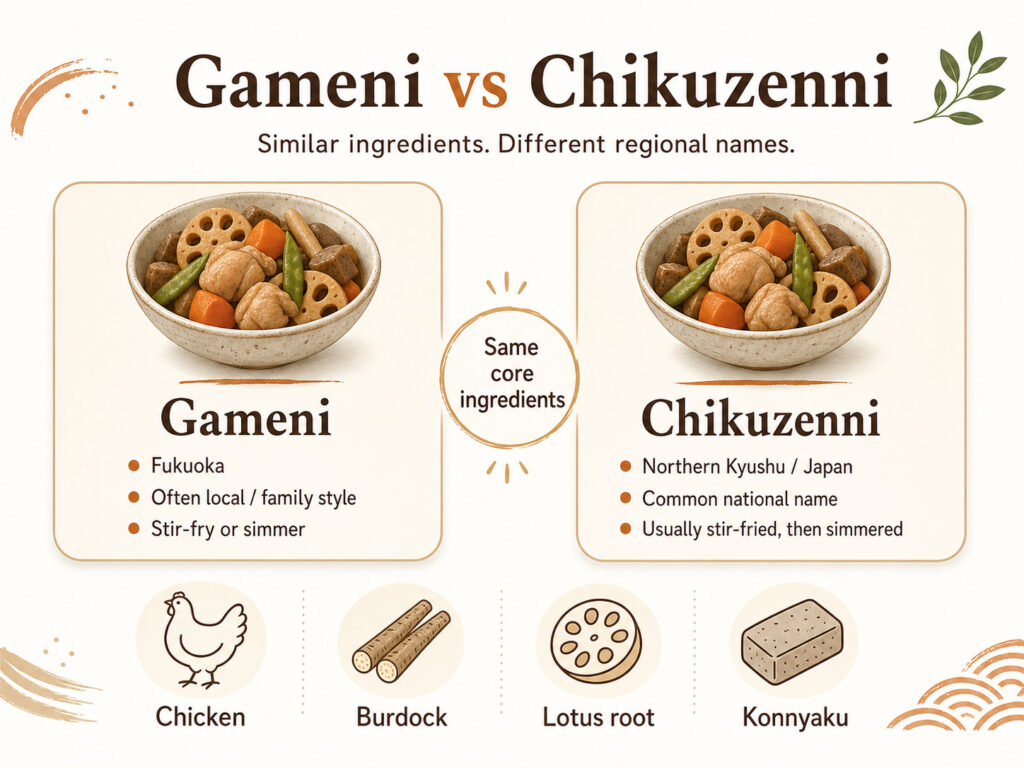
Gameni and Chikuzenni look almost identical at first glance. Both are chicken and root vegetable stews that use burdock root, lotus root, carrot, taro or potato, konnyaku, and shiitake mushrooms. Many people search for “Gameni vs Chikuzenni” because they wonder whether the dishes are actually different.
Traditionally, recipes for Chikuzenni often start by stir-frying chicken and vegetables in oil before simmering them in a seasoned broth. Many Fukuoka families prepare Gameni in almost the same way, while others place the ingredients directly into dashi and let the chicken fat provide richness. Some households therefore start by stir-frying the ingredients, while others focus on simmering. Today, the difference between Gameni and Chikuzenni is usually more regional than technical.
Historically, cooks made Gameni with older egg-laying hens or bone-in chicken, so the stew contained more natural fat and flavor. Modern home cooks often choose boneless thigh pieces for convenience, yet they still call the dish Gameni in Fukuoka. Outside Kyushu, people tend to use the general name Chikuzenni for similar simmered chicken dishes, especially in New Year osechi spreads.
| Aspect | Gameni | Chikuzenni |
|---|---|---|
| Region | Fukuoka Prefecture and Hakata area | Northern Kyushu and the rest of Japan |
| Typical name | Gameni or Game-ni | Chikuzenni, sometimes called simmered chicken and vegetables |
| Chicken parts | Originally bone-in older hens, now often boneless thigh | Usually boneless thigh or mixed pieces |
| Use of oil | Some cooks rely on chicken fat, others stir-fry lightly in oil | Commonly stir-fried in oil before simmering |
| Representative ingredients | Chicken, burdock root, lotus root, taro or potato, konnyaku, shiitake, carrot | Very similar mix of roots, konnyaku, and mushrooms |
| Celebratory role | Key Fukuoka New Year dish and festival stew | Common osechi-style nimono across Japan |
| Naming focus | Highlights Hakata dialect and local identity | Uses old province name Chikuzen |
Key Ingredients of Gameni
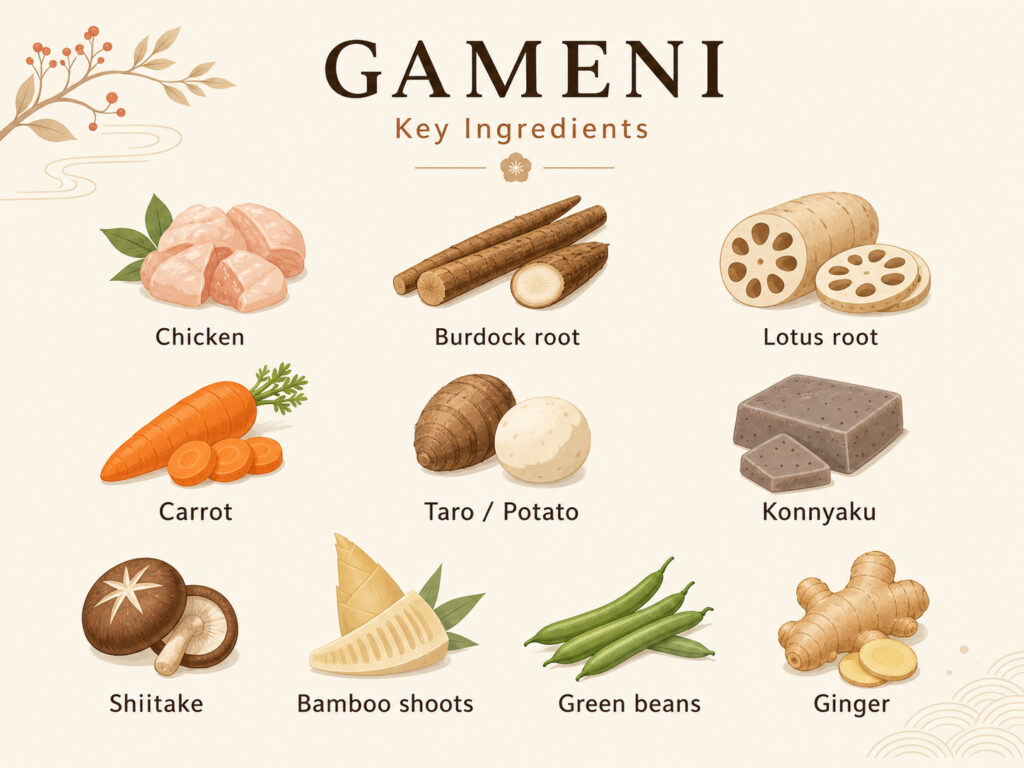
Chicken: Most households use chicken thigh for tender meat and rich flavor. Bone-in pieces or wings add extra depth to the broth.
Burdock root (gobo): Burdock brings earthy aroma and a firm bite. Its long roots symbolize stability and good fortune in New Year dishes.
Lotus root (renkon): Lotus root keeps its crunchy texture even after simmering. The holes are thought to represent a clear view of the future.
Carrot: Carrot adds sweetness and color contrast. Many cooks cut it into rounds or flower shapes for celebratory platters.
Taro or potato: Taro gives a creamy, sticky texture that thickens the sauce slightly. If taro is unavailable, waxy potatoes work as a practical substitute.
Konnyaku: Konnyaku contributes a firm, bouncy texture and soaks up the seasoned broth. It also lightens the dish because it contains very few calories.
Shiitake mushrooms: Dried shiitake provide deep umami and a distinctive aroma. Fresh shiitake can replace them, although the flavor becomes a little milder.
Bamboo shoots: Bamboo shoots add a gentle crunch and seasonal note, especially in spring. They also absorb flavor quickly, so they taste strongly of the broth.
Green beans or snow peas: Green vegetables brighten the dish visually and add a fresh snap. Cooks often scatter them on top just before serving.
Ginger: Ginger cuts any heaviness from the chicken fat and adds a soft warmth. Some people garnish each bowl with finely sliced ginger on top.
When People Eat Gameni
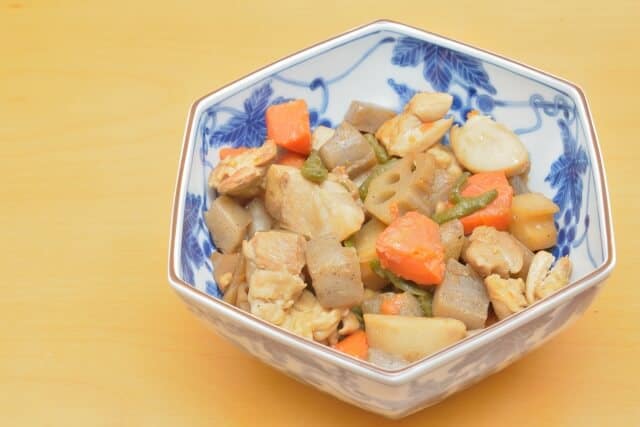
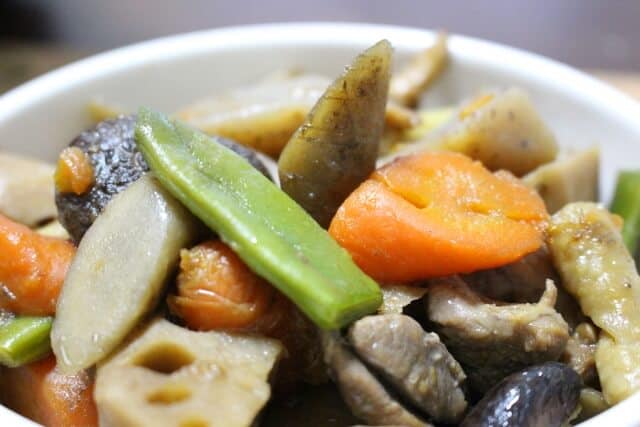
People in Fukuoka most strongly associate Gameni with New Year meals. Families prepare it in advance, place it in small bowls or lacquer boxes, and enjoy it over the first few days of the year. The stew sits comfortably beside other osechi dishes and plays the role of a hearty, home-style nimono.
However, New Year is not the only time you encounter this dish. Households also cook it for weddings, local festivals, community gatherings, and the Hakata Gion Yamakasa celebrations. Because the flavors improve overnight, it works very well for events where people want to serve many guests.
At the table, Gameni usually appears as a side dish rather than a single large main plate. Diners eat a few pieces alongside rice, miso soup, and sometimes sake. Many people also treat leftover Gameni as a comforting next-day dish, when the broth has soaked even deeper into the roots.
Outside formal occasions, this stew still belongs firmly to everyday home cooking in Fukuoka and parts of neighboring Kyushu. Some school lunch programs in the region serve a Chikuzenni-style nimono so children grow up with the flavor. Travelers may not see Gameni written in big letters on tourist billboards, but they can often find it quietly present in local meals.
Gameni Recipe
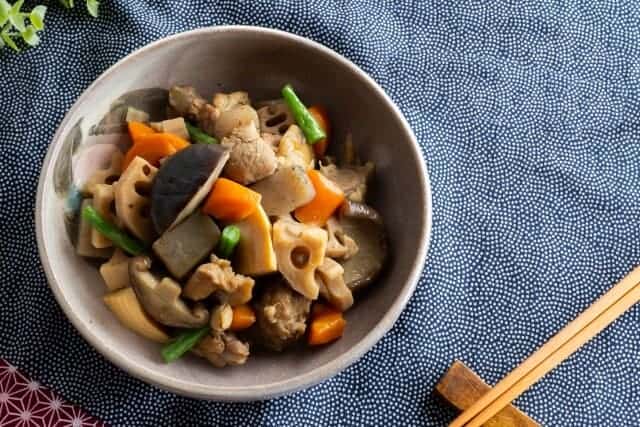
This Gameni recipe makes a classic Fukuoka-style chicken and root vegetable stew for about four to five people. The flavors are gentle but deep, so the dish suits people of many ages. You can serve it warm on the day of cooking or let it rest overnight for an even richer taste.
Approximate prep time is 20 minutes. Cooking time is about 25 minutes. Total time is roughly 45 minutes from start to finish.
If you cannot find taro, you can replace it with firm potatoes that hold their shape. When dried shiitake are hard to source, you can use fresh shiitake mushrooms and supplement with a slightly stronger dashi base.
Ingredients
| Ingredients of Gameni for 4-5 persons | Measurements |
|---|---|
| Chicken thigh | 250-300g |
| Potato (or taro) | 300g |
| Carrot | 80g |
| Bamboo shoot | 100g |
| Dried shiitake | 10g (3-4 pieces) |
| Green beans | 20g |
| Konnyaku | 100g |
| Dashi soup | 400g |
| [Seasoning A] Soy sauce | 25-30g |
| [Seasoning A] Salt | 4-5g |
| [Seasoning A] Mirin | 30g |
| [Seasoning A] Sugar | 20-30g |
| Oil | 14g |
| Ginger | 15g |
Prep
Soak the dried shiitake mushrooms in water until they soften, ideally for at least thirty minutes. Reserve the soaking liquid and use it as part of the dashi if you want extra umami.
Peel the potatoes or taro and cut them into bite-size chunks. Scrub the burdock root if you are using it, then cut it on a diagonal into thin pieces and soak briefly in water to remove excess bitterness.
Cut the bamboo shoots and konnyaku into similar bite-size pieces so they cook evenly. Trim the green beans and cut them into four to five centimeter lengths.
Peel and slice the ginger into thin strips for garnish, and finely mince a small portion if you like a stronger ginger note in the stew. Finally, cut the chicken thighs into bite-size pieces and pat them dry with kitchen paper.
Cooking Steps
Cut the chicken, potatoes or taro, and carrots into bite-size chunks. Try to keep the pieces similar in size so they cook evenly.
Cut the bamboo shoots and konnyaku into similar pieces. Rehydrate the shiitake if dried, then cut them in half or into thick slices.
Boil the green beans briefly in salted water until bright green, then cool them in cold water and drain well.
Heat the oil in a wide pan. Add the chicken and stir-fry until the surface turns opaque, then add shiitake, potatoes or taro, carrots, bamboo shoots, and konnyaku and stir-fry lightly.
Pour in the dashi and any reserved shiitake soaking liquid until the ingredients are just covered, then add soy sauce, salt, mirin, and sugar. Bring everything to a gentle boil, skim off any foam, cover with a drop lid if available, and simmer until the vegetables are tender and the liquid has reduced to a glossy sauce.
Add the blanched green beans at the end and warm them through. Taste and adjust the seasoning if needed, then transfer the Gameni to a serving bowl and top with sliced ginger.
How to Serve Gameni
Serve Gameni warm or at room temperature in small individual bowls, especially when it forms part of a larger meal. In Fukuoka, people often place a small portion beside rice, sashimi, or grilled dishes rather than eating a huge plate by itself.
Because the flavor develops as it cools, many home cooks prepare Gameni a day before New Year or big events. Leftovers taste excellent the next morning, so some families intentionally cook extra. The stew also pairs naturally with sake, thanks to its sweet-savory soy base and rich chicken flavor.
Quick Home Version
When you want a quicker version, you can use ready-made dashi granules and fresh shiitake instead of dried. Frozen mixed root vegetables also reduce prep time and still give a satisfying texture.
For a lighter everyday dish, you can reduce the sugar slightly and add more vegetables than chicken. If you need a vegetarian-style Gameni, you can omit the chicken, replace the broth with kombu and shiitake dashi, and increase the amount of roots and konnyaku. The flavor profile changes, but the feeling of a mixed root vegetable stew remains.
Where to Eat Gameni in Fukuoka
Travelers rarely find restaurants that specialize only in Gameni. Instead, they usually meet this stew as part of set meals, small side dishes, or New Year osechi boxes. Supermarket delicatessen counters, department store basement food halls, and neighborhood prepared food shops often sell small portions of Gameni, especially around the year-end holidays.
In Fukuoka City, many local cuisine restaurants and izakaya include Gameni alongside other Fukuoka local dishes such as mizutaki, motsunabe, and kashiwa udon. Prices vary, but this simmered dish most often appears as a small bowl in a course menu or as a side dish, not as an expensive centerpiece. If you look for mixed chicken and root vegetable stews on the menu, staff can usually point out something very close to Gameni.
Ishikura (いしくら)
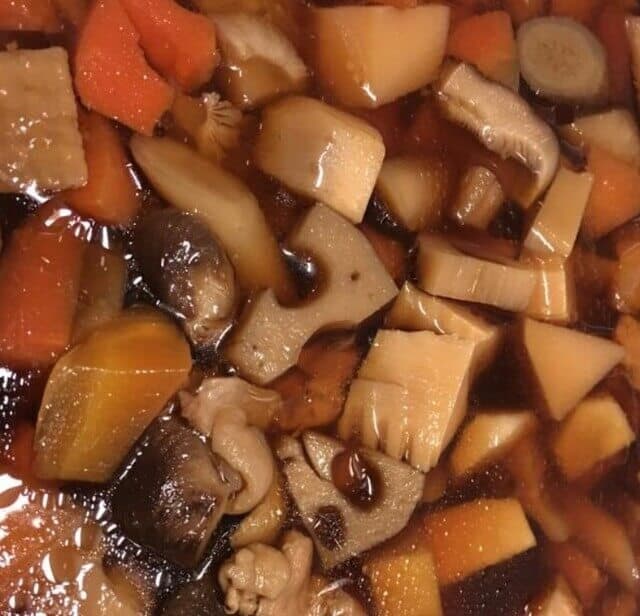
Ishikura is a restaurant that offers Hakata flavors in a series of small bowls and course menus. Gameni appears here as one of several simmered dishes rather than a single main attraction. Because each chef has a slightly different touch, tasting their version gives you a good sense of how home-style cooking translates into restaurant fare.
Fukuoka Musashi (福岡武蔵)
Fukuoka Musashi is another place where you can taste Gameni among a range of regional dishes. The shop focuses on carefully made soup stocks, so their version of the stew has a deep yet gentle flavor. Rather than marketing Gameni alone, they present it alongside other Fukuoka specialties in course meals and seasonal menus.
Final Thoughts
Gameni is Fukuoka’s celebratory chicken and root vegetable stew, known for its home-style warmth and strong ties to New Year tables. The dish started as a practical way to cook local roots and precious chicken, yet it grew into a symbol of family gatherings, festivals, and community events. In many ways, Gameni represents the quiet side of Fukuoka cuisine, where everyday flavors and special occasions overlap.
For visitors, this stew offers a gentle entry point into Kyushu’s food culture. You can taste it alongside richer dishes such as mizutaki chicken hot pot or hearty motsunabe. When you combine those with noodle dishes like kashiwa udon and Hakata ramen, you start to see how Gameni fits into the wider picture of Fukuoka local dishes.
You can also explore more Japanese vegetable dishes that highlight regional roots, mushrooms, and seasonal produce across Japan.
Gameni FAQ
- What is Gameni?
-
Gameni is a Fukuoka local dish of chicken and root vegetables simmered in sweet-savory dashi. Most families include burdock root, lotus root, carrot, taro or potato, konnyaku, and shiitake mushrooms. People often serve it at New Year and family celebrations, but they also cook it as a comforting everyday side dish.
- How is Gameni different from Chikuzenni?
-
Most recipes for Chikuzenni start by stir-frying chicken and vegetables in oil, then simmering them in seasoned broth. Many Fukuoka households prepare Gameni the same way, while others simmer the ingredients directly in dashi and rely on chicken fat for richness. Today, the difference between Gameni and Chikuzenni is usually the regional name rather than a strict rule about oil or technique.
- Why is it called Gameni?
-
Most explanations say the name comes from the Hakata dialect verb “gamekurikomu,” which means to gather or mix many things together. That matches the way cooks combine chicken, roots, and konnyaku in one pot. Another story links the name to old turtle stews eaten in the Chikuzen area, but the dialect theory is more widely accepted today.
- When do people eat Gameni?
-
Most Fukuoka households think of Gameni first as a New Year dish. They also serve it at weddings, local festivals, Buddhist memorials, and community gatherings. Outside these occasions, many families cook smaller batches for everyday dinners, especially when they have plenty of root vegetables to use. The dish keeps well, so it fits both event menus and regular meal prep.
- Is Gameni vegetarian?
-
Traditional Gameni is not vegetarian, because cooks usually include chicken and use dashi made from animal products or dried fish. However, you can make a vegetarian-style version at home by replacing the chicken with extra root vegetables and tofu. If you use kombu and shiitake dashi instead of meat-based stock, the stew becomes suitable for many plant-focused diets, though the flavor profile changes slightly.
- Can I make Gameni with boneless chicken?
-
Yes, most modern home cooks use boneless chicken thigh because it is easy to handle and cooks quickly. If you prefer deeper flavor, you can add a few bone-in pieces or chicken wings to the pot. They will release extra gelatin into the broth while the boneless pieces provide convenient, tender bites.
- What other prefectures cook Gameni or similar stews?
-
Gameni itself originates in Fukuoka Prefecture, but similar chicken and root vegetable stews appear across Kyushu and the rest of Japan. In Saga, Oita, and parts of Nagasaki, families prepare dishes very close to Gameni as New Year food and for important guests. In many other regions, people simply call the dish Chikuzenni and treat it as a standard part of osechi-style home cooking.
- What other dishes are Fukuoka specialties?
-
Fukuoka is famous for dishes that feature chicken, burdock root, and rich broths. Local favorites include chicken mizutaki hot pot, creamy Hakata ramen, and offal hot pot motsunabe. Noodle dishes such as kashiwa udon also show the region’s love of chicken-based flavors and hearty, comforting meals.
References
- Ministry of Agriculture, Forestry and Fisheries (MAFF), Our Regional Cuisines: Gameni. (Surveyed: June 2026)
- Umami Information Center, Gameni, Local Cuisine in Fukuoka. (Surveyed: June 2026)
- Fukuoka Now, New Year’s and the Traditional Flavors of Hakata. (Surveyed: June 2026)
- WASHOKU – Japanese Food Culture and Cuisine, Gameni Fukuoka. (Surveyed: June 2026)
- Kokoro Care Packages, Osechi Ryori (Japanese New Year’s Meal). (Surveyed: June 2026)
- Toyama College of Welfare Science Repository, A Questionnaire Study on the New Year’s Dish, Osechi. (Surveyed: June 2026)
- Cabinet Office, Government of Japan, White Paper on Shokuiku, Policies for the Promotion of Food Education. (Surveyed: June 2026)
- NOAA / NMFS, Proceedings of the 28th Annual Symposium on Sea Turtle Biology and Conservation, cultural notes including Gameni. (Surveyed: June 2026)
Related Articles
- Mizutaki (水炊き) (Surveyed: June 2026)
- Motsunabe (もつ鍋) (Surveyed: June 2026)
- Kashiwa Udon (Surveyed: June 2026)
- Hakata Ramen (博多ラーメン) (Surveyed: June 2026)
- Japanese Vegetable Dishes (Surveyed: June 2026)



Comments
List of comments (2)
Hello! I was curious as to why your Gameni recipe has no burdock root. It seems like it is integral to the Fukuoka recipe. Also: do you mean snow peas instead of green beans?
Thank you!
its not always needed for gameni.