


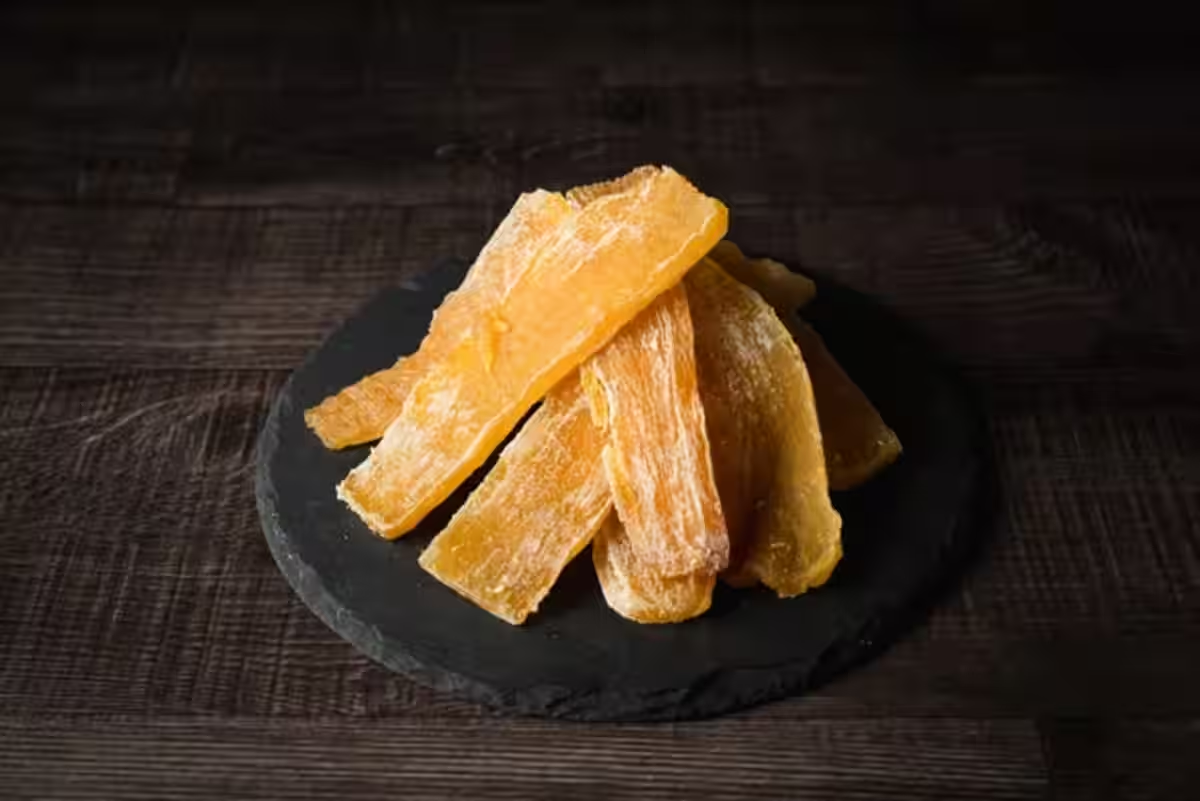




If you’ve ever wandered through a Japanese convenience store or browsed the snack aisle at an Asian grocery, you may have spotted a pale, chewy-looking slice wrapped in simple packaging. That’s hoshiimo, and it’s far more interesting than it looks at first glance. It sits quietly alongside other traditional Japanese snacks, but once you try it, it tends to stick with you.
So, what is hoshiimo exactly? The word literally means “dried sweet potato” in Japanese. It’s made from steamed sweet potatoes that are sliced and then slowly dried, with zero sugar or additives. Simple ingredients, old-school process, surprisingly addictive result.
What Is Hoshiimo? The Basics
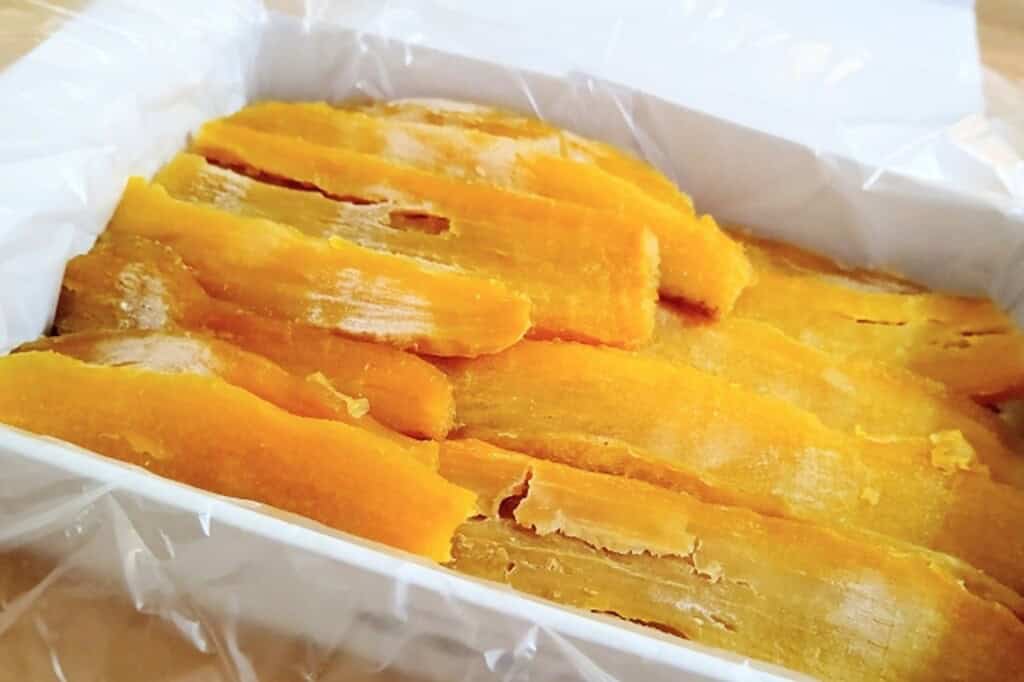
Hoshiimo (干し芋) is a traditional Japanese dried sweet potato snack that has been eaten for centuries. The process sounds almost too simple: steam the sweet potato, peel it, slice it thin, and dry it in the sun. No preservatives. No flavoring. Just the potato itself.
You might notice a white, powdery coating on the surface and wonder if something went wrong. Don’t worry. It’s not mold. That white layer is crystallized natural sugar that rises to the surface as the potato dries out. In fact, the more white powder you see, the sweeter the hoshiimo tends to be.
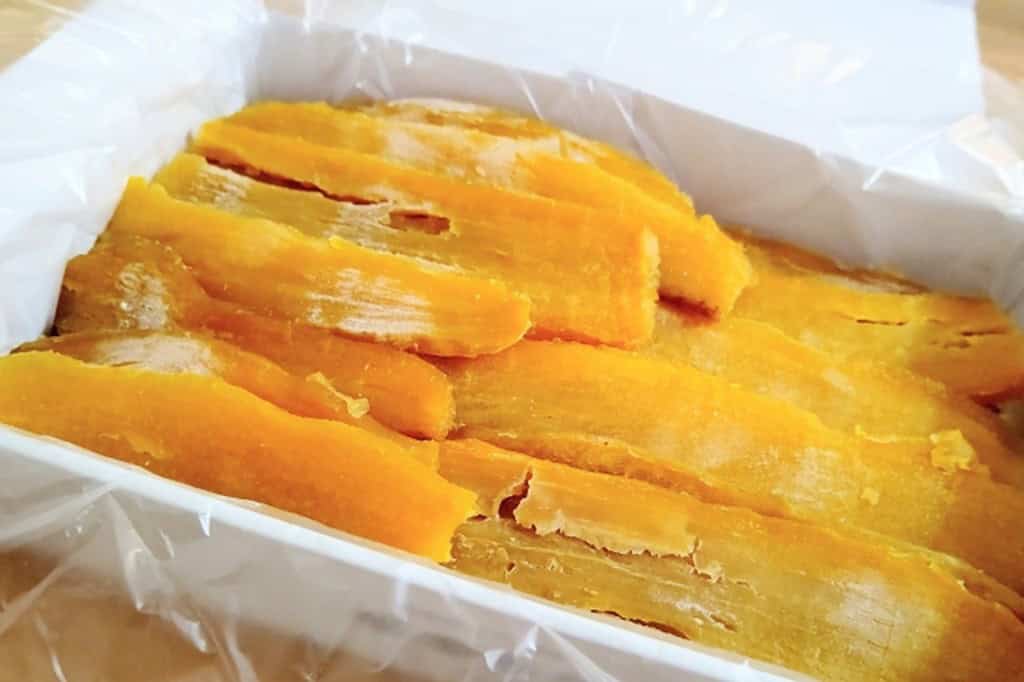
The texture varies quite a bit depending on how long it’s been dried. Fully dried hoshiimo is firmer and chewier. The semi-dried version, often called “shittori” style, is softer and almost fudge-like. For first-timers, the softer kind is usually an easier entry point.
What Does Hoshiimo Taste Like?
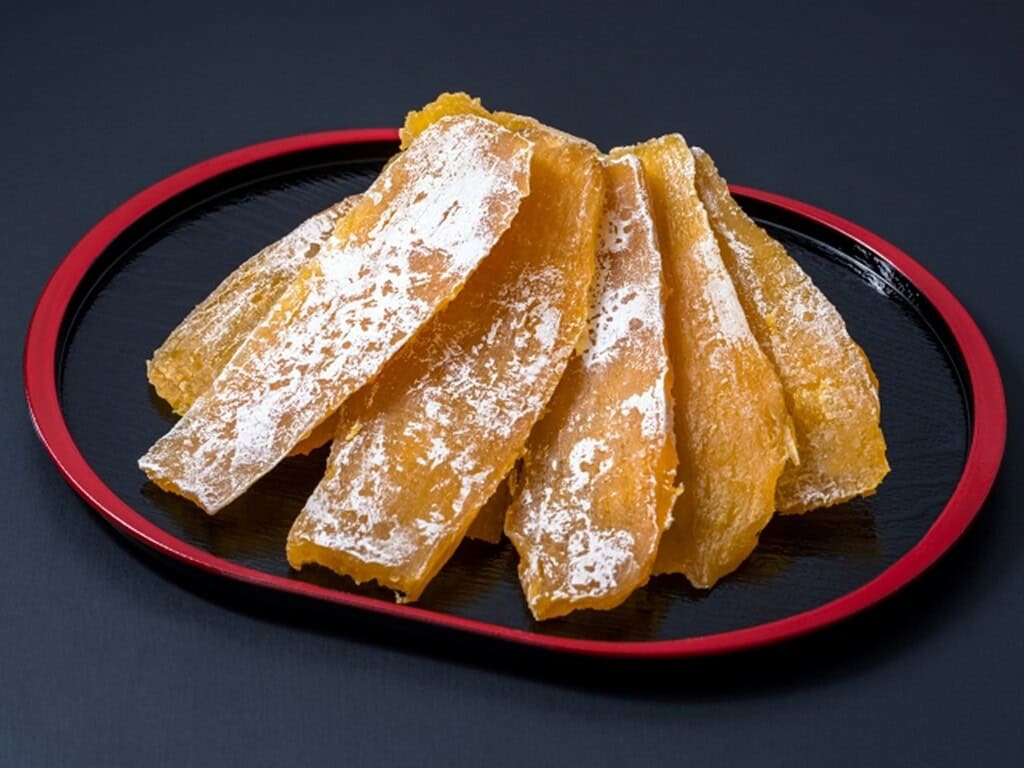
This is the question most people have before trying it. Honestly, it’s hard to describe without sounding underwhelming, but the taste is genuinely special.
Hoshiimo is sweet. Not candy-sweet, but deeply, naturally sweet in the way a perfectly ripe piece of fruit can be. The sweetness comes entirely from the potato itself, which becomes more concentrated as moisture is removed during drying. There’s also a slight earthiness underneath, a quiet richness that keeps you reaching for another piece.
The flavor depends a lot on the sweet potato variety used. Beni Haruka, now one of the most popular cultivars, produces a notably smooth, almost honey-like sweetness. Tamayutaka, an older variety, gives a more traditional, slightly denser result. Silk Sweet, as the name suggests, has a silkier texture and milder flavor.
Some people compare it loosely to dried mango or fig in terms of how concentrated and naturally sweet it feels. If you enjoy sweet potato-based Japanese confections, you might also want to try Imo Yokan, a firmer sweet potato jelly that shares a similar natural sweetness. But hoshiimo is its own thing, really.
How Is Hoshiimo Made?
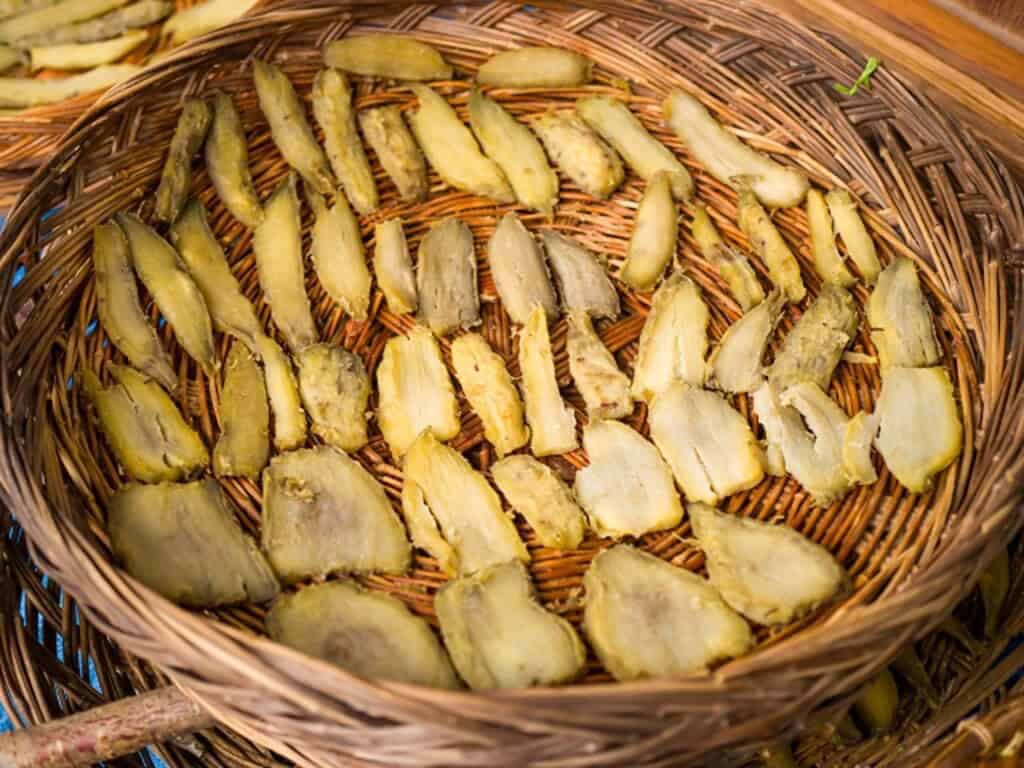
The production process is straightforward, but the details matter enormously.
After harvest in autumn, the sweet potatoes are not processed immediately. They’re stored for about a month at a controlled temperature, typically between 12 and 15 degrees Celsius. During this resting period, the starches slowly convert to sucrose. The potato gets sweeter on its own, without any help.
Once the potatoes are ready, they go into large steamers for over an hour until cooked through to the core. Peeling is done by hand while the potatoes are still hot. It’s labor-intensive and skill-dependent. The way the skin is removed affects both the appearance and the texture of the final product.
After peeling, the potatoes are sliced (usually around 1 cm thick for flat-style hoshiimo) and laid out on drying racks. Traditional producers rely on natural sunlight and ocean breezes to do the rest. The drying period runs roughly four to five days depending on conditions, though some batches take longer.
One kilogram of fresh sweet potato yields only about 200 grams of hoshiimo. That concentration is part of why the flavor is so intense.
Ibaraki Prefecture: Japan’s Hoshiimo Capital
When people talk about Japanese dried sweet potato, the conversation almost always comes back to Ibaraki Prefecture. And with good reason. Ibaraki accounts for over 90% of Japan’s domestic hoshiimo production.
The area around Hitachinaka City, in particular, has become synonymous with the craft. So why here?
The geography plays a big role. Ibaraki’s coastal areas receive strong, dry winds blowing in from the Pacific, which are ideal for outdoor drying. The soil, rich in volcanic ash and minerals from the Kanto region, suits sweet potato cultivation well. The cold winter air and long sunny days from November through March create near-perfect drying conditions.
There’s even a dedicated shrine for hoshiimo. The Hoshi-Imo Shrine, built in 2019 within the grounds of Horide Shrine in Ajigauracho, honors the people who helped build the industry. Walking through its golden torii gate, you get a sense of just how deeply this snack is woven into local identity.
The History of Hoshiimo
The story of hoshiimo starts not in Ibaraki, but in Shizuoka Prefecture, sometime in the late Edo period.
Around 1824, a merchant named Shozo Kuribayashi is credited with developing the method of boiling sweet potatoes, slicing them thin, and drying them. It spread quickly as a convenient preserved food: practical, shelf-stable, and naturally sweet.
The connection to Ibaraki came through a sailor named Terunuma Kantaro. Lost at sea and washed ashore in Shizuoka, he learned the craft while stranded there. When he eventually returned to Maehama (now part of Hitachinaka City), he brought the technique with him.
By around 1908, large-scale production had begun in Ibaraki. Local entrepreneurs, including a rice cracker maker named Toshichi Yuasa and a man named Koike Kihei, expanded production and helped turn it into a proper industry. Kihei, in particular, is remembered with a bust at Horide Shrine as the person who truly popularized hoshiimo in the region.
Production nearly stopped after World War II when sweet potatoes became a staple survival food rather than a processed snack. But the Ibaraki prefectural government actively supported revival efforts. By 1955, Ibaraki had surpassed Shizuoka to become Japan’s top producer, and it has held that position ever since. Today, hoshiimo stands alongside natto as one of Ibaraki’s most iconic food exports.
Interestingly, hoshiimo was once issued to Japanese soldiers during the Russo-Japanese War, earning it the nickname “soldier’s potatoes” for a time.
Is Hoshiimo Healthy?
It might look like just a snack, but the nutritional profile is genuinely impressive.
Hoshiimo is rich in dietary fiber, which supports digestion and helps maintain stable blood sugar levels. It contains vitamins A, B1, C, and E, along with potassium, calcium, and iron. Because drying concentrates the nutrients, you get a meaningful nutritional boost even from a small amount.
That said, calories and natural sugars are also concentrated. It’s not a low-calorie food. Eating a few pieces as a snack is sensible; treating it as something you can eat endlessly is a different story.
The absence of additives, preservatives, and refined sugar is what makes hoshiimo stand out among packaged snacks. It has quietly built a reputation as a “superfood” in Japan, and health-conscious consumers, including athletes looking for a natural energy source, have taken notice. In recent years, it has become a year-round product in convenience stores and pharmacies, no longer just a winter seasonal item.
How to Eat Hoshi imo
Straight from the package is the most common way. Room temperature or slightly chilled both work well.
For a warmer, richer experience, try toasting it lightly in a toaster oven for a few minutes. The edges caramelize slightly and the interior gets softer. It becomes almost dessert-like. A quick 20 to 30 seconds in a microwave achieves something similar, though the texture is a little different.
Some people enjoy hoshiimo alongside green tea, which balances the sweetness nicely. It fits naturally into the same moment as traditional wagashi sweets, those delicate Japanese confections that have been paired with tea for centuries. Others pair it with coffee or use it in cooking. It can be incorporated into yogurt, mixed into oatmeal, or baked into simple confections.
Storage is straightforward. At room temperature in a cool, dry spot it keeps for a while, but once opened, refrigerating it is the safer option. For longer storage, freezing works well and preserves both flavor and texture for up to three months.
Hoshiimo Today and Beyond Japan
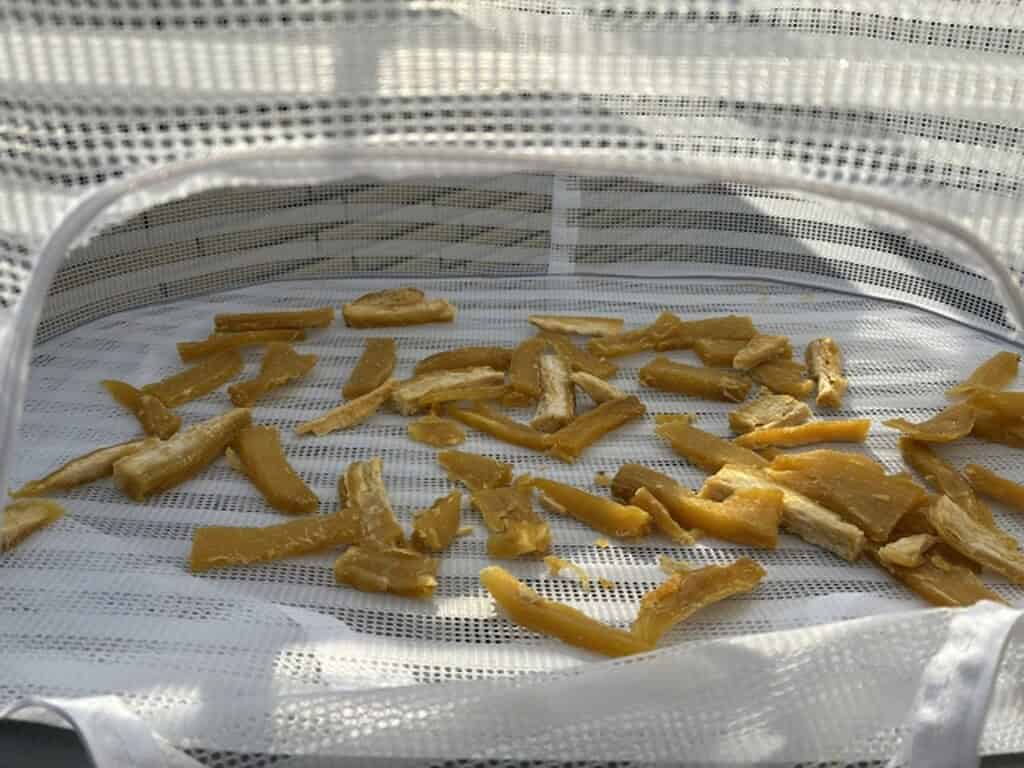
The hoshiimo world has evolved quite a bit in recent years. Premium varieties, especially those made with Beni Haruka, have become popular as gifts, carefully packaged and priced accordingly. The market now ranges from inexpensive everyday snacks at convenience stores to beautifully boxed artisan versions sold at department stores and direct farm shops.
Interest from outside Japan has grown steadily. The combination of natural sweetness, no additives, and a distinctive texture has resonated with health-focused consumers internationally. The snack is increasingly found under the label “japanese dried sweet potato” in specialty food stores and online shops worldwide.
Hoshiimo was also selected for the Agency for Cultural Affairs “100-Year Foods” program, which recognizes food cultures passed down across generations in Japan. It’s a small acknowledgment of something that has always been true: this is a food with real roots, real craft, and genuine staying power. If you’re curious to explore more of what Ibaraki has to offer, Kenchin Soba is another beloved local dish worth discovering.
References
Kouta Shouten – Hoshiimo Producer, Ibaraki: https://www.k-sho.co.jp/english/
Ministry of Agriculture, Forestry and Fisheries (MAFF) – Hoshiimo Traditional Foods: https://www.maff.go.jp/e/policies/market/dento_syoku/menu/hosiimo.html
Ministry of Agriculture, Forestry and Fisheries (MAFF) – Regional Cuisines: https://local-cuisine.maff.go.jp/en/recipe/1397/
Shungate – Ibaraki’s Amber-Colored Dried Sweet Potatoes: https://shun-gate.com/en/roots/roots_125
Hoshiimo Organic (Ibaraki): https://hoshiimo-organic.jp/en/
Comments