Tokyo has more restaurants per capita than any other city on earth. For first-time visitors, that abundance is both exciting and overwhelming. This guide cuts through it: 20 dishes that are genuinely essential to Tokyo’s food identity, organized by category, with notes on where to find them, how much to pay, and which neighborhoods to target. From the Edo-era origins of monjayaki to the standing sushi bars of Tsukiji, these are the foods that define eating in Tokyo.
🗺️
How to use this guide
20 dishes are organized into 5 categories. Each entry links to a dedicated food page for deeper reading.
Each dish includes the best neighborhood or venue type. Use the area guide below for planning.
🔗
Deep Dives
Blue links lead to dedicated articles on each dish — history, variations, and specific restaurant recommendations.
TOC
Tokyo Originals — Dishes Born in Edo
These dishes originated in Tokyo (then called Edo) and are found at their most authentic here. Starting with these gives you the city’s culinary foundation.
01–03: Sushi, Monjayaki & Fukagawa Meshi
01
江戸前寿司
Edomae Sushi
Sushi · ¥¥–¥¥¥¥ | ¥1,000–¥80,000+ (~$7–$550+)
The original Tokyo sushi style — nigiri made with vinegared rice and fresh seafood from Tokyo Bay. Although it developed in the Edo period as street food, it is now the foundation for the world’s most celebrated sushi tradition. The key distinction is the shari: warm, lightly seasoned, and pressed by hand. As a result, you can find it everywhere from ¥500 standing bars in Tsukiji to ¥80,000 omakase counters in Ginza.
Tsukiji Outer Market, Ginza, Nihombashi
02
もんじゃ焼き
Monjayaki
Savory Pancake · ¥¥ | ¥1,500–2,500 per person (~$10–17)
Monjayaki is Tokyo’s answer to Osaka’s okonomiyaki — a loose, runny batter of wheat flour, dashi, and toppings cooked on a hot iron plate. The key technique involves scraping the crispy edges with a small spatula as it cooks. Furthermore, dating to the late Edo period, it remains deeply associated with the Tsukishima neighborhood, where about 60 specialty restaurants line Monja Street. In addition, it is hands-on and interactive — you cook it yourself at the table.
Tsukishima (Monja Street)
03
深川めし
Fukagawa Meshi
Rice Dish · ¥¥ | ¥1,000–2,000 (~$7–14)
Fukagawa meshi is one of Tokyo’s most historically specific dishes. Manila clams, scallions, tofu, and other ingredients are simmered in miso or soy sauce broth and served over rice. It originated in the Fukagawa district during the Edo period to feed local fishermen, who could easily source asari clams from Tokyo Bay. Moreover, today it is officially recognized as part of Tokyo’s culinary heritage by the Ministry of Agriculture.
Monzen-Nakacho, Kiyosumi-Shirakawa
04–06: Ramen, Yanagawa Nabe & Chanko Nabe
04
東京ラーメン
Tokyo Shoyu Ramen
Ramen · ¥ | ¥800–1,200 (~$5–8)
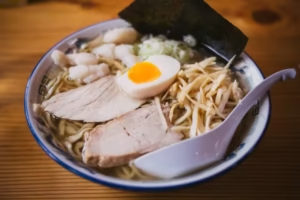
Tokyo-style ramen — also called chuka soba — is defined by its clear amber broth, combining chicken and dashi stock with soy sauce tare. Thin, slightly curled noodles are standard, topped with chashu, menma, negi, and nori. Notably, it is the original ramen style from which all others evolved. The dish arrived in Tokyo in the early 20th century via Yokohama’s Chinatown; consequently, the 1910 opening of Rairaiken in Asakusa is often cited as the founding moment of modern ramen.
Asakusa, Ueno, throughout the city
05
柳川鍋
Yanagawa Nabe
Hot Pot · ¥¥ | ¥1,500–2,500 (~$10–17)
Yanagawa nabe is a uniquely Edo dish: loach fish cooked with burdock root in a shallow clay pot, finished with beaten egg poured over the top. In particular, the technique of scraping the egg as it sets closely resembles a Japanese omelette. Although it has almost no presence outside Tokyo, it is one of the most authentic ways to connect with the city’s historic food culture. You can find it at traditional Shitamachi restaurants, especially in the Ueno, Asakusa, and Nezu areas.
Ueno, Nezu, Asakusa (Shitamachi area)
06
ちゃんこ鍋
Chanko Nabe
Hot Pot · ¥¥¥ | ¥3,000–5,000 (~$20–35)
Chanko nabe is the nutritionally dense hot pot traditionally eaten by sumo wrestlers. A rich dashi broth — typically chicken or miso-based — holds large quantities of meat, fish, tofu, and vegetables. Moreover, several former sumo wrestlers run chanko restaurants in the Ryogoku neighborhood, which is Tokyo’s sumo district and home to the Kokugikan arena. Therefore, eating chanko nabe in Ryogoku is one of Tokyo’s most distinctively local food experiences.
Ryogoku (Sumo district)
Tokyo Noodle Dishes
Tokyo is one of the world’s great noodle cities. These are the most important styles to know.
07–09: Soba, Tsukemen & Niboshi Ramen
07
蕎麦
Soba
Noodles · ¥–¥¥ | ¥500–2,000 (~$3–14)
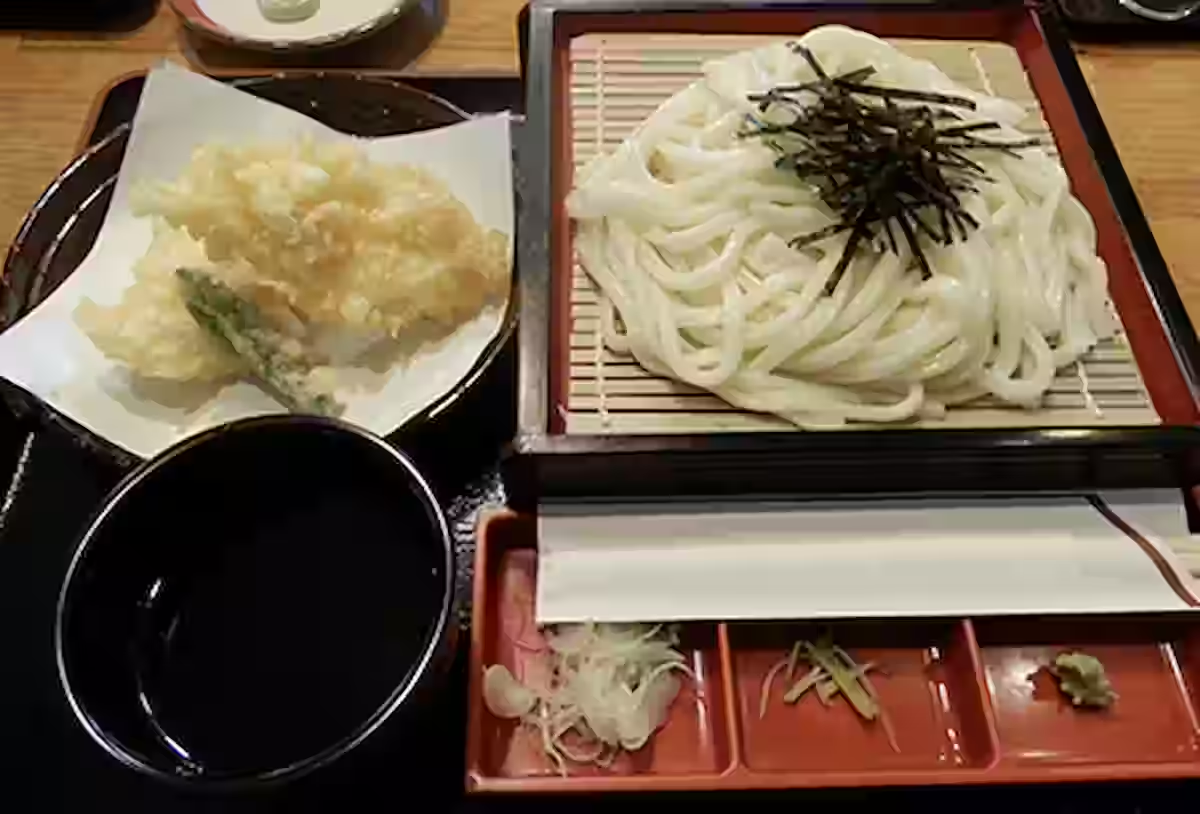
Buckwheat noodles have been one of Tokyo’s signature noodle dishes since the mid-Edo period, when soba stalls served as the fast food of the commoner class. In contrast to Kyoto and western Japan, Tokyo-style soba is served with a darker, saltier tsuyu dipping sauce. Furthermore, it is best experienced as zaru soba (cold, dipped) in summer or kake soba (hot, in broth) in winter. The classic toppings include tempura, kitsune (fried tofu), and tororo (grated mountain yam).
Everywhere — from station stalls to specialist shops
08
つけ麺
Tsukemen
Dipping Noodles · ¥–¥¥ | ¥900–1,500 (~$6–10)
Tsukemen — thick noodles served separately from a concentrated dipping broth — was invented in Tokyo in the 1960s and remains one of the city’s most popular noodle formats. While the noodles are thicker and chewier than standard ramen, they are served cold or at room temperature. The broth, however, is rich and intense, designed for dipping rather than drinking. In particular, a bowl of tsukemen at a specialist shop in Ikebukuro or Shibuya is one of Tokyo’s most satisfying food experiences. Finally, try adding a dash of the provided hot dashi to dilute the remaining broth at the end — called “soup wari.”
Ikebukuro, Shibuya, Shinjuku
09
煮干しラーメン
Niboshi Ramen
Ramen · ¥ | ¥900–1,200 (~$6–8)
Dried sardine ramen is a Tokyo specialty rarely found elsewhere in Japan at this level of intensity. Specifically, the broth uses 20 or more varieties of dried fish, producing a deep, bitter-edged, powerfully umami soup. As a result, it is considered the most challenging and distinctive ramen style in the city. Although it is an acquired taste, dedicated ramen eaters consider it essential to the Tokyo experience. Ramen Nagi in Shinjuku Golden Gai is the most famous destination and is open 24 hours.
Shinjuku Golden Gai, specialist shops citywide
Tokyo Street Food & Snacks
These foods are best eaten standing, walking, or at casual counters — the fastest way to eat well in Tokyo.
10–12: Tempura, Onigiri & Takoyaki
10
天ぷら
Tempura
Fried Dish · ¥–¥¥¥¥ | ¥800–¥20,000+ (~$5–$140+)
Tempura — seafood and vegetables dipped in a light batter and fried in oil — is one of Japan’s most celebrated cooking techniques, and Tokyo is where it was perfected. In particular, the batter should be thin and barely there, producing a crisp shell that doesn’t mask the ingredient inside. While street-level tendon (tempura over rice) is available from ¥800, high-end tempura omakase courses — where the chef fries each piece individually at the counter — are among Tokyo’s most refined dining experiences.
Asakusa, Ginza, throughout the city
11
おにぎり
Onigiri
Rice Ball · ¥ | ¥120–500 (~$1–3)
Onigiri — hand-pressed rice balls wrapped in nori, filled with anything from pickled plum to tuna mayo to grilled salmon — are Tokyo’s definitive convenience food. Although available at every 7-Eleven and FamilyMart from ¥120, they are also elevated to an artform at specialist shops using premium rice and seasonal fillings. Notably, the best convenience store onigiri in Japan are consistently better than equivalent products elsewhere in the world. As a result, they form a fundamental part of daily eating in Tokyo.
Every convenience store, specialist shops in Shinjuku and Ginza
12
たこ焼き
Takoyaki
Street Food · ¥ | ¥400–700 for 6 pieces (~$3–5)
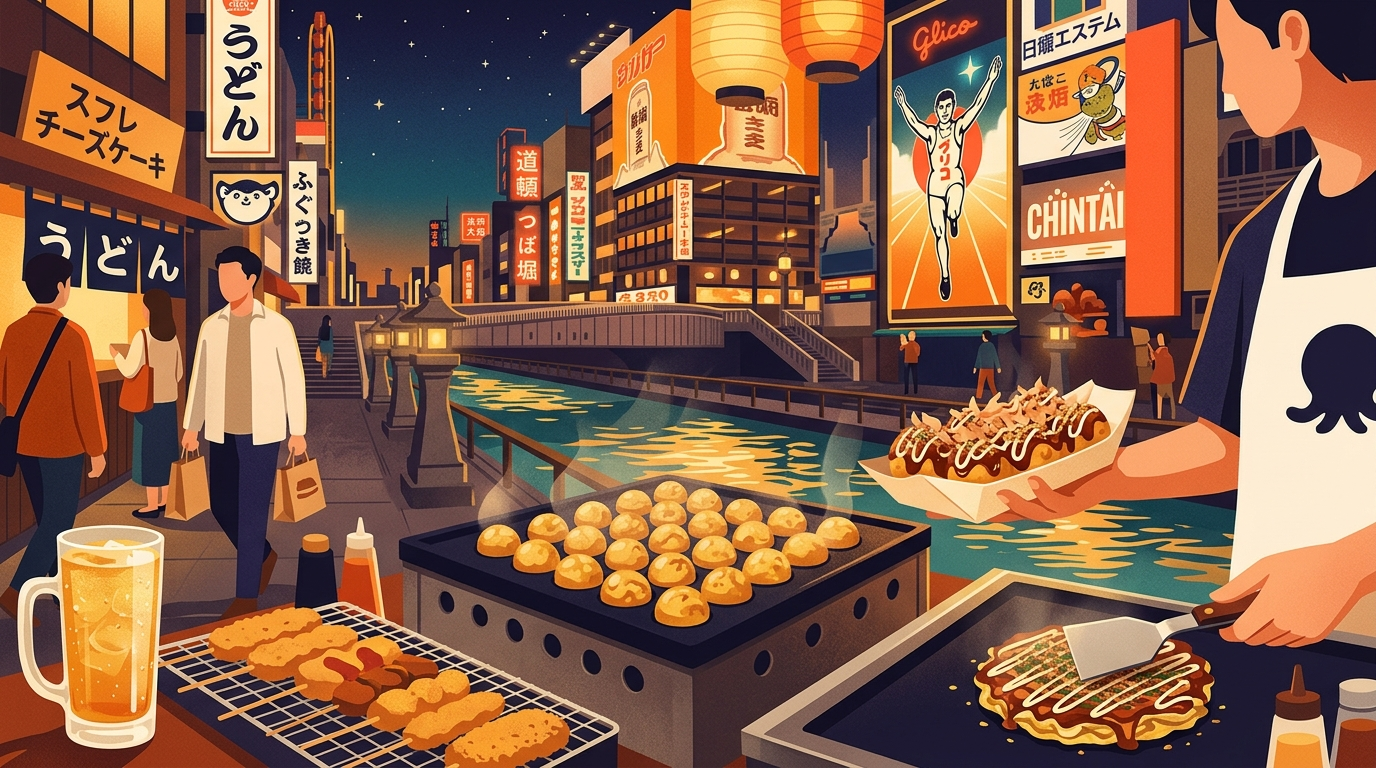
Takoyaki — grilled octopus balls — originated in Osaka but is now a standard Tokyo street food, found at festival stalls, markets, and specialist shops throughout the city. The exterior should be crisp; however, the interior should remain molten and soft. Standard toppings include takoyaki sauce, Japanese mayonnaise, katsuobushi (bonito flakes that wave in the steam), and aonori. Therefore, they are best eaten from the tray while standing at the stall, since they cool quickly.
Festival stalls, Asakusa, depachika food halls
13–14: Yakitori & Dorayaki
13
焼き鳥
Yakitori
Grilled Skewers · ¥–¥¥ | ¥150–300 per skewer (~$1–2)
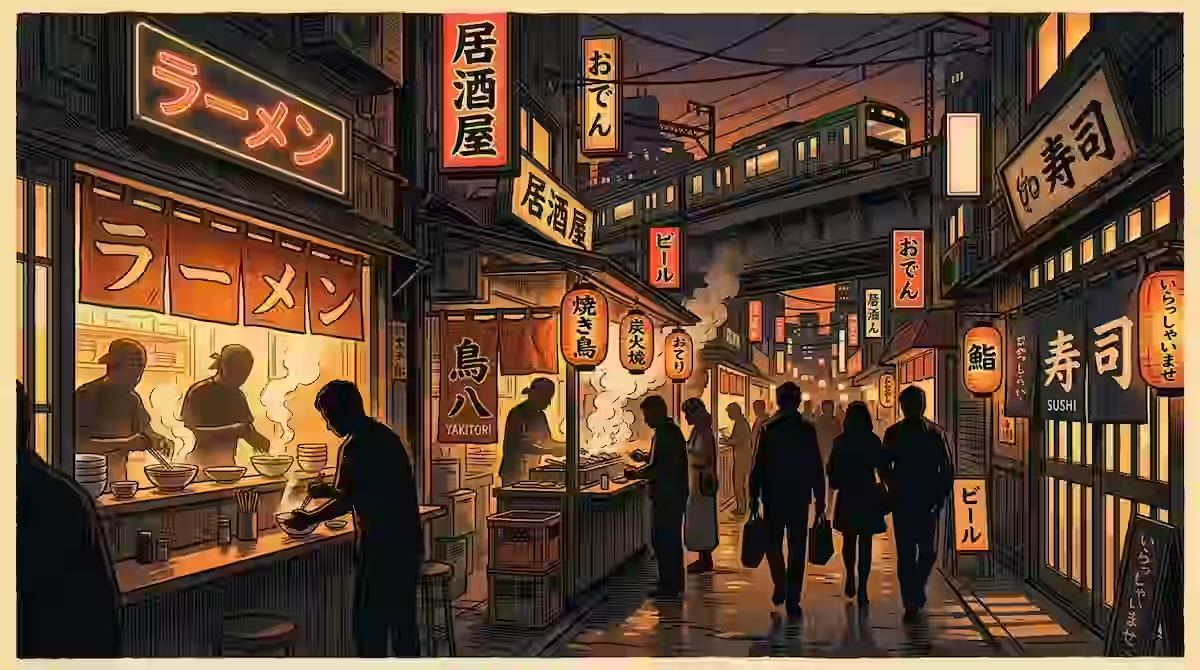
Yakitori — chicken and offal grilled on bamboo skewers over charcoal — is one of Tokyo’s most accessible and authentic eating experiences. Tiny yakitori alleyways (yokocho) under train tracks, filled with smoke and the smell of binchotan charcoal, are among the city’s most atmospheric food environments. Standard orders include negima (chicken and leek), tsukune (chicken meatball), and kawa (skin). Furthermore, you should specify tare (sweet soy glaze) or shio (salt) when ordering. In particular, the area under Yurakucho Station is one of Tokyo’s most famous yakitori districts.
Yurakucho, Shinjuku Omoide Yokocho, Shibuya
14
どら焼き
Dorayaki
Wagashi Sweets · ¥ | ¥200–400 each (~$1.50–3)
Dorayaki — two pancake-like discs sandwiching sweet red bean paste — is a Tokyo confectionery classic. The name comes from “dora” (gong), which the pancakes resemble in shape. The red bean filling (anko) should be slightly sweet with a textured, earthy quality. In particular, the gold standard is Usagiya in Ueno, which has made dorayaki by hand since 1913. Moreover, it is a fundamental Japanese sweet that translates easily for visitors unfamiliar with traditional wagashi.
Usagiya (Ueno), wagashi shops throughout the city
Tokyo Sit-Down Classics
Dishes best experienced at a proper restaurant — not necessarily expensive, but worth taking your time over.
15–16: Sukiyaki & Unaju
15
すき焼き
Sukiyaki
Hot Pot · ¥¥¥–¥¥¥¥ | ¥4,000–15,000 (~$28–105)
Sukiyaki is one of Japan’s most celebrated beef dishes — thinly sliced wagyu cooked in a cast iron pan with a sweet soy and mirin broth called warishita, alongside leeks, shirataki noodles, grilled tofu, and chrysanthemum greens. Each ingredient is then dipped in raw beaten egg before eating. While in Tokyo (Kanto style) the warishita is added from the start, in Osaka the beef is seared first. As a result, it is considered a special-occasion dish, available at Tokyo’s historic sukiyaki restaurants, some of which have been operating since the Meiji era.
Freshwater eel (unagi) lacquered with a sweet soy-based tare and grilled over charcoal — then served over rice in a lacquered box — is one of Tokyo’s most traditional luxury dishes. Notably, the Kanto (Tokyo) technique involves steaming the eel before grilling, producing a softer, more tender result than the direct-grilled Kansai method. Although traditionally eaten in midsummer (doyo no ushi no hi) for stamina, it is available year-round. Furthermore, Tokyo has some of Japan’s oldest unagi restaurants, several of which have been operating in the Asakusa and Ueno areas for over a century.
Asakusa, Ueno, Kanda — historic unagi specialists
17–18: Katsudon & Tendon
17
カツ丼
Katsudon
Rice Bowl · ¥ | ¥800–1,500 (~$5–10)
A breaded pork cutlet (tonkatsu) simmered with onions in a sweet dashi and soy sauce broth, finished with soft egg, and served over rice. Katsudon is one of Japan’s definitive comfort foods — warm, filling, savory, and entirely satisfying. Moreover, it is available at tonkatsu specialty restaurants and general teishoku (set meal) restaurants throughout Tokyo from around ¥900. In particular, the best versions have a cutlet that remains crispy despite the simmering, with an egg that is just barely set. Therefore, it is a reliable choice in any neighborhood.
Tonkatsu restaurants throughout the city, especially Ginza Bairin
18
天丼
Tendon
Rice Bowl · ¥–¥¥ | ¥600–5,000 (~$4–35)
Tendon — tempura served over a bowl of rice with a sweet tare sauce — is Tokyo’s most satisfying budget meal. Specifically, a bowl at a specialist tendon chain (Tenya being the most accessible) delivers three or four freshly fried tempura pieces over steaming rice for around ¥600–800. However, high-end versions at traditional tempura restaurants layer premium seasonal seafood over premium rice, approaching ¥5,000 or more. Consequently, both extremes are worth experiencing at least once.
The final category — sweet things and drinks that complete the Tokyo food experience.
19–20: Matcha Sweets & Shokupan
19
抹茶スイーツ
Matcha Sweets
Wagashi / Café · ¥–¥¥ | ¥500–2,000 (~$3–14)
Matcha — powdered green tea — flavours an enormous range of Tokyo sweets, including soft serve ice cream, parfaits, cakes, mochi, warabi-mochi, and traditional wagashi. However, the quality and intensity of matcha varies dramatically; in particular, premium ceremonial-grade matcha has a deep, complex bitterness that cheaper versions lack. As a result, the depachika (department store food basements) of Isetan in Shinjuku and Mitsukoshi in Ginza offer the highest concentration of excellent matcha confectionery in Tokyo.
Depachika (department store food halls), Nakameguro cafés, Asakusa wagashi shops
20
食パン
Shokupan (Japanese Milk Bread)
Bakery · ¥ | ¥400–800 per loaf (~$3–6)
Japanese milk bread — soft, slightly sweet, with a pillowy crumb and paper-thin crust — is one of Tokyo’s most beloved everyday foods, elevated to an artform by specialist bakeries. In particular, Centre the Bakery in Aoyama is the most famous destination, specializing exclusively in shokupan with a focused menu of toast sets. Furthermore, the bread is made from premium Japanese wheat and baked in a way that preserves exceptional moisture. Therefore, a loaf of premium shokupan from a Tokyo bakery makes one of the most accessible and memorable food souvenirs from the city.
Centre the Bakery (Aoyama), Ginza Nishi (Ginza), specialist bakeries throughout the city
Where to Eat in Tokyo by Neighborhood
A quick reference for planning your itinerary around food.
Tsukishima
Monjayaki — Monja Street has ~60 specialist shops within a few blocks
Best visited for dinner on weekdays to avoid weekend queues
Omoide Yokocho (Memory Lane) under the train tracks is best at dusk
Ikebukuro
Tsukemen · Shio ramen · Katsudon · International food (West exit)
Some of Tokyo’s most awarded ramen shops are in this neighborhood
Ryogoku
Chanko nabe — the city’s most authentic versions, run by former wrestlers
Visit on a sumo tournament day (January, May, September) for the full experience
Harajuku / Aoyama
Shokupan · Matcha sweets · Taiyaki · Modern Tokyo café food
Takeshita Street for street snacks; Aoyama for artisan bakeries and cafés
Practical Information for Eating in Tokyo
Topic
What to Know
Ordering
Most ramen and katsudon shops use a ticket vending machine (券売機) at the entrance. Pay before sitting. For sushi and yakitori, order directly with the staff or by pointing at a picture menu.
Payment
Cash is still king at small ramen shops, izakayas, and street stalls. Larger restaurants and chains increasingly accept IC cards (Suica/Pasmo) and credit cards. Always carry ¥1,000–3,000 in coins and small notes.
Reservations
Required for high-end sushi and tempura omakase, and for popular yakitori restaurants on weekends. Use Tabelog or Tableall (English). For top-tier restaurants, ask your hotel concierge.
The basement food halls of Tokyo’s department stores (Isetan, Mitsukoshi, Takashimaya) are among the finest food retail environments in the world. Visit for premium wagashi, bento boxes, and curated Japanese food products. See our complete Depachika guide.








Comments