




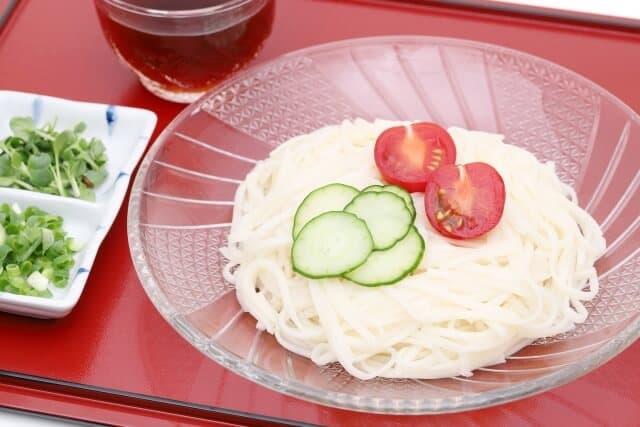
Hiyamugi is a thin wheat noodle served cold in summer. People enjoy these cold Japanese noodles with chilled broth or a dipping sauce. In thickness, hiyamugi sits neatly between somen and udon.
Japanese cuisine features many noodle dishes, such as ramen and udon. Yet some noodles belong only to the hottest months. Today, let’s look at hiyamugi, a refreshing noodle that feels perfect on warm summer days in Japan.
What Is Hiyamugi?
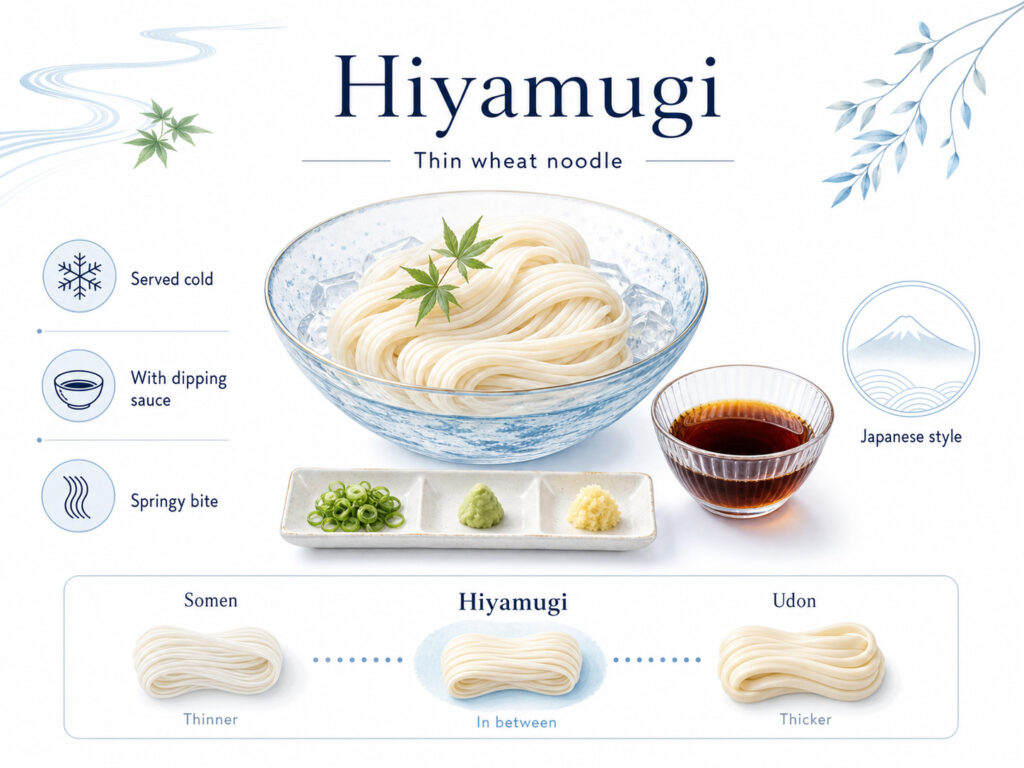
Hiyamugi is a thin wheat noodle made from flour and water. Many people outside Japan are unfamiliar with it. The name means “chilled wheat,” and locals eat it cold for its cool, clean taste. Shops mostly sell it as dried noodles.
This noodle is the second thinnest Japanese type, after somen. Udon, by contrast, is much thicker. It also appears more often in eastern Japan than in the west. The closest Western cousin is vermicelli, though the two differ in flavor.
Vermicelli may look similar, but the eating style sets them apart. People serve hiyamugi with a Japanese dipping sauce and fresh condiments. The wheat aroma and springy bite also feel distinctly Japanese.
How Japanese People Eat Hiyamugi in Summer
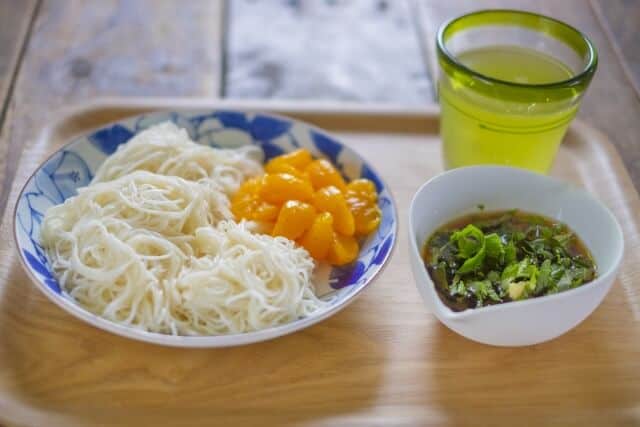
So when do people eat it? Hiyamugi is a classic summer noodle in Japan. Families enjoy it from June through September, when the heat peaks. Cooks often serve the chilled strands over ice in a clear glass bowl.
The appeal is simple. On a hot day, a heavy meal feels like too much. This light, cool dish slips down easily and refreshes you. Diners dip the noodles into tsuyu, a sauce of dashi, soy sauce, and mirin. Then they add condiments like ginger and green onion for extra lift.
History of Hiyamugi
Etymology: From Kirimugi to Hiyamugi
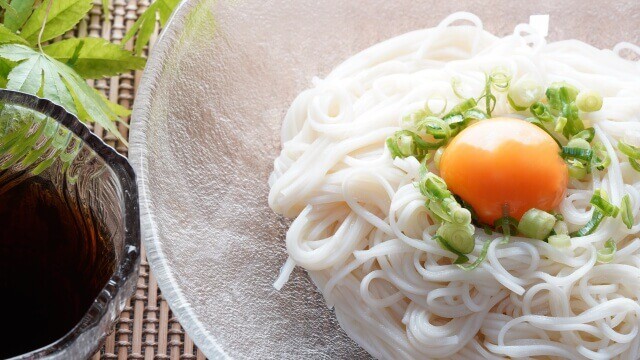
The name traces back to “kirimugi,” meaning cut wheat. It appeared during the Muromachi period, roughly 1336 to 1573. People cut udon into thin strips and called the result kirimugi. The chilled version became hiyamugi, while the hot version was atsumugi.
Temple Origins
Early records tie this noodle to temple kitchens. A 14th-century writer, Ryoyo Shogei, mentions it in Zenrin Kouta. According to him, the Shokoku-ji temple complex in Kyoto made udon, hiyamugi, and steamed buns. The Uncho-in temple handled hiyamugi production. Each year, on April 14th, it began making the noodles for the busy summer ahead.
Hiyamugi Recipe
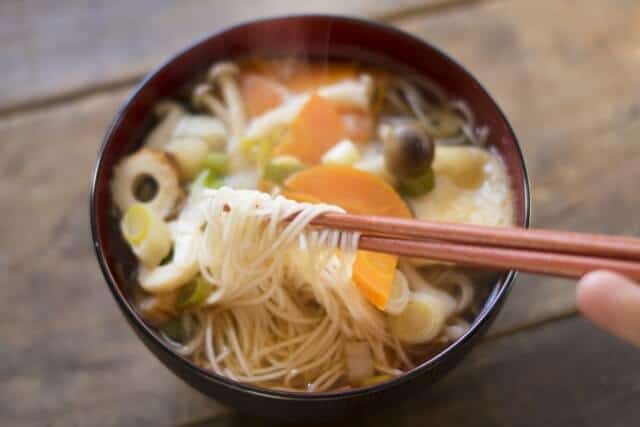
Making hiyamugi at home is quick and forgiving. The dish comes together in under 15 minutes. Here is a simple version with a sesame-rich dipping sauce.
Ingredients for 2 Servings
| Ingredient | Amount |
|---|---|
| Dried hiyamugi noodles | 200 g |
| Mentsuyu (3x concentrated) | 50 g |
| Water (to dilute the sauce) | 100 g |
| Ground sesame | 1 tbsp |
| Sesame oil | 1 tsp |
| Chopped nori | to taste |
| Green onion, sliced | 15 g |
| Myoga, shredded | 10 g |
| Shiso (oba) leaves, shredded | 5 g |
| Grated ginger | 1 tsp |
How to Make Hiyamugi
Slice the green onion thinly. Shred the myoga and shiso leaves into fine strips. Grate the ginger and set everything aside.
Boil the hiyamugi in plenty of water for about 4 minutes. Stir gently so the thin strands do not stick. Check the package, since brands vary slightly in time.
Drain the noodles, then rinse them under cold running water. This step removes surface starch and stops the cooking. More importantly, it gives the noodles their firm, springy bite. Finish with a quick dip in ice water.
Dilute the mentsuyu with cold water in a small bowl. Aim for a balance that tastes savory but not salty. Then stir in the ground sesame and sesame oil for a nutty finish.
Arrange the chilled noodles on a dish or over ice. Scatter the nori and condiments on top. Serve the sauce alongside, then dip and enjoy right away.
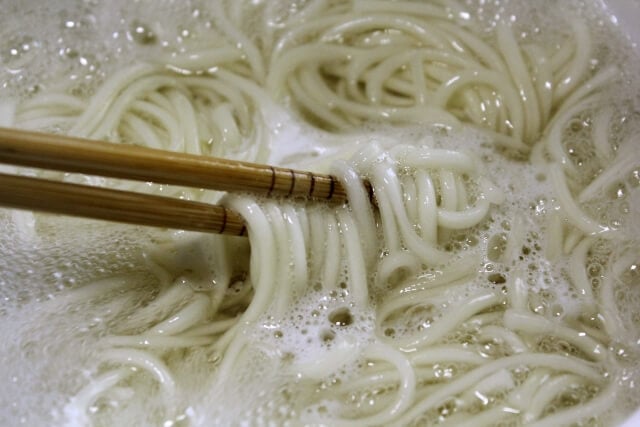
Somen vs Hiyamugi vs Udon
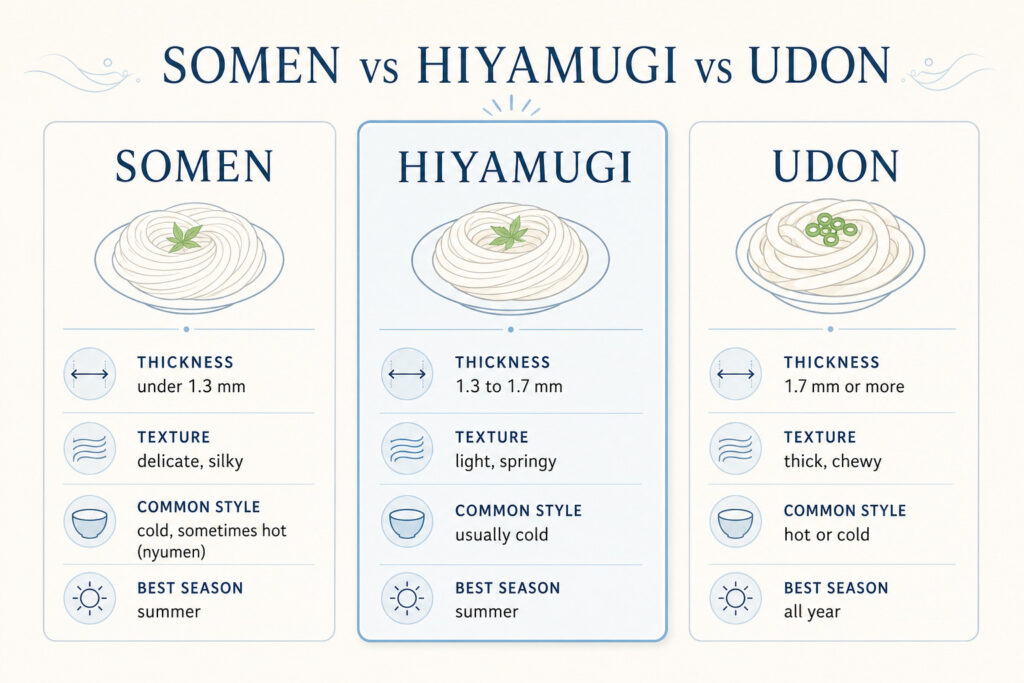
What is the difference between somen and hiyamugi? Mostly, it comes down to thickness. Japanese rules even define these noodles by their diameter. The table below makes the differences clear.
| Somen | Hiyamugi | Udon | |
|---|---|---|---|
| Thickness | Under 1.3 mm | 1.3 to 1.7 mm | 1.7 mm or more |
| Texture | Delicate, silky | Light, springy | Thick, chewy |
| Common style | Cold, sometimes hot (nyumen) | Usually cold | Hot or cold |
| Best season | Summer | Summer | All year |
So the three noodles form a simple scale. Somen is the thinnest and most delicate. Hiyamugi sits in the middle, a touch thicker. Udon is the thick, chewy giant of the group.
In summer, people serve somen and hiyamugi much the same way. Both come chilled, with a dipping sauce and fresh condiments. Hiyamugi often arrives over ice, which looks lovely on a hot day. To learn more, explore the difference between somen and hiyamugi in our Miwa somen guide, or browse other Japanese noodle types.
How to Choose Hiyamugi
Hand-Made vs Machine-Made
Like somen, hiyamugi comes in two main styles. Craftsmen hand-stretch some noodles, which builds a firmer, more elastic texture. Machines mass-produce the rest, giving a clean, even cut. Hand-stretched strands often show a rounder cross-section and a chewier bite. For daily meals, machine-made dried noodles work perfectly well. For a treat, try a hand-stretched brand instead.
Raw Noodles vs Dried Noodles
Want a chewier texture? Then choose raw noodles over dried ones. Makers steam raw noodles during drying, which gives a springier bite. Dried and raw types differ a lot in mouthfeel. So it is worth trying both to find your favorite.
Arranged Hiyamugi Dishes
Plain hiyamugi is lovely, but it also bends to other flavors. Once you tire of the classic style, try these easy twists.
- Tuna and tomato salad: top the noodles with chopped tomato and tuna, then pour mentsuyu over.
- Bibim-style: mix the noodles with kimchi and sesame oil for a spicy kick.
- Garlic hiyamugi: sauté minced garlic in sesame oil, toss with noodles, and season with mentsuyu.
- Stamina natto bowl: add natto, egg yolk, and green onion, then pour mentsuyu on top.
Is Hiyamugi Healthy?
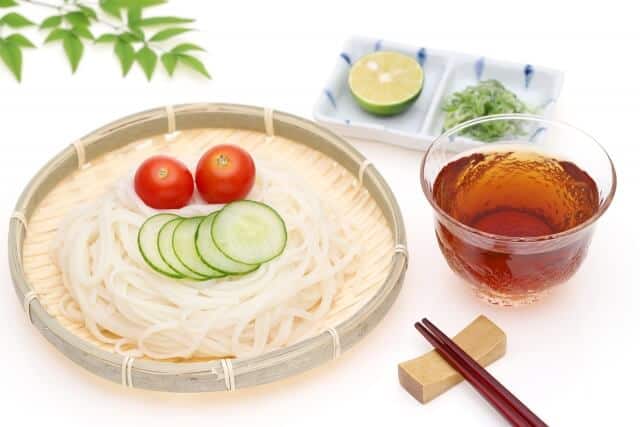
The main ingredient is simply wheat flour. So hiyamugi works as a light, easy meal on a hot day. The toppings, though, change the picture a lot. Sesame aids digestion, and its vitamin B1 helps your body process carbohydrates.
Condiments add real value too. Green onion supports the work of vitamin B1, while nori brings minerals. Keep an eye on the sauce, however, since tsuyu adds salt. Balance it well, and you get a refreshing yet satisfying dish.
Where to Eat and Buy Hiyamugi
Finding it is easy in Japan, at least in summer. Supermarkets stock dried hiyamugi in the noodle aisle from late spring. Department store food halls often carry premium brands. Online shops also ship a wide range across the country. Prices run from about 230 yen for a basic pack to 3,000 yen or more for hand-stretched gift sets.
Kiwadachi (Tokyo)
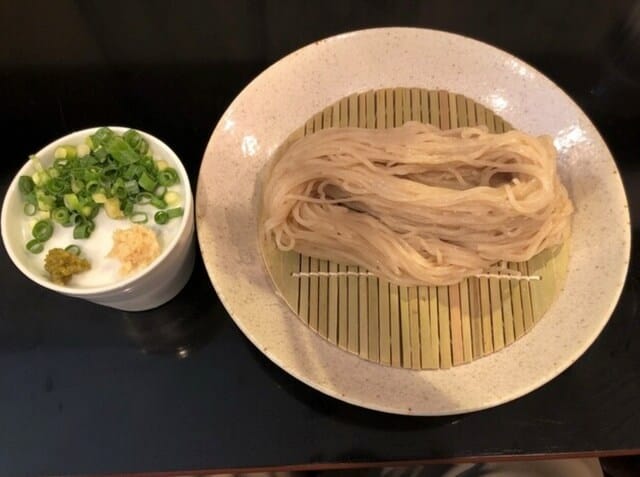
Kiwadachi is Japan’s only hiyamugi specialty shop. It blends wheat flour from Gunma with stone-ground whole wheat from Kagawa. The fresh, in-house noodles carry a wheat aroma you rarely find in dried packs. The name means “standing out,” and the noodles certainly do.
Nikomi-tei (Nagoya)
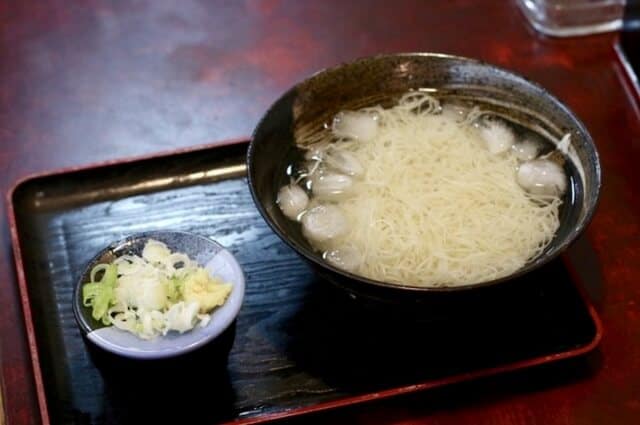
Nikomi-tei is the only shop in Nagoya serving handmade hiyamugi. It belongs to the Iwasho handmade udon family, founded in 1968. The interior feels warm and long-established. Locals prize its rare handmade noodles.
Sugiei (Tokyo)
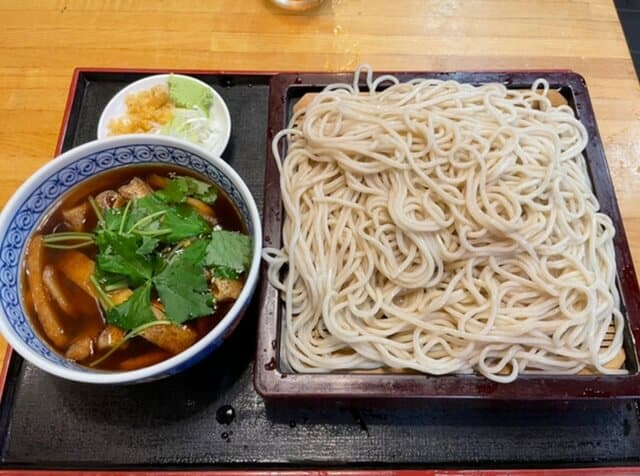
Sugiei is mainly a soba specialist, yet it serves hiyamugi in summer. The noodles hold their elasticity well, even in warm broth. So you can enjoy a firm texture right to the last bite. It makes a great stop in the Asakusabashi area.
Conclusion
Hiyamugi is one of Japan’s simplest summer pleasures. It is light, quick to cook, and endlessly easy to dress up. The thin wheat strands, the icy water, the sharp condiments all come together beautifully.
So why not try making hiyamugi at home this summer? Start with the basic recipe, then play with toppings. If you enjoy thin wheat noodles, compare it with somen next, or explore more cool dishes in our Japanese summer cuisine guide.
Hiyamugi FAQ
What is hiyamugi?
Hiyamugi is a thin Japanese wheat noodle eaten cold in summer. The name means “chilled wheat.” People serve it with a dipping sauce and fresh condiments. It sits between somen and udon in thickness.
How is hiyamugi different from somen?
The main difference is thickness. Somen measures under 1.3 mm, while hiyamugi runs 1.3 to 1.7 mm. As a result, hiyamugi feels slightly springier on the tongue. Both, however, are served cold in much the same way.
Can you eat hiyamugi hot?
Yes, though people rarely do. Cooks usually serve it chilled to enjoy its cool, refreshing texture. You can warm it in broth, but the thin strands soften quickly. For a hot bowl, udon holds its texture much better.
How long does dried hiyamugi last?
Dried hiyamugi keeps very well. Sealed and stored in a cool, dry spot, it lasts about one to two years. Always check the date printed on the package. Once opened, use it within a few months for the best flavor.
Is hiyamugi healthy?
It can be a light, easy meal. The noodles are mostly wheat, so they give quick energy. Toppings like sesame, nori, and green onion add minerals and vitamins. Just go easy on the dipping sauce, since it carries salt.
How do you cook hiyamugi?
Boil the noodles in plenty of water for about 4 minutes. Then rinse them under cold water to firm up the texture. Chill them briefly in ice water before plating. Finally, serve with diluted mentsuyu and your favorite condiments.
Reference
- Wikipedia – Hiyamugi (Surveyed: June 2026)
- Wikipedia – Udon (Surveyed: June 2026)
- Wikipedia (Japanese) – Hiyamugi (Surveyed: June 2026)
Related Articles
- Soumen (Japanese Thin Noodles) (Surveyed: June 2026)
- Japanese Noodles: Udon, Soba, Somen and More (Surveyed: June 2026)
- Miwa Somen Guide (Surveyed: June 2026)
- Hiyashi Chuka (Cold Chinese Noodles) (Surveyed: June 2026)
- Japanese Summer Cuisine (Surveyed: June 2026)



Comments
List of comments (1)
Crazyfrog PaiDaNeNAtu 6 17 2022 propecia shampoo Sporting KC side stepped a heavy rain to match a season best three game winning streak, pulling the club even with New York atop the MLS Eastern Conference standings