




Tokyo has more sushi restaurants per square kilometer than any other city in the world. The range is extraordinary — from standing sushi bars where you eat for ¥500 a piece, to omakase counters where a single meal costs ¥80,000 and reservations are booked months in advance. This guide covers everything you need to know to find the right sushi experience in Tokyo: the different styles, what to expect at each price range, how to make a reservation, and a selection of consistently praised restaurants worth knowing about.
Understanding Sushi Styles
The word “sushi” covers a wide range of dishes. Knowing the difference before you visit Tokyo helps you choose the right restaurant — and the right experience — for your budget and preferences.
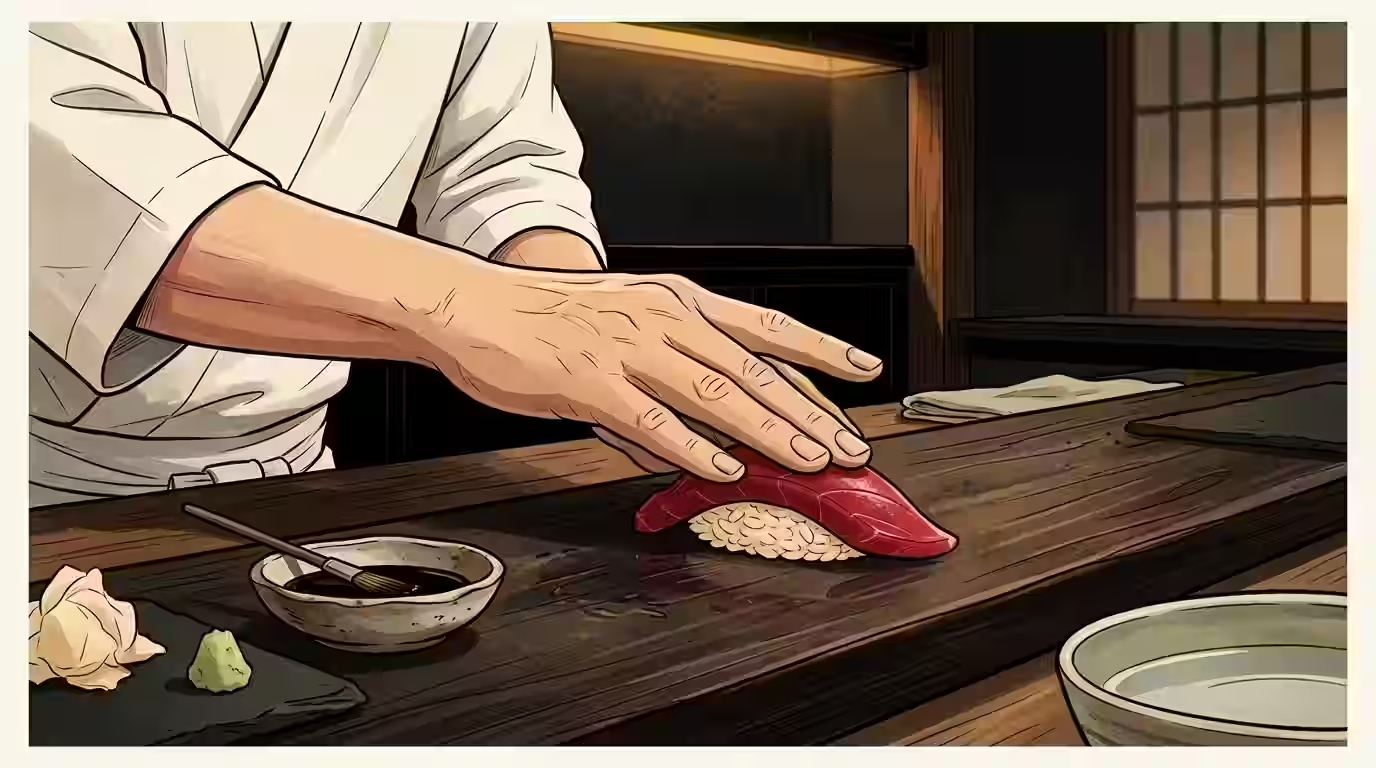
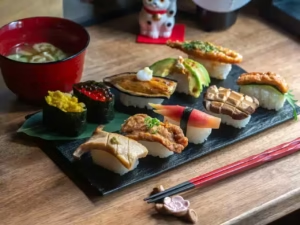
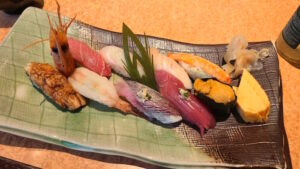
Hand-pressed vinegared rice topped with a single piece of seafood. The most iconic form of Tokyo sushi, perfected during the Edo period. The skill lies in the temperature and firmness of the rice, and the precision of the cut.
“I leave it to you.” The chef selects and prepares each piece based on the day’s best ingredients and the season. The definitive high-end Tokyo sushi experience — intimate counter seating, no menu, complete trust in the chef.
Conveyor belt sushi. Plates circulate on a belt in front of diners, who select what they want. Ranges from budget chains to high-quality establishments. An accessible way to eat excellent sushi without reservation pressure.
Rolled sushi — rice and fillings wrapped in nori seaweed. Includes futomaki (thick rolls), hosomaki (thin rolls), and temaki (hand-rolled cones). A staple of casual sushi restaurants and takeaway counters.
Scattered sushi — vinegared rice in a bowl topped with an assortment of seafood and vegetables. Widely available at lunch in Tokyo. Less formal than nigiri but an excellent way to taste a range of seasonal ingredients.
Standing sushi. No seats, quick service, competitive prices. Common in train stations and market areas like Tsukiji. Often extremely high quality despite the casual format — some of Tokyo’s best-value sushi is eaten standing.
What to Expect at Each Price Range
| Tier | Price per Person | Format | What to Expect |
|---|---|---|---|
Budget
¥500 – ¥2,000 | ¥500 – ¥2,000 | Standing bars, kaiten, supermarket takeaway | Fresh nigiri by the piece. No reservation needed. Tsukiji Outer Market and train station counters offer excellent value at this level. |
Mid-range
¥3,000 – ¥8,000 | ¥3,000 – ¥8,000 | Set courses, à la carte counter | Counter seating, skilled chefs, seasonal ingredients. Reservation recommended. All-you-can-eat high-quality sushi options (like Hinazushi) fall in this range. |
High-end
¥15,000 – ¥30,000 | ¥15,000 – ¥30,000 | Omakase course | Chef-selected courses, Michelin recognition, premium seasonal fish. Reservations required weeks in advance. Intimate counter atmosphere. |
Prestige
¥40,000 – ¥80,000+ | ¥40,000 – ¥80,000+ | Omakase, counter only | The highest level of Tokyo sushi. Tabelog Gold, multiple Michelin stars. Reservations often require months of advance planning and a personal introduction. |
How to Get a Reservation
Tabelog (Japan’s leading restaurant review site) and Hot Pepper Gourmet allow direct online reservations in Japanese. Chrome’s auto-translation makes these usable for non-Japanese speakers. Many mid-range sushi restaurants are bookable same-week through these platforms.
For Tabelog Gold or Michelin three-star sushi restaurants — places like Sushi Saito or Sugita — a personal introduction through a well-connected concierge at a high-end Tokyo hotel is often the most effective route. These restaurants may not accept cold reservations at all.
Popular mid-range omakase counters fill up 4–8 weeks in advance, especially on weekends. Budget standing bars and kaiten restaurants rarely require reservations. If you’re visiting during Golden Week (late April to early May) or peak autumn foliage season, plan even further ahead.
Tabelog Gold: Tokyo’s Most Acclaimed Sushi
The following restaurants have received Tabelog Gold — awarded annually by verified diners, not food critics. Consistent Gold-winners represent the most reliably excellent sushi in the city.
One of the most difficult sushi reservations in Tokyo, Sushi Saito is widely regarded as the pinnacle of Edo-mae sushi. The appetizers are carefully crafted and the seafood selection is exceptional — nodoguro (blackthroat seaperch) is a signature piece. A personal introduction through a hotel concierge or established connection is typically required to book.
Sugita has won Tabelog Gold every year since the award began — an unbroken record that speaks to the restaurant’s consistency. The chef’s approach emphasizes the relationship between the shari (vinegared rice) and each piece of neta. Regulars describe a nostalgic quality to the rice that keeps them returning. Reservations are extremely difficult to secure without a connection.
Known for rare toppings not commonly found at other high-end sushi restaurants, Amamoto offers delicate and deeply flavored nigiri that regulars describe as among the finest they’ve encountered. The presentation is refined without being theatrical.
Mitani pairs its meticulously crafted nigiri with a carefully curated selection of rare sake — a combination rarely found at this level elsewhere in Tokyo. The original tableware is a notable detail; every element of the dining experience has been considered. Diners consistently place it among their top three sushi restaurants.
Located on the third floor of Tokyo Midtown Hibiya, Namba is praised for its exceptional attention to temperature — both the toppings and the rice are served at precisely the right warmth, which allows the fat in the fish to melt at the moment of eating. The setting is modern and refined.
Sushi Arai is celebrated for its tuna — considered among the finest maguro available in Tokyo — alongside a willingness to serve unusual pieces including whale and specialty shellfish. The scallop grilled with seaweed is a signature piece that diners frequently single out as a career highlight.
Also Worth Knowing: Other Notable Tokyo Sushi
Highly regarded by locals and food lovers, without requiring months of advance planning.
A Michelin-starred counter known for creative departures from convention. The chef begins with medium-fat tuna, then proceeds through a sea urchin comparison, shiitake mushroom sushi, and specialty preparations of botan shrimp. The meal ends with soy sauce ice cream — a dessert that only makes sense at a sushi counter. Awarded a Michelin star within one year of opening.
Following the Sushi Sho style, nigiri and seasonal appetizers are served alternately in a carefully paced sequence. The sunken kotatsu-style counter seating is unusually comfortable for a long omakase meal. Located in Akasaka, the restaurant is more accessible for reservations than the top-tier Ginza and Nihombashi counters.
Located in the Nishi-Ginza Department Store, Hinazushi offers an all-you-can-eat format with over 60 varieties of fresh fish and seafood, including monthly limited-edition nigiri. Skilled chefs prepare each piece to order. The brightest, most accessible entry point to quality counter sushi for visitors who want variety without the pressure of an omakase format.
A venture by sushi chef Takuya Motohashi that deliberately breaks with tradition. French, Italian, and Chinese influences are woven into a 14-course omakase format (7 sushi + 7 innovative dishes). The intimate 10-seat counter is ideal for diners who want to experience where Tokyo’s sushi scene is heading, rather than where it has been.
Specializing in domestic bluefin tuna, Yamaken offers a chef’s selection course alongside all-you-can-eat nigiri in a warm, wood-accented interior in Kabukicho. The sea urchin and bluefin tuna “Yamaken dog” is a signature order. One of the most approachable high-quality sushi experiences in the Shinjuku area.
Housed in a renovated Japanese townhouse in Nishi-Azabu, Sushi Tou is committed to the technical precision of nigiri — using a combination of red vinegar and rice vinegar, alongside two types of nikiri soy sauce, to achieve the ideal flavor balance. The calm, traditional atmosphere makes it one of the most relaxed high-end sushi experiences in central Tokyo.
Practical Tips for First-Time Visitors
At high-end omakase restaurants, the chef typically brushes each piece with nikiri (seasoned soy sauce) before serving it. Dipping in additional soy sauce, especially rice-first, is considered bad form — and will dilute the chef’s intended flavor.
Eating nigiri with your fingers is perfectly acceptable — and preferred by many chefs, who consider it a more direct way to experience the texture of the shari. At formal restaurants, both hands and chopsticks are fine.
Nigiri is served at the precise temperature the chef intends. Leaving it to rest on the plate — especially at a high-end counter — means the rice temperature drops and the fat in the fish changes character. Eat each piece within 30 seconds of it being placed in front of you.
At high-end sushi counters — particularly small omakase restaurants — arriving wearing strong perfume or cologne is considered disrespectful. The delicate aromas of fresh fish and seasoned rice are central to the experience.
Many high-end Tokyo sushi restaurants request no photography during the meal, or allow it only without flash and without disrupting other diners. Always check with the chef or staff before taking photos at an omakase counter.
Gari (pickled ginger) is not a topping — it is a palate cleanser, eaten between pieces of sushi to reset your taste. Hot green tea serves the same function. Using gari as a topping on nigiri is a common tourist mistake at high-end restaurants.
Comments