




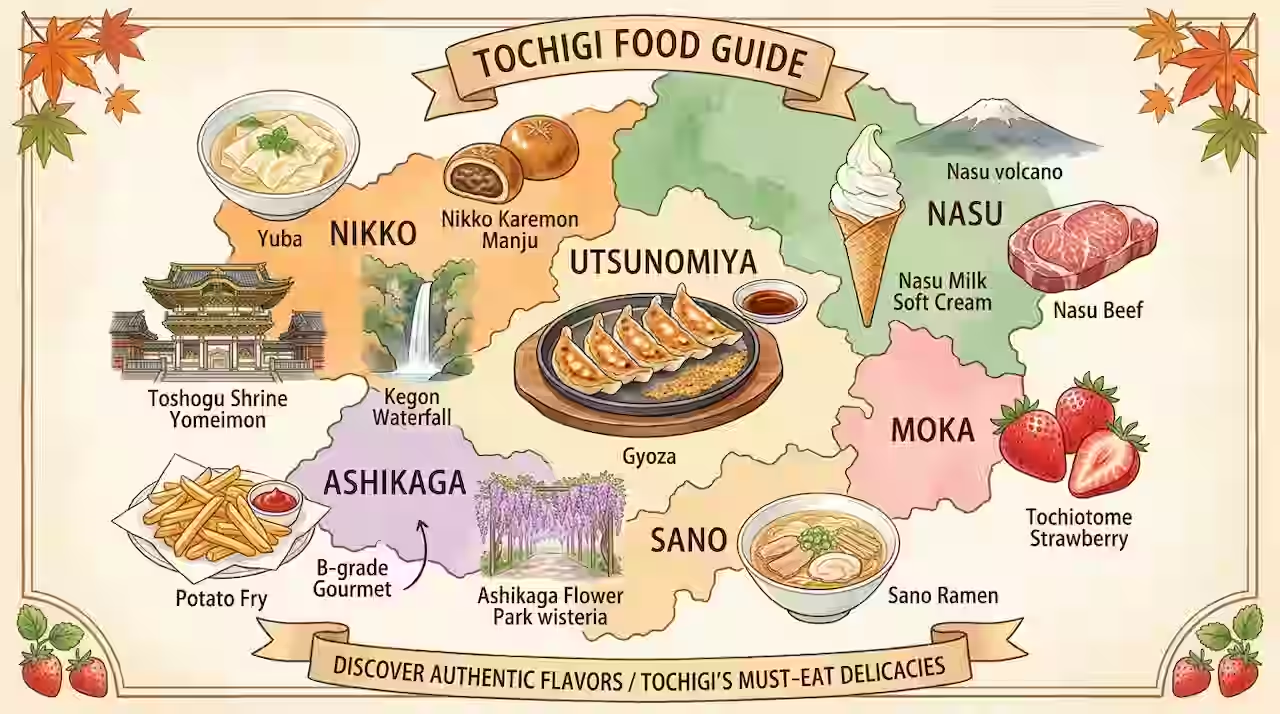
This Tochigi food guide covers the dishes, cities, and culinary traditions that make this mountainous inland prefecture one of the Kanto region’s most surprising food destinations. Tochigi is known across Japan as the “Strawberry Kingdom” — producing more strawberries than any other prefecture for over 50 consecutive years. But its food culture extends far beyond fruit. Utsunomiya is Japan’s undisputed gyoza capital. Nikko’s thousand-year-old temple culture produced one of Japan’s most refined tofu preparations. And the mountains of Nasu raise wagyu beef of exceptional quality. This complete Tochigi food guide covers them all.
Tochigi has held the title of Japan’s top strawberry-producing prefecture for over 50 consecutive years. The prefecture’s rich volcanic soil, ample sunlight, and cool winters create ideal growing conditions. Tochiotome — developed in 1996 and named “Maiden of Tochigi” — is the variety that cemented this reputation, combining sweetness, acidity, and firmness in a way that made it Japan’s dominant strawberry for over two decades. The newer Skyberry variety, released in 2014, builds on that legacy with even larger fruit and a more complex sweetness. Strawberry picking (ichigo-gari) farms attract hundreds of thousands of visitors to Tochigi each winter and spring.
Utsunomiya — Japan’s Gyoza CapitalUtsunomiya City holds the highest per capita gyoza consumption in Japan and has competed aggressively with Hamamatsu for the title of Japan’s gyoza city since the 1990s. The city’s gyoza culture originated after World War II when soldiers returning from Manchuria brought Chinese dumpling techniques with them — and Tochigi’s abundant leek and cabbage farms provided the ideal filling ingredients. Today Utsunomiya has hundreds of dedicated gyoza restaurants, its own gyoza association, and a dedicated gyoza tasting facility called Kirasse where visitors can sample multiple styles side by side.
Nikko — Mountain Temple CuisineNikko has been one of Japan’s most sacred mountain destinations for over 1,200 years. Its Buddhist temples and Shinto shrines developed a refined vegetarian food culture centered on yuba — the delicate skin that forms on the surface of heated soy milk. Nikko yuba has a thicker, richer preparation than Kyoto’s version, reflecting the colder mountain climate and the heavier nutrition requirements of temple training. The city’s pure mountain spring water, used to make the soymilk, gives Nikko yuba a clean, subtly sweet flavor that chefs serve in every form from fresh sashimi-style to simmered and tempura.
Tochigi’s essential dishes range from Japan’s most celebrated gyoza city to ancient Buddhist temple preparations and rustic mountain home cooking.
Tochigi’s food culture is strongly shaped by its cities, each with a distinct culinary identity formed by history, geography, and local agriculture.
Tochigi has been Japan’s leading strawberry prefecture for over 50 consecutive years. Tochiotome, developed in 1996, became Japan’s most produced variety for two decades. The newer Skyberry, released in 2014 and grown exclusively in Tochigi, produces larger fruit with a more complex flavor profile — sweeter, more aromatic, and with a distinctive deep red color. Both varieties are available for picking at ichigo-gari farms across the prefecture from December through May, making strawberry tourism one of Tochigi’s most important food industries.
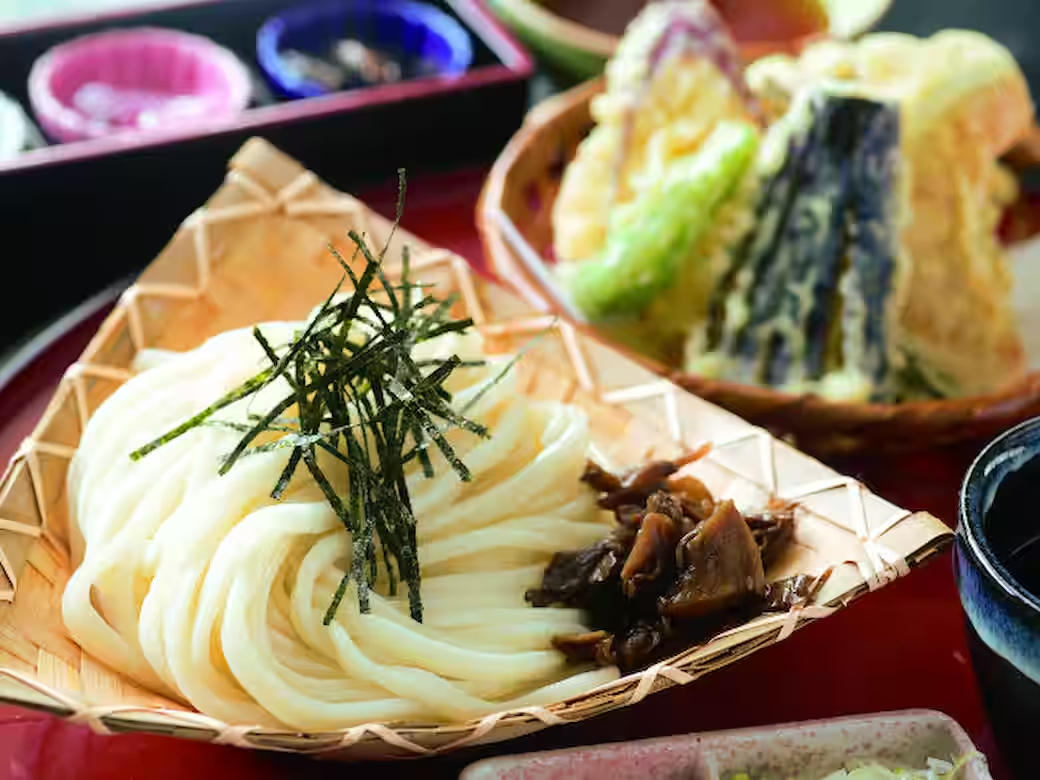
Kanpyo (Dried Gourd)Tochigi produces over 90% of Japan’s kanpyo — the dried strips of yugao gourd used in traditional rolled sushi, simmered dishes, and New Year foods. Tochigi City in the south of the prefecture is the historic center of kanpyo production, where the white gourd strips have been dried in long curtains outside farmhouses since the Edo period. Kanpyo appears in futomaki sushi rolls, oden, and as a wrapping ingredient in celebration foods across Japan.
Nasu Highland Dairy and WagyuThe Nasu highlands in northern Tochigi have exceptionally clean water, cool summers, and rich volcanic soil that support both premium dairy farming and high-quality wagyu cattle raising. Nasu wagyu benefits from the pure mountain water and local rice feed that give the beef its characteristic mild, clean umami. Nasu dairy products — milk, butter, cheese, and soft serve ice cream — are among the most sought-after in the Kanto region and attract significant food tourism to the highland resort area.
Tochigi’s food history is inseparable from its role as a sacred mountain region. Nikko was established as a mountain worship site in 766 AD by the Buddhist monk Shodo Shonin. The temples and shrines that grew around Nikko required a sustained food culture for the monks and pilgrims who lived and traveled there. Yuba, tofu, and vegetarian mountain vegetables became the foundation of Nikko’s culinary identity. The cold, pure spring water from the Nikko mountains was — and remains — essential to the quality of both the soymilk used to make yuba and the sake brewed in the region.
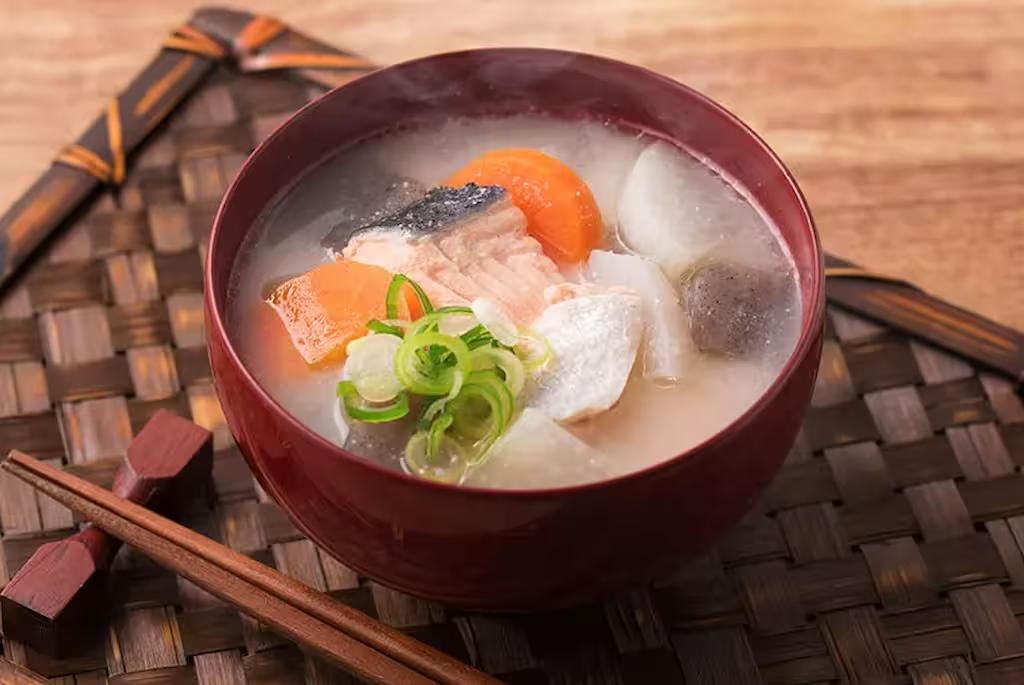
Edo Period — Kanpyo, Trade, and the TokaidoDuring the Edo period Tochigi developed as an important agricultural and commercial prefecture. Tochigi City grew as a prosperous merchant town along the Uzuma River, and its farmers developed kanpyo production as a high-value crop that could be dried, stored, and transported to Edo’s growing population. Shimotsukare emerged during this period as a practical preservation dish — combining the salmon head from New Year’s celebrations with soybeans, sake lees, and daikon to create a nutrient-dense food that could last through the cold winter months.
Post-War — Gyoza, Strawberries, and Modern IdentityAfter World War II Tochigi’s food identity transformed rapidly. Soldiers returning to Utsunomiya from Manchuria brought gyoza-making techniques, and the city’s abundant leek and cabbage farms provided the perfect filling ingredients. Utsunomiya developed a gyoza culture so strong that it eventually created its own association and competed nationally with Hamamatsu for Japan’s gyoza city title. Simultaneously, Tochigi’s strawberry breeding programs produced a succession of varieties that made the prefecture Japan’s undisputed strawberry leader — a position it has held without interruption ever since.
Tochigi Food Guide FAQ
What food is Tochigi most famous for?
Tochigi is most famous for Utsunomiya gyoza, Nikko yuba, Tochiotome strawberries, shimotsukare, Nasu wagyu, and kanpyo (dried gourd). It is known throughout Japan as the “Strawberry Kingdom” for producing more strawberries than any other prefecture for over 50 consecutive years.
Why is Utsunomiya called Japan’s gyoza capital?
Utsunomiya has the highest per capita gyoza consumption of any city in Japan. Its gyoza culture began after World War II when soldiers returning from Manchuria brought dumpling-making techniques and Tochigi’s abundant leek and cabbage farms provided perfect filling ingredients. The city has its own Gyoza Association, a dedicated tasting facility called Kirasse, and hundreds of gyoza-specialized restaurants.
What is Nikko yuba and how is it different from Kyoto yuba?
Nikko yuba (written 湯波) is the delicate skin lifted from heated soy milk, made in Nikko’s mountain temples for over 1,200 years. Nikko yuba is thicker and richer than Kyoto’s version (written 湯葉) — the cold mountain climate and the heavier nutrition requirements of temple training drove a richer preparation style. Nikko’s pure spring water used to make the soymilk gives it a distinctively clean, sweet flavor.
What is shimotsukare?
Shimotsukare is a traditional Tochigi stew made after Setsubun (early February) using salmon head from the New Year’s celebrations, roasted soybeans, grated daikon, aburaage (deep-fried tofu), and leftover root vegetables, all simmered in sake lees (sakekasu). It was developed as a practical preservation dish using ingredients that would otherwise be discarded. Its appearance is unusual and its flavor is bold and complex — considered an acquired taste but deeply loved by Tochigi residents.
What is the Tochiotome strawberry?
Tochiotome is a strawberry variety developed by Tochigi Prefecture’s agricultural research station in 1996. Its name means “Maiden of Tochigi.” It quickly became Japan’s most produced strawberry variety, valued for its balance of sweetness and acidity, firm texture for transportation, and vibrant red color. Tochigi has produced more strawberries than any other Japanese prefecture for over 50 consecutive years. Tochiotome is now being succeeded by the newer, larger Skyberry variety, released in 2014.
What is soup yakisoba and where does it come from?
Soup yakisoba is a uniquely Tochigi dish where stir-fried yakisoba noodles are served in a hot soy-based soup. It originated at a restaurant in the Shiobara Onsen hot spring resort area of Nasushiobara City, reportedly when a chef added hot soup to leftover yakisoba. The noodles carry a smoky stir-fried flavor while the broth adds warming savory depth. It is found mainly at local diners in the Shiobara and Ashikaga areas.
What is Nasu wagyu?
Nasu wagyu is a premium Japanese Black cattle brand from the Nasu area of northern Tochigi. The cattle are raised in single enclosures in the clean air and pure mountain water of the Nasu highlands, fed on a blend of over ten grains plus local rice for enhanced flavor and aroma. They are raised for over 30 months. The beef is known for exceptional marbling, mild flavor, and clean umami. Steak House Juraku in Utsunomiya is a well-known restaurant for tasting it.
What is kanpyo and why does Tochigi produce so much of it?
Kanpyo is dried strips of yugao gourd, used in sushi rolls, oden, and celebration foods across Japan. Tochigi produces over 90% of Japan’s total kanpyo. The tradition began in Tochigi City during the Edo period when farmers found that the light, dry winds of the Kanto interior were ideal for drying the gourd strips. Kanpyo production remains centered in Tochigi City, where the long white strips are still dried outside farmhouses each summer.
What is yuzu maki from Tochigi?
Yuzu maki is a traditional pickle from the northern Utsunomiya area of Tochigi, made by rolling strips of thinly peeled daikon around pieces of yuzu citrus peel and pickling them in vinegar and salt. The resulting pickle has a crisp texture, pale white color, and fresh yuzu fragrance. It is traditionally served at New Year’s celebrations and autumn festivals. Kaburagi Shoten in Tochigi City is a well-known producer.
Where is the best place to eat gyoza in Utsunomiya?
Utsunomiya has hundreds of gyoza restaurants. Minmin, with multiple locations including near Utsunomiya Station, is one of the most famous. Masashi and Satsuki are also highly regarded. Kirasse, a dedicated gyoza tasting facility near the station, allows visitors to sample gyoza from multiple different local restaurants in one visit and compare styles side by side.
What is strawberry picking (ichigo-gari) in Tochigi?
Strawberry picking (ichigo-gari) allows visitors to pick and eat as many strawberries as they wish directly from the farm within a set time limit, typically 30–40 minutes. Tochigi has hundreds of ichigo-gari farms concentrated around Utsunomiya, Moka, and Kaminokawa. The season runs from December to May, with peak season in February and March. It is one of the Kanto region’s most popular winter day-trip activities from Tokyo.
What is Skyberry and how is it different from Tochiotome?
Skyberry is a newer Tochigi strawberry variety, released in 2014, grown exclusively in Tochigi Prefecture. It is larger than Tochiotome — often exceeding 25–30 grams per berry — with a distinctive conical shape, deeper red color, and more complex sweetness with a richer aroma. It is marketed as a premium variety above Tochiotome and commands a higher price. Both varieties are available at ichigo-gari farms and in shops across Tochigi.
What is the Nikko yuba food experience like as a visitor?
Nikko has dozens of yuba-specialized restaurants along the main approaches to Nikko Toshogu Shrine and Rinno-ji Temple. The typical experience involves a multi-course yuba meal featuring fresh yuba sashimi (eaten with wasabi and soy sauce), simmered yuba with dashi, yuba tempura, and yuba tofu. Takaiya Restaurant, operating for over 100 years, is one of the most celebrated. Yuba also appears in soft serve ice cream and souvenir snacks throughout the Nikko area.
What dairy products is Nasu famous for?
Nasu in northern Tochigi is well known for premium dairy products including fresh milk, rich butter, aged cheeses, and — most famously — soft serve ice cream. The clean mountain water, cool summers, and pasture-fed cows produce milk with exceptional fat content and flavor. Nasu Milk Land and other farm-based facilities in the area are popular day-trip destinations for food tourism from Tokyo and Utsunomiya.
What is Tochigi City known for in terms of food culture?
Tochigi City (not to be confused with Tochigi Prefecture) is a historic merchant town with beautiful Edo-period warehouse (kura) architecture along the Uzuma River. It is Japan’s leading kanpyo producer and has a strong culture of traditional preserved foods including yuzu maki, sake-lees pickles, and fermented miso from local soybeans. The city’s food culture reflects its Edo-period prosperity as a trading town connected to Edo by the river route.
Is Tochigi food accessible from Tokyo as a day trip?
Yes — Utsunomiya is about 50 minutes from Tokyo by Shinkansen (JR Tohoku/Hokuriku Shinkansen). Nikko is about 2 hours from Tokyo’s Asakusa Station via the Tobu Nikko Line. The Nasu highlands are about 1 hour 15 minutes from Tokyo by Shinkansen to Nasushiobara Station. All three destinations are popular day-trip and weekend-trip destinations from Tokyo, particularly for food and nature tourism.
What is botamochi and when is it eaten?
Botamochi are round balls of sticky rice coated in sweet red bean paste (anko), named after the peony flower (botan) for their round shape. They are traditionally eaten during Ohigan — the Buddhist spring and autumn equinox memorial weeks. Spring versions are called botamochi (named after the spring peony), while autumn versions are called ohagi (named after the autumn hagi bush clover). In Tochigi they are particularly associated with family Buddhist memorial gatherings.
What sake is produced in Tochigi?
Tochigi has a growing sake-brewing tradition, with over 20 active breweries. The pure mountain water from Nikko and the Nasu highlands provides excellent brewing water. Notable breweries include Nishioka Shuzo in Utsunomiya and several smaller craft breweries in the Nikko area. Tochigi sake tends toward a clean, dry style that pairs well with the prefecture’s rich gyoza and wagyu dishes.
What is Tochigi’s strongest food rivalry with other cities?
Utsunomiya has a famous rivalry with Hamamatsu (Shizuoka) over the title of Japan’s gyoza city. Both cities compete annually based on household gyoza expenditure data released by Japan’s Ministry of Internal Affairs. The competition is taken seriously by both cities — Utsunomiya has held the top position in several recent years. The rivalry has become a major marketing tool for both cities and a genuine source of local pride.
What foods can I buy as souvenirs from Tochigi?
Top Tochigi souvenirs include Tochiotome or Skyberry strawberry jam and freeze-dried strawberries, Nikko yuba dried sheets, kanpyo packages, Utsunomiya gyoza frozen sets (available at the station and gyoza shops), yuzu maki pickles, Nasu wagyu gift sets (vacuum-packed, check airline rules), and craft sake from local breweries.
What is the best season to visit Tochigi for food?
Winter and spring (December–May) for strawberry picking. Spring (March–May) for fresh mountain vegetables, mountain cherry blossoms, and the full yuba menu at Nikko restaurants. Autumn (September–November) for new-harvest rice, Nasu wagyu at highland restaurants, and the spectacular autumn leaves that attract visitors to Nikko and Nasu. Summer for fresh dairy products in Nasu and cold soba in the mountains.
How does Tochigi gyoza differ from other regional gyoza styles?
Utsunomiya gyoza typically uses a thin, crispy skin with a filling of minced pork, leek, cabbage, and garlic — leaning more toward leek and garlic than the more cabbage-forward styles of some other regions. Pan-fried (yaki-gyoza) is the most common preparation, resulting in a crispy bottom and soft top. Many Utsunomiya restaurants also serve boiled (sui-gyoza) and deep-fried (age-gyoza) versions. The ratio of leek to cabbage and the degree of garlic varies significantly between individual shops, making comparison dining across multiple restaurants a genuine local pastime.