




Creamy, cheesy, and baked over rice, Doria is one of Japan’s most comforting yoshoku dishes. Doria is a Japanese rice gratin created in Yokohama in the early Showa period. Butter rice, béchamel sauce, and melted cheese define its classic style. This guide covers its origin, classic ingredients, common variations, and where to try it in Japan.
What is Doria?
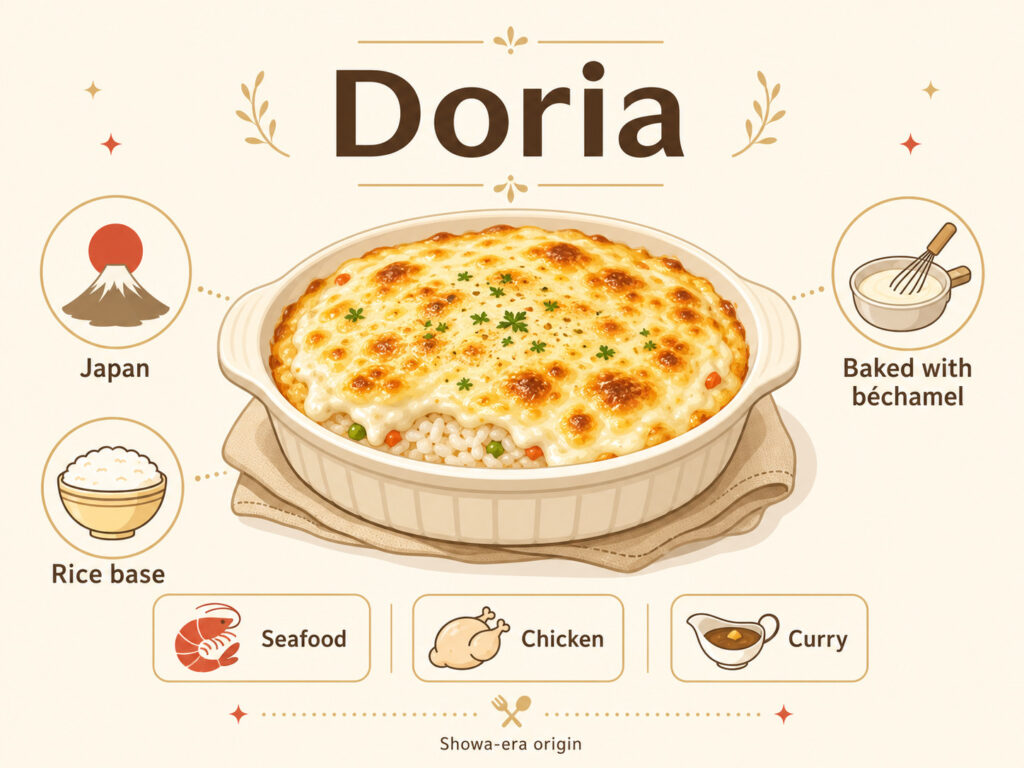
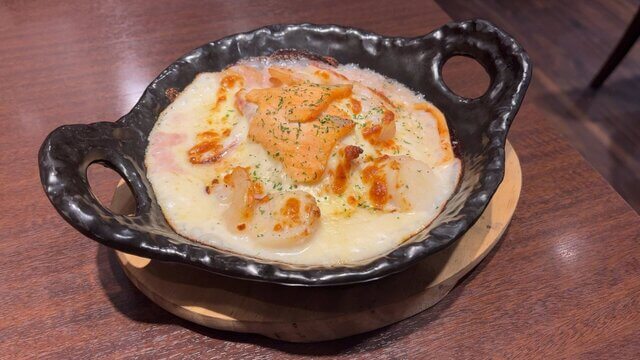
Doria is a baked rice dish topped with béchamel sauce and cheese. It looks like gratin, but rice replaces pasta or vegetables as the base. In Japan, cooks pour white sauce over buttered rice or pilaf, then bake it until the cheese browns.
Doria was created in Japan in the early Showa period, inspired by Western gratin techniques. It is not a French import, despite what many people assume. Home cooks and restaurants across Japan serve it today, from casual family diners to upscale hotel restaurants.
Several regional and seasonal variations exist. Seafood Doria uses shrimp or squid as the topping. Chicken Doria is also common on Japanese menus. Curry-flavoured Doria keeps the same rice-and-sauce base but swaps in a spiced sauce.
Origin in Yokohama
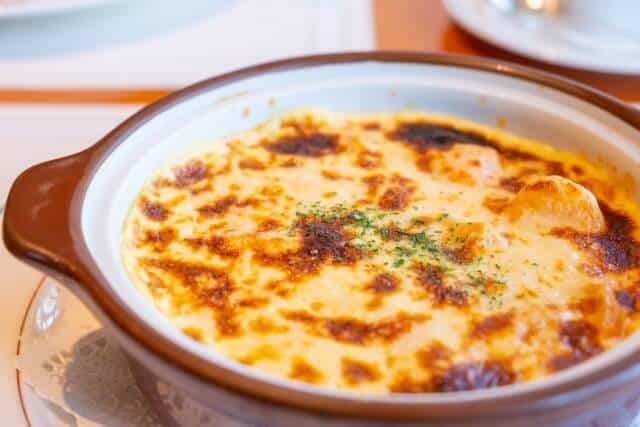
French cuisine once had a dish named after the Doria family. It was served to aristocratic guests in Paris in the 19th century. That dish used tomatoes, cucumbers, and eggs. It was completely different from Japanese Doria, though the name carried over.
Yokohama opened as one of Japan’s first international port cities in the 1850s. Foreign residents, sailors, and diplomats settled there, bringing Western food habits with them. Local chefs adapted these dishes to Japanese tastes. This blending gave rise to yoshoku, a category of Western-inspired comfort food that still defines Japanese menus today. Learn more about yoshoku in Japan.
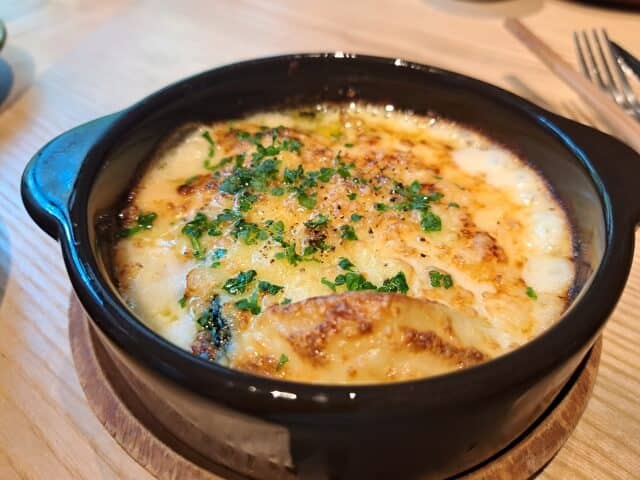
The modern prototype of Doria appeared around 1930. Sally Weil, the first head chef at Hotel New Grand in Yokohama, created it for an ill European banker. The guest wanted something soft and easy to eat.
Chef Weil topped rice with shrimp, béchamel sauce, and cheese, then baked it in the oven. The result was warm, mild, and simple to swallow. That dish became the ancestor of every Doria served in Japan today.
Many people assume Doria is European because of its name and sauce. But it is a creative dish that originated in Japan. Chefs topped butter rice with shrimp cream and béchamel sauce, then baked it until golden. Hotel New Grand still serves a version close to the original recipe. Food historians often cite it as one of the clearest examples of Yokohama’s food culture. Explore Yokohama’s local food scene.
Family restaurants later helped Doria spread beyond hotels and into everyday life. Japan’s family restaurant chains grew rapidly from the 1970s onward, adapting yoshoku dishes for home-style dining and putting Doria on menus nationwide. That shift turned a hotel specialty into a dish nearly every Japanese household recognises today.
Ingredients and Taste
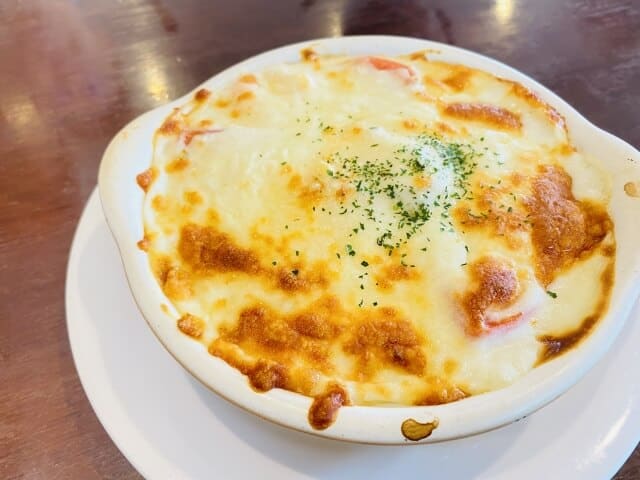
Four elements build the flavour of Doria. Rice forms the base and usually comes buttered or made into pilaf. It soaks up the sauce without turning mushy, which keeps each bite structured.
Béchamel sauce brings the creamy character that defines the dish. Cooks make it from butter, flour, and milk, then season it lightly. Cheese sits on top and browns under the oven’s heat, adding a savoury crust.
Protein varies by version. Shrimp is the traditional choice from the original Yokohama recipe. Chicken, crab, and minced meat also appear often. Each protein changes the dish’s overall flavour, yet the basic structure stays the same.
Doria vs Gratin vs Risotto
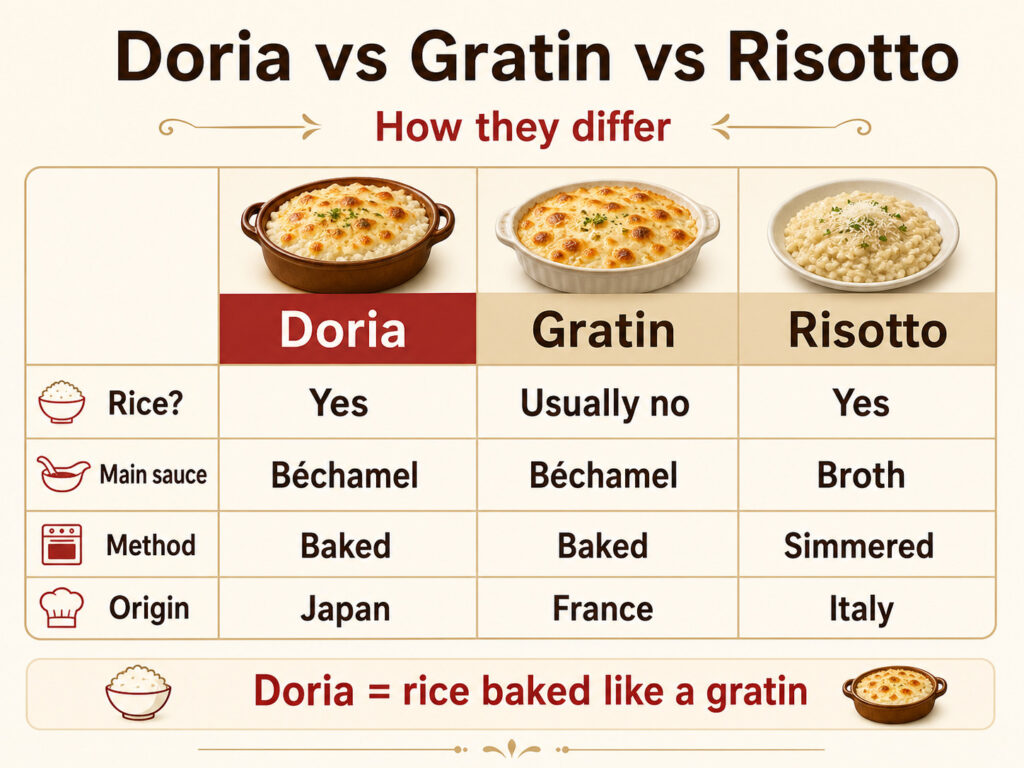
These three dishes often get confused. This table shows how they actually differ.
| Dish | Uses Rice? | Main Sauce | Cooking Method | Origin |
|---|---|---|---|---|
| Doria | Yes | Béchamel sauce | Baked in oven | Japan (Yokohama) |
| Gratin | No (usually pasta or vegetables) | Béchamel sauce | Baked in oven | France |
| Risotto | Yes | Broth, reduced slowly | Simmered on stovetop | Italy |
Doria is essentially rice gratin. Gratin skips rice entirely in its traditional French form. Risotto uses rice too, but the cooking method sets it apart, since it simmers slowly rather than baking.
Types of Doria
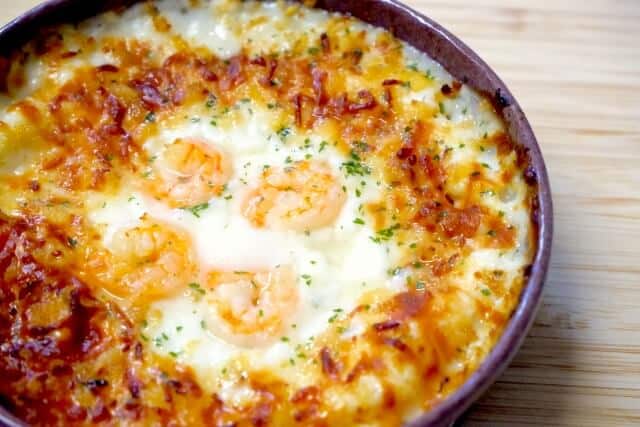
Restaurants across Japan serve many Doria styles. Here are the most common ones.
- Shrimp and lobster cream Doria: rich lobster sauce paired with cream sauce
- Seafood tomato cream Doria: shrimp, squid, and scallops in tomato cream
- Mentaiko and squid Doria: a classic pairing with edamame cream
- Sweet potato and chicken Doria: a Japanese-style sweet and savoury mix
- Demi-glace hamburger Doria: hamburg steak finished with demi-glace sauce
- Cheese fondue hamburger Doria: extra melty cheese over hamburger steak
- Sukiyaki-style Doria: soy-flavoured cream sauce with beef and vegetables
- Vegetarian Doria: mushroom or vegetable cream sauce, no meat or seafood
- Kids-friendly Doria: mild curry or ketchup-based sauce, popular in family restaurants
How to Make Doria
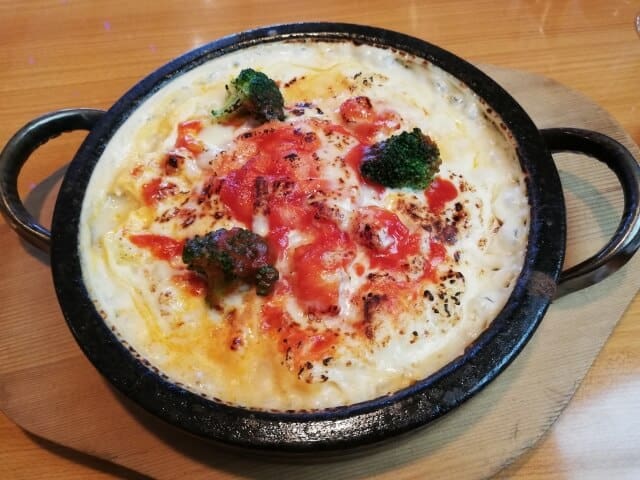
Two versions are worth knowing. Classic Seafood Doria follows the original Yokohama style with shrimp and béchamel sauce. Easy Home Meat Doria uses meat sauce and works well with leftover rice.
Classic Seafood Doria
This version stays closest to Chef Weil’s original recipe. Shrimp, béchamel sauce, and butter rice form the base. Many old-school yoshoku restaurants still serve it this way.
Easy Home Meat Doria
This version is faster and uses common pantry items. It suits busy weeknights or leftover rice that needs a second life.
| Ingredients for 1 person | Measurements |
|---|---|
| Minced beef and pork | 80g |
| Mushrooms (boiled) | 50g |
| Meat sauce | 175g |
| Salted butter | 10g |
| Cumin powder | 7g |
| Rice | 200g |
| Cheese for pizza | 50g |
| Parsley | 3g |
Heat meat sauce, minced meat, and mushrooms in a frying pan over medium heat. Stir so nothing burns. Add cumin and pepper, then mix well.
Add butter, salt, and pepper to rice in a heat-resistant dish. Mix thoroughly, then spread it evenly across the bottom.
Sprinkle cheese on top and bake in an oven at 250°C for 13-14 minutes, until the cheese browns. An oven toaster works fine too if you don’t have a full oven.
Sprinkle parsley on top once it browns nicely. Serve it hot, straight from the dish.
A few substitutions help at home. Mozzarella or a pizza cheese blend both melt well if you don’t have the exact type listed. Leftover rice from the day before actually works better since it holds its shape under the sauce.
Cost at home runs roughly ¥300 to ¥500 per serving, depending on the protein used. That’s noticeably cheaper than eating it out.
Where to Eat Doria
Hotel New Grand (Yokohama)
This is where Doria was born, and the hotel still serves a version close to Chef Weil’s 1930 original. Recommended menu: Shrimp Doria. Price range: around ¥2,500 to ¥3,500. Best for: anyone wanting the historic, classic experience.
Restaurant Komiya (レストラン香味屋)
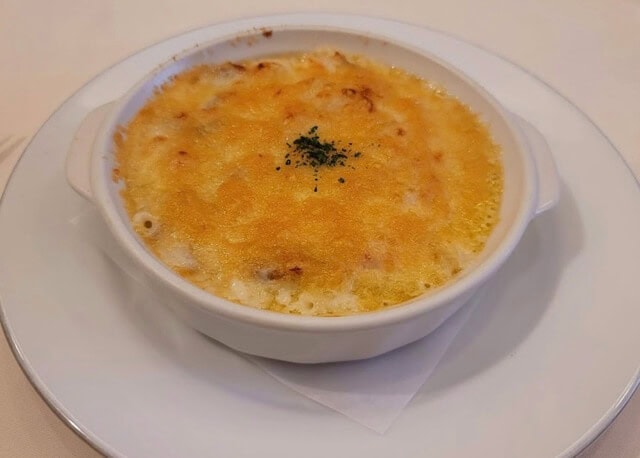
A Bib Gourmand pick in the Michelin Guide, located in Tokyo. Recommended menu: Shrimp Doria, known for its deep, carefully finished béchamel sauce. Price range: around ¥1,800 to ¥2,500. Best for: classic yoshoku fans.
Yoshoku Wine Fritts (洋食・ワイン フリッツ)
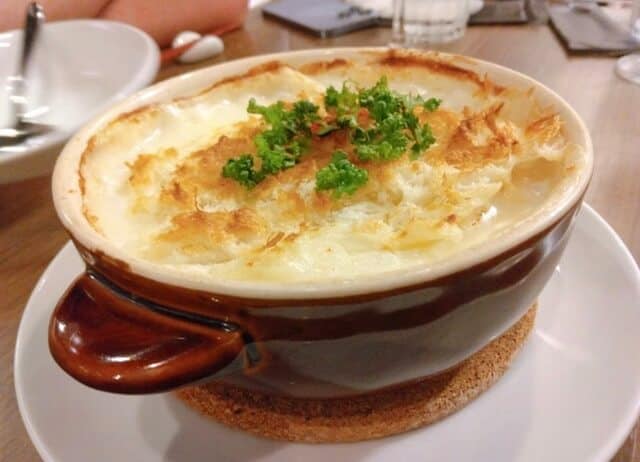
Another Bib Gourmand restaurant, run independently by a chef trained in Akasaka. Recommended menu: Chicken Doria with yoghurt-marinated chicken and tomato sauce. Price range: around ¥1,600 to ¥2,200. Best for: casual diners who like bold flavours.
Akasaka Tsutsui (赤坂 津つ井)
A well-known name on Tabelog’s top 100 list, serving Western food meant to be eaten with chopsticks. Recommended menu: Crab Doria, made with generous crab and béchamel sauce. Price range: around ¥2,800 to ¥3,800. Best for: an upscale night out. This restaurant’s approach pairs nicely with their crab cream croquette if you want more crab dishes.
Takeaway
Doria is one of the clearest examples of yoshoku: a Western-inspired dish that became truly Japanese in Yokohama. It started as a quick fix for a sick banker and grew into a national comfort food. Kids and adults both still order it at family restaurants, kissaten, and upscale hotels alike.
If you enjoyed this dish guide, continue with yoshoku in Japan and Yokohama’s local food scene.
Doria FAQ
Is Doria Japanese or Western?
This dish is Japanese, despite its European-sounding name and ingredients. Chef Sally Weil created it at Hotel New Grand in Yokohama around 1930. It belongs to the yoshoku category, meaning Western-style food adapted for Japanese tastes. Many visitors assume it originated in France or Italy, but the béchamel-and-rice combination is a Japanese invention.
What is the difference between Doria and gratin?
The classic version uses rice as its base, while French gratin usually skips rice entirely. Gratin often features pasta, potatoes, or vegetables instead. Both dishes share the béchamel sauce and baked cheese topping. Locals sometimes call it rice gratin, which captures the overlap well.
What sauce is used in Doria?
Most home cooks use béchamel sauce, made from butter, flour, and milk. Some variations swap in tomato cream, curry sauce, or demi-glace sauce depending on the protein. Cheese always tops the dish before baking. The sauce choice changes the flavour profile significantly, from mild and creamy to rich and savoury.
Can you make Doria without seafood?
Absolutely, and many home versions skip seafood entirely. Minced meat, chicken, and even vegetables work well as the main protein. Vegetarian versions use mushroom or vegetable cream sauce instead. The core structure, rice with béchamel and cheese, stays the same regardless of topping.
In what situations is Doria typically eaten?
This dish works for casual dinners, lunch, and even home parties. Families often make it on weeknights using leftover rice. Restaurants also serve it as a comfort food option on set menus. Kissaten, or old-style Japanese cafes, frequently include it alongside coffee and light meals.
What type of rice is recommended for Doria?
Plain white rice works fine for most versions. Seasoned rice such as pilaf or takikomi gohan adds extra flavour if you want something more complex. Leftover rice actually holds up well under the sauce. Freshly cooked rice sometimes turns too soft once baked.
What are common mistakes when making Doria?
Watery béchamel sauce is the most frequent issue. Cooking the sauce thoroughly removes excess moisture before it goes over the rice. Baking time matters too, since undercooking leaves cheese unmelted and overcooking burns it. Following the recipe’s timing closely avoids both problems.
References
- Cwiertka, Katarzyna J. — Modern Japanese Cuisine: Food, Power and National Identity, Reaktion Books, 2006 (Academic Source, Surveyed: July 2026)
- Government of Japan — The Birth of Yoshoku: How It Transformed the Modern Japanese Diet (Surveyed: July 2026)
- Government of Japan — Family Restaurants: Supporting the Spread of Yoshoku in Japan (Surveyed: July 2026)
- Hotel New Grand — Official History Page (Surveyed: July 2026)
- Japan Travel (JNTO) — The Art of Yoshoku: Six Popular Western Dishes Reinvented in Japan (Surveyed: July 2026)
- Plenus Kome Academy — The Roots of Yoshoku: Beginnings of Western Cuisine in Japan (Surveyed: July 2026)
- BBC Travel — Japan’s Surprising ‘Western’ Cuisine (Surveyed: July 2026)
Related Articles
- Yoshoku: Japan’s Western-Inspired Comfort Food (Surveyed: July 2026)
- Food in Yokohama: Where to Enjoy the Best Local Cuisine (Surveyed: July 2026)
- Crab Cream Croquette (Surveyed: July 2026)
- Japanese Curry Rice (Surveyed: July 2026)



Comments