


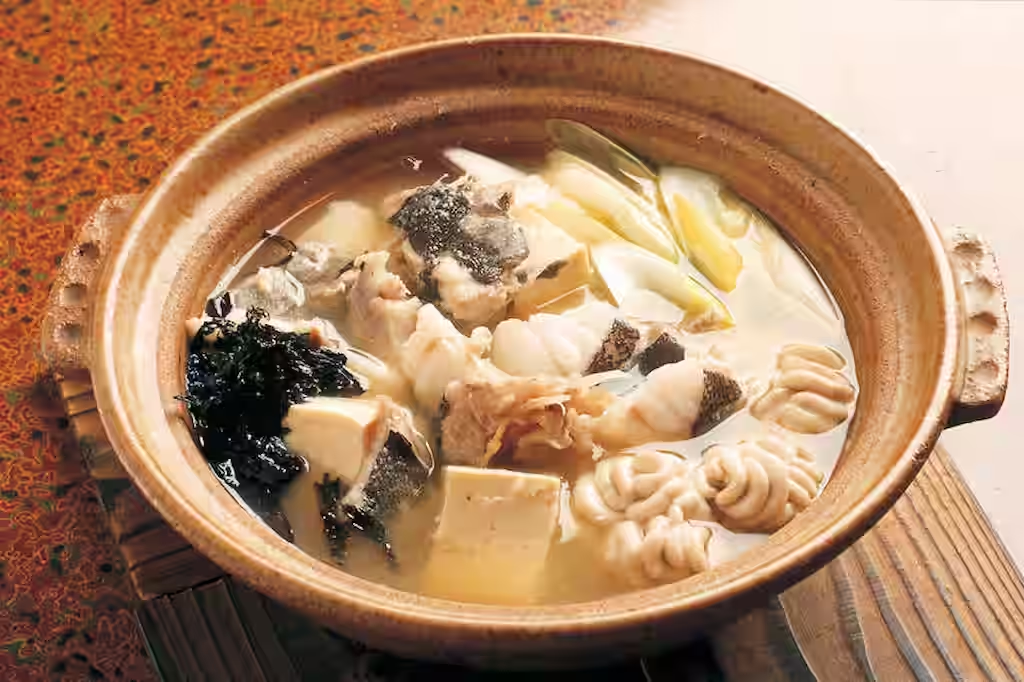
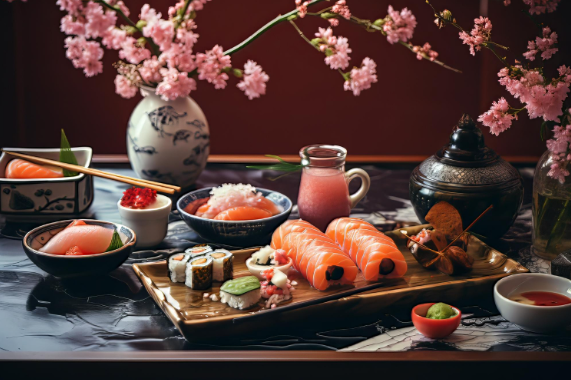
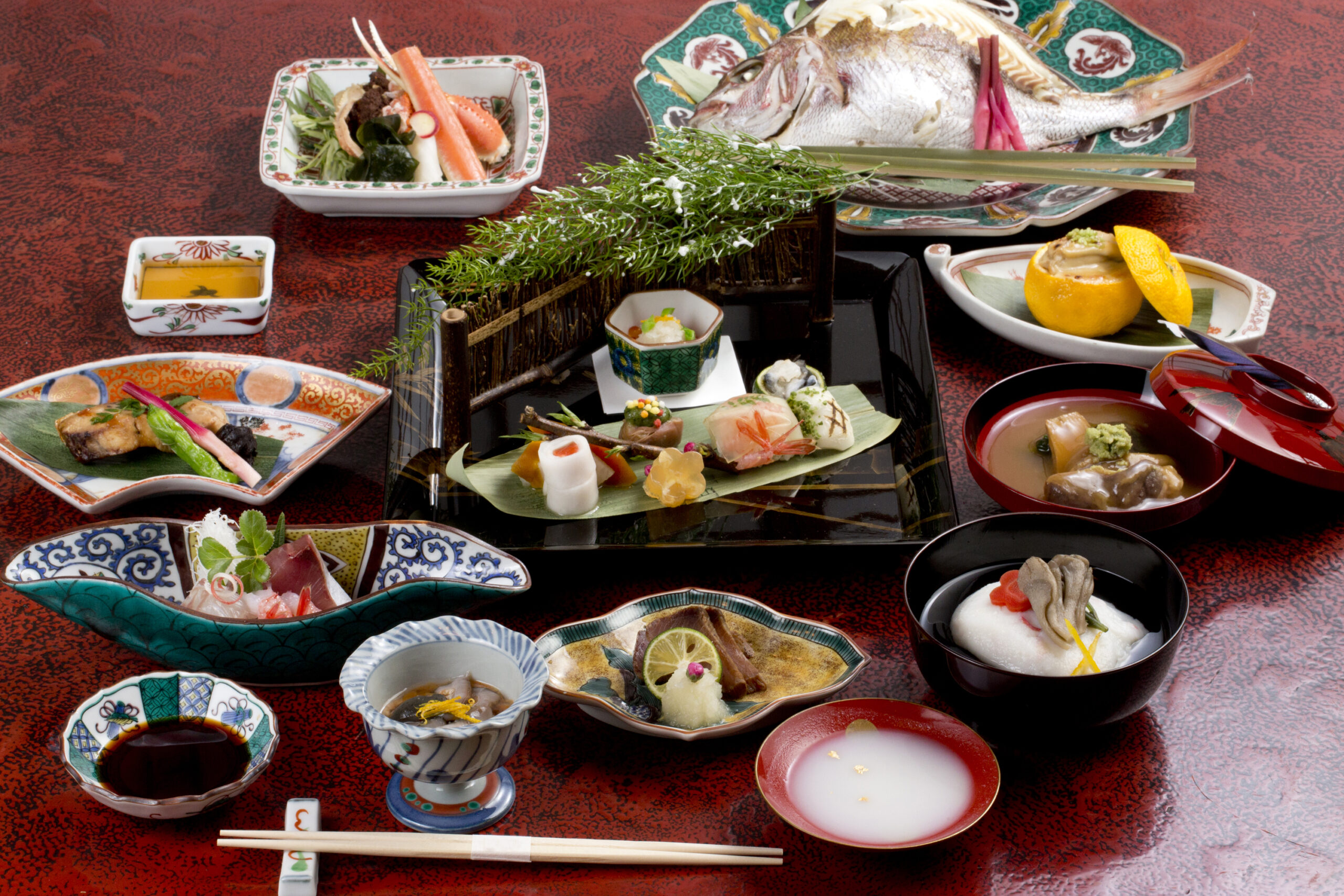
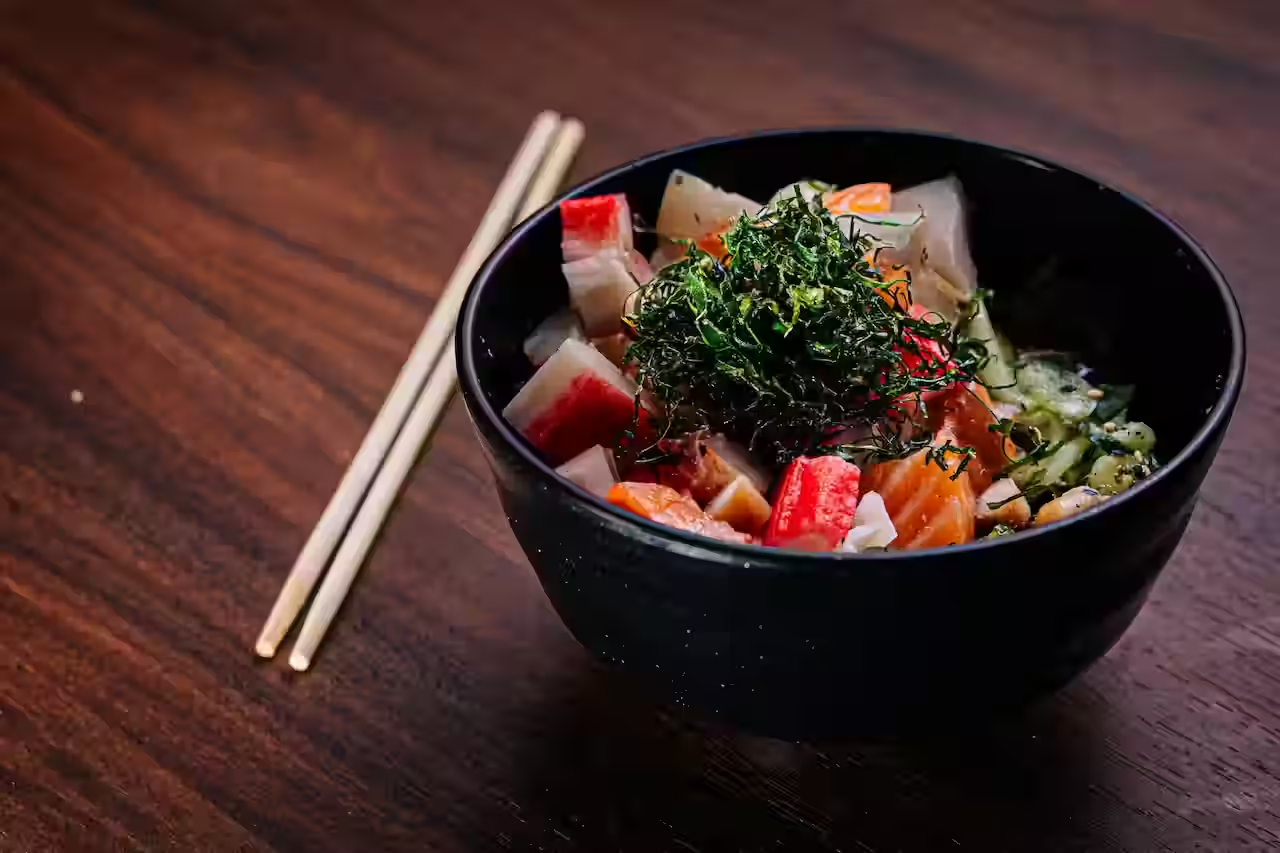



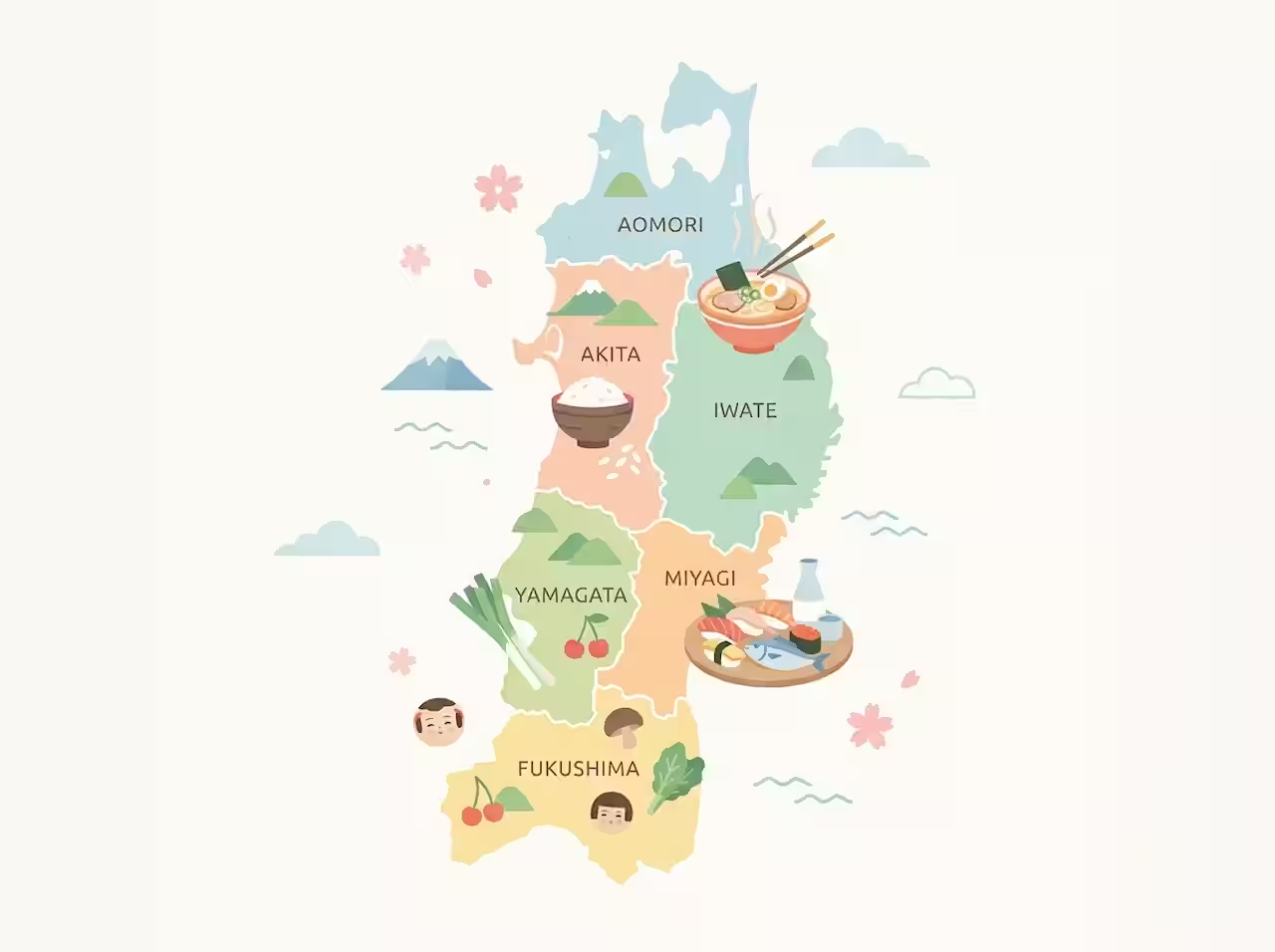
The Tohoku region in northern Japan is known for its rugged mountains, cold winters, and rich agricultural traditions. These natural conditions have shaped a unique food culture that focuses on hearty dishes, preserved foods, and regional specialties made from rice, seafood, and seasonal vegetables.
Stretching across six prefectures—Aomori, Iwate, Miyagi, Akita, Yamagata, and Fukushima—Tohoku offers a wide variety of traditional foods that reflect local history and climate. From comforting noodle dishes to famous rice bowls and hot pots, the region is filled with flavors that are deeply connected to everyday life.
With that in mind, this guide explores the most famous foods of Tohoku, the cities where they originated, and the unique culinary traditions that make northern Japan a fascinating destination for food lovers.
Quick Facts About Tohoku Food
- Region: Northern Honshu, Japan
- Prefectures: Aomori, Iwate, Miyagi, Akita, Yamagata, Fukushima
- Famous ingredients: Rice, seafood, apples, beef, fermented foods
- Signature dishes: Gyutan, Kiritanpo Nabe, Wanko Soba
- Food culture: Hearty winter dishes and rice-based cuisine
Tohoku Food Map
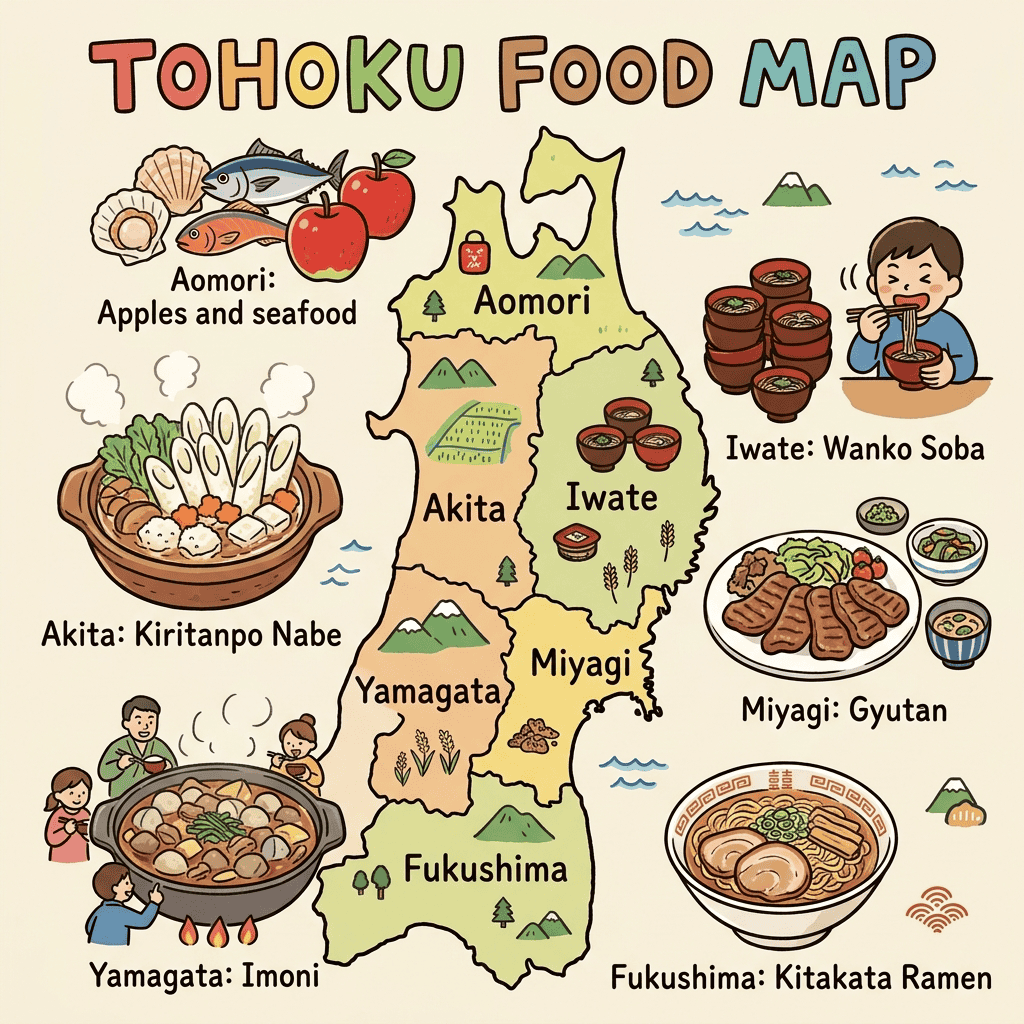
Each prefecture in Tohoku has its own culinary specialty shaped by local climate and traditions. Notably, coastal regions are known for fresh seafood, while inland areas produce high-quality rice and comforting hot pot dishes.
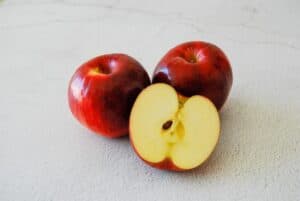
- Aomori: Apples and seafood
- Iwate: Wanko Soba
- Miyagi: Gyutan
- Akita: Kiritanpo Nabe
- Yamagata: Imoni
- Fukushima: Kitakata Ramen
Popular Tohoku Foods
The Tohoku region offers many famous regional dishes that highlight its agricultural richness and strong culinary traditions. With so much to discover, here are some of the most iconic foods you should try when exploring northern Japan.
Food Culture of Tohoku
Tohoku’s cold climate and mountainous geography have shaped its food culture. Winters in the region are long and snowy, which historically encouraged the development of preserved foods such as pickles, fermented dishes, and hearty soups.
Rice plays a central role in the region’s cuisine, as Tohoku is one of Japan’s most important rice-producing areas. Many traditional dishes complement freshly harvested rice, including grilled meats, pickled vegetables, and flavorful hot pots.
Seafood is also an essential part of the Tohoku diet, particularly along the Sanriku Coast, which boasts rich fishing grounds and high-quality seafood such as oysters, scallops, and sea urchin.
Famous Food Cities of Tohoku
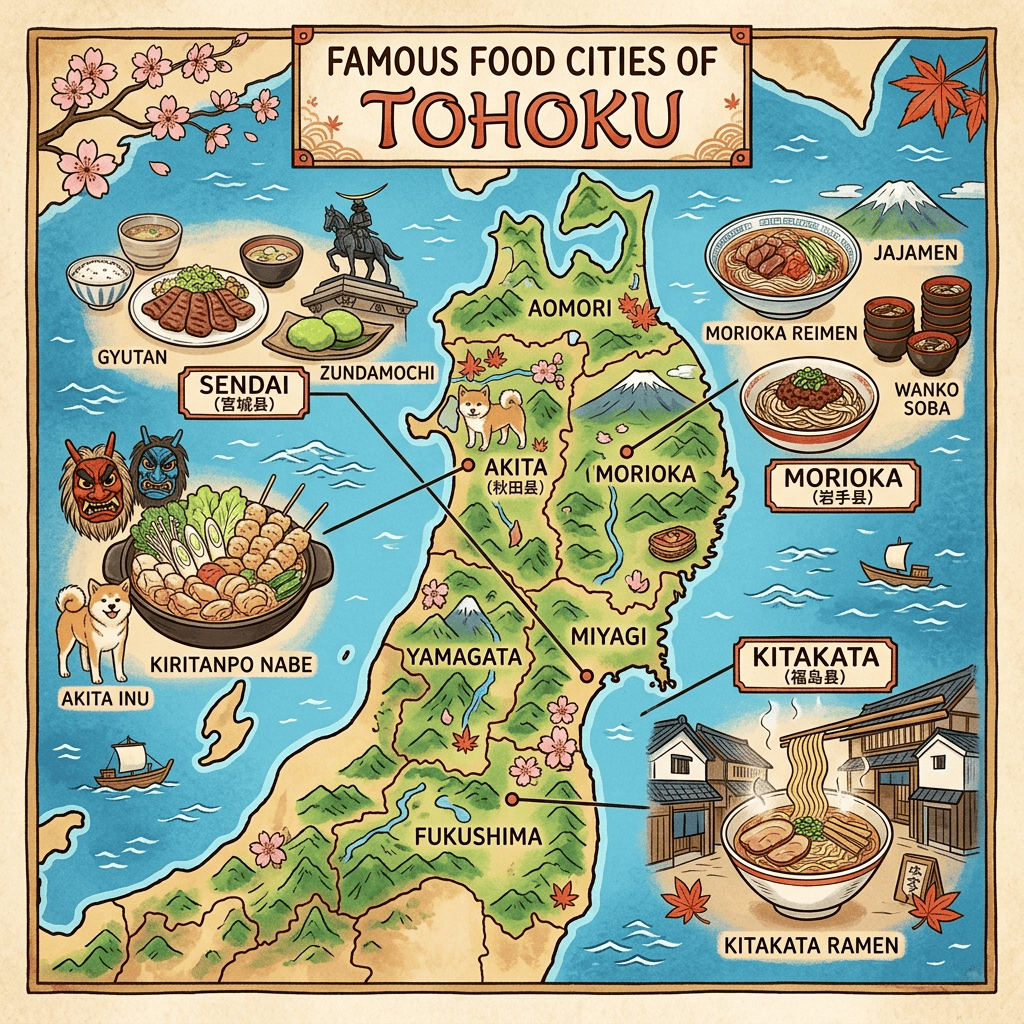
Sendai – The Home of Gyutan
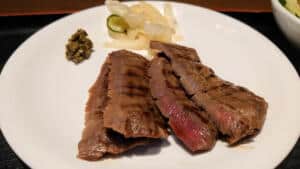
Sendai, the largest city in the Tohoku region, is best known for gyutan, grilled beef tongue that is sliced thick and cooked over charcoal. The dish is typically served with rice, pickles, and oxtail soup, making it one of the most famous regional specialties in Japan.
Morioka – Noodle Capital of Iwate
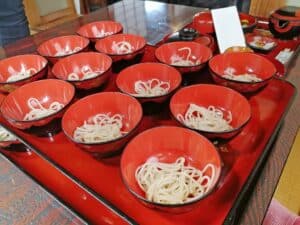
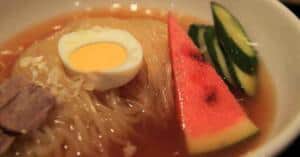
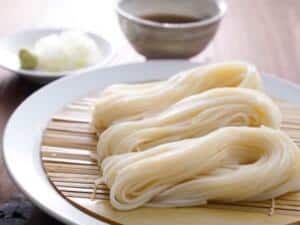
Morioka is famous for its diverse noodle culture. The city is home to dishes such as wanko soba, where diners continuously receive small bowls of soba noodles, and Morioka reimen, a refreshing cold noodle dish.
Akita – Traditional Hot Pot Culture
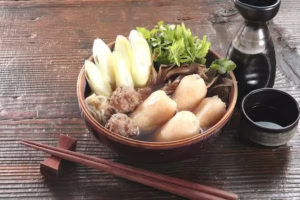
Akita is known for kiritanpo nabe, a comforting hot pot made with grilled rice sticks, chicken, vegetables, and broth. This dish is especially popular during the cold winter months.
Kitakata – One of Japan’s Famous Ramen Cities
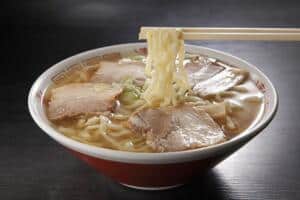
The city of Kitakata in Fukushima Prefecture is renowned for Kitakata ramen, one of Japan’s three major ramen styles. The ramen features a soy sauce-based broth and thick curly noodles.
Explore More Tohoku Foods
Tohoku is home to many traditional dishes and regional specialties that reflect the rich food culture of northern Japan. Discover more iconic foods from the region below.
- Gyutan – Sendai’s famous grilled beef tongue.
- Kiritanpo Nabe – Traditional Akita hot pot with grilled rice sticks.
- Kitakata Ramen – One of Japan’s most famous ramen styles.
- Wanko Soba – A unique noodle dining experience from Iwate.
- Morioka Reimen – Refreshing cold noodles from Morioka.
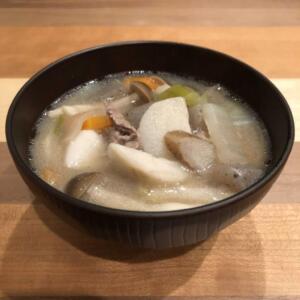
- Imoni – A famous taro stew enjoyed during autumn in Yamagata.
Explore Other Japanese Food Regions
Japan’s regional cuisines vary widely depending on climate, history, and local ingredients. Explore other food regions across Japan to discover even more traditional dishes and local specialties.
- Hokkaido Food Guide – Discover seafood, ramen, and dairy specialties from Japan’s northern island.
- Kanto Food Guide – Explore Tokyo’s vibrant food culture and famous regional dishes.
- Chubu Food Guide – Discover mountain cuisine, noodles, and traditional regional foods.
- Kansai Food Guide – Taste iconic dishes like takoyaki, okonomiyaki, and Osaka street food.
- Kyushu Food Guide – Enjoy rich ramen, fresh seafood, and southern Japanese specialties.
Tohoku Food Guide FAQ
What food is Tohoku famous for?
The region boasts premium rice, high-quality sake, rich seafood, and hearty local hot pots that warm the body during harsh winters.
What are the most popular dishes in the Tohoku region?
Locals and tourists love Gyutan (grilled beef tongue), Kiritanpo Nabe, Kitakata Ramen, Wanko Soba, and Imoni stew.
Which prefectures are part of the Tohoku region?
The region consists of six prefectures: Aomori, Akita, Iwate, Yamagata, Miyagi, and Fukushima.
What seafood is famous in Tohoku?
Fishermen catch excellent Oma tuna, Pacific saury, oysters, sea squirts (hoya), and scallops in the cold, nutrient-rich coastal waters.
What is Gyutan and where did it originate?
It is thickly sliced, charcoal-grilled beef tongue. A restaurant owner in Sendai (Miyagi Prefecture) invented it after World War II.
What is Kiritanpo Nabe?
Chefs in Akita boil mashed, toasted rice skewers (Kiritanpo) in a rich chicken broth with burdock root and mushrooms.
Why is Kitakata Ramen famous?
Cooks use thick, flat, curly noodles and serve them in a light, clear soy sauce broth, making it one of Japan’s top three ramen styles.
What makes Wanko Soba unique?
Waiters continuously throw small, bite-sized portions of soba noodles into your bowl until you put a lid on it to signal you are full.
What is Imoni and when is it eaten?
It is a hearty meat and taro potato stew. Locals gather along riverbanks in autumn to cook and eat it together at “Imonikai” parties.
What ingredients are commonly used in Tohoku cuisine?
Cooks heavily use mountain vegetables (sansai), mushrooms, tofu, miso, soy sauce, and preserved foods to endure the long winters.
Why is rice important in Tohoku food culture?
The clean snowmelt water and severe temperature differences allow farmers to grow some of Japan’s most famous premium rice brands, like Akita Komachi.
What desserts or sweets are famous in Tohoku?
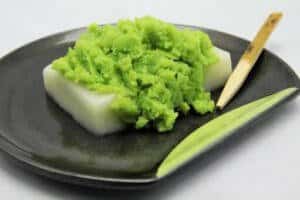
You should try Zunda Mochi (sweet edamame paste over rice cakes), Kamome no Tamago, and Nambu Senbei (crispy wheat crackers).
When is the best season to try Tohoku food?
Autumn offers the best rice and harvest foods, while winter provides the fattiest seafood and the most comforting hot pots.
Which city in Tohoku is best known for food?
Sendai serves as the culinary capital, offering massive seafood markets, famous beef tongue, and a vibrant Izakaya scene.
Is Tohoku food different from other regions of Japan?
Yes. Cooks historically used more salt and preservation techniques to survive heavy snow, creating deeper, richer, and more robust flavors.