


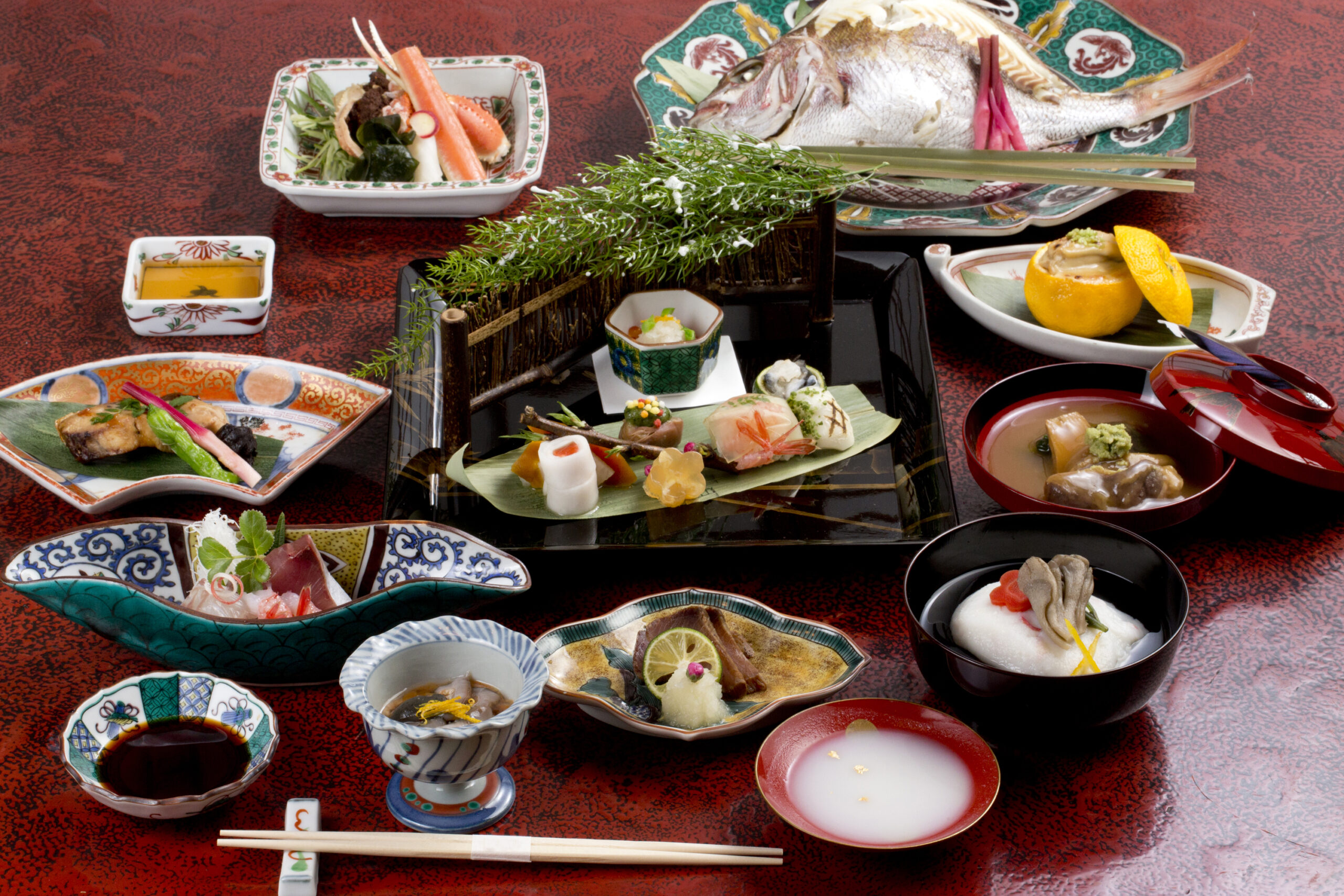



My first encounter with Kaga cuisine was in Kanazawa during the winter. Walking along stone-paved streets glistening with snow, I entered a traditional ryotei restaurant. In the quiet tatami room, vermillion lacquerware and Kutani ceramics already lay before me. Even before the food arrived, I felt as though the “feast” had already begun. Everything in sight was meticulously calculated, yet a relaxed elegance hung over it all. That was the moment I realized this unique atmosphere differed slightly from other types of Japanese cuisine.
What is Kaga Cuisine?
Kaga cuisine is a regional culinary tradition that developed primarily in the castle town of the Kaga Domain—once known as “Kaga Hyakumangoku” (the million-koku domain)—in what is now Kanazawa City, Ishikawa Prefecture.
What makes it distinctive is that it functions as a “total art form,” encompassing not just the food, but the tableware, the room’s decor, and the hospitality itself. It isn’t just a meal to satisfy hunger; I feel that the essence of Kaga cuisine lies in the time spent savoring the stories of the season and the land.
Kanazawa is also known as a city where many traditional crafts gather, such as Kutani porcelain, Wajima lacquerware, and Kaga Yuzen silk dyeing.
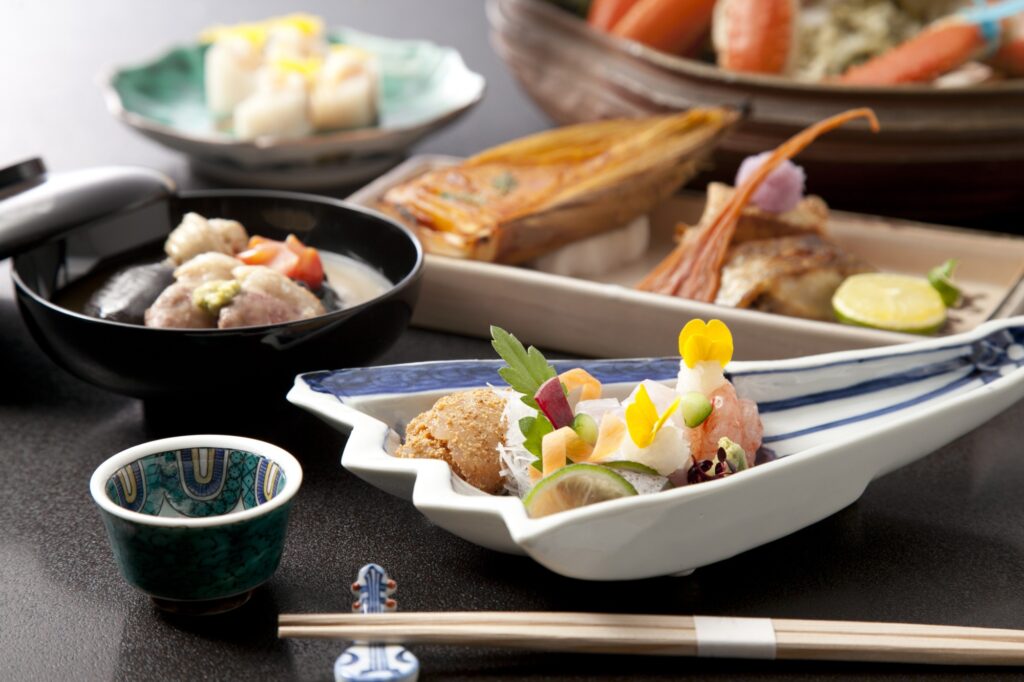
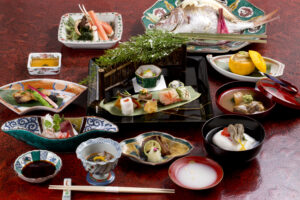
At a Kaga cuisine seating, these crafts are used as a matter of course, with dishes selected to match the colors of the food and the feeling of the season. Is the dish for the food, or the food for the dish? The sense of unity is so impressive that you might momentarily wonder which one is the star.
Kaga Cuisine as a Registered Intangible Cultural Property
In December 2025, Kaga cuisine was registered as a national Registered Intangible Cultural Property under the title “Culinary Techniques and Hospitality of Kaga Cuisine.”
The registration didn’t just cover individual recipes. It recognizes the comprehensive efforts that create the Kaga dining experience: the chefs’ skills, the refined movements of the proprietress (okami) and servers as they explain the meaning behind the dishes, and the presentation involved in preparing the room.
Behind this lies the history of the Maeda family, who generously protected tea ceremonies, Noh theater, and traditional crafts during the Edo period.
The solemn etiquette nurtured within samurai society combined with a culture of grand banquets using rich ingredients. The fact that both have been passed down continuously to the present day is likely what led to its value as an intangible cultural property.
The History of Kaga Cuisine
The roots of Kaga cuisine lie in the formal honzen-ryori of samurai families and the banquet dishes served at ceremonial occasions.
In the Kaga Domain, which was so financially prosperous it was dubbed “Kaga Hyakumangoku,” lavish and prestigious meal settings were developed for celebrations and entertaining guests.
At the same time, the variety of ingredients gathering in Kanazawa—kelp and dried goods brought by Kitamaebune trading ships, seafood from Noto and Etchu, and rice and vegetables from the Kaga plains—expanded the culinary range.
By incorporating the flow of tea ceremony culture and kaiseki cuisine, a unique style gradually took shape that came to be known as “Kaga cuisine.”
The Three Pillars of Kaga Cuisine
Local Ingredients and Seasonality
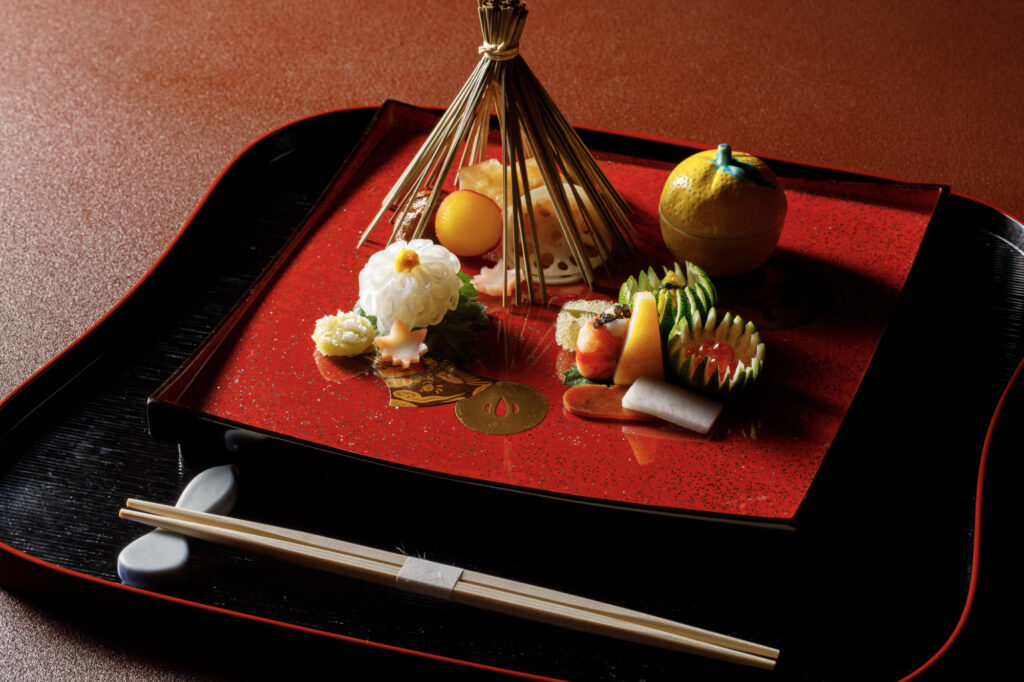
The foundation of Kaga cuisine is the concept of “eating local products locally.”
Seafood from the Sea of Japan such as winter yellowtail (kanburi), snow crab (zuwaigani), female snow crab (koubakogani), and northern shrimp (amaebi) is paired with heirloom vegetables known as Kaga vegetables. Representative examples include Gensuke daikon, Kaga lotus root, kinziso (Okinawan spinach), and red zuiki (taro stalks).
The seasoning is relatively mild, leaning toward bringing out the natural sweetness and umami of the ingredients.
Because of that, it’s a world where the quality of the dashi broth and the precision of the cooking make all the difference. Since it shows a completely different face every season, this is exactly why you’ll want to visit the same restaurant multiple times.
Harmony Between Food and Tableware
TThe first thing that catches your eye in Kaga cuisine is the tableware. Brilliant colorful Kutani porcelain plates, heavy Wajima lacquerware bowls, and the soft woodgrain of Yamanaka lacquerware.
Each dish arrives in the vessel that makes it look its best. One chef described tableware as “the clothing for the food,” and I feel that is exactly right. The tokonoma alcove holds subtly arranged seasonal flowers, and the decor of the room pulls the entire space into a single world.
While tasting the food, your imagination expands: “What kind of kiln fired this dish?” or “What intention drove the choice of these colors?” This is a pleasure unique to Kaga cuisine.
Hospitality Based on the Spirit of the Tea Ceremony
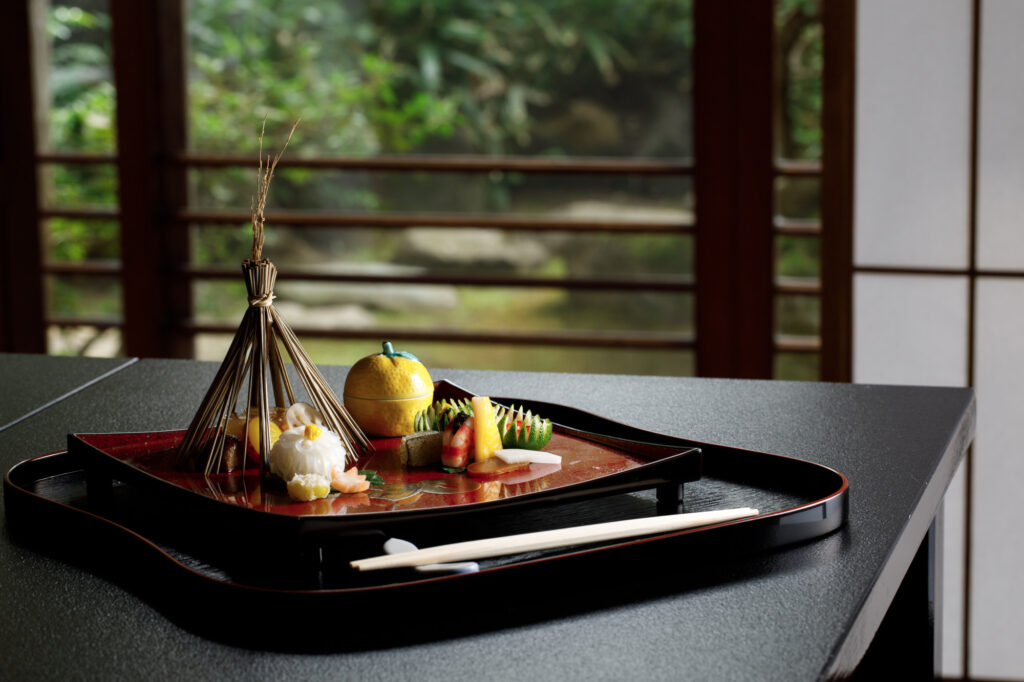
The flow of Kaga cuisine is very similar to the progression of a tea ceremony. The first dish offers a seasonal greeting, the bowls and side dishes showcase the blessings of the land, and as you move through grilled, simmered, and side dishes, the atmosphere naturally relaxes.
The okami or servers often add subtle explanations of the food and tell you the origins of the dishes or ingredients, making the meal feel like a small cultural lecture.
There is the phrase “ichi-go ichi-e” (once-in-a-lifetime encounter), and even with the same menu, no two nights are ever the same. The flavor and the pacing change slightly depending on the weather, the day’s haul, and the guests present.
I believe the earnestness in facing that one-time-only occasion leads to the quiet tension found in Kaga cuisine.
Representative Kaga Dishes
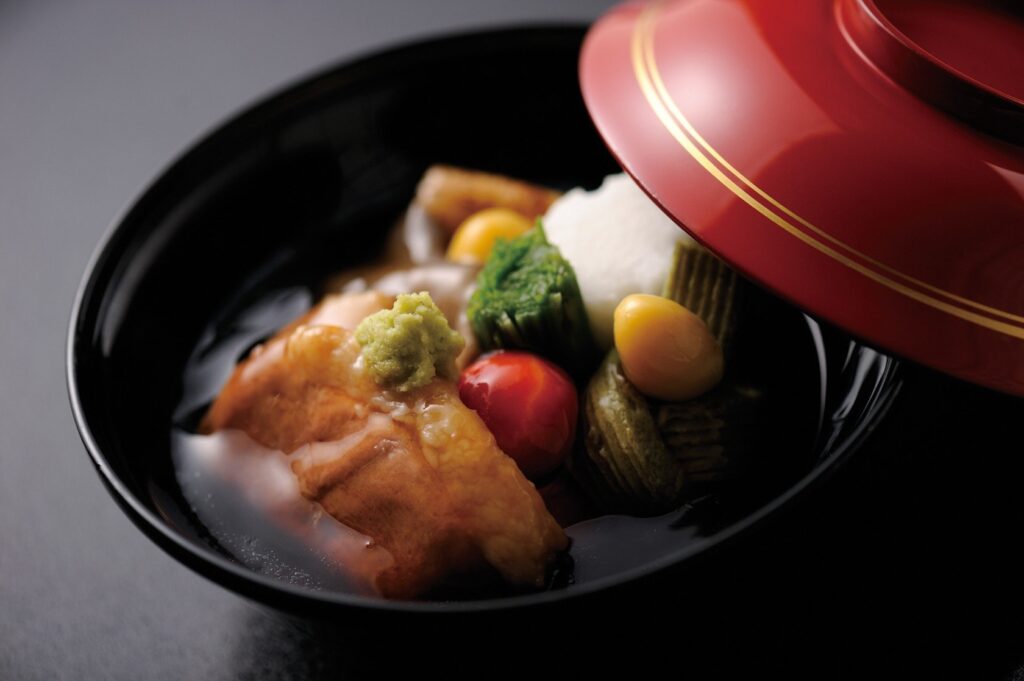
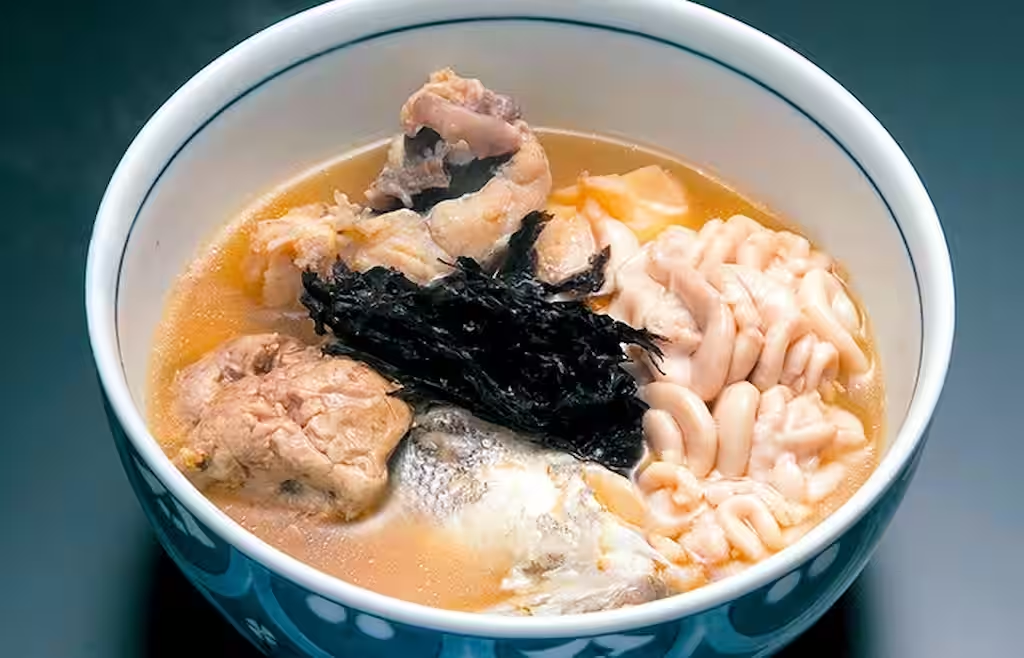
Jibuni
Jibuni stands as the first dish people mention as a symbol of Kaga cuisine.
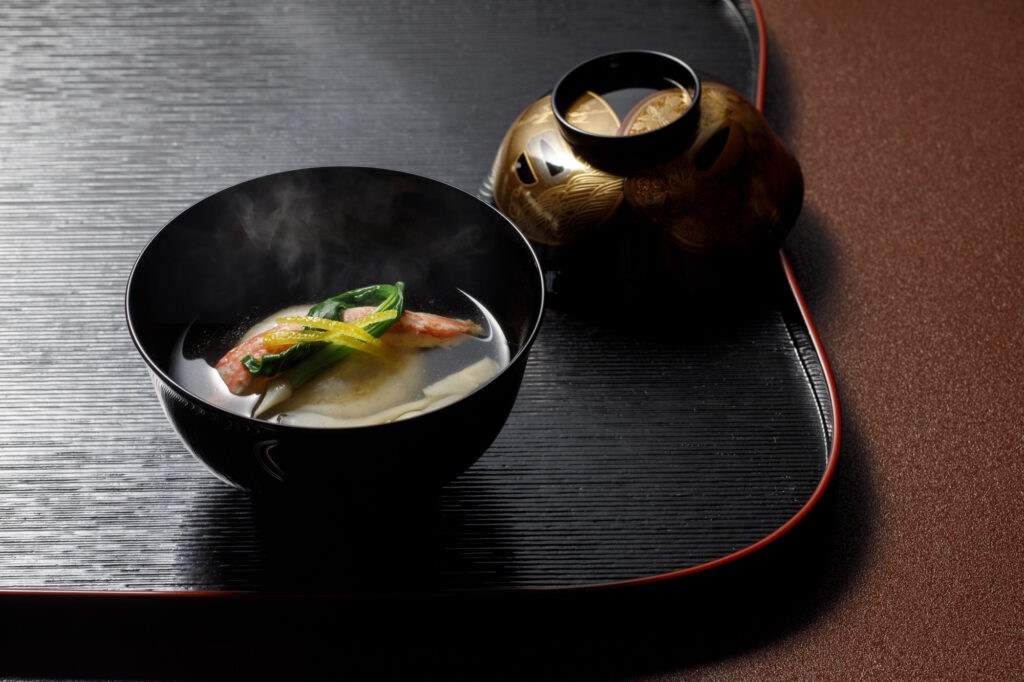
Cooks coat duck (or chicken) in flour and slowly simmer it in a broth of dashi and soy sauce, serving it alongside wheat gluten (kurumafu), leafy greens, and wasabi.
The flour thickens the broth, carrying the umami of the duck to every corner of the bowl.
As you gradually dissolve the wasabi while eating, the balance of sweetness and spice shifts, keeping it interesting until the very end. Cooks often serve it in a flat lacquer bowl called a “jibu-wan,” and the shape of the vessel itself makes you feel the essence of Kaga.
Tai no Karamushi (Steamed Sea Bream)
Cooks often serve Tai no Karamushi at celebratory occasions.
They slice the sea bream open from the back, stuff it with a mixture of okara (soy pulp) and vegetables, and steam it. Samurai society avoided cutting the belly, as it evoked the idea of seppuku (ritual suicide), which is why cooks prepare it by opening the back instead.
They present the steamed sea bream on colorful Kutani porcelain, sometimes serving it as a male and female pair.
Within its splendor lies a prayer for the prosperity of descendants and marital harmony. It is a quintessential Kaga dish where food and etiquette become one.
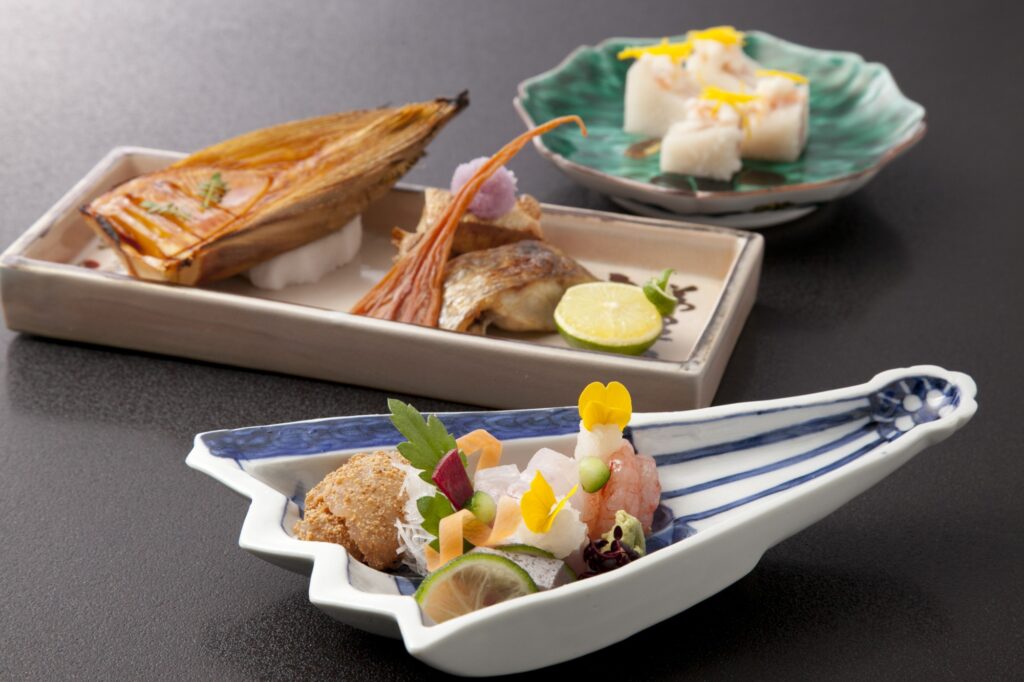
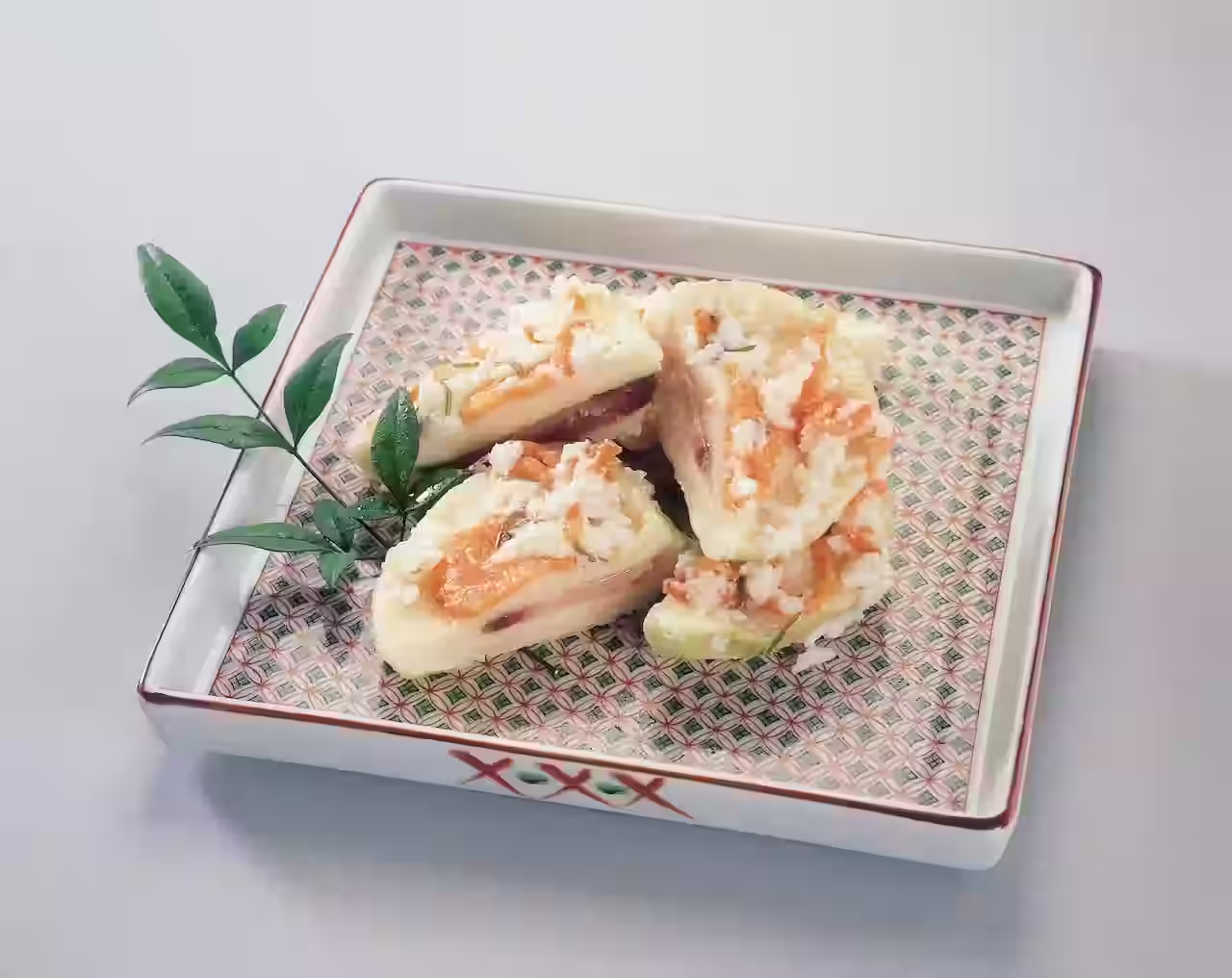
Hasumushi (Steamed Lotus Root)
Hasumushi, made with Kaga lotus root, is another essential dish.
Cooks grate lotus root, mix it with whitefish, shrimp, ginkgo nuts, and seasonal vegetables, steam it, and finish it with a thick starchy sauce poured over the top.
Kaga lotus root is high in starch, which gives it a signature chewy, mochi-like texture.
It shows a side of the vegetable so different from the usual crunchy impression that you might be surprised and think, “Is this really what lotus root tastes like?” Despite the delicate seasoning, the sweetness spreads gently the more you chew.
Other Flavors
There are countless other Kaga-specific dishes, such as “Gori no Tsukudani” (small fish simmered in a sweet and savory sauce), winter “Kabura-zushi” (turnip and yellowtail pickled with koji), and simmered dishes using Gensuke daikon.
Meals often conclude with Kanazawa-style wagashi sweets and tea, letting you feel the local culture until the very last bite.
The Relationship Between Kaga Cuisine and Japanese Cuisine (Washoku)
Washoku is Japan’s traditional dietary culture. UNESCO registered it as an Intangible Cultural Heritage in 2013. It follows the “ichiju-sansai” structure: rice paired with one soup and three sides.
Kaga cuisine is one regional style within this broad framework of Washoku. However, it carries strong influences from samurai, tea ceremony, and craft cultures. This positions it closer to kaiseki or ryotei cuisine than typical home cooking.
People sometimes compare it to Kyoto’s Kyo-kaiseki. But Kaga cuisine feels distinctly different. It emphasizes Sea of Japan seafood, Kaga vegetables, and Kutani porcelain.
Savoring Kaga Cuisine in Kanazawa
In Kanazawa, you can enjoy Kaga cuisine and its essence in various styles, from long-standing prestigious ryotei to more casual establishments.
Here, I have selected five spots that are easy to recommend even for first-time visitors to Kanazawa, chosen as if I were walking around the city myself. Their styles vary slightly, from prestigious shops suitable for special occasions to places easy to drop by during your travels.
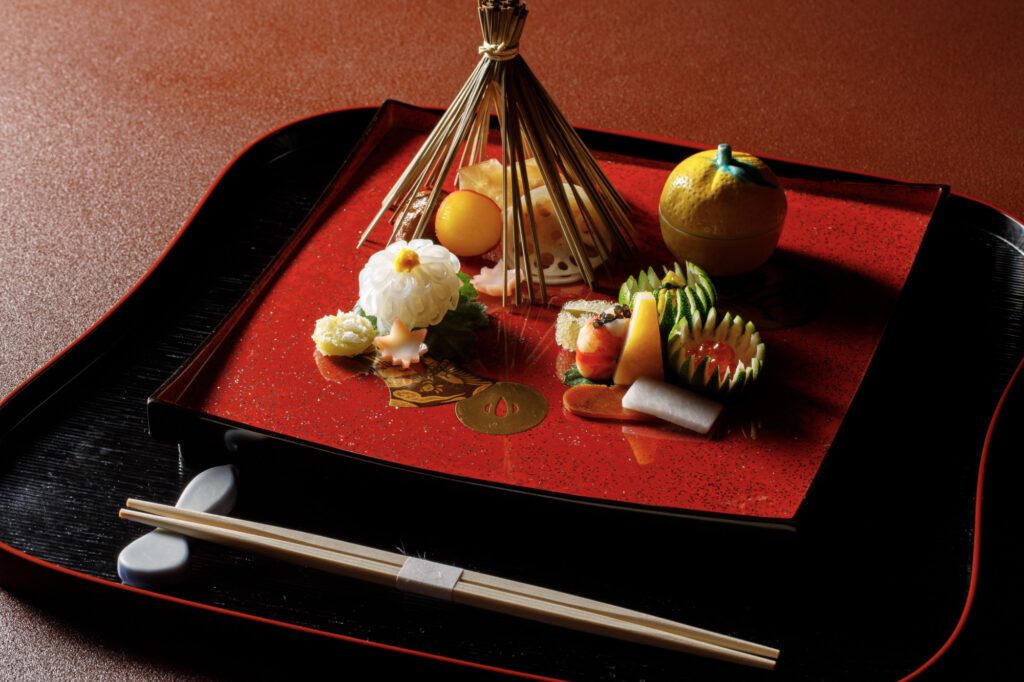
Recommended Restaurants for Kaga Ryori
Asadaya Ryokan(浅田屋)
Asadaya Ryokan is a historic ryokan serving Kaga cuisine in an intimate setting. Seasonal seafood and Kaga vegetables take center stage at each course. Lacquerware and Kutani porcelain quietly frame every dish. Staying and dining here feels like stepping into Kanazawa’s culinary history. The quiet, attentive hospitality lingers in your memory long after the meal.
Ryotei Tsubajin(つば甚)
Ryotei Tsubajin dates back to the 18th century. Many describe it as Kanazawa’s oldest ryotei. Its wooden buildings and garden immediately put you in a different time frame. The multi-course Kaga cuisine here feels formal yet warm. Delicate sashimi and carefully seasoned jibuni arrive at an unhurried pace. Seasonal dishes follow, letting you soak in both flavors and atmosphere. If you want to understand why Kaga cuisine is called a “total art,” come here. This is one of the best places to see everything come together.
Ryotei Honami(料亭 本多屋本店)
Ryotei Honami sits by a quiet river with tatami rooms that open toward a manicured garden, creating a calm backdrop for refined Kaga cuisine. Course menus lean into seasonal crab, premium white fish, and Kaga vegetables, plated on beautiful lacquer and porcelain that feel carefully matched to each dish. It is a good choice when you want something polished and special, but still relaxed enough to enjoy conversation over a long dinner.
Gyohan(魚半 武家屋敷前店)
Gyohan is a cozy restaurant not far from the Korinbo area. Set menus built around jibuni and other local dishes anchor the menu. It makes Kaga cuisine feel approachable. The atmosphere is less formal than a ryotei. This works well for travelers who want to taste Kanazawa local cuisine. No need to commit to a full kaiseki dinner. Portions are balanced and prices are reasonable for the quality. It is the kind of place where you order “one more dish” almost without thinking.
Kappo Takeshi(割烹 たけし)
Kappo Takeshi in Katamachi bridges classic Kaga cuisine and modern kappo. You sit at the counter or in a small private room. The chef prepares seasonal seafood and Kaga vegetables right in front of you. Traditional flavors weave into creative plates. The atmosphere is relaxed but focused. You might start with familiar sashimi and end up trying something new. The chef’s quiet suggestions guide you naturally along the way.
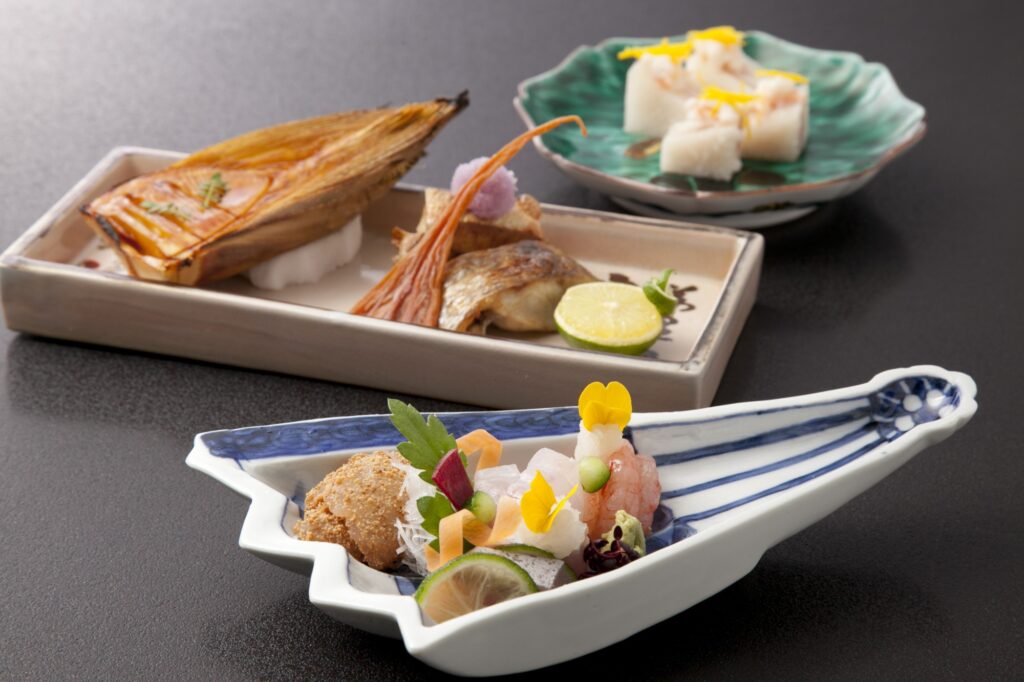
For those about to savor Kaga cuisine
If you’re experiencing Kaga cuisine for the first time, there’s no need to be formal. You might worry: “Can I sit on my heels properly?” or “What if I mess up?” Most restaurants simply want you to relax and enjoy yourself. If you’re unsure about something, just ask. It’s a great chance to learn the story behind each dish.
Kaga cuisine also changes dramatically with the seasons. Winter crab and Jibuni stew are iconic. But the refreshing fish and vegetables of early summer are equally hard to pass up. The mushrooms and new-harvest rice of autumn are too.
Don’t try to understand everything in one visit. Instead, approach each meal ready to enjoy whatever seasonal encounter awaits. You’ll naturally find yourself feeling much closer to the world of Kaga cuisine.
Reference Information
What is Kaga Cuisine? A Beginner’s Guide to Kanazawa
https://cool-kanazawa.com/kaga-cuisine/
Kaga Cuisine (Ishikawa Prefectural Foundation for Cultural Promotion)
https://www.ishikawabunka.jp/culture/resource2.html
“Kaga Cuisine” Registered as a National Registered Intangible Cultural Property (Ishikawa Prefecture)
https://www.pref.ishikawa.lg.jp/syoko/kagaryouritoroku.html
“The Essence of Kaga Cuisine” – A Comprehensive Culinary Art of Food, Tableware, and Decor (Hot Ishikawa Travel Net)
https://www.hot-ishikawa.jp/blog/detail_702.html
Learn about Kaga Cuisine (Kaga Cuisine Research Society)
https://kagaryori.jp/learn/
Comments