




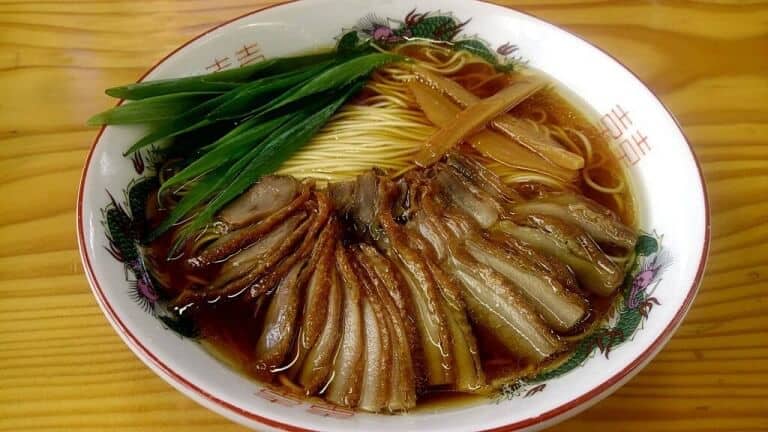
Okayama ramen is a regional ramen style from Okayama Prefecture. Most bowls use tonkotsu shoyu, or cooks finish a chicken-and-pork broth with soy sauce tare. Flat chewy noodles and shop-by-shop variation define the style.
Okayama ramen is a flexible regional style from western Japan. That variety is exactly why locals and travelers keep coming back. What makes it memorable is its range of shop styles, from tonkotsu shoyu bowls to lighter chicken-and-pork soups.
Quick Answers
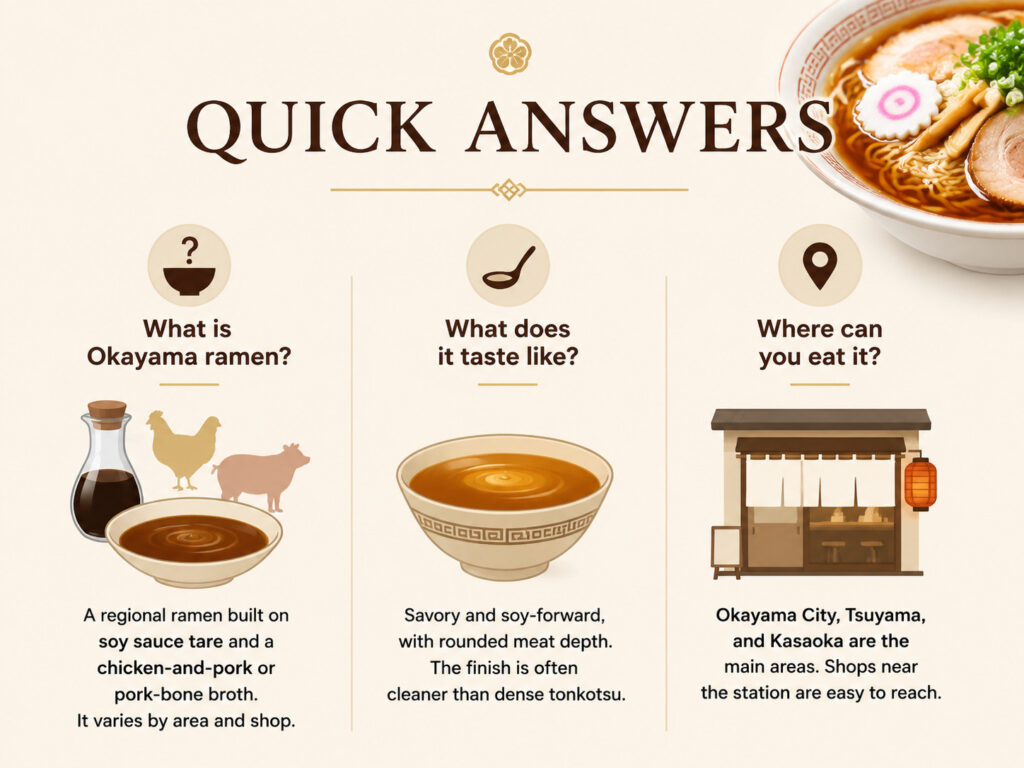
- What is Okayama ramen? A regional ramen built on soy sauce tare and a chicken-and-pork or pork-bone broth. It varies by area and shop.
- What does it taste like? Savory and soy-forward, with rounded meat depth. The finish is often cleaner than dense tonkotsu.
- Where can you eat it? Okayama City, Tsuyama, and Kasaoka are the main areas. Shops near the station are easy to reach.
What Is Okayama Ramen?
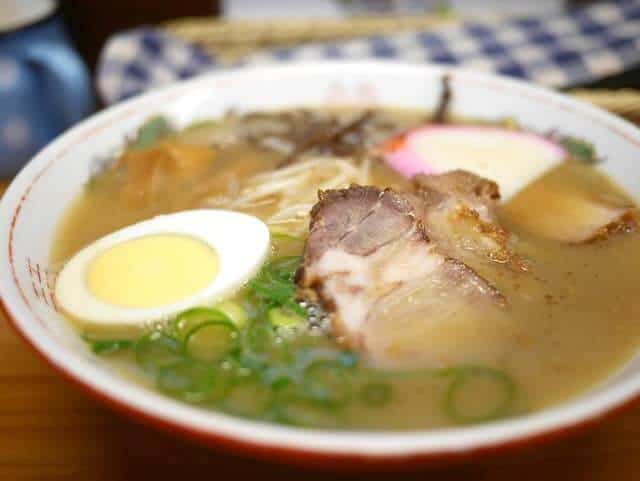
Okayama ramen is a broad local style from Okayama Prefecture. Many bowls share three traits: a soy sauce base, a rounded meat stock, and flat chewy noodles. Beyond that, the details shift from shop to shop.
This flexibility sets it apart from stricter local styles. For example, some bowls lean toward pork. Others, meanwhile, feel lighter, since cooks blend chicken into the broth. Still, the soy sauce tare usually keeps the flavor focused.
If you already enjoy shoyu ramen, this style feels familiar. The local bowls just show a softer, broader profile. That balance is why many visitors remember them fondly.
Okayama Ramen at a Glance
- Broth: tonkotsu shoyu, or mixed chicken-and-pork stock with soy tare.
- Noodles: flat, chewy, often medium-thin.
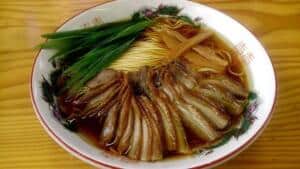
- Toppings: chashu, green onions, menma, boiled egg.
- Best area to try: Okayama City, Tsuyama, Kasaoka.
- Price range: about 700 to 1,000 yen per bowl.
What Does Okayama Ramen Taste Like?
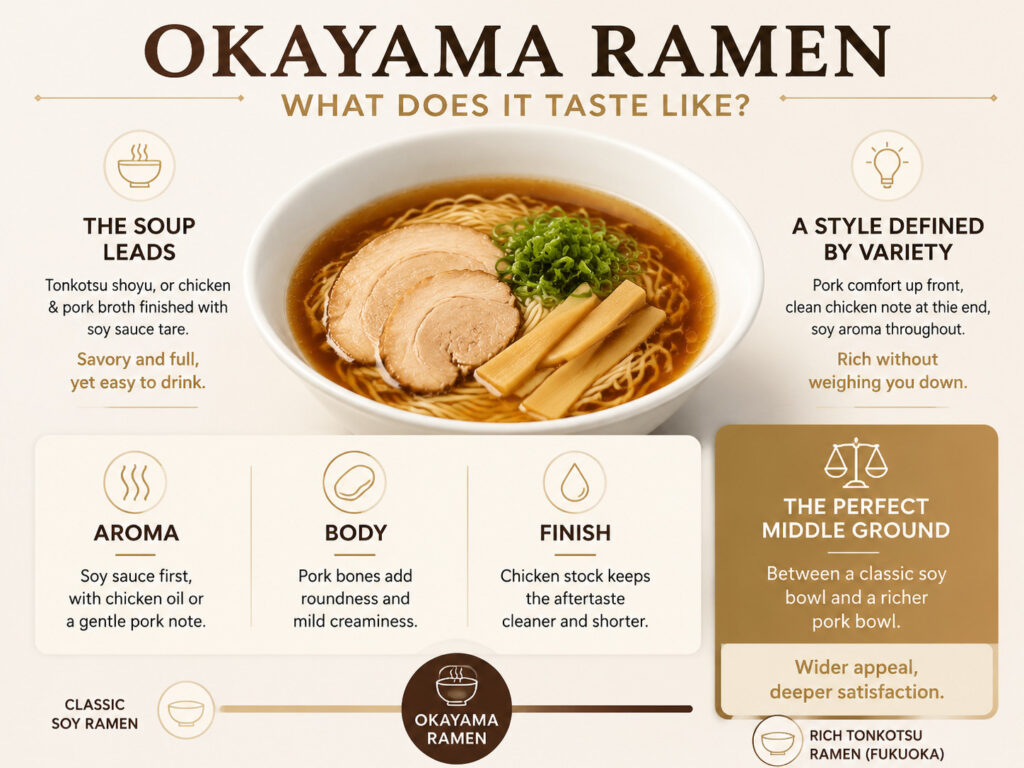
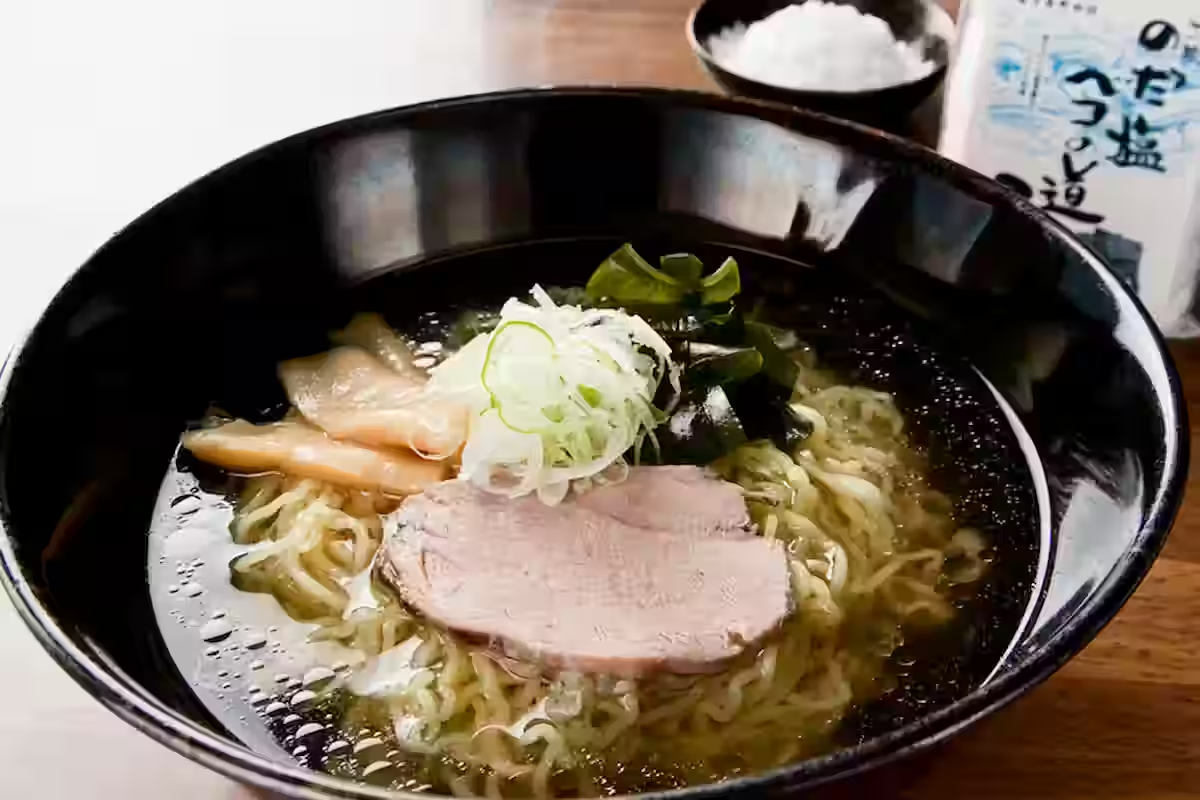
The soup leads the experience. Most bowls use tonkotsu shoyu, or cooks finish a chicken-and-pork broth with soy sauce tare. As a result, the soup feels savory and full, yet easier to drink than very dense tonkotsu.
I will admit, “a style defined by variety” sounded vague to me at first. Then the first sip made sense. You get pork comfort up front, a clean chicken note at the end, and soy aroma throughout. It is rich without weighing you down.
| Aroma | Body | Finish |
|---|---|---|
| Soy sauce first, with chicken oil or a gentle pork note | Pork bones add roundness and mild creaminess | Chicken stock keeps the aftertaste cleaner and shorter |
In short, that pattern explains the style well. Okayama ramen sits between a classic soy bowl and a richer pork bowl. Because of that middle ground, it suits a wide range of eaters. For context, you can also compare it with tonkotsu ramen from Fukuoka.
Noodles and Toppings
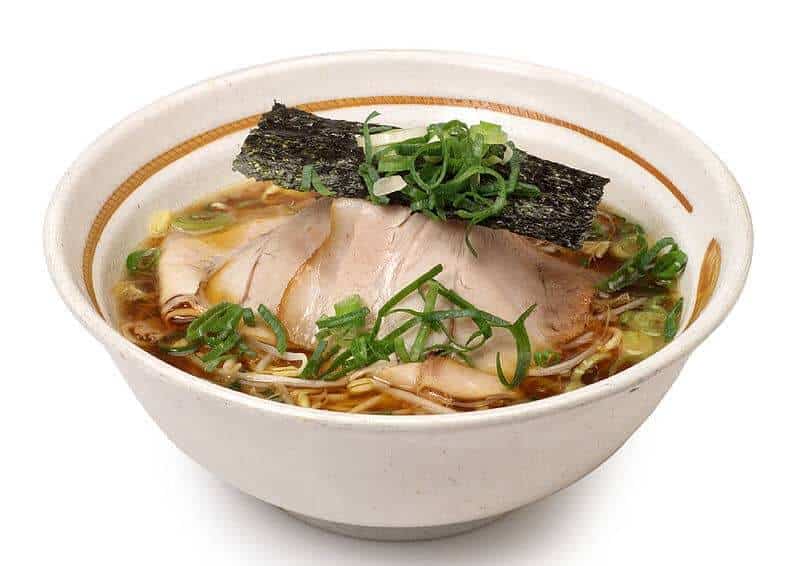
The noodles are a clear signature. In fact, many shops use flat chewy noodles, often medium-thin in width. These noodles catch the broth well, while keeping a pleasant bite. By contrast, thin straight noodles would sharpen the bowl, so flat noodles soften the impression instead.
| Topping | What it adds | How common |
|---|---|---|
| Chashu | Richness and meatiness | Very common |
| Green onions | Fresh aroma and contrast | Very common |
| Menma | Crunch and texture | Common |
| Boiled egg | Softness and gentle richness | Common |
| Pork cutlet | A hearty local twist | Tonkatsu ramen versions |
| Wild boar chashu | Stronger game flavor | Niimi-style bowls |
A few terms can confuse first-time readers. “Tare” means the seasoning base. “Chashu” refers to sliced cooked meat, usually pork. “Shoyu” simply means soy sauce.
History of Okayama Ramen
Okayama ramen grew from the postwar food scene. Like many local styles, it started with simple stalls and small shops. Vendors served cheap, filling bowls to workers and families.
Okayama City became the center of this culture. There, cooks used local soy sauce and affordable meat stock. Over time, each shop refined its own recipe. As a result, the city built a reputation for soy-forward, flexible bowls rather than one fixed style.
From there, towns across the prefecture added their own ideas. Local ingredients shaped each version. That spirit of local pride still defines Okayama ramen today.
Regional Variants Across Okayama
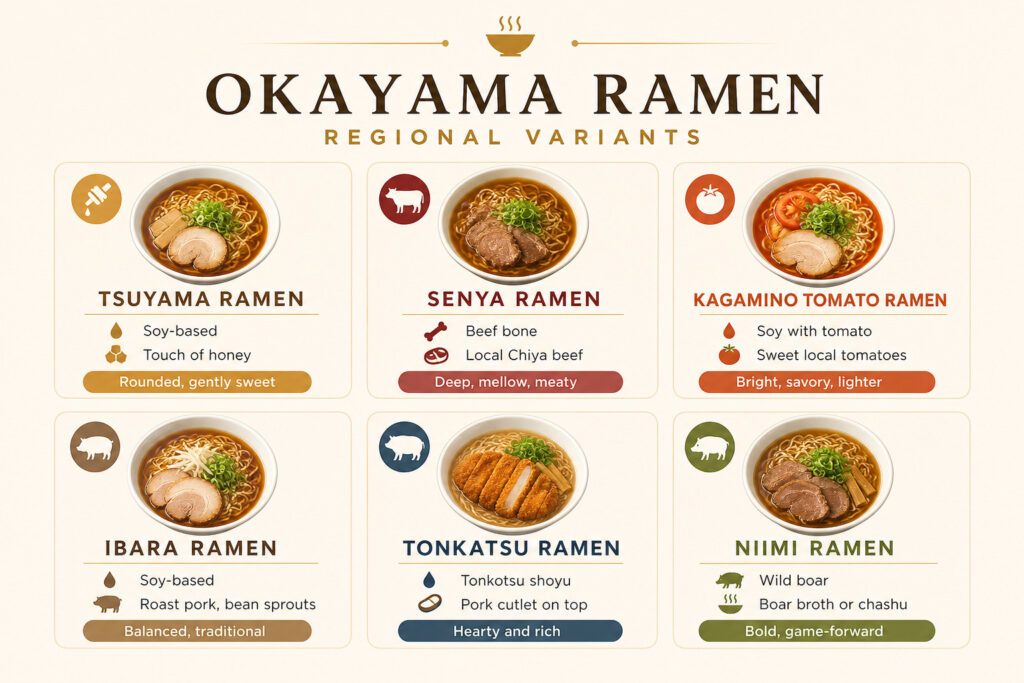
Regional variants make Okayama especially fun. Each town uses its own ingredients and stories. The bowls feel connected but never identical. The table below sums up the main ones.
| Variant | Area | Broth | Distinct point | Taste |
|---|---|---|---|---|
| Tsuyama ramen | Tsuyama | Soy-based | Touch of honey | Rounded, gently sweet |
| Senya ramen | Niimi (Chiya) | Beef bone | Local Chiya beef | Deep, mellow, meaty |
| Kagamino tomato ramen | Kagamino | Soy with tomato | Sweet local tomatoes | Bright, savory, lighter |
| Ibara ramen | Ibara | Soy-based | Roast pork, bean sprouts | Balanced, traditional |
| Tonkatsu ramen | Okayama City | Tonkotsu shoyu | Pork cutlet on top | Hearty and rich |
| Niimi ramen | Niimi | Wild boar | Boar broth or chashu | Bold, game-forward |
For instance, Tsuyama bowls use a little honey to round the edges. Even so, the soup never turns sugary. Senya ramen, by contrast, builds depth from beef bones. Meanwhile, Kagamino tomato ramen tastes bright rather than gimmicky. In each case, the style bends without breaking.
Okayama Ramen vs Hakata Ramen vs Shoyu Ramen
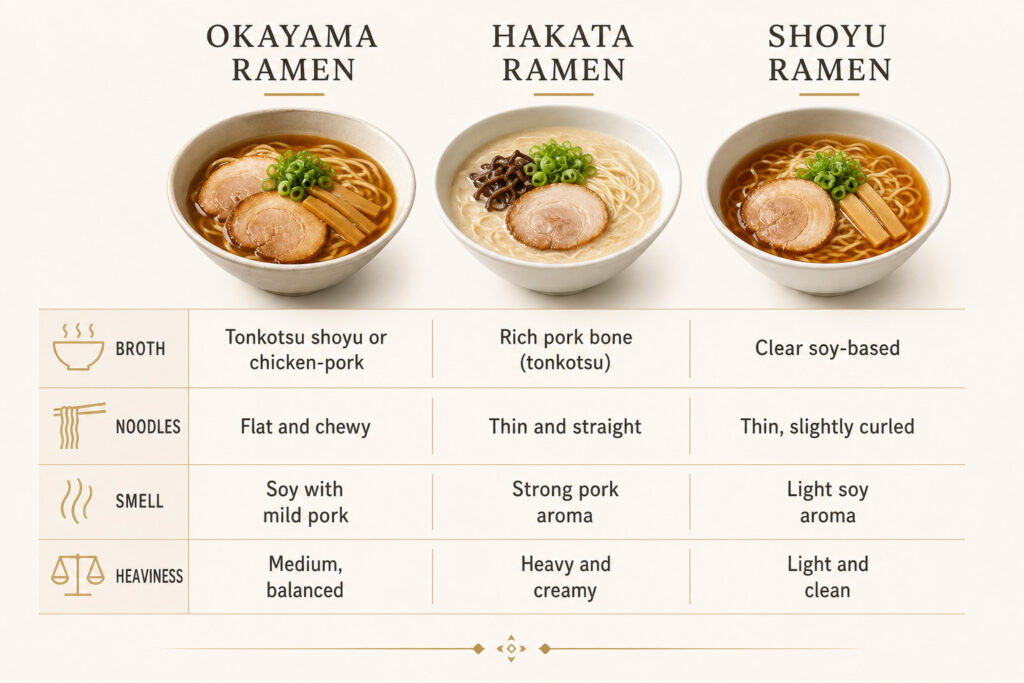
Travelers often compare nearby styles. The table below lines up three common ones.
| Okayama ramen | Hakata ramen | Shoyu ramen | |
|---|---|---|---|
| Broth | Tonkotsu shoyu or chicken-pork | Rich pork bone (tonkotsu) | Clear soy-based |
| Noodles | Flat and chewy | Thin and straight | Thin, slightly curled |
| Smell | Soy with mild pork | Strong pork aroma | Light soy aroma |
| Heaviness | Medium, balanced | Heavy and creamy | Light and clean |
If you enjoy strict signatures, Hakata and shoyu styles are easier to summarize. Okayama ramen gives you more room to compare bowls. If you also plan to try Onomichi ramen nearby, the contrast is worth knowing.
How to Make Okayama Ramen at Home
Many readers also search for an Okayama ramen recipe. A true shop version takes time. Still, a simple home version captures the tonkotsu shoyu mood well.
Ingredients
- 2 servings ramen noodles, flat or medium-thin
- 600 ml chicken stock
- 300 ml light pork stock (or more chicken stock)
- 2 tbsp soy sauce
- 1 tbsp oyster sauce
- 1 tsp sugar
- 1 tsp garlic oil or neutral oil
- Chashu, green onions, menma, boiled egg to top
Steps
- Tare: mix soy sauce, oyster sauce, and sugar in each serving bowl.
- Broth: heat the chicken and pork stock together until hot.
- Noodles: boil until springy, then drain well.
- Assembly: pour broth over the tare, stir, then add noodles.
- Finish: add toppings and a little oil. Serve hot.
For a sharper soy profile, add a little more tare. If you prefer a softer bowl, reduce it slightly. If you only have chicken stock, use it and add extra oil. That small change makes the broth feel rounder.
How Much Does Okayama Ramen Cost?
Okayama ramen is affordable for most travelers. A standard bowl usually costs 700 to 1,000 yen. Extra toppings like chashu or egg add 100 to 300 yen. Premium or specialty bowls can cost a little more. Most shops offer strong value for the portion.
Best Shops to Try Okayama Ramen
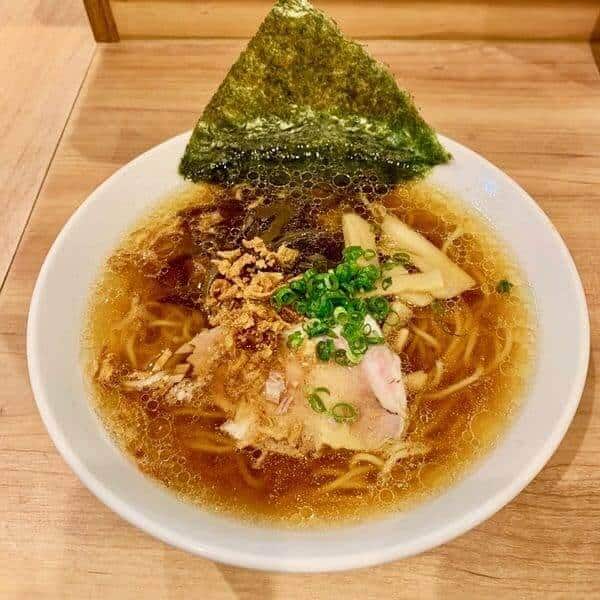
For where to eat Okayama ramen, start with Okayama City, Tsuyama, and Kasaoka. Station areas are convenient. Still, some memorable bowls sit a little off the tourist route.
Fujiya (Okayama City)
Fujiya is one of the best-known names in the city. The shop dates back to 1950, so many treat it as a reference point. For first-time visitors, it is an easy, sensible start.
- Area: Hokancho, Okayama City.
- Known for: classic local flavor with strong Okayama identity.
- Best for: a first bowl.
Men-ya Daisuke (Tsuyama)
Men-ya Daisuke has strong support in Tsuyama. People queue for it, which usually says a lot. If you explore northern Okayama, this shop deserves a spot on your list.
- Area: Tsuyama.
- Known for: a hearty, popular local bowl.
- Best for: northern Okayama trips.
Yamato (Okayama City)
Yamato stands out because its ramen leans into dashi. Kelp and bonito create a different kind of depth. The bowl feels layered and comforting without being too dense.
- Area: Omote-cho, Okayama City.
- Known for: a dashi-led character with kelp and bonito notes.
- Best for: a gentler, layered bowl.
Ottsuan Ramen (Kasaoka)
Ottsuan Ramen is known for a chicken-based broth and a clear shoyu presence. So it makes a good bridge between Okayama ramen and Kasaoka-style bowls. Note that young children are not allowed to dine in.
- Area: Kasaoka wholesale market.
- Known for: chicken broth with a strong shoyu profile.
- Best for: Kasaoka-style fans.
Bokkee Ramen (Okayama City)
This Ramen restaurant has a warm local following and a memorable name. “Bokkee” means “amazing” in the local dialect. The relaxed setting shapes the memory as much as the bowl.
- Area: Shimoishii, Okayama City.
- Known for: a friendly, approachable local feel.
- Best for: a casual visit.
Make It a Half-Day Okayama Food Trip
Okayama City makes a convenient base for a ramen trip. You can reach it from Osaka or Kyoto in about an hour by Shinkansen. Local food makes more sense when dishes connect, so try a simple three-stop plan.
- Lunch: start with a classic soy-forward bowl of Okayama ramen.
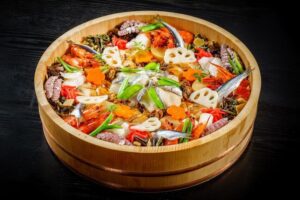
- Afternoon: try Okayama barazushi, a colorful local sushi.
- Snack or souvenir: finish with kibi dango, the famous millet sweet.
Conclusion
Okayama ramen is not one strict formula. It is a regional style built on soy sauce, meat stock, and local variation. Many bowls use tonkotsu shoyu, while others mix chicken and pork stock.
If you want one bowl that feels familiar but still local, Okayama is a strong place to start. First, begin with a classic soy-forward shop in the city. After that, compare it with Tsuyama, Kasaoka, or Kagamino versions. Little by little, the wider picture becomes easy to taste.
Okayama Ramen FAQ
What is the broth made of?
Most bowls use a soy sauce tare with meat stock. Cooks often boil pork bones, or blend chicken and pork. The soy base keeps the flavor focused. Some shops add vegetables for extra aroma.
Is Okayama ramen tonkotsu?
Often, but not always. Tonkotsu shoyu is the most common base. However, many shops blend chicken into the stock. So the bowl rarely feels as heavy as pure tonkotsu.
What noodles does it use?
It usually uses flat, chewy noodles. They are often medium-thin in width. These noodles catch the soy broth well. Thin straight noodles are rare in this style.
Where did it originate?
It grew from postwar stalls and small shops. Okayama City became the main hub. Local soy sauce and meat stock shaped the early bowls. Other towns later added their own versions.
How is it different from Hakata ramen?
Hakata ramen uses a rich, milky pork broth and thin straight noodles. This style uses a soy-forward broth and flat chewy noodles. It also feels lighter overall. The two aim for very different effects.
Can I make it at home?
Yes, a simple version is easy. Mix a soy tare with chicken and pork stock. Boil flat noodles, then add your toppings. It takes about 25 to 30 minutes with ready stock.
What are the common toppings?
Chashu and green onions are the most common. Menma and a boiled egg also appear often. Some local versions add a pork cutlet or chicken chashu. Toppings shift by shop and area.
What should first-time visitors order?
Start with a classic soy-forward or tonkotsu shoyu bowl in Okayama City. That gives you the most familiar profile first. Then compare it with a regional variant. Tsuyama and Kasaoka are good next steps.
References
- Okayama Prefecture Official Tourism Guide, Recommended Ramen Restaurants, https://www.okayama-japan.jp/en/18513 (Surveyed: June 2026)
- Okayama Prefecture Official Tourism Guide, Kasaoka Ramen, https://www.okayama-japan.jp/en/19141 (Surveyed: June 2026)
- Okayama Prefecture Official Tourism Guide, Local Gourmet, https://www.okayama-japan.jp/en/gourmet (Surveyed: June 2026)
Related Articles
- Shoyu Ramen (醤油ラーメン) (Surveyed: June 2026)
- Tonkotsu Ramen (豚骨ラーメン) (Surveyed: June 2026)
- Okayama Barazushi (岡山ばらずし) (Surveyed: June 2026)
- Kibi Dango (きびだんご) (Surveyed: June 2026)

Comments