




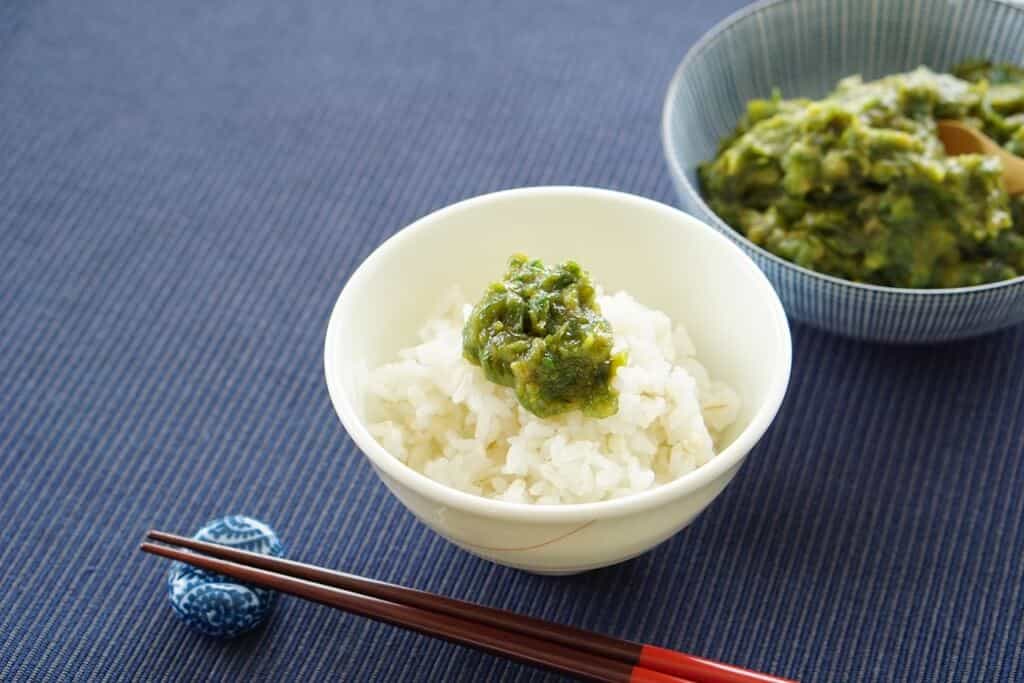
Bakke miso is a traditional Japanese condiment with a unique flavor, often enjoyed in the Tohoku region. Made by cooking butterbur sprouts with miso and other ingredients like sesame seeds or mirin, it offers a delicious balance of earthy and savory notes. This dish has been passed down through generations and remains a cherished part of Japanese cuisine, particularly during special occasions. In this article, we’ll explore the origins, preparation, and growing popularity of bakke miso—so keep reading to discover more about this fascinating dish!
What is Bakke miso?

Bakke miso is a butterbur miso, a local condiment loved in the Tohoku region. “Bakke” means butterbur in the Tohoku dialect, and one theory is that the word originates from the Ainu word “spring (bakya),” or that butterbur suddenly appears on the ground, which brings to mind a ghost, hence the name “bakke.” Locals chop the leaves and stalks of the butterbur and cook them with miso, often combining them with ingredients like sesame seeds, and sometimes chili peppers or anchovies, depending on regional variations.
This condiment fills your mouth with the flavors of sweet and spicy miso and butterbur, as well as the bittersweetness of butterbur. It goes well with rice and alcohol, making it a popular choice for families who like to drink.
Bitter and Earthy Punch of Spring
Bakke miso brings a flavor that is both wild and comforting. It uses the young buds of the butterbur plant, which have a very strong and bitter taste. This bitterness is tempered by the salty sweetness of fermented soybean paste. While some Western herb pestos focus on brightness and garlic, this Japanese condiment is much more earthy and dark. The umami from the miso wraps around the floral notes of the plant. It creates a complex profile that tastes like the very first day of spring coming out of the cold soil.
Exploring Sweet and Savory Variations
You can find this spread made in two main styles. Some people prefer a sweeter version by adding extra sugar or mirin, which hides the natural bitterness of the butterbur. This style is often more popular with children. Others keep it very traditional and salty to highlight the medicinal and sharp notes of the plant. The sweeter version has slightly more calories due to the added sugar, while the salty version is lower in energy but higher in sodium. Both versions are packed with fiber and are great for helping your digestion after a heavy meal.
A Grainy Spread that Melts on Rice
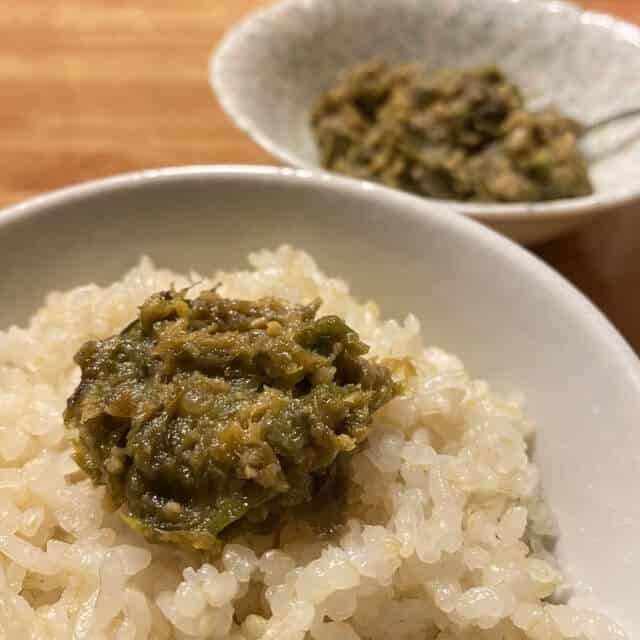
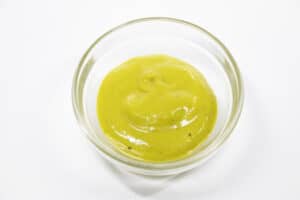
The physical sensation of bakke miso is quite unique because it is not perfectly smooth. You can feel the tiny, chopped bits of the butterbur buds against your tongue, giving it a rustic and grainy mouthfeel. It is thick and tacky, sticking easily to a warm bowl of rice or a piece of tofu. When you stir it into a hot soup or spread it over grilled fish, the heat loosens the paste. It turns into a glossy and aromatic glaze that coats your mouth with a warm and slightly oily finish that lingers nicely.
Bakke miso History
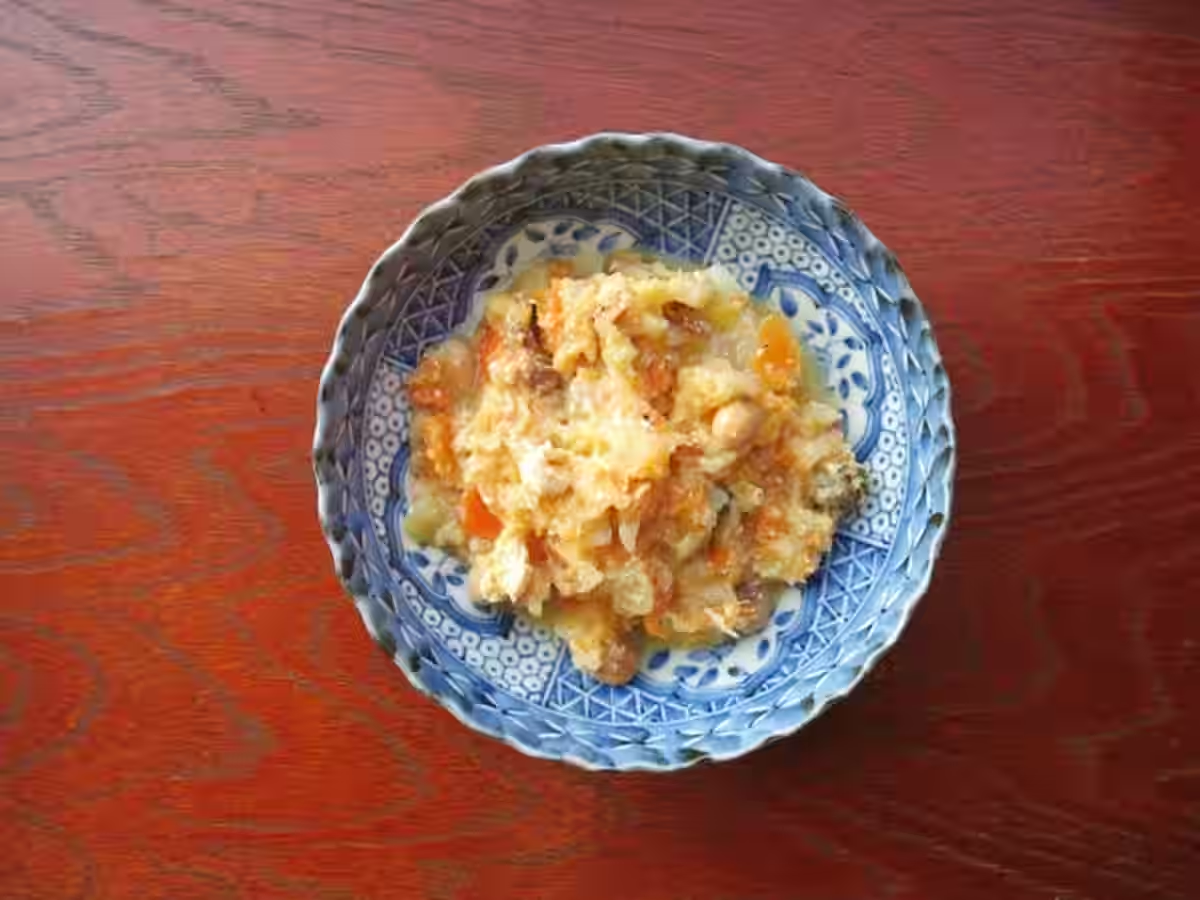
Sendai Zoni, a traditional dish served since the Edo period, is a special occasion meal featuring grilled goby, skirt roe (salmon roe), Sendai Japanese parsley, and ohikina. Made from parboiled and frozen daikon, carrot, and burdock. Locals prepared the soup stock with grilled and dried goby, once abundant in Matsushima Bay but now scarce, driving up costs. Skirt roe, from salmon migrating in the Abukuma River, has also become more expensive, making Sendai Zoni an increasingly luxurious dish. Interestingly, Date Masamune’s zoni differed, made with dried abalone, sea cucumber, and herring broth.
How to make Bakke miso?
Firstly, cut off the outer skin and blackened roots of the butterbur sprouts. Soak the butterbur sprouts in water.
Finely chop the prepared butterbur sprouts and fry them in sesame oil. Once cooked, add miso, mirin, cooking sake, and sugar, heat slowly, and knead until well combined.
Lastly, allow the bakke miso to cool and store it in an airtight container.
Takeaway
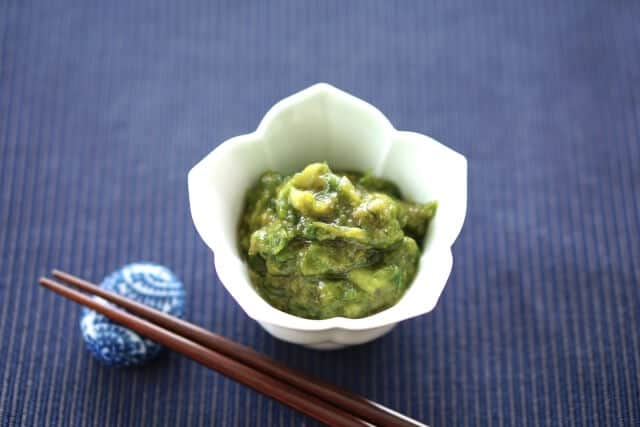
Bakke miso is a true taste of Japan’s rich culinary tradition, offering a unique combination of flavors that reflect the country’s deep connection to local ingredients. This traditional condiment is a must-try for anyone interested in authentic Japanese cuisine. We hope that after reading about this condiment, you’ll be inspired to buy some when you visit Japan and experience its distinctive taste for yourself!
For those who enjoyed learning about bakke miso, we also recommend exploring other unique Japanese dishes such as Dengaku and Goya Chanpuru to further immerse yourself in Japan’s diverse and delicious culinary offerings.
Bakke Miso (Butterbur Bud Miso) FAQ
What is Bakke Miso?
It is a seasoned paste made by sautéing chopped butterbur buds with miso, sugar, and mirin.
What does “Bakke” mean?
“Bakke” is the local dialect in the Tohoku region for “Fukinoto” (butterbur sprout).
What does it taste like?
It has a distinct, strong bitterness from the sprouts balanced by the sweet and salty richness of the miso.
How do I eat it?
You typically eat it as a topping for hot white rice, or use it as a dip for cucumber and tofu.
Is it good with alcohol?
Yes. The sharp bitterness makes it an excellent “Otsumami” (snack) to pair with Japanese Sake.
Where is it famous?
You find it primarily in northern Japan, specifically in Akita, Iwate, and Miyagi prefectures.
When is the season?
Locals make it in early spring when the snow melts and the first buds appear.
Is it vegan?
Generally, yes. Traditional recipes use only plants, but you should check if the miso contains fish dashi.
Can I put it in Onigiri?
Yes. Many locals use it as a filling for rice balls to enjoy a mature, bitter flavor.
Why is it so bitter?
The wild butterbur plant contains strong polyphenols. Locals believe this bitterness helps “wake up” the body after winter.
How long does it last?
It lasts a long time. The salt and sugar preserve it, so you can keep it in the fridge for months.
Can I buy it as a souvenir?
Yes. Shops in the Tohoku region sell jars of Bakke Miso that are perfect for taking home.
Do they cook the sprouts?
Yes. Chefs chop and sauté the buds in oil before mixing them with miso to soften the flavor.
Is it spicy?
No. It is bitter and salty, but not spicy like chili peppers.
Can I use it on toast?
Surprisingly, yes. Some modern cafes recommend spreading it on buttered toast or using it as a pizza sauce.


Comments