





As summer approaches, many people take great care of their food to prevent summer fatigue. Eel is perfect for such people. It is a good food for digestion because it is high in protein and rich in minerals and vitamins. In Japan, there has long been a custom of eating eel to prevent summer fatigue. Speaking of the typical eel dishes, there are “unaju” and “unadon”. Can you explain the difference between the two dishe. In this article, we will introduce about “unaju” as well as explain the difference between “unaju” and “unadon”.
What is Unajyu?
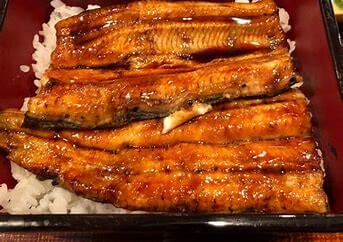
Unajyu, primarily made of eel, is a popular dish in Shizuoka Prefecture. Lake Hamana, located in the prefecture, holds the title as the birthplace of eel aquaculture. It was the first lake in Japan to succeed in cultivating eels. Several long-established eel specialty restaurants, in business for more than 100 years, call Hamamatsu city home. You can enjoy Unajyu in both the Kansai style, which features a sweet, crisp sauce, or the equally popular Kanto style. It’s best to buy and bake the Kanto style on the same day to prevent the tasty eel from becoming too chewy.
Sweet, Savory Glaze with Rich Eel
The taste is deeply savory with a sweet, caramelized edge. The eel itself has a rich, almost buttery flavor that’s distinct from other fish. It’s not fishy in an unpleasant way but more earthy and full-bodied. The tare sauce, that sweet soy-based glaze, adds layers of umami and sweetness that complement the eel beautifully. I remember my first bite being surprisingly complex. The sauce caramelizes slightly during grilling, creating these sweet-savory notes that linger. The rice beneath soaks up the drippings, becoming incredibly flavorful. You might wonder if it’s too sweet, and some versions can be, but quality restaurants balance it perfectly.
Tender Flesh, Crispy Skin
The texture is what makes well-prepared unajyu special. The eel flesh is tender and almost melts on your tongue, while the skin develops a pleasant crispness from grilling. There’s a delicate balance here. Overcook it and the eel becomes chewy and tough, which is why freshness matters so much. I’ve experienced both perfectly tender eel and slightly overdone versions, and the difference is remarkable. The rice provides a soft, slightly sticky base that contrasts nicely with the eel’s texture.
Smoky Sweetness Fills the Air
The aroma is intoxicating. When unajyu is being prepared, the smell of grilling eel and caramelizing tare sauce fills the restaurant. There’s a smoky, slightly charred scent mixed with sweet soy and mirin. It’s warm and inviting, almost irresistible. The eel itself has a distinctive smell that some people love and others find strong. When combined with the sweet sauce and smoke from the grill, it creates this rich, complex fragrance.
What is the Difference between Unajyu and Unadon?
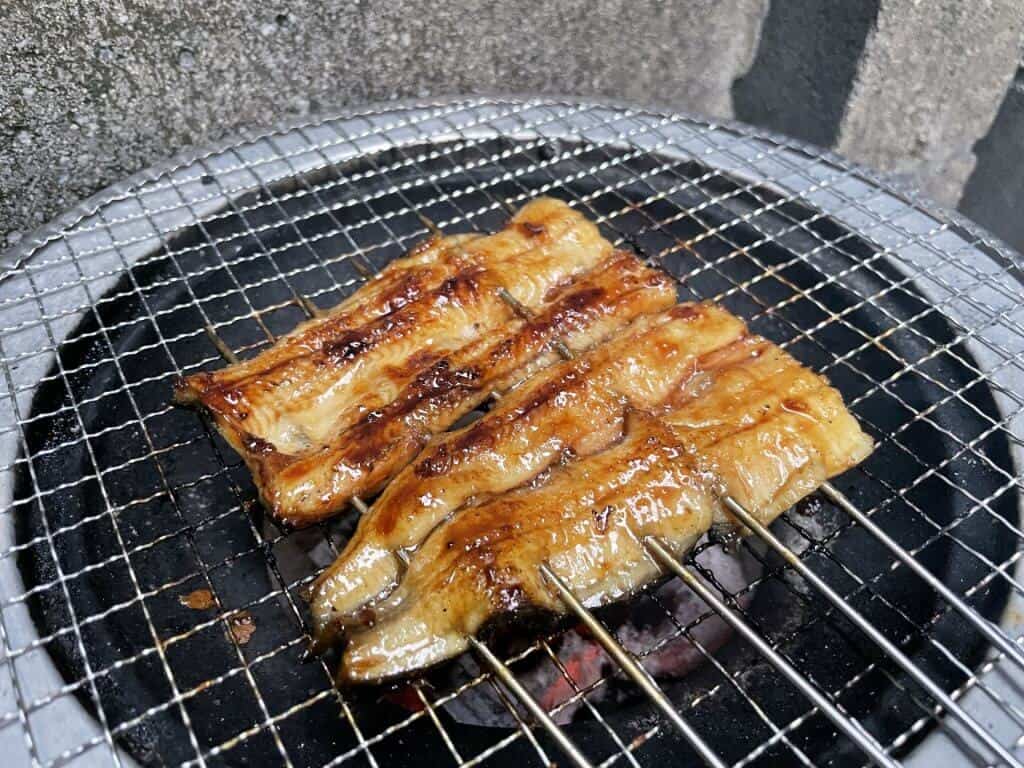
There is very little difference between the two. Unadon is served in a bowl and Unajyu is served in a heavy box. The difference between the bowl and the box is only seen in the quantity of eel present. On average, you can expect to receive 1.5 times more eel in a serving of Unajyu, than in a serving of Unadon. There is no difference in the quality of each. Both are available as a normal-sized or special sized portion. Unadon came into existence in the late Edo period of Japan, while Unajyu didn’t appear until the Meiji period. They introduced the use of the heavy box to deliver the meal to customers while keeping it warm. If you put the same amount of eel into the box, it appears a little scarce, so they introduced a larger sized meal for the box version.
Eel History
Jōmon Period Origins
Eels have been a cherished part of Japanese cuisine for millennia. Archaeological excavations of shell mounds from the Jōmon period (c. 10,000 – 300 BC) have unearthed eel bones over 5,000 years old, showing that people in prehistoric Japan already valued this fish as a source of nourishment. In ancient poetry, too, eels made their mark—one famous song records the poet Ōtomo no Iemochi encouraging Yoshida no Renrō to eat eel, praising its rich flavor and restorative properties.
Heian Aristocracy and Early Records
By the Heian period (794 – 1185), the aristocracy developed refined tastes, favoring the delicate flavor of steamed white eel sprinkled with salt. Japanese writers recorded the word unagi (eel) as early as the 12th century, and people quickly linked it with stamina and health, especially during the hottest days of summer.
Medieval Mentions and the Rise of Kabayaki
The Suzuka Family Book of 1399 (Oei 6) offers one of the earliest surviving literary mentions of eels. Around this time, people began using the term kabayaki. One theory claims the name came from the skewered eel’s resemblance to a toad’s ears (gama) when roasted whole. Another theory argues that the aroma of roasted eel inspired the name, which evolved from kaban to kabaya to kabayaki.
Muromachi Innovations
During the Muromachi period (1333 – 1573), people often ate eel simply with salt, vinegar, and miso. Toward the end of this era, cooks created a dish called ujimaru—broiled eel chopped and seasoned with soy sauce, sake, and pepper-infused miso—foreshadowing the sweet-savory flavors beloved today.
Edo Period and the Modern Kabayaki Style
In the Edo period, particularly in the Tenmei era (1781 – 1789), chefs shaped the modern kabayaki style. They butterflied eels, skewered them, grilled them over charcoal, and repeatedly basted them with a sweet soy-based tare sauce. This technique, enhanced by the arrival of thick, rich soy sauce from the Kansai region, produced the glossy, fragrant style still served today. By the mid-19th century, unagi restaurants flourished in Edo (modern Tokyo) and promoted the idea that eating eel in midsummer could prevent fatigue—helping establish the tradition of Doyo no Ushi no Hi (“Midsummer Day of the Ox”) eel feasts.
An Enduring Cultural Treasure
From prehistoric campfires to refined Edo cookery, eel’s journey through Japanese history reflects the country’s enduring passion for turning the bounty of rivers and seas into dishes of deep cultural significance.
Variations of Eel Available
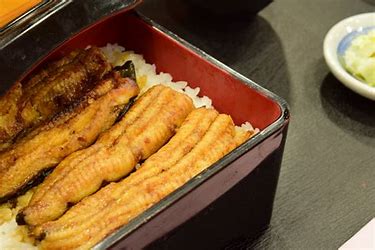
Kanto style involves splitting the eel from the back, also known as a back opening. The meat is skewered and baked as is or steamed before sauce application.
Kansai style involves an open belly, skewering, and baking before adding sauce for a final bake. This style excludes steaming and is also known as ‘ground burning.’
Cooking eel correctly and making the dishes taste delicious is considered a difficult art. A Japanese saying describes eel cooking as 3 years of skewering, 8 years of tearing, and a lifetime of grilling.
The eel or Unagi used
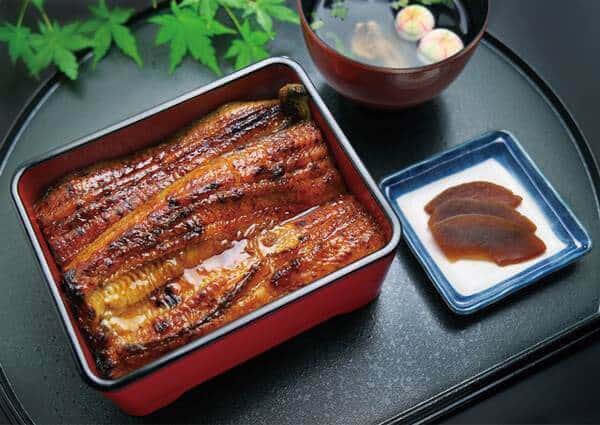
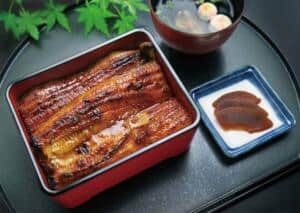
Japanese often serve Unagi Kabayaki over rice. The grilled eel topping itself is the “Unagi no Kabayaki (鰻の蒲焼)“. The dish is titled “unaju” (unagi + jubako) when served in a square lacquerware bowl called a “jubako”. Unaju, on the other hand, is generally higher in grade and more expensive than Unadon. Unaju makes use of more unagi than Unadon.
The Origin of Unajyu Boxes
There are several theories about the origin of the bowls and boxes used for Unajyu. One theory suggests that during the 18th year of the Meiji era (1868-1912), Okubo Imasusuke, a theatre owner who loved eel, insisted on having his eel delivered warm in a bran of rice. This method prevented the dish from cooling during delivery.
Restaurants Serving Unajyu in Hamamatsu
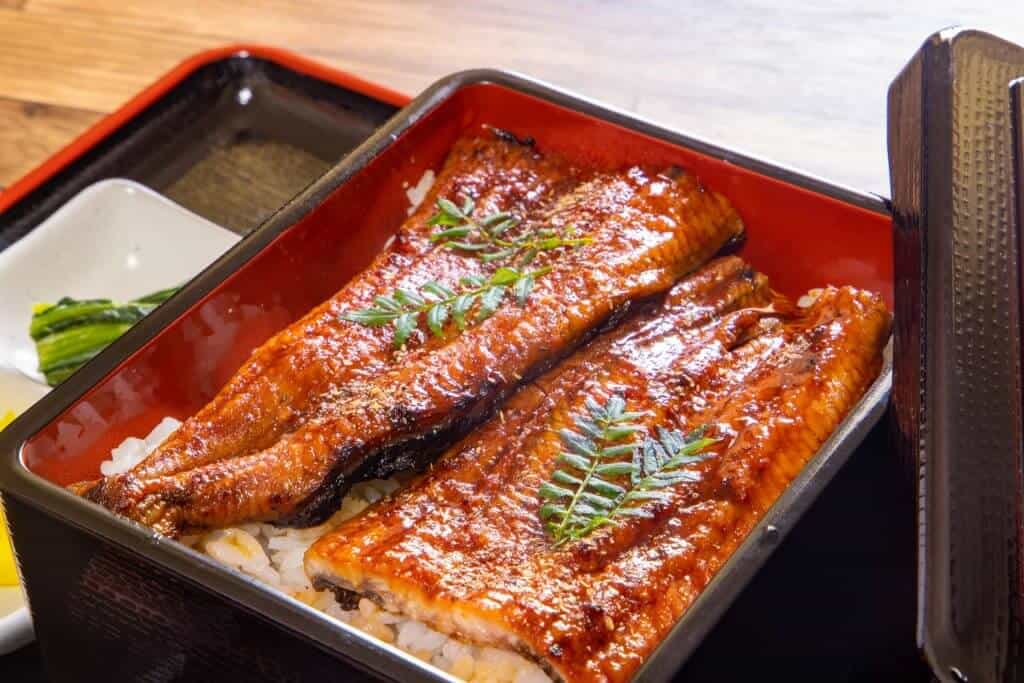
Hamamatsu has lots of recommended Unajyu restaurants.
Eel Dish Atsumi
Eel Dish Atsumi is a restaurant that specializes in using high quality domestic ingredients, including eels from Lake Hamana. Here, you can trust the high standards of food safety with many customers sampling the original taste of eel. They bake Kabayaki Unajyu with a sauce using a secret recipe handed down for more than 100 years. The restaurant’s founding year is 1890. The delicious sauce, is full of aroma and fragrance which you will enjoy from the moment you take the first bite. There is a large menu for you to choose from at this restaurant located within ten minutes walking distance of Hamamatsu Station on the JR Tokaido Line.
Unagi Hikumano
Unagi restaurant Hikumano uses only eels from Lake Hamana in its original dishes. The restaurant specializes in all aspects of eel cuisine using fluffy textures of the body and skin and using salted boiled liver in a wasabi soy sauce in its dish known as Kimosashi. It is an old-fashioned style of an eel speciality restaurant, located just a five-minute walk from Hamamatsu Station. All the eel served here is steamed until soft and fluffy and served with a light sauce if required. The varied menu includes sake and wine selection of local products from Shizuoka Prefecture in addition to the selection of eel dishes available.
Charcoal-grilled Unagi Aoiya
The specialty eel restaurant, formerly known as Charcoal-grilled Unagi Kantaro, sells carefully selected high-quality eels, especially those with a thick volume. They typically roast and serve these eels with wasabi sauce and a little salt. One of the restaurant’s charms is the ability for you to choose the eels you want to eat from the live selection on display. Kabayaki is prepared and then carefully grilled using Bincho charcoal for its smooth texture. This process results in a dish of fluffy, tasty eel with a crunchy, fragrant exterior created by the charcoal. Akitakomachi rice, renowned for its minimal pesticide use, is the carefully selected variety used here.
Kanerin Eel Restaurant
This restaurant is famed for its exquisitely baked eel using Bincho charcoal and the ‘Unaju Special,’ a sauce that has been served across generations of customers. Founded around 70 years ago, it is a restaurant serving a richly flavoured eel that only a long-established restaurant can deliver. Customers can enjoy the atmosphere of a calm environment inside or weather depending on the courtyard surrounded by beautiful scenery.
Shimizu Family
The Shimizu Family Restaurant grills fresh eels caught that morning. Along with the Unajyu, they serve a soup. They receive only the number of eels they plan to serve each day every morning and cook all of them to order on a carefully managed charcoal grill to ensure the correct temperature. Customers can enjoy a taste that has remained unchanged over three generations of this family of chefs in an inviting atmosphere. If you prefer to take your selected food away, they offer eel boxes for this service.
Unaju (Grilled Eel Box) FAQ
What is Unaju?
It is glazed grilled eel (Unagi) served over steamed rice in a rectangular lacquer box.
How is it different from Unadon?
The vessel differs. Unaju comes in a fancy box (Jubako) and typically contains larger portions than Unadon (bowl).
Why is it expensive?
Catching baby eels is difficult, and raising them requires significant resources, keeping prices high.
What is the sauce?
Chefs baste the eel with “Tare,” a rich, sweet, and savory sauce made of soy sauce, mirin, and sugar.
Is there a Kanto vs. Kansai style?
Yes. Kanto chefs steam the eel before grilling for softness. Kansai chefs grill it directly for crispiness.
What is the green spice?
It is “Sansho” (Japanese peppercorn). You sprinkle it to add a citrusy spice and cut the fat.
When do people eat it?
People eat it in summer, especially on “Doyo no Ushi no Hi,” to gain stamina against the heat.
Does it have bones?
Yes, but chefs remove the main spine. The remaining tiny bones become soft enough to eat after cooking.
What is “Kimosui”?
It is a clear soup containing the eel’s liver. Restaurants often serve it as a side dish with Unaju.
Why are Square boxes used for unajyu?
The box is square in shape so that eels can be beautifully placed in every corner
Why use a box?
The lacquer box keeps the steam inside, ensuring the rice and eel remain warm and moist.
Is raw eel safe?
No. Eel blood contains a toxin, so chefs always cook it thoroughly to neutralize the poison.
What do Matsu, Take, and Ume mean?
These grades indicate portion sizes. Pine (Matsu) offers the most eel, while Plum (Ume) offers the least.
What is the difference between (Nami)並, (Jyo) 上, and (Tokujyo) 特上 in Unajyu?
The quality of eels is the same and the quantity of eels is different.
Is it healthy?
Yes. It contains high levels of Vitamin A, Vitamin E, and Omega-3 fatty acids.
What is “Hitsumabushi”?
It is a Nagoya style of eating eel. You enjoy it three ways: plain, with condiments, and with tea broth.
Does the quality vary by grade?
Usually, no. The quality of the eel remains the same; only the amount of eel differs between price tiers.
Comments