




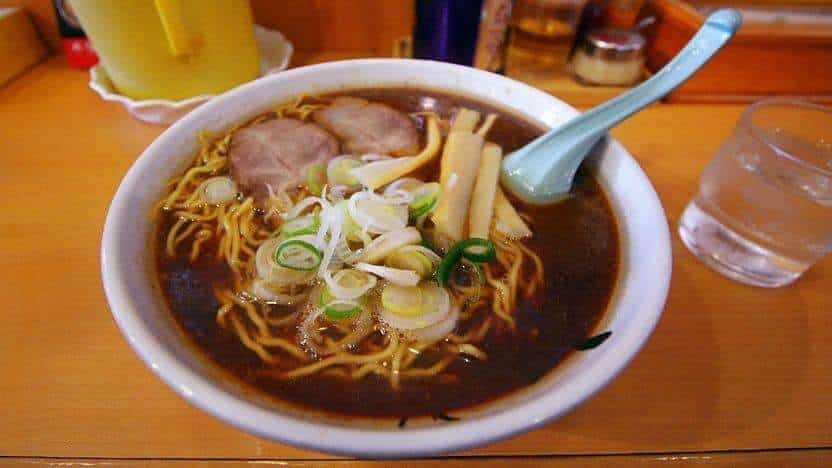
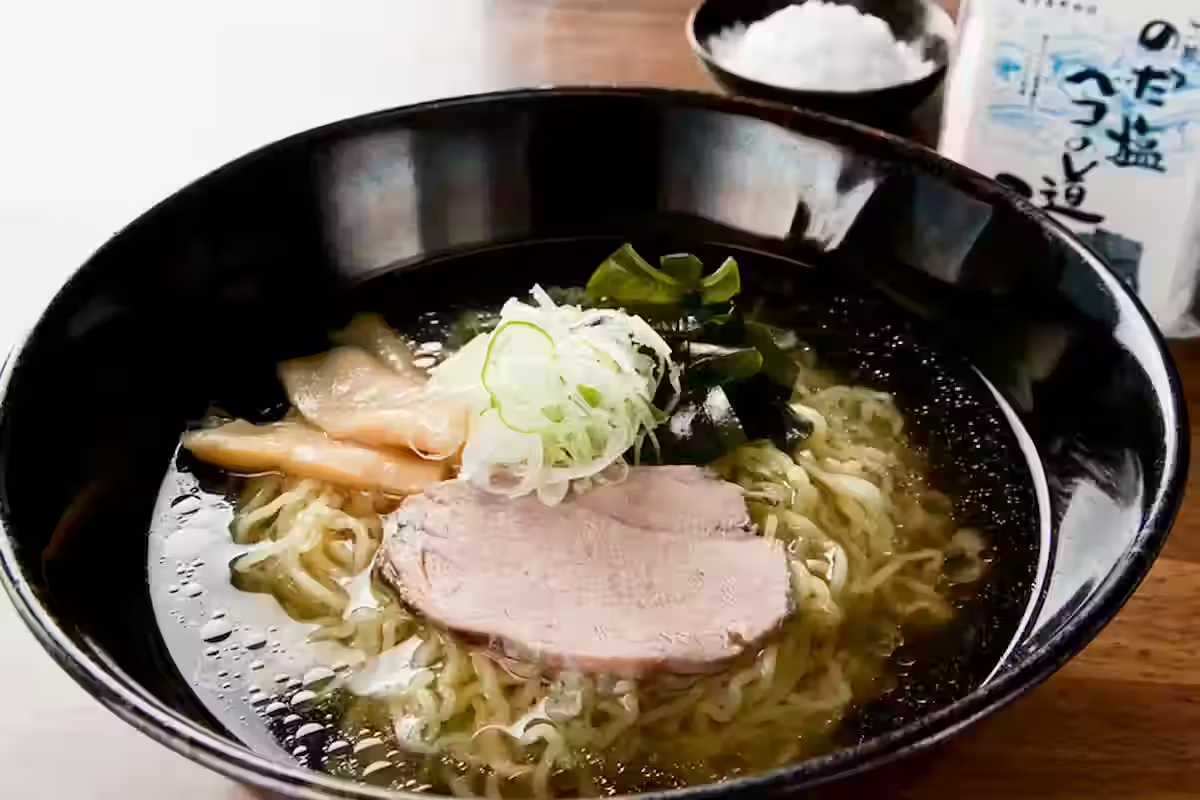
Asahikawa Ramen is a soy sauce ramen from Asahikawa City in Hokkaido. A layer of lard seals the surface, which keeps the bowl hot in brutal cold. Underneath sits a double soup of pork and seafood, plus firm low-hydration wavy noodles.
This guide explains what defines the style, how the double soup and lard work together, and where the dish came from. It also covers Asahikawa Ramen Village, how the bowl differs from Sapporo and Hakodate, and which shops are worth your time.
I ate my first bowl here in February, walking in from a street where the air genuinely hurt. The soup was still scalding twenty minutes later. That was the moment the lard finally made sense to me.
What Is Asahikawa Ramen?
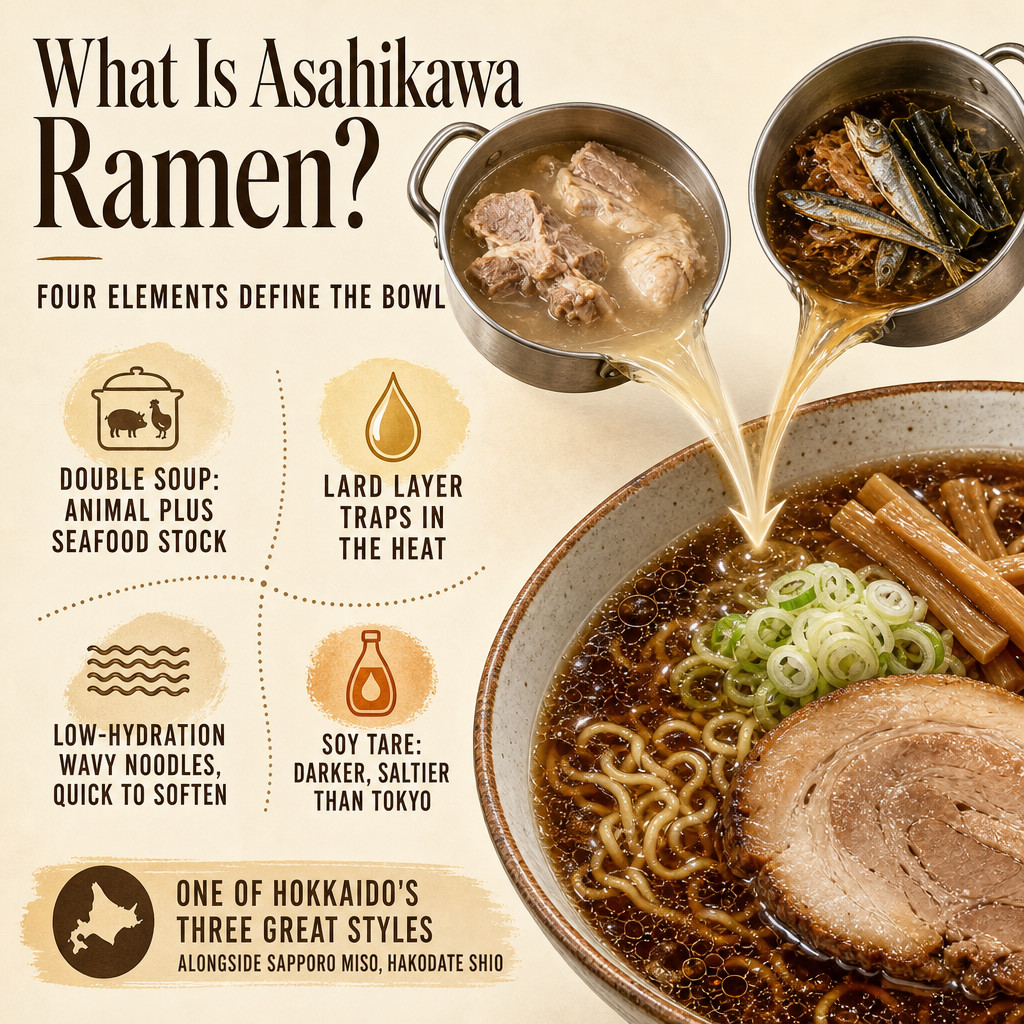
Four elements define the style. Miss any one of them and the bowl stops tasting like Asahikawa.
- Double soup: animal stock and seafood stock, brewed separately then combined.
- Lard layer: melted pork fat across the surface, sealing in the heat.
- Low-hydration wavy noodles: firm, thirsty for broth, and quick to soften.
- Soy sauce tare: the seasoning base, darker and saltier than a Tokyo bowl.
Alongside Sapporo miso and Hakodate shio, this counts as one of the three great Hokkaido ramen styles. For the wider picture, our Japanese ramen guide maps out how the regional styles relate.
The Double Soup Explained
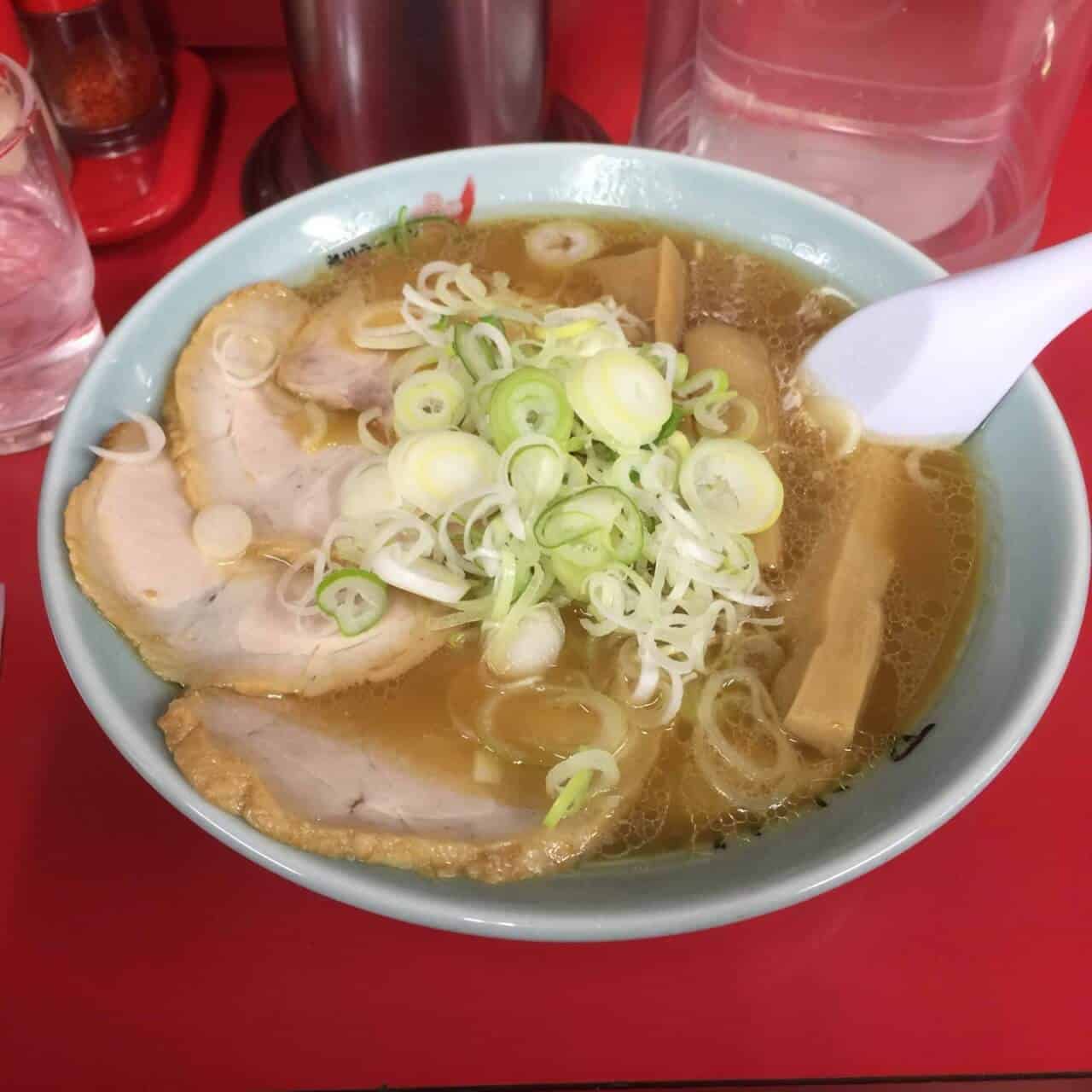
Japanese shops call it W soup, using the English letter W for “double”. The idea is simple, although the execution is not.
Cooks simmer two stocks in separate pots. One holds pork bones and chicken bones, sometimes with vegetables, drawn out over many hours. The other holds kelp, dried bonito, and niboshi, meaning dried sardines or dried horse mackerel.
Why keep them apart? Because the two need completely different treatment. Bones reward long extraction, while seafood turns bitter and fishy if you push it too far. Combining them late preserves both.
Shop-by-shop differences show up here. Aoba, one of the two founding restaurants, describes a stock of pork and chicken bones plus Rishiri kelp, bonito, niboshi, and vegetables, drawn out below boiling point. Hachiya works with pork bones and dried horse mackerel instead. Both taste unmistakably like Asahikawa, and neither tastes like the other.
One caveat is worth knowing. Not every shop in the city follows the formula, and Tenkin openly skips seafood altogether, simmering pork and chicken bones alone for two full days. So treat the double soup as the dominant style rather than an absolute rule.
Why the Lard Layer Matters
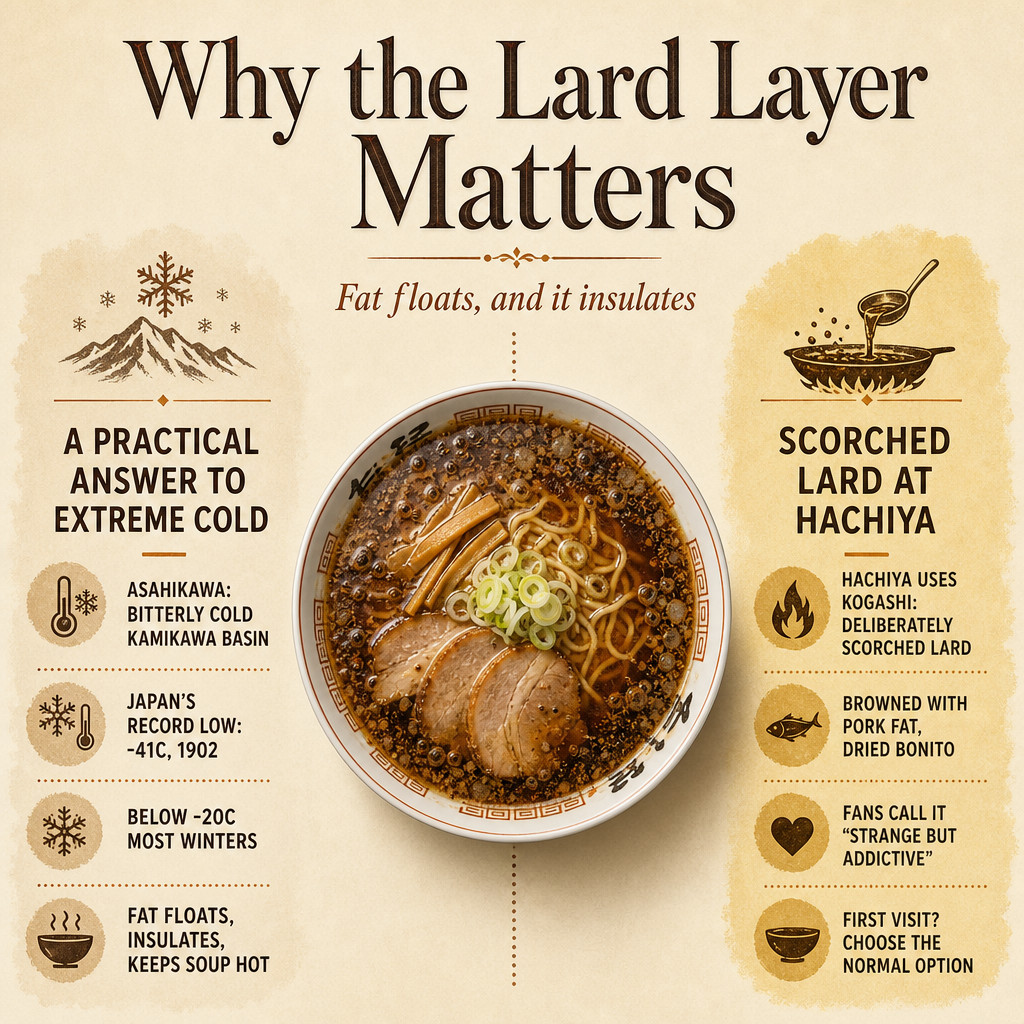
Look at a bowl from directly above. A glossy film covers almost the entire surface, and it is not there for richness alone.
A Practical Answer to Extreme Cold
Asahikawa sits in the Kamikawa Basin, ringed by mountains that trap cold air. Japan’s all-time record low was set here, at minus 41 degrees Celsius on 25 January 1902. Winter days below minus 20 still happen most years.
Fat floats, and it insulates. The film slows evaporation and heat loss, so the soup stays hot from the first slurp to the last. Asahikawa’s tourism association gives exactly this reasoning in its account of how the local style developed.
Scorched Lard at Hachiya
Not all lard is the same, though. Hachiya uses kogashi lard, meaning deliberately scorched fat, and it gives the shop its signature aroma.
The founder reportedly found that plain lard separated on the surface and smelled flat. So he heated good lard together with pork fat and dried bonito until it browned. Regulars sum up the result as strange but addictive, and honestly that is fair. My first spoonful surprised me, and by the third I wanted more.
Usefully, the shop lets you pick between normal and heavy. Choose normal on a first visit.
The Noodles: Wavy, Firm, and Thirsty
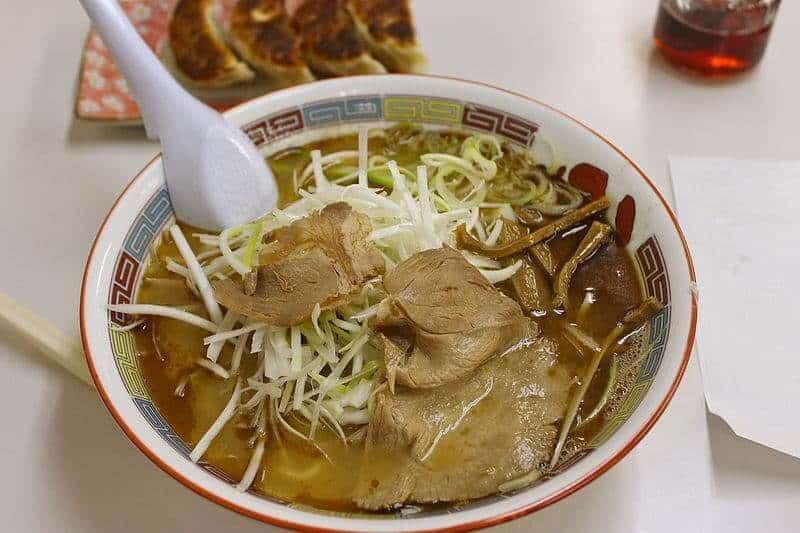
The noodles matter as much as the soup here. Asahikawa uses teikasui men, meaning low-hydration noodles, with water content commonly cited around 25 to 30 percent of flour weight.
Ramen noodles generally sit near 30 to 38 percent, so this is firmly at the dry end. Less water means a denser dough, and denser dough behaves differently in hot soup.
| Property | Effect in the bowl |
|---|---|
| Low hydration | Firm bite, strong wheat aroma |
| Wavy shape | Grips the fatty broth instead of letting it slide off |
| Soup absorption | Flavour arrives fast, since the noodle drinks the broth |
| The trade-off | Goes soft sooner, so eat briskly |
Thickness varies more than guidebooks suggest. Aoba serves a medium-thin cut, while Hachiya uses a medium-thick one, and both count as classic. Wavy and low-hydration are the constants rather than any exact gauge.
Kansui, the alkaline solution used in all ramen dough, does the rest. Food science research shows it tightens gluten and produces a firmer, rougher texture, which matters more when water is scarce in the mix.
Here is the practical consequence. Order, then eat. Waiting around for photographs costs you texture, and locals do not linger.
Asahikawa Ramen History
Uncertain Prewar Beginnings
The origins are genuinely murky, and local sources disagree. One account traces Chinese noodle culture to a 1933 Asahikawa branch of a Sapporo restaurant, while another points to a soba shop adding ramen to its menu around 1936.
Either way, the war interrupted everything. Ingredients vanished, shops closed, and whatever existed before largely disappeared.
1947: Hachiya and Aoba
Postwar Asahikawa is where the real story starts. Two shops arrived in 1947, and both still trade today.
Hachiya took an odd route. Kato Edanao opened an ice cream shop in 1946, named for the honey he used, then heard about a dish called chuka soba from a neighbouring soba restaurant. He worked out his own version alone, and the business became a ramen shop in December 1947.
Aoba started differently, as a street stall run by Murayama Kichiya. The family still runs it, now in a third generation. Between them, these two fixed the template of double soup, lard, and low-hydration noodles that the rest of the city then copied.
Context explains the appeal. Food was short, winters were savage, and a hot bowl of cheap noodles solved several problems at once. Noodle factories mattered too, since local makers taught shops how to handle dry dough. Kato Ramen, founded the same year, pushed low-hydration noodles into general use.
1996 and 2001: Recognition
Asahikawa Ramen Village opened in August 1996, driven by local ramen enthusiasts rather than by city hall. The tourism division then promoted it hard, and visitor numbers climbed.
Five years later came official recognition. In 2001, Hokkaido ramen as a whole was designated a Hokkaido Heritage item, so the honour covers Sapporo and Hakodate too. Asahikawa shops have since opened branches nationally, at the Shin-Yokohama Ramen Museum, and overseas.
Toppings and What Goes in the Bowl
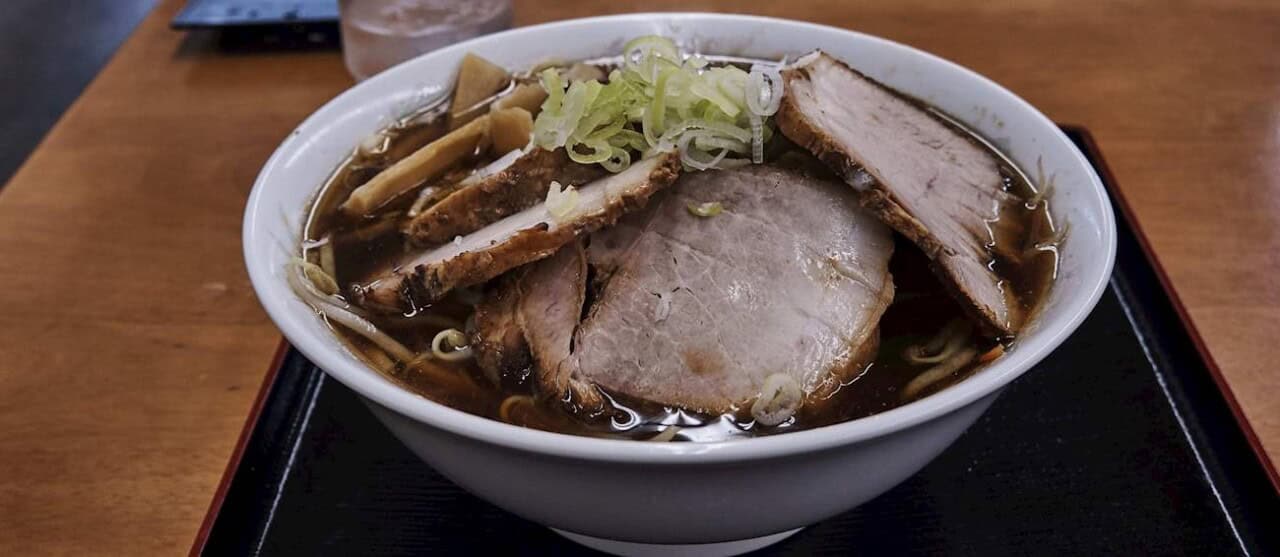
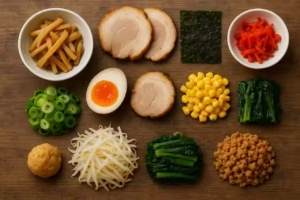
Toppings stay restrained compared with Sapporo. The broth does the heavy lifting, so the garnish rarely competes.
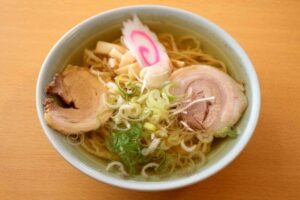
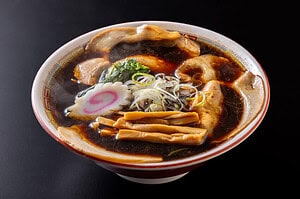
- Chashu: braised or roasted pork, sliced thin at most shops.
- Menma: fermented bamboo shoots, for a crunchy contrast.
- Negi: chopped green onion, cutting through the fat.
- Naruto: pink-swirled fish cake, mostly at older shops.
- Ajitama: a marinated soft-boiled egg, usually a paid extra.
- Nori: dried seaweed, optional and shop-dependent.
Butter and corn belong to Sapporo, not here. If you want a fuller rundown, our guide to Japanese ramen toppings covers the regional variations in detail.
Asahikawa vs Sapporo vs Hakodate
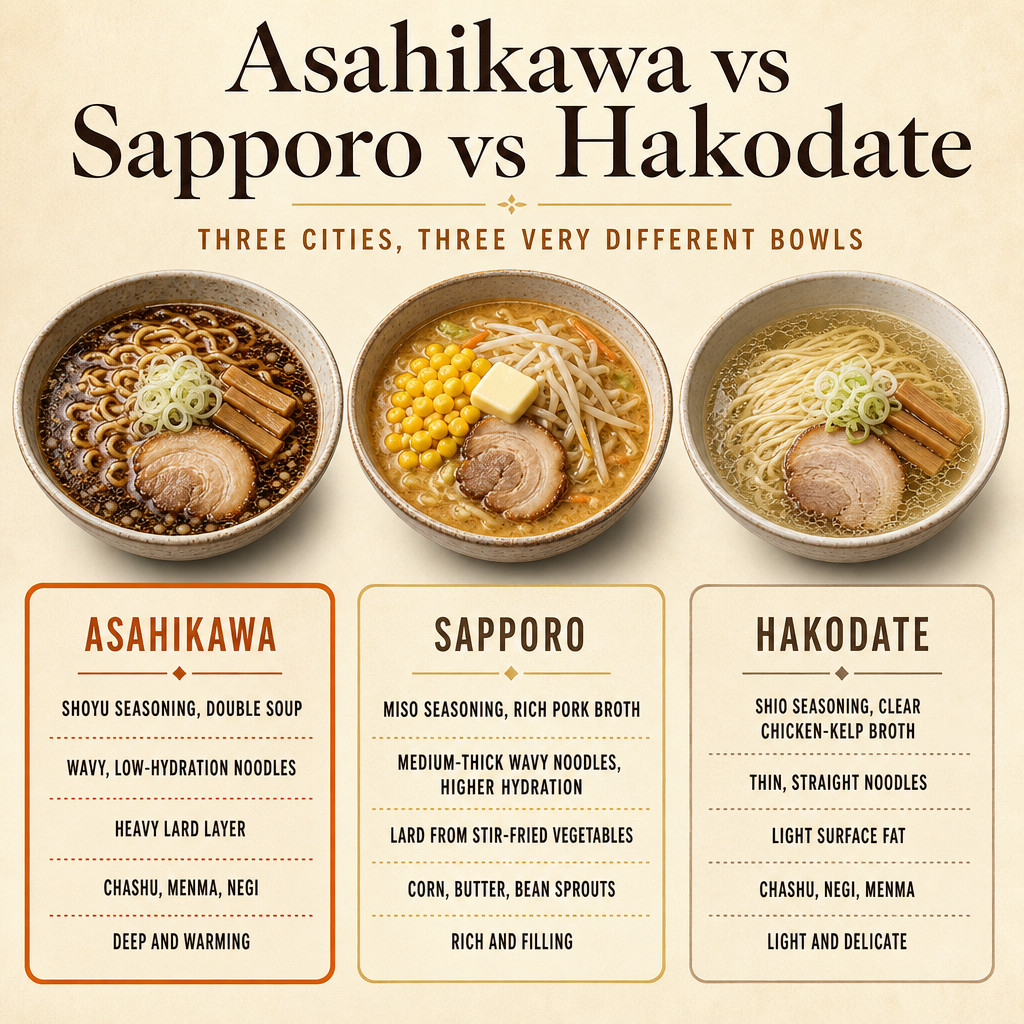
Hokkaido’s three famous styles came from three very different cities. The contrast shows up immediately in the bowl.
| Asahikawa | Sapporo | Hakodate | |
|---|---|---|---|
| Seasoning | Shoyu (soy sauce) | Miso | Shio (salt) |
| Broth | Pork and seafood double soup | Pork, rich and thick | Chicken and kelp, clear |
| Noodles | Wavy, low hydration | Medium-thick, wavy, higher hydration | Thin, straight |
| Surface fat | Heavy lard layer | Lard from stir-fried vegetables | Light |
| Signature toppings | Chashu, menma, negi | Corn, butter, bean sprouts | Chashu, negi, menma |
| Overall impression | Deep and warming | Rich and filling | Light and delicate |
Read across the table and a pattern appears. Sapporo ramen wins on sheer richness, while Hakodate ramen works through restraint. Asahikawa lands in between, dark and savoury without the weight of miso.
One more comparison sometimes comes up. The soy sauce base and wavy noodles resemble Shirakawa ramen in Fukushima, yet the lard layer sets Asahikawa firmly apart.
Asahikawa Ramen Village
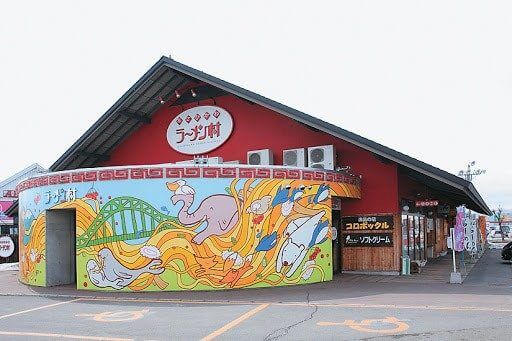
Eight shops sit side by side inside the Powers shopping centre, out in the Nagayama district. It opened in August 1996 and remains the easiest way to compare styles in one afternoon.
- Eight units, 220 seats: Aoba, Ittetsu-an, Isshin, Tenkin, Santouka, Saijo, and Baikohken, plus a Ramen Caravan slot hosting guest shops from around Japan.
- Ramen Shrine: added in 2006, dedicated to bonds lasting as long as noodles.
- Souvenir shop: take-home noodle packs, useful if you cannot fit another bowl.
- Practical details: free entry, free parking, English menus, and cashless payment.
- Location: on the route between Asahiyama Zoo and Asahikawa Airport.
Be realistic about capacity, however. Most people manage one full bowl, maybe a half portion afterwards. Individual shop hours vary and the site notes ongoing shortened hours, so check before making a special trip.
Where to Eat Asahikawa Ramen
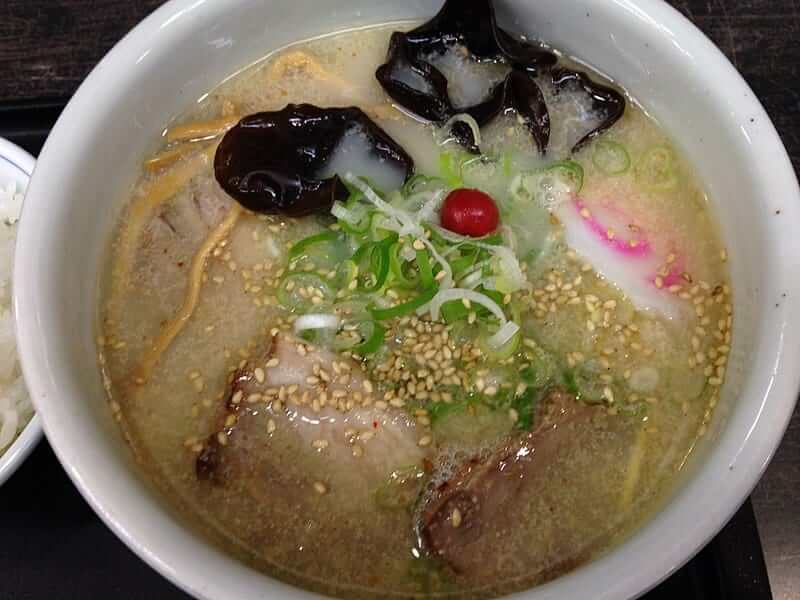
Choosing an Area
Two areas cover most visitors. Around JR Asahikawa Station you will find the historic shops within a short walk, which suits a day trip or a stopover.
Nagayama, out towards the airport, means Ramen Village plus a car or a local train. Choose based on whether you are collecting shops or just want one good bowl.
Best Asahikawa Ramen Restaurants at a Glance
| Shop | Founded | Known for | Area |
|---|---|---|---|
| Aoba | 1947 | Founding shop, gentle additive-free double soup | 2-jo dori, 6 min from the station |
| Hachiya | 1947 | Founding shop, scorched lard aroma | 5-jo dori and 3-jo dori |
| Baikohken | 1969 | Classic shoyu, thick chashu, Michelin Guide listing | 2-jo dori, 5 min from the station |
| Ramenya Tenkin | 1952 | No seafood, two-day pork and chicken stock | 4-jo dori, 7 min from the station |
| Santouka | 1988 | Tonkotsu shio, now a global chain | 1-jo dori, 5 min from the station |
| Shoga Ramen Mizuno | 1967 | Ginger blended into the soup, a local one-off | Tokiwadori, 15 min from the station |
| Yoshino | – | Miso ramen with stir-fried vegetables | Toyooka, suburban |
| Himawari | – | Spicy miso horumon ramen | Taisetsudori |
Founding years without a confirmed source are left blank rather than guessed. Prices change often too, so budget roughly 900 to 1,200 yen for a standard bowl and check the shop for anything precise. Several of these places take cash only.
Asahikawa Ramen Aoba
Aoba started as a street stall in 1947 and helped define the whole style. The kitchen draws its stock from pork and chicken bones, Rishiri kelp, bonito, niboshi, and vegetables, kept below a rolling boil, and uses no MSG. Order the shoyu, which the shop spells “raumen” in its own old-fashioned way.
A branch operates inside Ramen Village too. The main shop closes at 17:30 and takes Wednesdays off, so plan around that rather than assuming a late dinner.
Hachiya Ramen
Hachiya became a ramen shop in December 1947, having begun as an ice cream business the year before. The founder taught himself noodle-making, then developed the scorched lard that still defines the place. Some visitors find the aroma challenging at first, and that reaction is entirely normal.
Two branches operate. The Gojo shop stands on the original site inside the Furari-to alley, while the Sanjo shop is run by the third generation.
Baikohken Ramen
Baikohken opened in 1969 and serves one of the most textbook shoyu bowls in the city. The name plays on the word ume, the plum that ranks lowest in the pine-bamboo-plum trio, and translates roughly as shining a light on humble food. Thick chashu and a Michelin Guide Hokkaido listing have kept it busy ever since.
Branches now run at Ramen Village, Asahikawa Airport, and as far afield as Hong Kong and Bangkok. Bring cash, though, since the main shop does not take cards.
Ramenya Tenkin
Tenkin has traded since 1952 and takes a deliberately different route. No seafood and no vegetables go into the pot, only pork and chicken bones simmered gently for two days, finished with a fairly dark soy tare. The noodles run medium-thick, wavy, and low in hydration.
Two more points make it easy for visitors. The kitchen stays open through the afternoon, and half portions exist for smaller appetites.
Ramen Santouka
Santouka opened on 10 March 1988 and now runs shops across Japan and overseas. Its signature is a cloudy tonkotsu shio rather than shoyu, so treat this as a local success story rather than a classic Asahikawa bowl. Low-hydration noodles and a small pickled plum still mark it out as an Asahikawa product.
The main shop moved next door a few years ago, so older addresses online are wrong. Queues are common, and evening service runs late, which suits travellers arriving on a night train.
Shoga Ramen Mizuno
Mizuno has served ginger ramen since 1967, and nowhere else in the city does quite the same thing. Grated ginger dissolves into the soup itself rather than sitting on top as a garnish. The result reads as warming instead of sharp, and people who normally avoid ginger often finish the bowl anyway.
Note the walk. The shop sits north of the centre near the Tokiwa rotary, roughly 15 minutes from the station, with no parking of its own.
Yoshino and Himawari
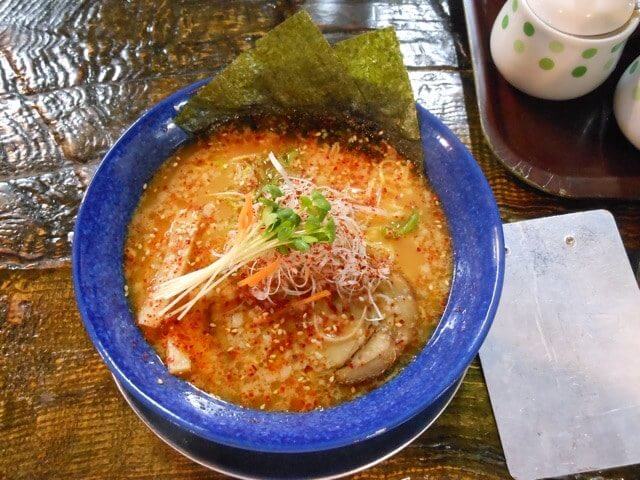
Both sit outside the classic shoyu tradition, yet locals rate them highly. Yoshino serves miso ramen that looks heavy but eats lighter than expected, topped with stir-fried bean sprouts and onion.
Himawari goes further with spicy miso horumon ramen, built around grilled pork offal. That one divides opinion, so approach with curiosity rather than caution.
How Locals Eat It
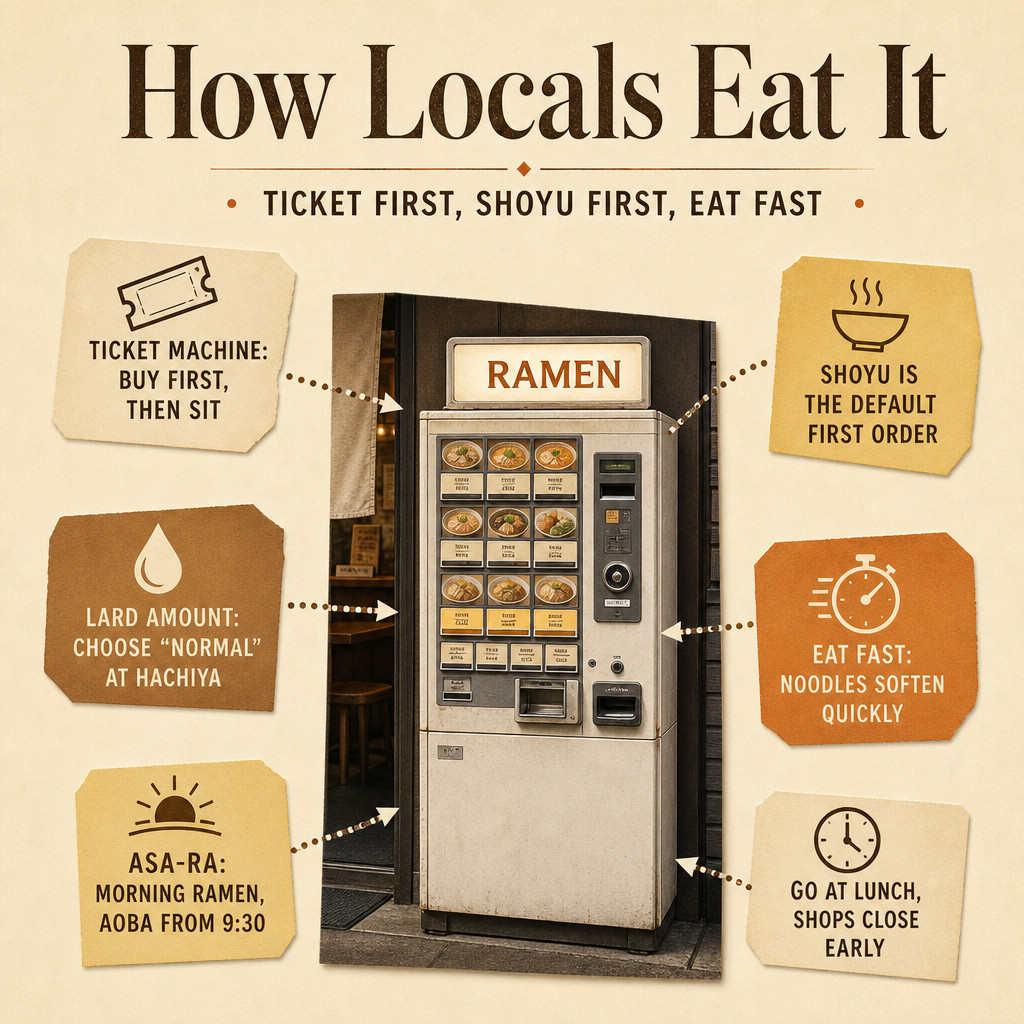
Ordering is straightforward, though a few habits are worth copying.
- Many shops use a ticket machine at the entrance. Buy first, then sit down and hand over the ticket.
- Shoyu is the default. Order that on a first visit, even where miso and shio appear on the menu.
- Some shops let you choose the amount of lard. Normal is the safer answer at Hachiya.
- Eat quickly. Low-hydration noodles soften fast, and slurping cools each mouthful.
- Asa-ra, or morning ramen, exists at a few shops. Aoba opens at 09:30, which surprises most visitors.
Two practical warnings. The historic shops close early in the afternoon, so lunch beats dinner for those. And the soup stays genuinely scalding because of the fat, which the first mouthful will remind you about.
Getting to Asahikawa
Asahikawa sits near the centre of Hokkaido and holds about 310,000 residents, second only to Sapporo. Reaching it is easy enough.
- From Sapporo: roughly 90 minutes by limited express train, or about two hours by highway bus.
- By air: Asahikawa Airport connects to Tokyo, with a bus into the city centre.
- Nearby: Asahiyama Zoo, Daisetsuzan National Park, and the Furano lavender fields.
Most travellers pair a bowl with the zoo, which sits between the station and the airport. Ramen Village lies on that same road, so the detour costs very little time.
Asahikawa Ramen Summary
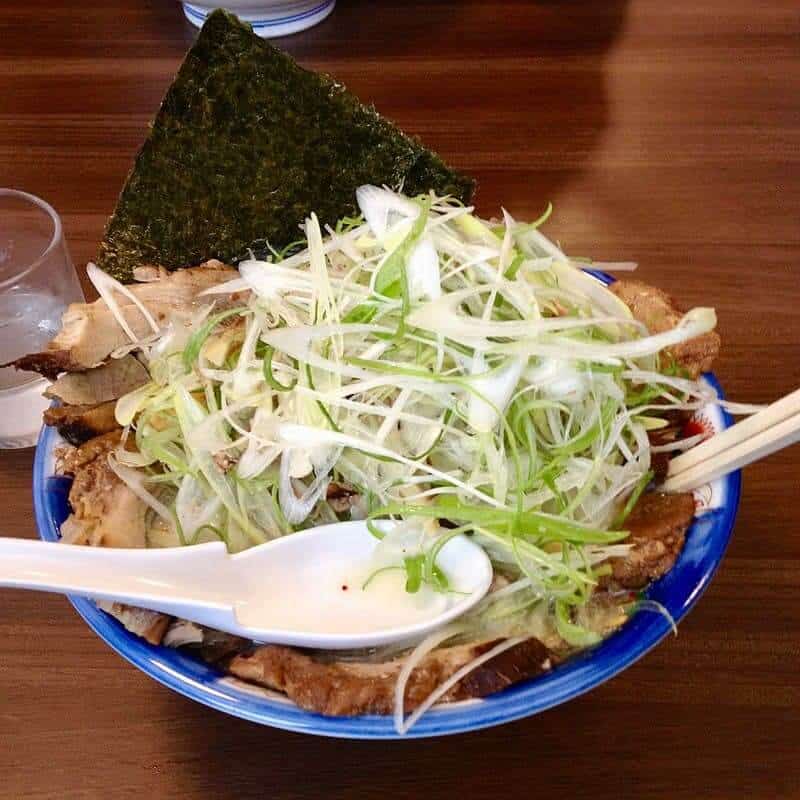
- What it is: soy sauce ramen from Asahikawa City, central Hokkaido.
- The broth: a double soup of pork and chicken bones plus kelp and dried fish.
- The lard: a surface layer that keeps the soup hot in extreme cold.
- The noodles: wavy and low in hydration, so eat them promptly.
- The history: shaped from 1947 by Hachiya and Aoba, both still open.
- Where to go: the station area for historic shops, Ramen Village for variety.
So is it worth a detour? If you are already heading to Asahiyama Zoo or Daisetsuzan, absolutely. Pair one station-area shop at lunch with a stop at Ramen Village, and you will understand the style properly.
Hokkaido has plenty more waiting after that. Our Hokkaido food guide covers seafood, dairy, and the rest of the island’s noodle culture.
Asahikawa Ramen FAQ
What is Asahikawa ramen?
Asahikawa ramen is a soy sauce ramen from Asahikawa City in central Hokkaido. Shops combine an animal stock of pork and chicken bones with a seafood stock of kelp and dried fish. A layer of lard covers the surface, and the noodles are wavy and low in hydration. It ranks alongside Sapporo miso and Hakodate shio as one of the three great Hokkaido styles.
What is the difference between Asahikawa ramen and Sapporo ramen?
Asahikawa uses a soy sauce base, while Sapporo uses miso. The Asahikawa broth is a pork and seafood double soup, whereas Sapporo builds a thicker pork base seasoned with fermented soybean paste. Noodles differ too, since Asahikawa favours low-hydration strands and Sapporo uses chewier ones. Sapporo also adds corn and butter, which Asahikawa shops rarely do.
Why does Asahikawa ramen use lard?
The lard forms an insulating film that slows heat loss from the soup. Asahikawa is one of Japan’s coldest cities, and the national record low of minus 41 degrees Celsius was set here in January 1902. Local shops adopted the technique so bowls stayed hot through a whole meal. Hachiya takes it further with scorched lard, which adds a distinctive roasted aroma.
What does double soup mean?
Double soup, or W soup in Japanese, means two stocks prepared separately and blended at the end. One pot handles pork and chicken bones, which need long extraction. The other handles kelp, bonito, and dried sardines, which turn bitter if overcooked. Combining them late keeps the depth of both without the drawbacks of either.
What toppings should I order?
Start with the standard bowl, which usually includes chashu, menma, and green onion. Adding an ajitama, a marinated soft-boiled egg, is the most common upgrade. Extra chashu suits bigger appetites, though the broth is rich enough already. Skip elaborate combinations on a first visit, since the soup is the point here.
Where can I eat Asahikawa ramen?
Historic shops such as Aoba, Hachiya, and Baikohken sit within walking distance of JR Asahikawa Station. Asahikawa Ramen Village in the Nagayama district gathers eight shops in one place, and it lies on the route between Asahiyama Zoo and the airport. Several Asahikawa shops also run branches in Tokyo and overseas. Note that the oldest shops often close by late afternoon.
How much does a bowl cost?
Budget roughly 900 to 1,200 yen for a standard bowl in 2026. Chashu-heavy versions and large portions push past that. Many shops take cash only, although Ramen Village accepts cashless payment. Prices shift with ingredient costs, so treat any figure online as approximate.
Is Asahikawa ramen very oily or salty?
The surface fat looks heavy, yet the broth underneath tastes cleaner than it appears. Seafood stock lightens the finish, so the bowl rarely feels greasy. Some shops let you request less lard if you prefer. Salt levels sit higher than a Tokyo bowl, which reflects local taste for stronger seasoning.
Does Asahikawa ramen contain common allergens?
Yes, several. The noodles contain wheat, the tare contains soy sauce, and the broth uses pork, chicken, and fish. Menma, chashu, and marinated eggs add further allergens. Vegetarian and vegan versions are rare, so anyone with dietary restrictions should confirm with the shop before ordering.
References
Official and Institutional Sources
- Asahikawa Ramen Village, Official Site and Shop Information, https://www.ramenmura.com/shopinfo.html (Accessed July 2026)
- Asahikawa Tourism and Convention Association, Asahikawa Ramen Village, https://www.atca.jp/ (Accessed July 2026)
- Asahikawa City, Population of Asahikawa, https://www.city.asahikawa.hokkaido.jp/700/701/summary/d059886.html (Accessed July 2026)
- HOKKAIDO LOVE! Official Hokkaido Tourism Site, Asahikawa Ramen Village, https://www.visit-hokkaido.jp/spot/detail_11227.html (Accessed July 2026)
- Shin-Yokohama Ramen Museum, Hokkaido Asahikawa: Hachiya, https://www.raumen.co.jp/shop/hachiya.html (Accessed July 2026)
- Web Japan (Ministry of Foreign Affairs), Explore Japan: Temperatures, https://web-japan.org/kidsweb/explore/nature/q6.html (Accessed July 2026)
- Asahikawa Raumen Aoba, Official Site, https://www5b.biglobe.ne.jp/~aoba1948/ (Accessed July 2026)
- Ramen Santouka, Company Story, https://www.santouka.co.jp/story (Accessed July 2026)
- Baikohken, Official Site, https://baikohken.com/ (Accessed July 2026)
- Ramenya Tenkin, About the Shop, https://www.tenkin-asahikawa.jp/about.html (Accessed July 2026)
- Ramen Santouka, Asahikawa Main Shop, https://www.santouka.co.jp/shop-jp/hokkaido/area01-001 (Accessed July 2026)
- Asahikawa Tourism and Convention Association, Shoga Ramen Mizuno, https://www.atca.jp/miduno/ (Accessed July 2026)
Academic and Technical References
- CiNii Research, Effects of “Kansui” (Alkaline Solution) on Physical Property of Noodle, https://cir.nii.ac.jp/crid/1390001206334614016 (Accessed July 2026)
- Myojo USA, Let’s Ask the Chef About Ramen: What Is Kansui?, https://www.myojousa.com/blog/what-is-kansui/ (Accessed July 2026)
- Yamato Noodle, Ramenology 101: Types of Ramen Noodles by Ingredients, Shape and Hydration, https://www.yamatonoodle.com/noodle-master-labs/types-of-ramen-noodles-by-ingredients-shape-hydration/ (Accessed July 2026)
- The Japanese Food Lab, The Science of Ramen Noodles, https://thejapanesefoodlab.com/ramen-science/ (Accessed July 2026)
- Cookpit, The History of Asahikawa Ramen, https://cookpit.jp/local-ramen-guide/top/asahikawaramen/history/ (Accessed July 2026)
Related Articles
- Sapporo Ramen (札幌ラーメン) (Surveyed: July 2026)
- Hakodate Ramen (函館ラーメン) (Surveyed: July 2026)
- Muroran Curry Ramen (室蘭カレーラーメン) (Surveyed: July 2026)
- Shirakawa Ramen (白河ラーメン) (Surveyed: July 2026)
- Kitakata Ramen (喜多方ラーメン) (Surveyed: July 2026)
- Tokyo Ramen (東京ラーメン) (Surveyed: July 2026)
- Japanese Ramen Toppings (Surveyed: July 2026)
- Japanese Ramen Guide (Surveyed: July 2026)
- Hokkaido Food Guide (Surveyed: July 2026)
- Hokkaido Area Japanese Food (Surveyed: July 2026)




Comments