



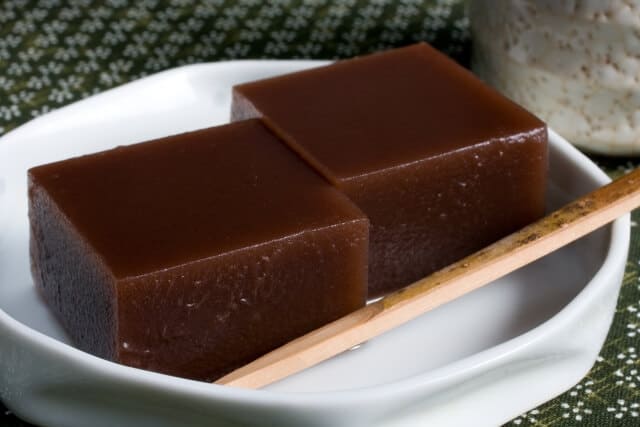
Japan’s food world goes far beyond sushi and ramen. One treat that often surprises first-timers is 水羊羹 Mizu Yokan, a chilled wagashi made from adzuki beans, kanten jelly, and sugar. It looks simple. But the moment you taste it, something clicks. This guide covers everything: what Mizu Yokan is, why it has a unique seasonal history, how to make it at home, and where to find the best versions in Japan.
What is Mizu Yokan? (水羊羹とは)
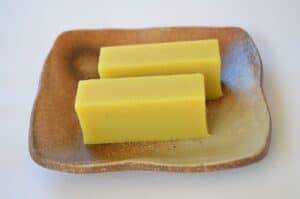
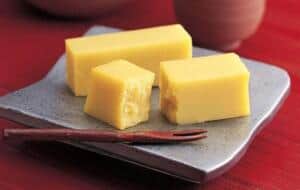
So, what exactly is Mizu Yokan? In short, it is a type of Japanese red bean jelly that belongs to the wagashi family of traditional Japanese sweets. The base ingredients are adzuki bean paste (koshian or tsubuan), powdered agar (kanten), water, and a small amount of sugar. The mixture sets into a smooth, soft jelly that is served cold.
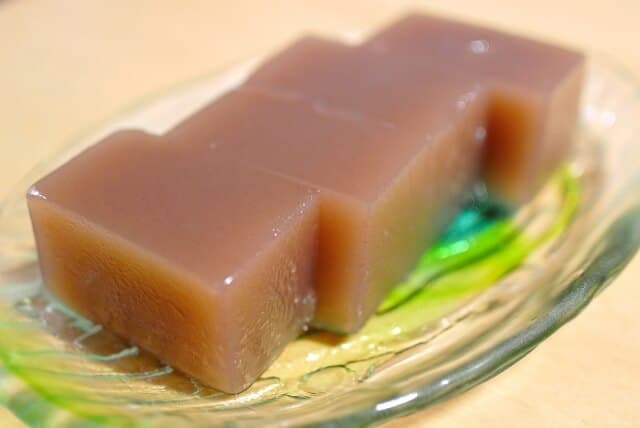
Compared to its sibling Neri-yokan, which is denser and sweeter, Mizu Yokan contains far more water. That extra water gives it a lighter, more delicate texture. Some versions swap adzuki for white kidney bean paste (shiro-an). Others add matcha, sweet potato, or chestnut for a seasonal twist. The finished block is usually rectangular, sliced before serving, and eaten chilled. It is one of those cold Japanese desserts that feels almost effortless, yet deeply satisfying.
The Name: Why “Mizu” Yokan?
The name answers one question right away. Mizu (水) means “water” in Japanese. Yokan (羊羹) is the broader term for this family of adzuki bean desserts. Put them together and you get “water yokan,” which is exactly what it is: a yokan with a high water content.
Interestingly, the kanji 羊羹 literally references sheep soup, reflecting the dish’s origins before it was adapted into a plant-based sweet. More on that in the history section below.
A Brief History of Mizu Yokan
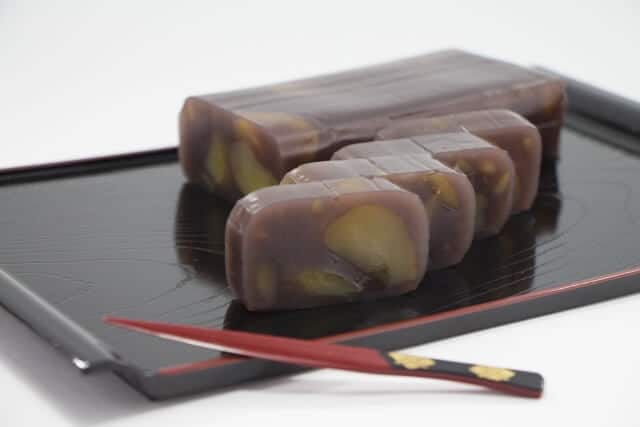
Yokan’s story begins in China. During the Kamakura-Muromachi period (roughly 1185 to 1573), a Buddhist monk who had studied in China brought back a dish called “sheep soup.” Buddhist monks, however, could not eat meat. So they created a vegetarian substitute using red adzuki beans. That substitution became the foundation of what we now know as yokan.
By the Edo period, Mizu Yokan had become a well-known treat. Here is where things get a little counterintuitive: it was originally considered a winter sweet. Not summer. Why? Because Mizu Yokan contains less sugar than regular yokan, it spoils more quickly at room temperature. In an era before refrigerators, making it during cold winter months was the only practical option. It was often served at New Year’s gatherings.
Today, modern refrigeration has freed Mizu Yokan from its seasonal constraints. You can enjoy it year-round.
Summer Treat or Winter Sweet? It Depends Where You Are
This is one of the more fascinating quirks of Japanese food culture. Nationwide, 水ようかん Japanese red bean jelly is associated with summer. It even appears as a kigo, a “season word,” in traditional haiku poetry, representing the summer season.
Yet in Fukui Prefecture, and in parts of Osaka, Kyoto, Ishikawa, Niigata, Yamagata, and Tochigi, locals still eat it in winter. The Fukui tradition in particular traces back to that pre-refrigerator era. Low sugar content meant it could only be safely made and stored in the cold months. That custom simply never disappeared, even after refrigerators became common. It is a small but telling example of how regional food habits persist long after the practical reasons behind them fade.
What Does Mizu Yokan Taste Like?
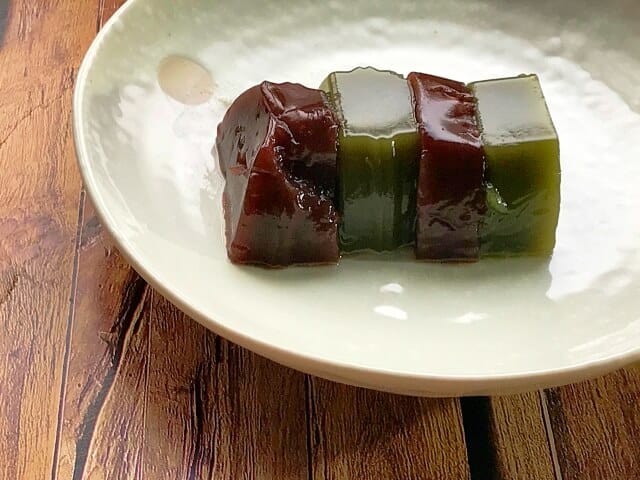
People often expect something richer, then find themselves pleasantly surprised. Mizu Yokan has a mild, gently sweet flavor. The adzuki bean earthiness comes through without being heavy. The kanten jelly gives it a cool, silky mouthfeel that is not rubbery but firm enough to hold its shape when sliced.
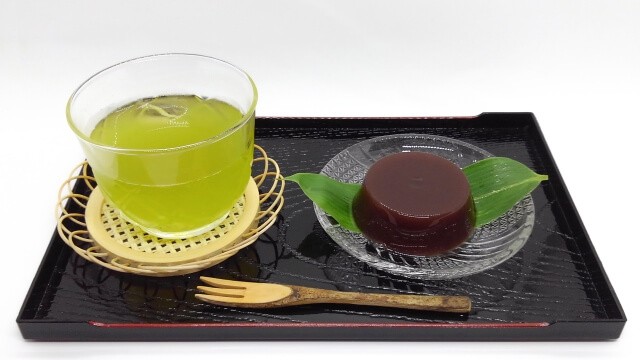
Because the sweetness is restrained, it pairs naturally with bitter green tea or matcha. That combination is something of a Japanese classic. The contrast works well on a hot day, and honestly, it works just as well on a quiet winter afternoon too. Compared to Neri-yokan, the overall impression is lighter and more refreshing. It is the kind of sweet that does not overwhelm.
Mizu Yokan Ingredients and Nutrition Facts
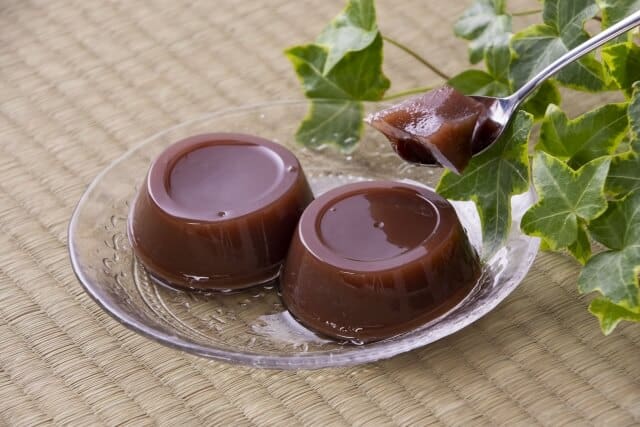
The ingredient list for Mizu Yokan is short: adzuki bean paste, kanten (agar), water, sugar, and a pinch of salt. That’s it. The simplicity is part of what makes it a timeless traditional Japanese sweet.
Kanten, the gelling agent derived from seaweed, is widely used in Japanese confectionery. It contains dietary fiber and sets firmer than gelatin at room temperature. Adzuki beans themselves are notable for their nutrient profile. They contain protein, iron, potassium, magnesium, zinc, and B vitamins including folate. Because Mizu Yokan uses more water and less sugar than denser sweets, it tends to be lower in calories than many comparable confections.
That said, it is still a sweet. Enjoy it as a treat, not a health food.
How to Make Mizu Yokan at Home
Making Mizu Yokan at home is genuinely easy. The process takes around 20 minutes of active cooking, plus 2 to 3 hours of chilling. Here is what you need for 4 servings.
| Ingredient | Amount |
| Koshian (smooth adzuki bean paste) | 300g |
| Water | 500g |
| Sugar | 20g |
| Powdered agar (kanten) | 4g |
| Salt | 3g |
Add water and powdered agar to a saucepan. Heat over medium, stirring as it comes to a boil. Lower the heat and continue stirring until the agar fully dissolves. Add sugar and salt, then stir again until everything is incorporated.
Once the sugar has dissolved, add the koshian. Mix thoroughly until the paste is fully blended into the liquid with no lumps remaining. A smooth finish here matters for the final texture.
Remove the pan from the heat. Set it inside a large bowl filled with ice water. Stir continuously as it cools. Be careful not to splash any water into the pan, as this can affect how it sets.
Once the mixture has cooled and thickened slightly, pour it into a storage container. Cover and refrigerate for 2 to 3 hours, until fully set and firm.
Run a knife around the edges of the container. Turn out the jelly onto a cutting board and slice into portions. Serve cold, ideally alongside a cup of green tea or matcha.
One tip worth knowing: do not skip the ice water cooling step. Stirring the mixture as it cools prevents the adzuki paste from settling at the bottom and helps the final jelly set evenly. The texture really does come out better this way.
Why is Mizu Yokan So Popular in Summer?
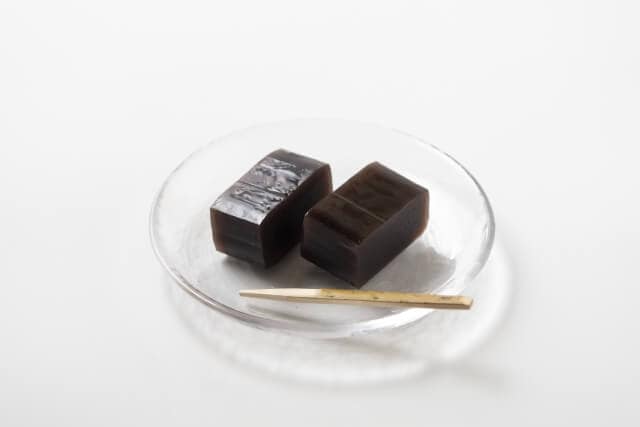
It might seem odd that a traditional winter sweet became the quintessential Japanese summer dessert. But the logic is simple. When served cold, Mizu Yokan is genuinely refreshing. The high water content and kanten base give it a cool, clean quality that heavier sweets cannot match in the heat.
Japan’s summers are humid and intense. Light, chilled wagashi from Japan fits naturally into that context. The mild sweetness does not feel cloying. The silky texture is easy on the palate. And it pairs so well with a cold glass of mugicha or a hot cup of sencha, depending on your mood. It is also a popular midsummer gift (ochugen) item, which has helped cement its association with the season.
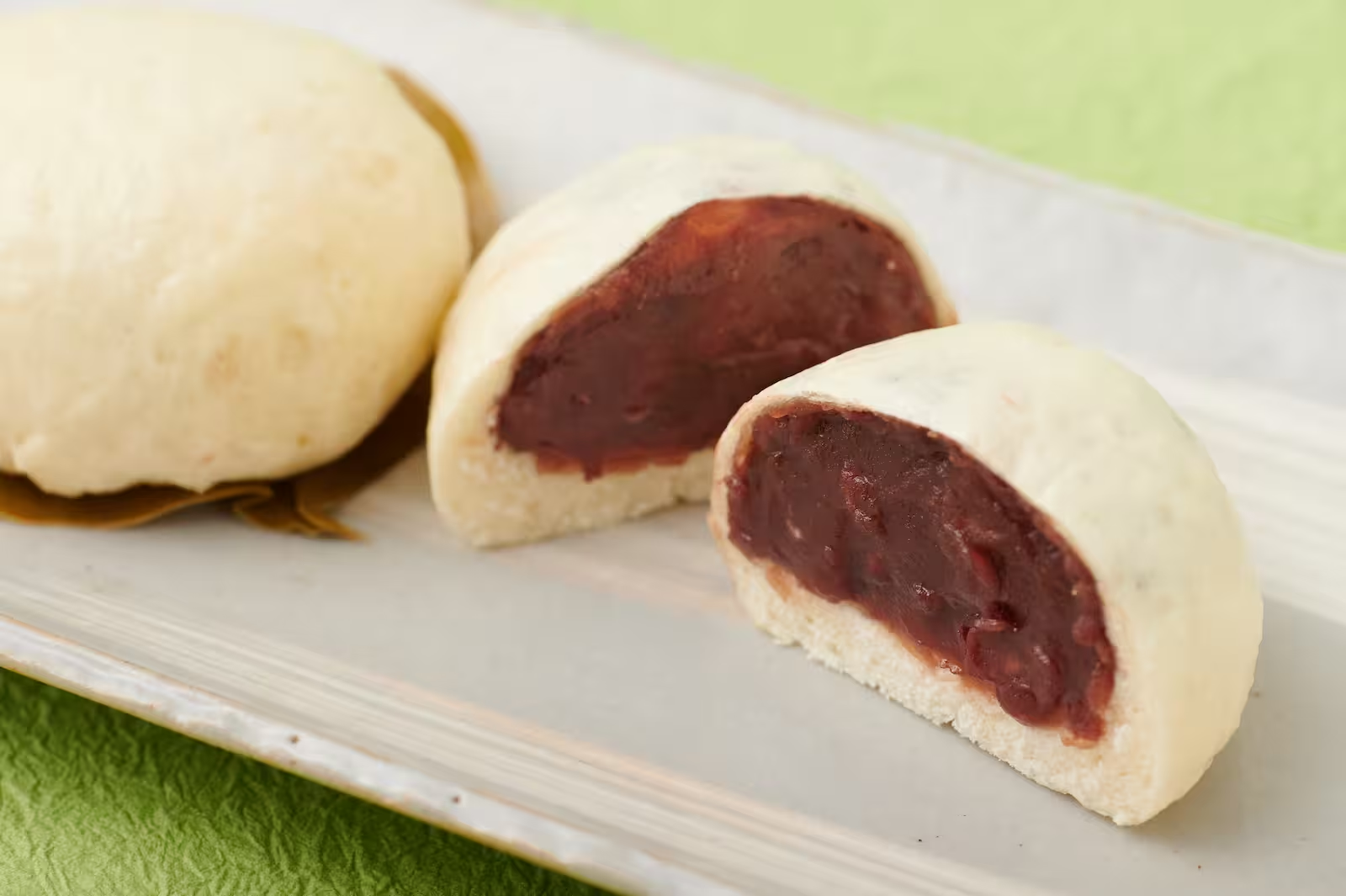
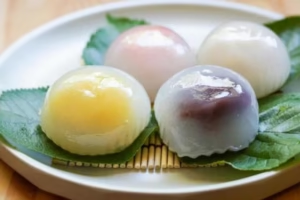
If you are curious about other Japanese sweets with a similar refreshing character, Mizu Manju is another great option worth exploring.
Where to Buy Mizu Yokan in Japan
You can find packaged versions in convenience stores and supermarkets across Japan. But if you want the real experience, these shops are worth a visit.
Aizu Nagatoya (会津長門屋) — Fukushima
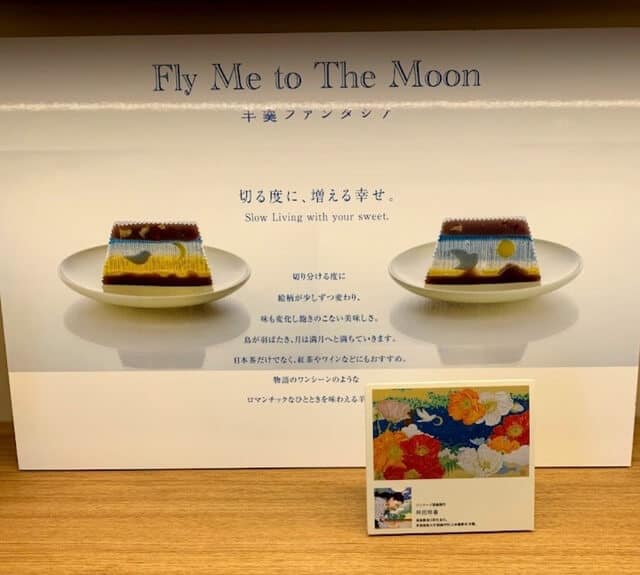
Founded in the first year of the Kaei era, Nagatoya is one of Aizu’s most storied wagashi makers. Their Mizu Yokan stands out for its use of six different mix-ins, including walnuts, cranberries, and raisins alongside traditional adzuki beans. Each slice offers a slightly different combination of flavors depending on where you cut. It is a genuinely fun version of a classic sweet.
Azabu Shogetsudo (麻布昇月堂) — Tokyo
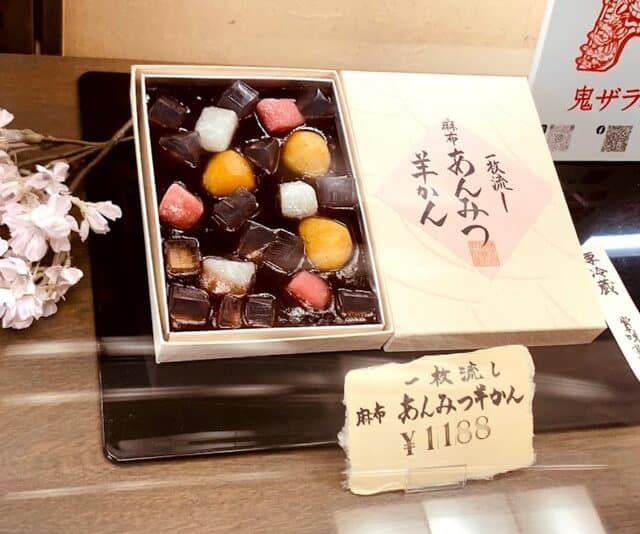
This Tokyo shop takes a creative approach. Their Mizu Yokan incorporates anmitsu-style ingredients, including agar pieces, chestnuts, and other inclusions. The result looks almost jewel-like when sliced. It has visual appeal on top of great flavor, which makes it a popular gift choice.
Imuraya (井村屋) — Mie Prefecture
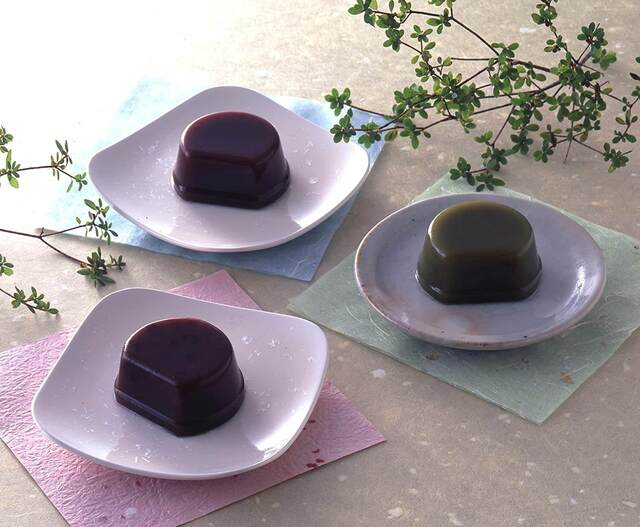
Imuraya is probably the most accessible name on this list. Best known for ice cream and steamed buns, they also produce a well-regarded Mizu Yokan line with three varieties: Rengaian (standard adzuki), Matcha, and Ogura. They source adzuki beans from Hokkaido and matcha from Kyoto. You can often find their products in supermarkets and online.
Kyoto Katsura Tsuruya Mitsunobu (京都・桂 鶴屋光信) — Kyoto
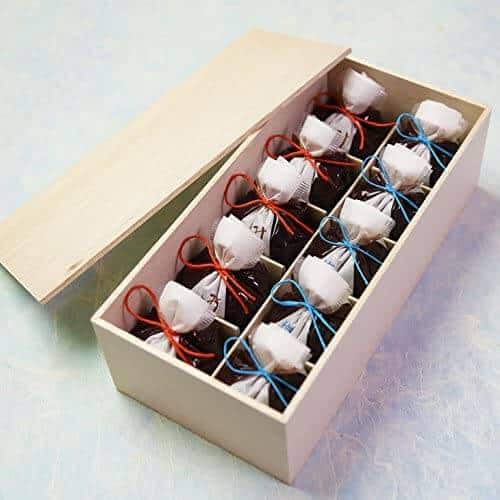
This Kyoto shop offers two flavors: classic adzuki and a salted version using Okinawan sea salt. The salted yokan is harder to describe than it sounds. The salt does not overpower; it enhances. The adzuki flavor comes through richer, with a mellow, round sweetness. The beans are simmered carefully to avoid a watery consistency, and it shows in the final texture.
Final Thoughts
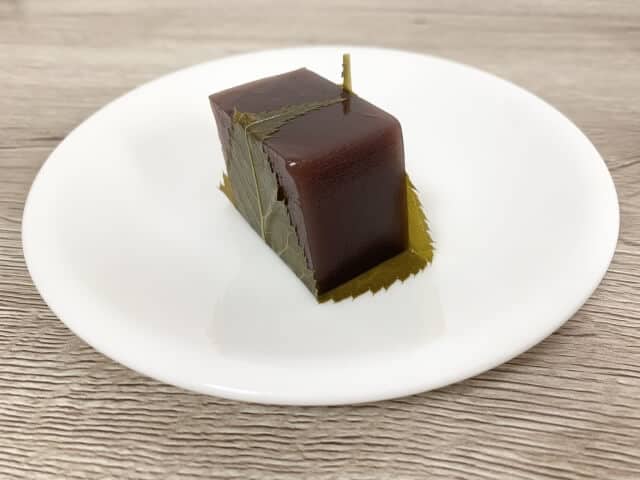
水羊羹 Mizu Yokan is one of those sweets that rewards curiosity. It looks understated. It tastes subtle. Yet there is real craft behind it, and a history that stretches back to Buddhist monks adapting a Chinese dish into something entirely Japanese. Whether you try it as a 福井の名物 chilled wagashi in its original winter context, or enjoy it ice-cold on a sweltering summer afternoon, it delivers.
If you have already explored Yokan and want to branch out, Imo Yokan (sweet potato yokan) is a natural next step. And if you are curious about other regional specialties from Fukui, the Echizen Gani is the prefecture’s celebrated winter crab, and equally worth seeking out.
Interested in more Japanese sweets? Browse the full wagashi and confectionery collection on Food in Japan.
References
- Azabu Shogetsudo — azabusyougetsudou.com
- Imuraya — imuraya.co.jp
- Tsuruya Mitsunobu — mitsunobu-t.com



Comments