




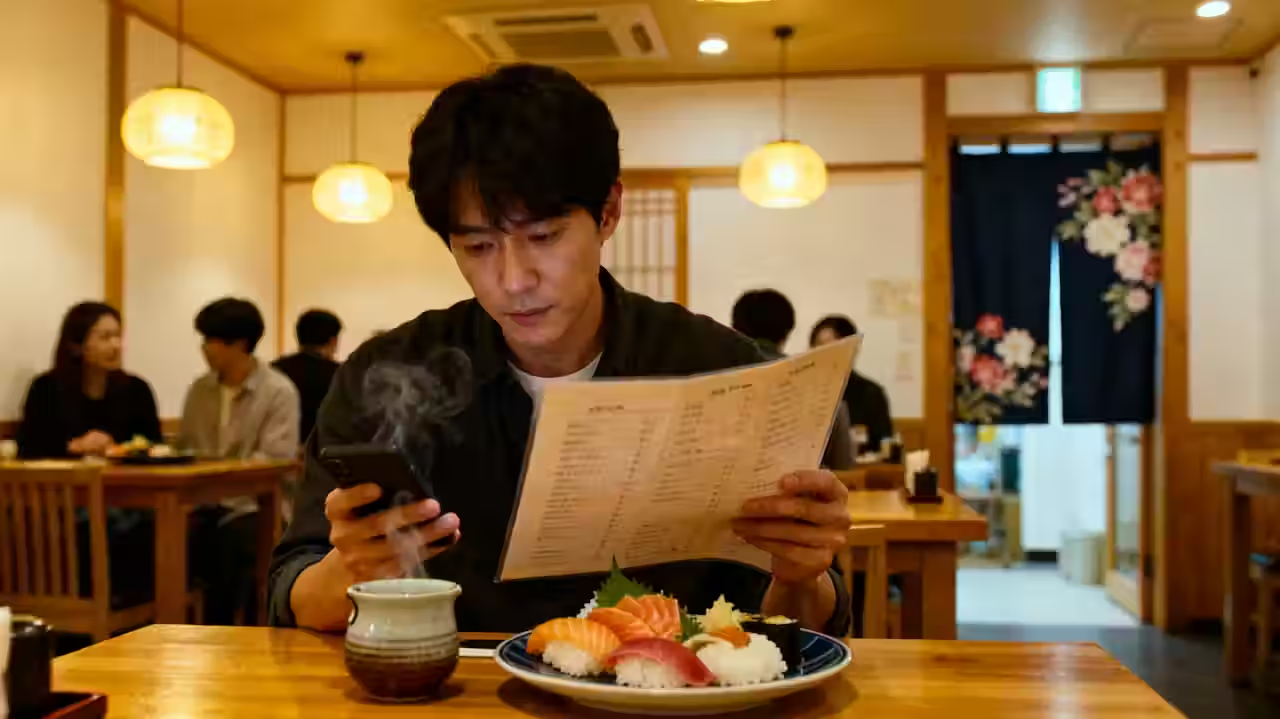
Picture this scenario. You find a cozy, hidden alleyway eatery in Tokyo. The smell of grilled soy sauce is irresistible, so you step inside and sit down. You open the menu and suddenly freeze. There are no pictures. There is no English at all. You just stare at vertical lines of elegant calligraphy. Panic sets in. Should you pretend to take a phone call and run away?
Figuring out how to order food in japan with no english menu can feel terrifying for first time visitors. But honestly? Taking that leap of faith is often the gateway to your greatest culinary memories.
Why Some Japanese Menus Have Almost No Explanations
Minimalism and Trust Signals
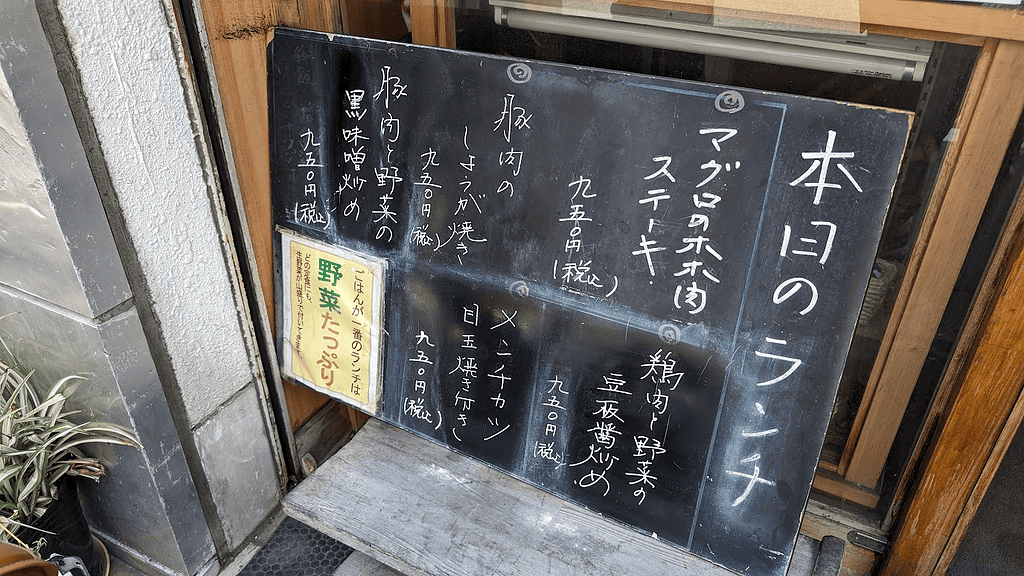
Is a text only menu a sign of bad customer service? Not at all. Many traditional spots intentionally keep things extremely simple. They assume local regulars already know what a standard dish entails. Actually, a sparse menu is often a strong trust signal. It quietly whispers that the chef relies on fresh, daily ingredients rather than glossy stock photos. You might wonder if they even want foreign tourists in their restaurant. Mostly, yes! They are usually just shy about their language skills.
The 3 Safest Ordering Strategies
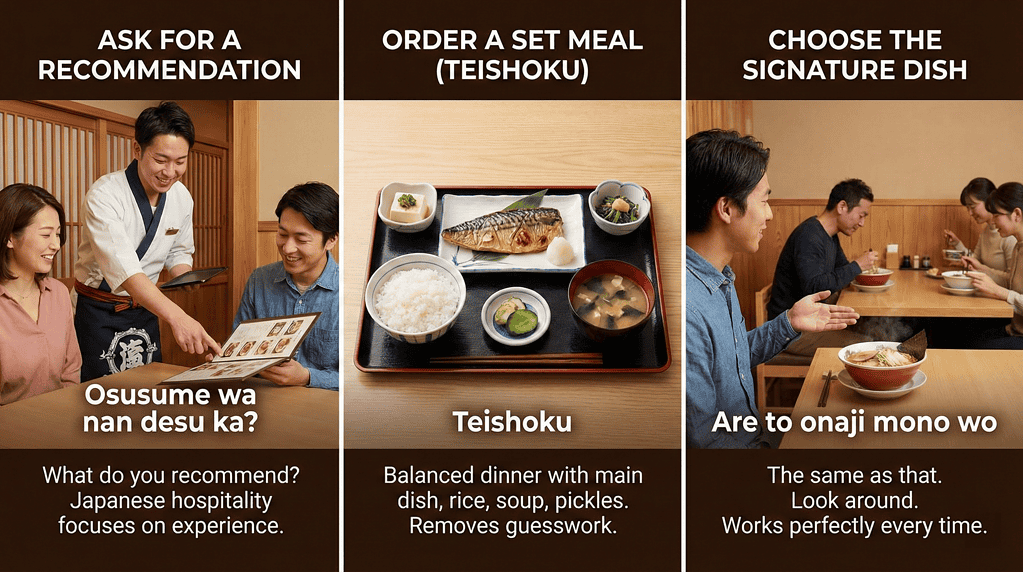
The waiter is slowly approaching your table. What do you actually do? Here are three foolproof moves.
Ask for a Recommendation
Look the server in the eye, smile, and say “Osusume wa nan desu ka?” (What do you recommend?). They will proudly point to their best item. Wait, what if they sneakily suggest a luxury hundred dollar dish? Do not worry. In typical neighborhood joints, this rarely happens. Japanese hospitality focuses heavily on giving you a great experience, not scamming you.
Order a Set Meal (Teishoku)
For a safe and balanced dinner, ask for a “Teishoku“. This magical word gets you a beautifully portioned main dish, rice, hot miso soup, and pickles. It completely removes the guesswork of pairing sides.
Choose the Signature Dish
Look around the dining room. What is everyone else eating? You can subtly point to a neighboring table and say “Are to onaji mono wo” (The same as that). It feels a bit cheeky, I know. Yet it works perfectly every single time.
Essential Phrases for Allergies and Preferences
How to Say No Raw Fish or No Pork
Dietary limits definitely add another layer of anxiety. Keep it straightforward. To avoid raw seafood, softly say “Nama sakana wa dame desu”. If pork is strictly off limits, firmly state “Butaniku wa nuki de”. You might feel awkward causing a fuss in a quiet space. However, clear communication prevents food waste.
How to Handle Payment and Exits
Register Pay vs Table Pay Basics
You finished your fantastic mystery meal. Now comes the exit strategy. Do you sit and wait for the bill to arrive? In Japan, paying at your table is quite rare. Look closely for a small plastic clipboard. Grab it, walk confidently to the front register, and pay there.
Are you wondering if they accept credit cards? This is a very common trap. Many small, authentic restaurants are strictly cash only. Always keep a few crisp thousand yen bills in your wallet just in case. If you cannot find a bill slip anywhere on your table, just walk toward the door and say “Okaikei onegaishimasu”. They will know exactly what to do.
Quick Cheat Sheet: Menu Words That Save You
Before you step out into the wild, memorize these basic concepts. Spotting just one or two familiar characters makes the whole menu much less intimidating. When faced with a wall of text, break it down by looking for the main ingredient, how it is prepared, and how it is flavored.
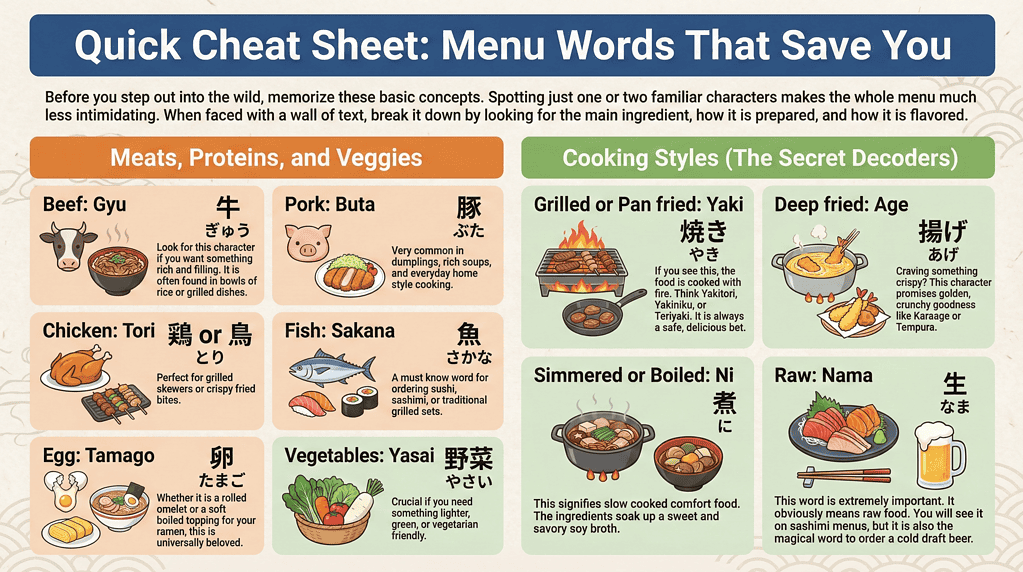
Meats, Proteins, and Veggies
- Beef: Gyu (漢字: 牛 / ひらがな: ぎゅう)
Look for this character if you want something rich and filling. It is often found in bowls of rice or grilled dishes. - Pork: Buta (漢字: 豚 / ひらがな: ぶた)
Very common in dumplings, rich soups, and everyday home style cooking. - Chicken: Tori (漢字: 鶏 or 鳥 / ひらがな: とり)
Perfect for grilled skewers or crispy fried bites. - Fish: Sakana (漢字: 魚 / ひらがな: さかな)
A must know word for ordering sushi, sashimi, or traditional grilled sets. - Egg: Tamago (漢字: 卵 / ひらがな: たまご)
Whether it is a rolled omelet or a soft boiled topping for your ramen, this is universally beloved. - Vegetables: Yasai (漢字: 野菜 / ひらがな: やさい)
Crucial if you need something lighter, green, or vegetarian friendly.
Cooking Styles (The Secret Decoders)
Are you worried about accidentally ordering raw fish when you wanted a warm meal? Understanding cooking methods is your best defense against surprises.
- Grilled or Pan fried: Yaki (漢字: 焼き / ひらがな: やき)
If you see this, the food is cooked with fire. Think Yakitori, Yakiniku, or Teriyaki. It is always a safe, delicious bet. - Deep fried: Age (漢字: 揚げ / ひらがな: あげ)
Craving something crispy? This character promises golden, crunchy goodness like Karaage or Tempura. - Simmered or Boiled: Ni (漢字: 煮 / ひらがな: に)
This signifies slow cooked comfort food. The ingredients soak up a sweet and savory soy broth. - Raw: Nama (漢字: 生 / ひらがな: なま)
This word is extremely important. It obviously means raw food. You will see it on sashimi menus, but it is also the magical word to order a cold draft beer.
Flavors and Spiciness
What if you cannot handle fiery foods? Menu warnings are helpful to spot.
- Spicy: Karai (漢字: 辛い / ひらがな: からい)
A single warning sign that your mouth might tingle. - Sweet: Amai (漢字: 甘い / ひらがな: あまい)
Usually found in the dessert section, but sometimes indicates a sweeter sauce.
Drinks and Sizes
- Water: Mizu (漢字: 水 / ひらがな: みず)
Always free and usually brought to your table immediately. - Tea: Ocha (漢字: お茶 / ひらがな: おちゃ)
A standard hot or cold beverage. - Large / Medium / Small: Dai (大) / Chu (中) / Sho (小)
These kanji dictate your portion size. If you are extremely hungry, point to “Dai”. Otherwise, “Chu” is the standard regular size.
Embracing the Delicious Unknown
So, what happens if you accidentally order something you did not expect? Maybe a mysterious plate of fermented soybeans arrives. Perhaps you get a bowl of noodles when you really wanted rice. Take a deep breath and smile. This is the exact reason you traveled all the way to Japan.
You cannot control every single detail of your meal, and that is completely fine. Culinary accidents often become your favorite travel stories. The local chefs want you to leave with a full stomach and a happy heart. They will appreciate your effort to bridge the cultural gap. Step away from the familiar tourist traps with laminated photo menus. Push open that heavy wooden sliding door. Take a seat at the counter. A wonderful adventure is waiting for you on the other side.

Comments