




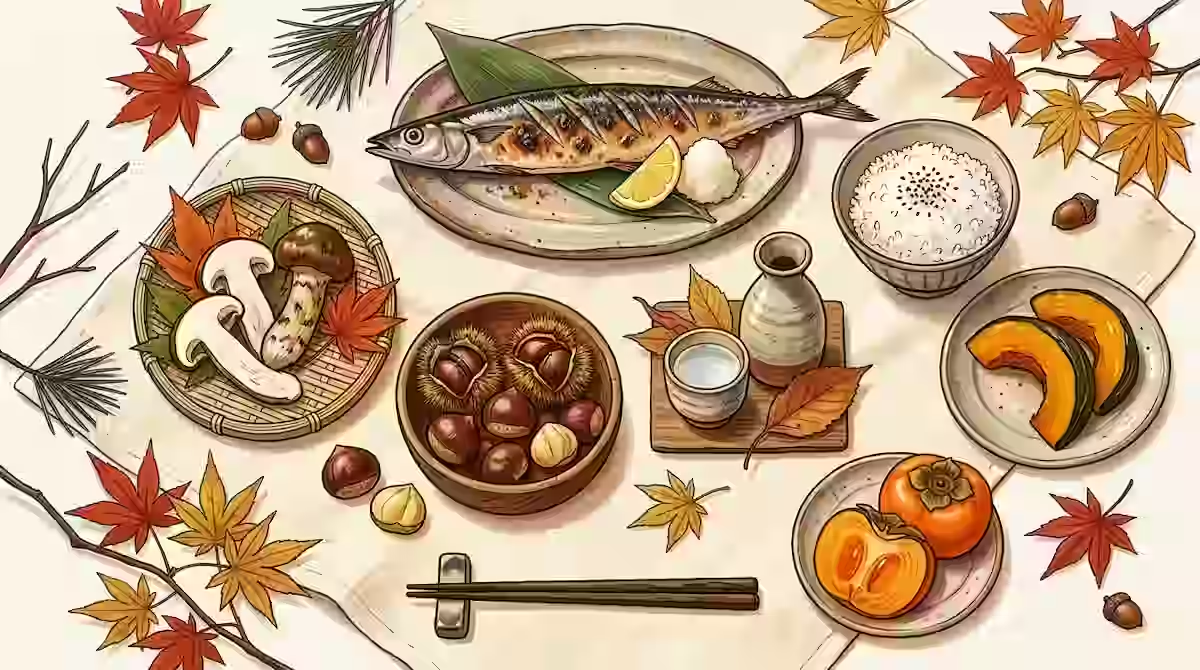
Japanese autumn food is shaped by one phrase: shokuyoku no aki (食欲の秋) — “the season of appetite.” Autumn in Japan runs from September through November, and it is widely considered the best time of year to eat. The rice harvest peaks in October, seafood reaches its fattiest and most flavorful state, mushrooms emerge from mountain forests, and chestnuts and persimmons fill market stalls across the country. This guide covers the essential Japanese autumn foods by season and region, including what to eat, where to find it, and why autumn is the most celebrated food season in Japan.
Introduction
Autumn 2025 brings a vibrant palette of colors and abundant harvests across Japan. As the air turns crisp and landscapes transform with brilliant foliage, Japanese autumn foods emerge as the season’s greatest treasure. From fatty Pacific saury (sanma) and freshly harvested rice to aromatic matsutake mushrooms and sweet chestnuts, every region celebrates its bounty through distinctive Japanese autumn foods that reflect local traditions and seasonal ingredients. The best way to enjoy Japan at this time is to “travel and eat”—exploring regionally distinct flavors and culinary events centered around Japanese autumn foods that make autumn extraordinary for food lovers seeking authentic seasonal experiences.
Why Autumn Is Japan’s Best Season for Food
Japanese cuisine is built around the concept of shun (旬) — eating ingredients at the precise moment they reach peak flavor. No season demonstrates this more vividly than autumn. The summer heat breaks, triggering a wave of harvests across land and sea simultaneously. Rice fields turn gold in October. Sanma (Pacific saury) migrates south along the coast, its fat content reaching a yearly peak. Matsutake mushrooms push through pine forest soil after the first autumn rains. This convergence of peak ingredients, combined with cooler temperatures that make eating hot dishes genuinely pleasurable, is why Japanese people often say autumn is the season they look forward to most for food.
10 Essential
Japanese Autumn Foods
September — November · Shokuyoku no Aki
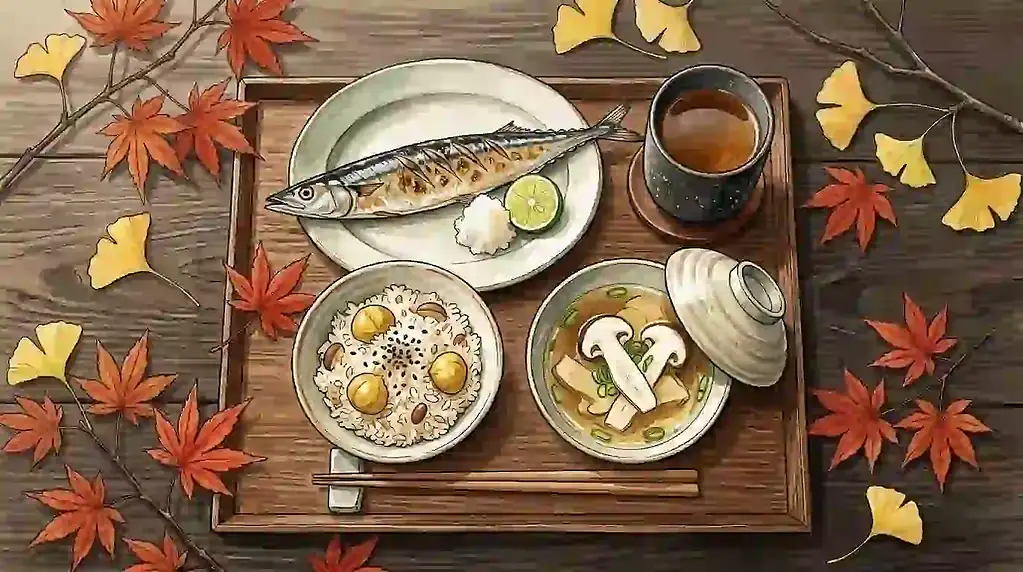
Sanma is the defining dish of the Japanese autumn. Pacific saury migrates south along Japan’s Pacific coast from September through November, and fish caught during this period are prized for their high fat content. The standard preparation is shioyaki (salt-grilling) over charcoal, served whole with grated daikon and a squeeze of sudachi citrus. The combination of crispy charred skin with rich, oily flesh alongside fresh daikon is one of the most celebrated seasonal contrasts in Japanese cooking.
September – NovemberMatsutake is Japan’s most prized and expensive mushroom. It grows wild in Japanese red pine forests, emerging from September through November, with limited and unpredictable availability — contributing to its prestige. The flavor is distinctively spiced and earthy, unlike any other mushroom, and the aroma perfumes an entire room. Classic preparations include dobin-mushi (steamed in ceramic teapot with dashi broth), matsutake gohan (rice cooked with the mushroom), and simple charcoal-grilling with soy sauce.
September – NovemberJapanese chestnuts are harvested from late September through October and appear across a wide range of dishes and sweets. In savory cooking, kuri gohan (chestnut rice) is the classic preparation. In confectionery, they appear in mont blanc cakes, kuri kinton, kuri manju, and dorayaki fillings. For visitors, buying freshly roasted chestnuts (yaki-guri) from a street stall is one of the simplest and most satisfying autumn experiences Japan offers.
September – OctoberShinmai — “new rice” — refers to rice from the current year’s autumn harvest, sold from October onwards. It is considered significantly superior in flavor and texture to stored rice: fresher, softer, more fragrant, and naturally sweeter. In Japan, the arrival of shinmai is treated almost like a new vintage wine release. Niigata’s Koshihikari is the most famous variety, but Akita’s Akitakomachi and Yamagata’s Tsuyahime are equally respected. Eating shinmai plain with miso soup and pickles is the traditional way to appreciate its quality.
October – NovemberHiyaoroshi is a style of sake released only in autumn, from September through November. Brewed in winter and left to mature through summer, hiyaoroshi is bottled without a second pasteurization, giving it a notably rounder, mellower character than freshly brewed sake. It is widely considered the sake season’s highlight — the Japanese sake equivalent of a seasonal wine release. Most sake breweries across Japan produce a hiyaoroshi, and many hold autumn tastings and open-brewery events during September and October.
September – NovemberKabocha is a dense, sweet Japanese pumpkin with dark green skin and deep orange flesh, reaching peak flavor in autumn. It appears across Japanese cooking in simmered dishes (kabocha no nimono), tempura, soups, and confectionery. The flesh is drier and starchier than Western pumpkin varieties, with a flavor closer to sweet potato, and it absorbs dashi-based broths exceptionally well. Kabocha no nimono — sliced kabocha simmered in dashi, soy sauce, mirin, and sugar — is one of the most comforting of all Japanese autumn home dishes.
September – NovemberAutumn is salmon season in Japan. Wild salmon returning from the Pacific are caught off the Hokkaido and Tohoku coastlines from September through November, and the fish at this time are notably fatter and richer than summer fish. The simplest and most beloved preparation is shioyaki — salted and grilled — served with rice and miso soup. Salmon roe (ikura), harvested from female fish during the same period, is a seasonal delicacy in its own right, most commonly served as ikura-don (salmon roe over rice) in Hokkaido.
September – NovemberPersimmons are one of the most recognizable symbols of the Japanese autumn, ripening from October through December. Sweet varieties (amagaki) are eaten fresh. Astringent varieties (shibugaki) are dried over several weeks to produce hoshigaki — wrinkled, concentrated dried persimmons with an intensely sweet, almost honey-like flavor. Hoshigaki from Nagano and Gifu are considered among Japan’s finest dried fruit products. The sight of persimmons hanging to dry outside farmhouses in the autumn mountains is a classic Japanese landscape.
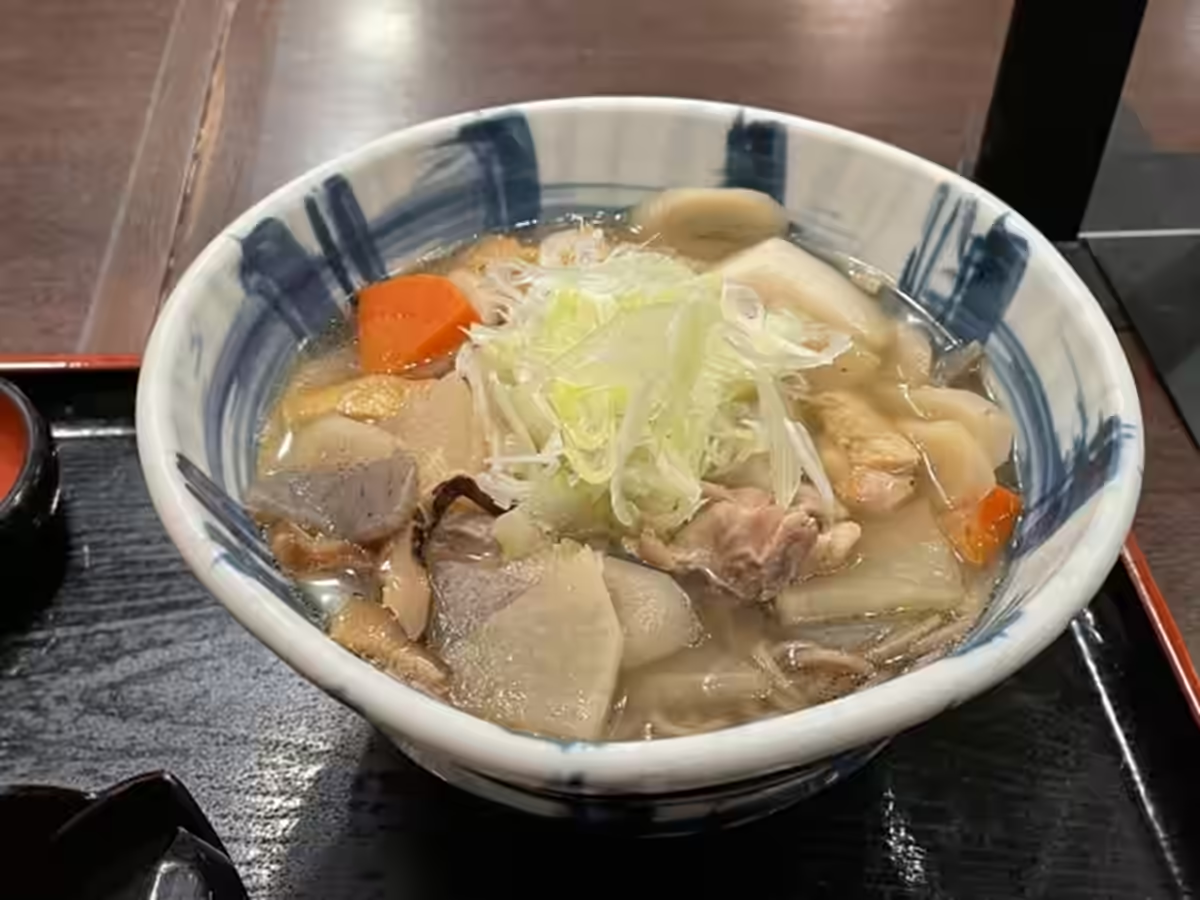
October – DecemberImoni is the signature autumn dish of the Tohoku region, particularly Yamagata Prefecture. A hearty outdoor stew made with satoimo (Japanese taro root), beef, konjac, and leeks in a soy and sake broth, imoni is a communal activity — groups gather outdoors in October to cook large pots over open fires, a tradition called imoni-kai. The Yamagata Imoni Festival, held annually along the Mamigasaki River, is one of Japan’s most famous autumn food events.
October – NovemberSatoimo is a small, slippery taro root harvested in autumn, a staple of Japanese autumn simmered dishes. Essential in imoni, it also appears in traditional oden hot pots, miso soup, and nimono alongside other root vegetables. The characteristic slippery texture — from mucilaginous compounds in the flesh — is strongly associated with the autumn season. Satoimo is also connected to Tsukimi (moon-viewing festival) in September, where it is offered alongside dango as part of the traditional harvest ceremony.
October – NovemberJapanese Autumn Foods
by Region
The focus is on seafood — salmon, ikura, and scallops — alongside exceptional dairy products. The annual Sapporo Autumn Fest (September–October) brings together regional food vendors from across the island in one place.
The imoni-kai tradition defines the season, alongside kiritanpo nabe from Akita and freshly harvested apples and grapes from Yamagata and Aomori. The Yamagata Imoni Festival is one of Japan’s most famous autumn food events.
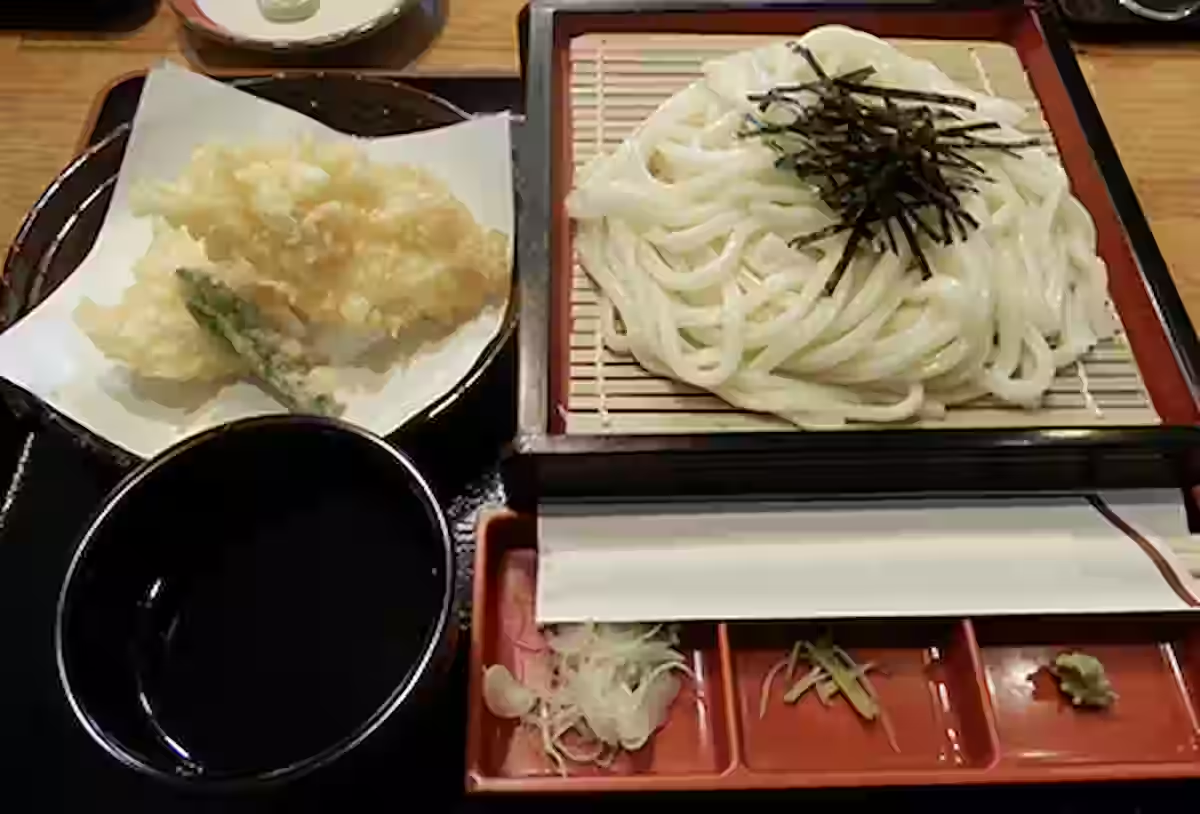
New soba noodles made from autumn buckwheat and sanma from izakayas are the seasonal highlights. In Tokyo, the Meguro Sanma Matsuri (October) serves free charcoal-grilled sanma to thousands of visitors each year.
Kyoto’s refined kaiseki restaurants build entire autumn menus around matsutake. Osaka’s food markets are stocked with kuri, kaki, and shinmai from across western Japan. October is the peak month for matsutake dining.
Hiroshima’s autumn oysters, olive-based cuisine from Shodoshima, Ehime’s imotaki stew, and juicy autumn fruits define the season. Seafood markets and fruit picking are the region’s defining autumn experiences.
Fatty mackerel (saba), skipjack (katsuo), and local chicken dishes, alongside sweet potato products from Kagoshima. Nagasaki and Fukuoka are the region’s best bases for autumn food exploration.
Autumn Seasonal
Ingredients at a Glance
| Ingredient | Season | Best Used In |
|---|---|---|
Sanma 秋刀魚 · Pacific Saury | Sep – Nov | Salt-grilled with daikon and sudachi |
Matsutake 松茸 · Pine Mushroom | Sep – Nov | Dobin-mushi, gohan, charcoal-grilled |
Kuri 栗 · Chestnut | Sep – Oct | Kuri gohan, mont blanc, wagashi |
Shinmai 新米 · New Rice | Oct – Nov | Plain steamed, takikomi gohan |
Kabocha かぼちゃ · Japanese Pumpkin | Sep – Nov | Nimono, tempura, soup |
Kaki 柿 · Persimmon | Oct – Dec | Fresh, hoshigaki (dried), salads |
Autumn Salmon 鮭 · Sake | Sep – Nov | Shioyaki, ikura-don |
Satoimo 里芋 · Taro Root | Oct – Nov | Imoni, nimono, oden |
New Soba 新そば · Buckwheat Noodles | Oct – Nov | Zaru soba, kake soba |
Hiyaoroshi Sake ひやおろし | Sep – Nov | Served chilled or at room temperature |
Autumn Food Events
Worth Planning Around
One of Japan’s most famous autumn food events. An enormous single pot of imoni (taro and beef stew) is cooked using a construction crane along the river — a unique outdoor cooking spectacle that draws large crowds each year.
The best single event for sampling Hokkaido regional specialties in one place. Food vendors from across the island gather to serve sanma, seafood bowls, fresh dairy, and local produce throughout September and October.
The most famous urban autumn food event in Japan. Free charcoal-grilled Pacific saury (sanma) is served to thousands of visitors. The festival draws both locals and international visitors for a taste of the season’s most iconic fish.
Kyoto’s restaurant district shifts its menus entirely to matsutake in October. Visiting a high-end kaiseki restaurant during this window offers the most concentrated matsutake dining experience available in Japan.
Sake breweries across Japan release their autumn hiyaoroshi from September onwards. Visiting a brewery region during this period provides direct access to the season’s best bottles, often alongside open-brewery events and tastings.

Comments