In Japanese cuisine, the beauty of sushi and sashimi depends not only on fresh fish and perfectly seasoned rice, but also on how cleanly each slice is made. A properly sharpened Japanese knife glides through tuna, salmon, or tai without crushing the flesh, helping preserve texture, shine, and flavor on the plate. For many sushi chefs in Japan, sharpening knives with whetstones is the only acceptable way to maintain this level of precision.
TOC
What Is a Whetstone?
A whetstone is a flat stone used to grind and sharpen the edges of knives. Unlike electric sharpeners, whetstones allow you to sharpen slowly and carefully. They come in different materials and grits, which determine how coarse or fine the sharpening surface is. Coarse-grit stones remove more metal and are used for dull or damaged blades. Fine-grit stones polish and refine the edge for a smooth, sharp finish.
There are natural whetstones, made from materials found in nature, and synthetic stones, which are man-made. Both types work well, but synthetic stones are often more affordable and consistent in quality.
Why Sharp Knives Matter for Sushi
When preparing sushi or sashimi, every cut changes how the fish feels in the mouth and how it absorbs soy sauce or wasabi. A dull knife tears delicate fibers, leaving rough surfaces and uneven slices that can affect both taste and appearance. In contrast, a razor-sharp edge creates glossy, smooth cuts that are prized in traditional sushi restaurants across Japan.
This is why professional itamae (sushi chefs) invest time in knife sharpening as part of their daily routine. Keeping blades sharp is seen as an extension of respect for the ingredients, a concept deeply rooted in Japanese food culture where presentation and texture are as important as flavor.
Japanese Sushi Knives and Their Edges
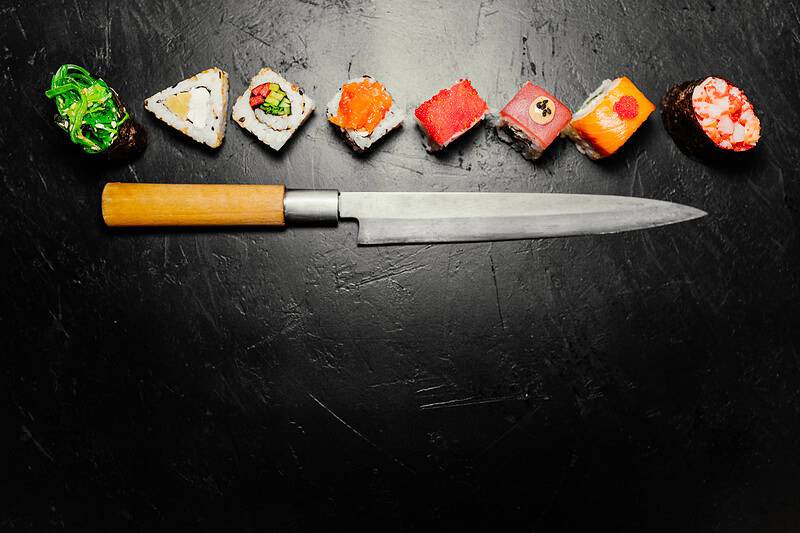
Different Sushi with Japanese knife on black stone slate background. Sushi on a table. Space for text. Top view. Sushi background. food frame
Many knives used in Japanese sushi preparation, such as yanagiba and shobu, are single-bevel blades designed specifically for slicing raw fish in long, uninterrupted strokes. A single-bevel edge means one side of the blade is flat (or slightly concave) and the other is ground to a sharp angle, a structure similar to a woodworker’s chisel. This design allows for extremely precise control when portioning sashimi or forming nigiri.
Because of this unique geometry, sushi knives cannot be maintained properly with quick tools like pull-through sharpeners or honing rods. These tools are better suited to Western-style double-bevel knives and can easily damage the fine single-bevel edge that sushi work requires. A flat, consistent sharpening surface — such as a quality whetstone — is necessary for protecting the knife’s shape and performance over time.
Why Whetstones Are Essential in Japanese Kitchens
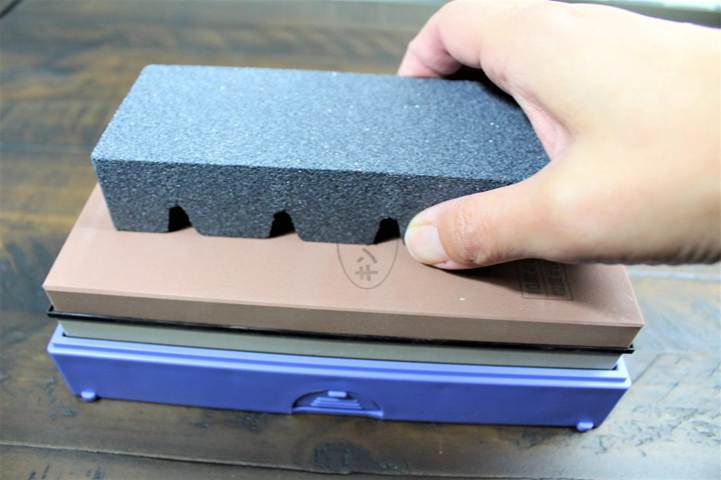
Kitchen cleaning tools with sponge and scrubbing pads for Japanese cuisine preparation.
In many Japanese restaurants, whetstones (often water stones) are the standard sharpening method rather than electric machines. The main reason is control. With a whetstone, the user can adjust pressure, angle, and stroke length to match different knife styles and tasks, from thinly slicing sashimi to finely mincing negi (green onion) for garnishes.
Water stones are also gentle on high-carbon and stainless steels commonly used in Japanese knives. They remove just enough metal to refresh the edge while helping maintain the original blade profile. For single-bevel knives like yanagiba, this gentle, precise approach helps preserve the flat back side and the carefully ground bevel that gives the knife its character.
Tools You Will Need
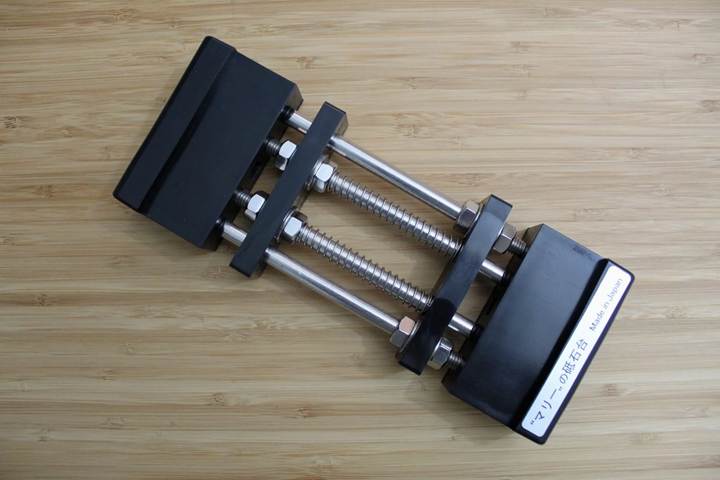
To start sharpening Japanese knives at home or in a professional kitchen, you need only a few tools. Besides the whetstones, you will need a towel to keep your workspace dry and safe. A stone holder or a non-slip mat helps keep the whetstone steady while sharpening. Some whetstones require soaking in water before use, so have a bowl of water nearby if you use water stones. If you have oil stones, you will need sharpening oil.
Some cooks also keep a Japanese flattening stone on hand to maintain a level surface on their whetstones. This is especially useful for anyone sharpening regularly, whether for home Japanese meals or more advanced sushi projects.
Preparing Your Whetstone
If you have a water stone, there may be a need to soak it in water for about 10 to 15 minutes before use. You will know it is ready when no more bubbles come out, which means the stone is fully saturated and prepared for sharpening. Oil stones should have a thin layer of sharpening oil on the surface instead of water to help with smooth grinding.
Once soaked, set the stone securely on a damp towel or stone holder. A stable surface is quite important when working with long sushi knives like yanagiba, which require smooth, continuous strokes along the full length of the blade.
Finding the Right Angle
Single-bevel sushi knives are typically sharpened to an angle of 20 degrees, while double-bevel gyuto knives are normally sharpened at relatively low angles of 12-15 degrees per side to achieve a fine, slicing edge. For many Japanese kitchen knives, the working angle is often in the range of roughly 10 to 20 degrees per side, depending on the style and intended use.
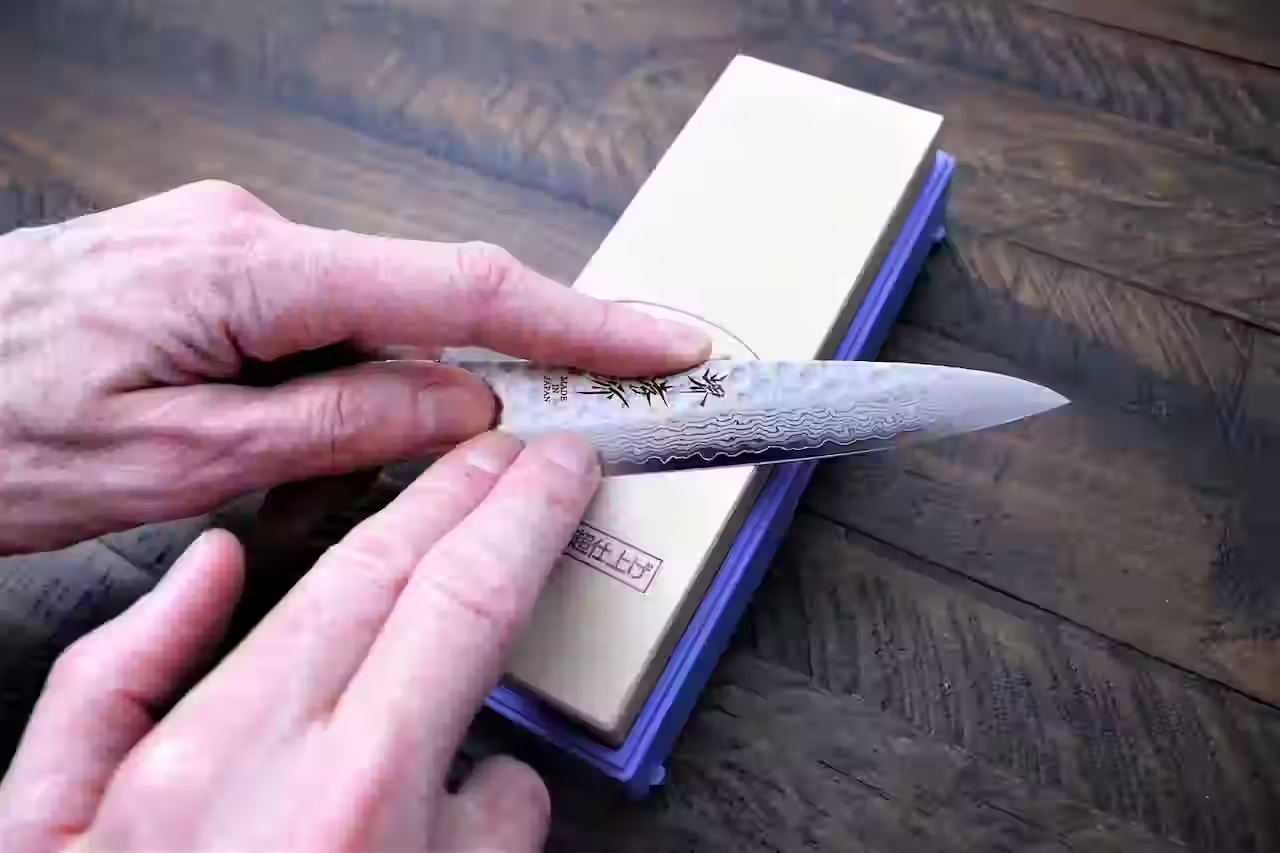
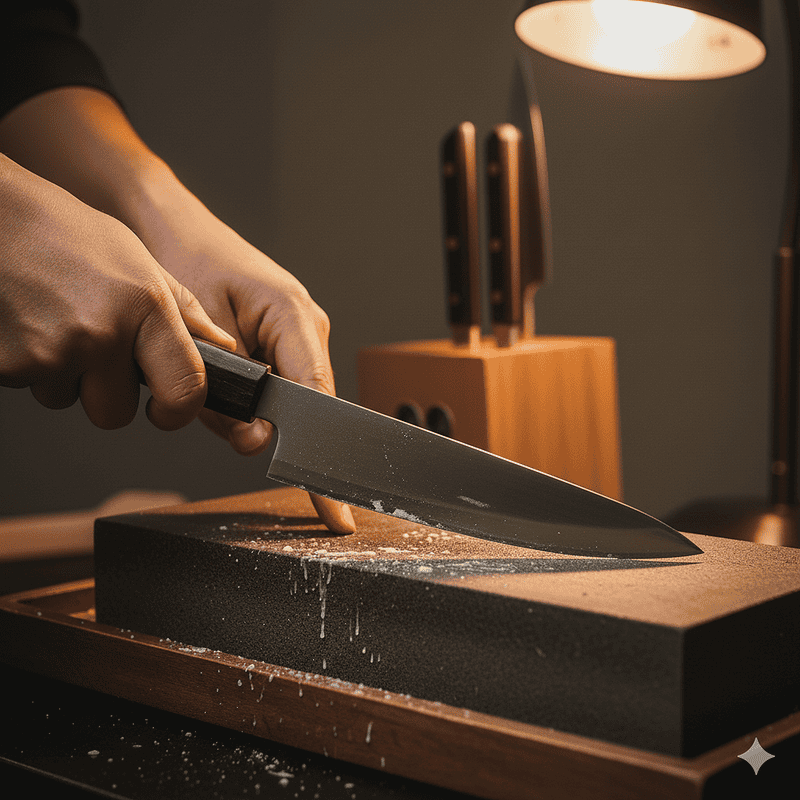
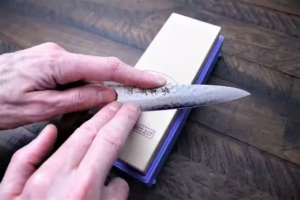
For a single-bevel knife, most of the sharpening happens on the beveled side, which is set at a low angle on the stone, while the flat side is laid nearly flat to lightly remove burrs and keep the back true. Holding this angle consistently is more important than chasing an exact number. Over time, your fingers and eyes begin to “remember” the correct tilt through repetition.
Step-by-Step: Sharpening a Sushi Knife on a Whetstone
A basic sharpening progression for a sushi or Japanese kitchen knife usually involves moving from coarser grits to finer ones:
Start with a medium or coarse grit Place the beveled side of the blade against the stone at your chosen angle. Using long, even strokes, push and pull the knife along the stone so that the entire edge makes contact, from heel to tip. For a yanagiba, this often means moving in a motion that follows the natural slicing path you use on fish.
Raise a burr along the edge Continue sharpening on the beveled side until you can feel a slight, continuous burr forming on the opposite side of the blade. The burr is a sign that fresh steel has been brought to the very edge.
Lightly work the flat side Flip the knife and lay the flat side nearly flush with the stone. Use gentle strokes to remove the burr without over-grinding the flat surface, which is important for maintaining the geometry of single-bevel knives.
Refine on finer grits Move to a finer stone to polish the edge. Repeat the same sequence — primarily sharpening the beveled side, then lightly cleaning up the flat side. Finer grits help create the smooth, crisp edge needed for clean sashimi slices.
Rinse and dry After sharpening, rinse both the knife and the stone, then dry your knife thoroughly to prevent rust, especially if it is a high-carbon Japanese steel knife. Applying a light layer of camelia oil can help to protect high-carbon steel knives as well. Store the stone where it can dry completely before your next session.
Common Mistakes to Avoid
Beginners often run into a few predictable issues that can affect performance in Japanese cooking:
Pressing too hard can damage the edge or wear down your whetstone faster.
Inconsistent sharpening angles cause uneven edges that dull quickly.
Skipping grit stages may leave your knife rough and not properly sharpened.
Forgetting to soak the whetstone when required can reduce its effectiveness.
Being mindful of these points helps keep your knife ready for precise work like slicing sashimi or cutting maki rolls cleanly without tearing the nori.
Caring for Your Whetstones and Knives
To keep your whetstones working well, they need care. Over time, stones can develop uneven surfaces that make sharpening harder. Flatten them regularly using a flattening stone or sanding block. Always clean and dry your whetstones after use to prevent damage.
For your knives, proper storage helps keep the edge sharp longer. Use knife blocks, magnetic strips, or blade guards. For double-bevel knives, regular honing with a honing rod can help maintain the edge between sharpenings.
Mastering the Art of Sharpening: Patience and Practice Make Perfect
Sharpening knives with whetstones might seem complicated at first, but it is a skill worth learning. With patience and practice, you will develop the confidence to sharpen any knife to a perfect edge. Remember to start with the right tools, keep a steady angle, and take your time through each grit.
A sharp knife is safer, faster, and more precise. Using a whetstone is a traditional way to maintain your blades and honor the art of knife making. No matter if you cook professionally or at home, this skill brings a new level of enjoyment to your kitchen.Sharpen your knives with whetstones and experience the difference in your cooking today.














Comments