




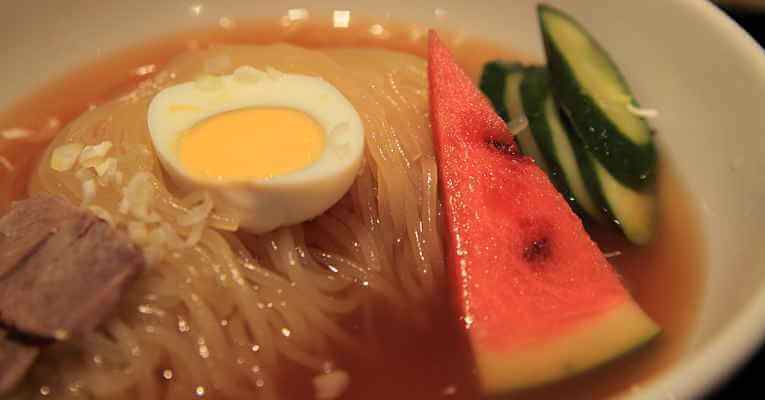
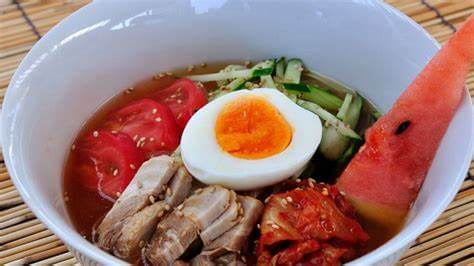
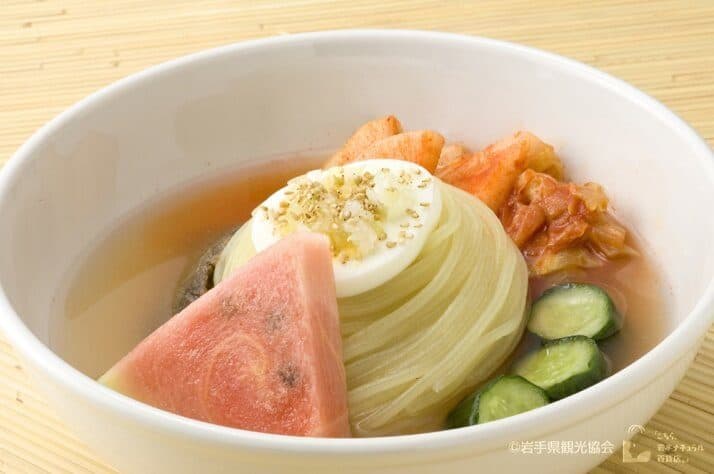
Morioka Reimen is a local specialty noodle dish from Morioka City, Iwate Prefecture. It consists of chewy noodles made from corn starch, a rich soup made from beef bones and vegetables, and homemade kimchi as a topping. Morioka Reimen is originally a dish that came from the Korean Peninsula, and became popular in Morioka after World War II. Nowadays, there are many reimen specialty shops and barbecue restaurants in Morioka City, and it is a popular menu item for both locals and tourists. Morioka Reimen is attractive because you can adjust the spiciness and toppings to your liking. Please try checking about morioka special noodle!
Origins of Morioka Reimen
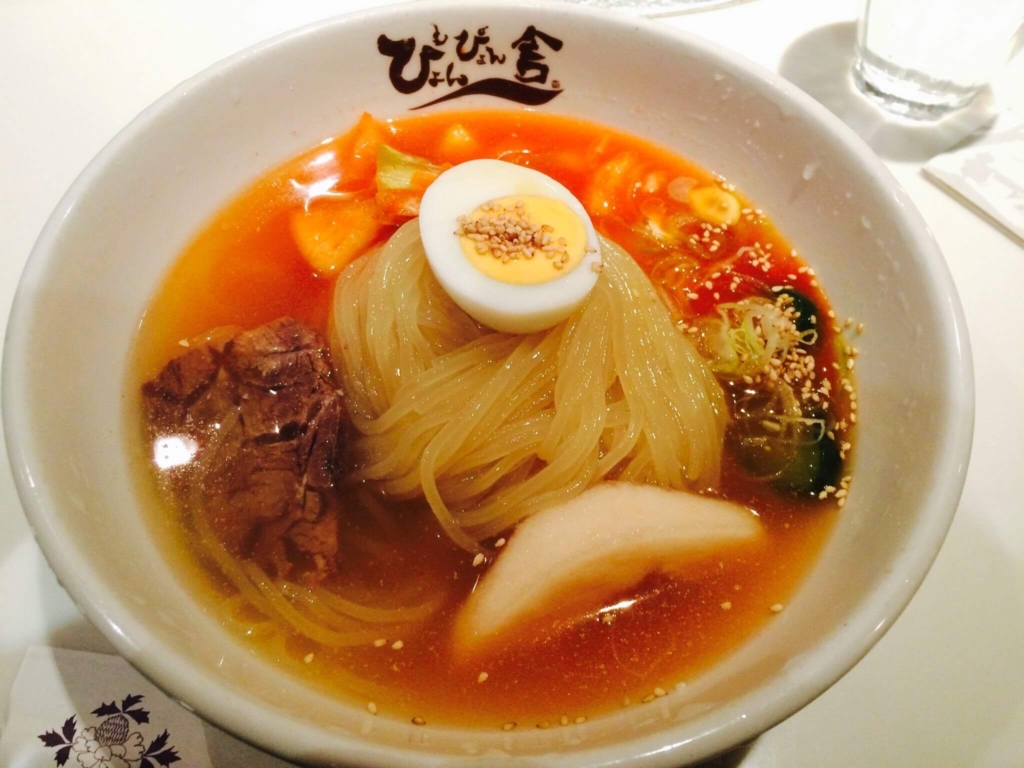
Morioka Reimen is one of traditional food in the north eastern city of Morioka although it does not originate from this city. Reimen originates from the northern part of the Korean peninsula. It was brought to Japan by Teruto Aoki, a native of Hamnhung in North Korea. He brought the dish with him when he migrated to Japan in 1954 and opened the Shokudoen restaurant in Morioka.
At that time Pyongyang cold noodles were already known in Japan. The version that began in Morioka combined the spicy flavours of his home town with a light broth. This broth was a non-spicy version of the tradition originating in Pyongyang. The new dish soon became popular in Morioka city and by the mid 1960s there were a number of reimen restaurants operating in the city, each one using its own distinct combination of flavours. By the mid 1980s,a gourmet boom propelled Morioka Reimen to became famous nationally.
Noodle of Morioka Reimen
The noodles are distinct in that they are very firm and made from a combination of wheat flour and potato starch. Chefs flavor the soup with stewed beef and chicken. They then chill the soup to a perfect temperature. Finally, they combine it with the spicy addition of kimchi. This dish tastes even better if you add a dash of vinegar. There are around 30 noodle eateries located across the city of Morioka.
Reasons for Morioka Cold Noodles’ Popularity
The Unforgettable Texture
The first bite of Morioka cold noodles is something special. Chefs craft these noodles from a blend of wheat flour and potato starch, creating a texture that’s remarkably thick yet somehow manages to be smooth at the same time. I suppose that combination might sound contradictory at first, but when you actually taste them, it makes perfect sense. The noodles have this satisfying chewiness that stands up to your bite, yet they glide across your palate with an almost silky quality. It’s this unique mouthfeel that keeps people coming back.
A Broth Unlike Any Other
Now, you might wonder how cold soup could possibly be appealing, especially if you’re used to hot ramen broths. The secret lies in the preparation. The broth uses beef bones and chicken carcasses simmered for hours, developing a richness and depth of umami that’s quite different from the lighter dashi found in traditional Japanese soups. When served cold, this broth doesn’t lose its character. Instead, the coolness seems to highlight the noodles’ firm texture even more, creating a refreshing contrast that works surprisingly well.
The Kimchi Factor
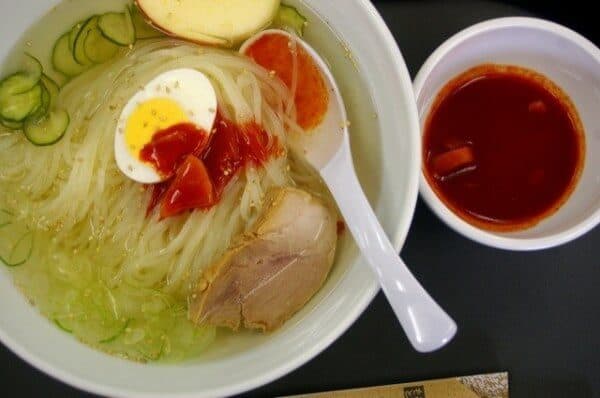
Here’s where things get interesting. The dish includes lacto-fermented kimchi made from cabbage and radish, and it really transforms the entire experience. The sourness cuts through the richness of the broth, while the spiciness adds layers of complexity. There’s also that satisfying crunch from the kimchi that contrasts beautifully with the smooth noodles. What I find clever is that diners can adjust the kimchi amount themselves, tailoring the heat level to their preference. Some days you might want just a hint of spice; other times, you’ll pile it on.
More Than Just Noodles and Broth
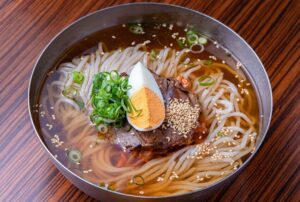
The toppings deserve attention too. Thinly sliced beef chashu brings a savory richness, boiled eggs add creaminess, and pickled cucumbers offer another layer of refreshing crunch. Each element seems carefully chosen to complement rather than compete with the others. When you gather a bit of everything in one bite, the flavors balance each other in a way that feels almost orchestrated.
A Dish Born from Two Traditions
The history adds another dimension to appreciating these noodles. In 1954, Teruhito Aoki, a chef originally from the Korean peninsula, combined elements from both Kankō cold noodles and Pyongyang cold noodles to create something new. I imagine he must have experimented quite a bit to get the balance just right. The result was a dish that maintained Korean roots while adapting to Japanese tastes and local ingredients. It’s this hybrid nature that likely helped the dish gain such wide acceptance.
Soul Food Status in Morioka
For people in Iwate Prefecture, these cold noodles represent more than just a meal. Many locals make regular trips to yakiniku restaurants specifically for the cold noodles, often ordering them at the end of a barbecue meal to cleanse the palate. The dish has earned its place alongside Jajamen and Wanko Soba as one of Morioka’s three great noodles. There’s genuine local pride in this creation, and residents will enthusiastically recommend their favorite shops to visitors.
The Iwate Advantage
Geography plays a role too, though perhaps a subtle one. Morioka cold noodles benefit from Iwate’s natural environment. The local water, the quality of ingredients grown in the region’s climate: these factors contribute to the dish’s character. While you can find versions of Morioka cold noodles elsewhere in Japan now, there’s something about having it in Iwate, made with ingredients from the surrounding area, that feels authentic. Maybe it’s partly psychological, but I think place matters when it comes to regional specialties.
A Dish for All Seasons?
Interestingly, while “cold noodles” might suggest a summer dish, people enjoy Morioka cold noodles year-round. Even in winter, restaurants serve them, and customers order them happily. Perhaps the rich, warming broth balanced with the cold temperature makes it work across seasons. Or maybe once something becomes comfort food, the weather stops mattering quite so much.
These elements combine to make Morioka cold noodles a beloved regional specialty.
Restaurants of Morioka Reimen
Seirokaku
Seirokaku is a famous grilled meat or yakiniku restaurant located across from the JR Morioka Station. In this restaurant the Morioka reimen costs 1,000 JPY for a regular sized serving and 1,200 JPY for a large serving. The reimen is one of the most popular dishes in the restaurant and the noodles served here have characteristic texture that is chewy and with a strong flavour. The soup is made from the beef shin and it includes both the meat and bones. The reimen served here is not too spicy but has a rich, deep flavour. There are seven distinct levels of spice from which you can choose to include in your dish.
Yakiniku cold noodle Esophagus Garden
This is Morioka’s original noodle shop. Here you can enjoy the elastic noodles and the taste and texture of the delicious soup. The rich tasting soup is made by the beef bones slowly simmering together with the beef skin and whole chicken for eight hours. The noodles are freshly cooked every day. There are a number of simple toppings and they are cucumber, green onion, vegetables, eggs and sesame seeds. The topping are there to help bring out the taste of the soup and the noodles.
One of the distinct differences at the Esophagus Garden restaurant is the use of Kakuteki in preference to Kimchi, this is served on a separate plate. If you require a hotter soup simply add the Kakuteki soup until you reach the level of spiciness you require.
Pyonpyonsha Inaricho Main Store
This restaurant serves a beef bone light soup together with their home made kimchi. The smooth noodles are a feature of this restaurant. The strong tasting soup is further intensified by the kimchi, the more you add, the spicier it becomes. It is a combination of refreshing sour tasting kimchi together with the chili, the texture of the soup and the glutinous pastry of the noodles. These tastes are so different yet combine together so well in this dish. There is limited space available and you may want to reserve a space in advance of your visit.
Yakiniku Cold Noodles
In order to retain the best possible taste the soup, noodles and kimchi are all prepared in the restaurant. Skilled craftsmen prepare this delicious soup that you can enjoy for its firm texture. Craftsmen make the noodles by hand, not by machine. They carefully create the soup by stewing ingredients, including beef steaks and vegetables, for 6 to 7 hours.
This process produces a soup that is a clear, golden colour and richly condensed with the flavour of beef. The restaurant has followed the same recipe for more than 30 years. People describe the home-made kimchi as having an excellent taste, being spicy, and being the best locally produced. Even the seasonings follow the original recipe.The dish is a compatible soup with the noodles and combined with the acidity and hot tasting kimchi leaves you with an exquisite taste.
Mountain Shop
Mountain Shop restaurant claims that it is pursuing the taste of cold noodles through their home made noodles which are full of strong flavours and may require a strong throat due to richness of the flavour of this soup. Careful selection goes into each ingredient, and once chosen, these selected ingredients simmer for more than 8 hours to develop the exquisite taste. All the kimchi is home-made and specifically developed for use with cold noodles. The kimchi has a distinctive spicy taste and together with the pickled cucumber it helps to season the soup by adding some sweetness and a refreshing taste.
Another Food in Iwate Prefecture
Wanko soba is a well-liked dish in Iwate Prefecture. Although it is made from the same type of noodle as morioka reimen, the flavor of soba in Wanko soba is completely different.
Let’s explore the various foods found in Iwate Prefecture.
Comments