







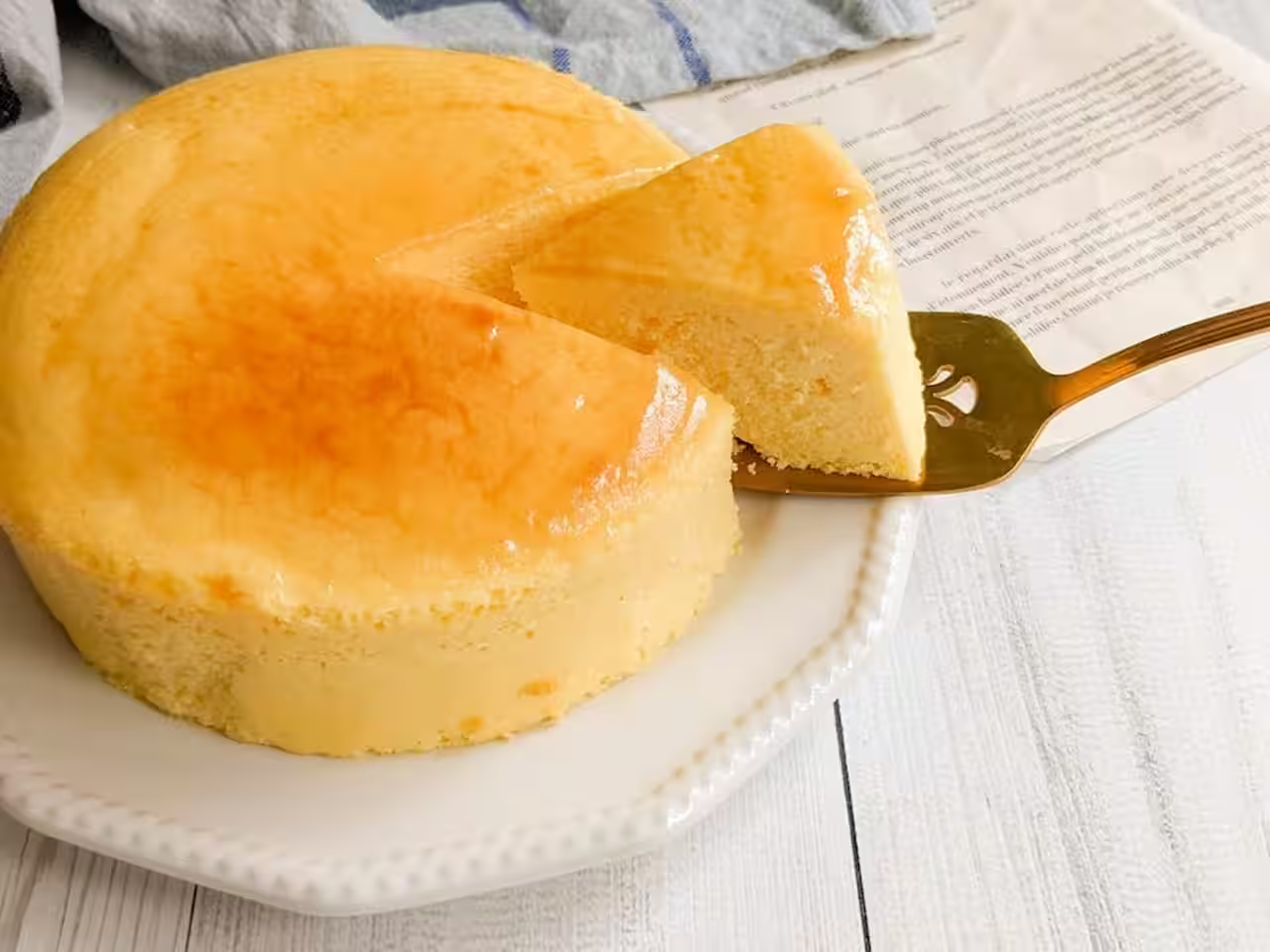
The Japanese Soufflé Cheesecake (スフレチーズケーキ) is a famous dessert that has gained popularity worldwide for its wonderfully light texture. Unlike heavy, traditional baked cheesecakes, this Japanese version is known for its incredible airiness and signature soft wobble. This article will explain what gives this cake its unique properties, share its surprising history rooted in European tradition, and provide the essential guide and metric measurements needed to bake this airy masterpiece at home.
What is Soufflé Cheesecake?
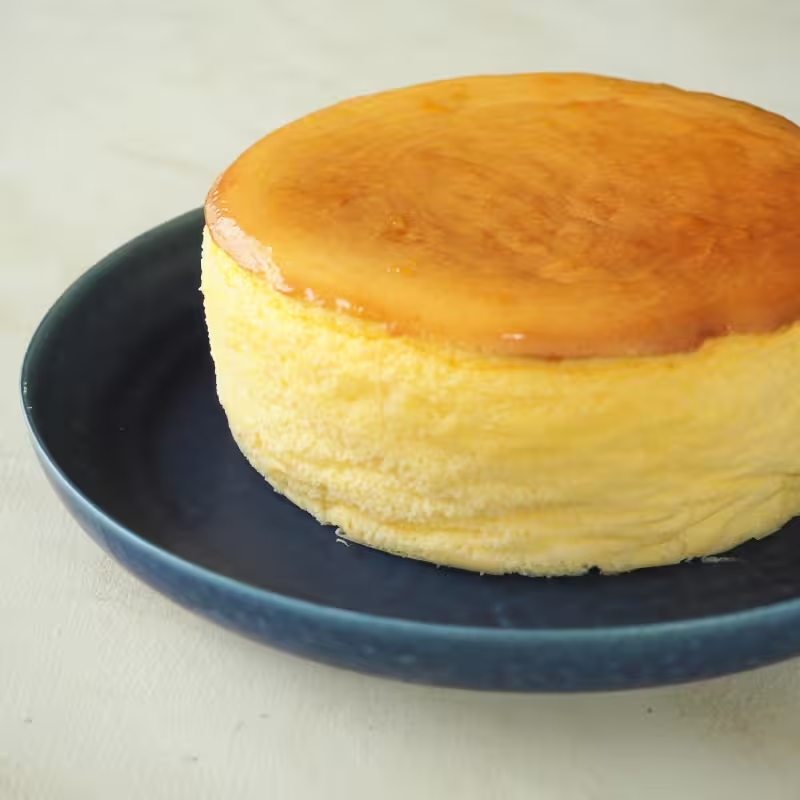
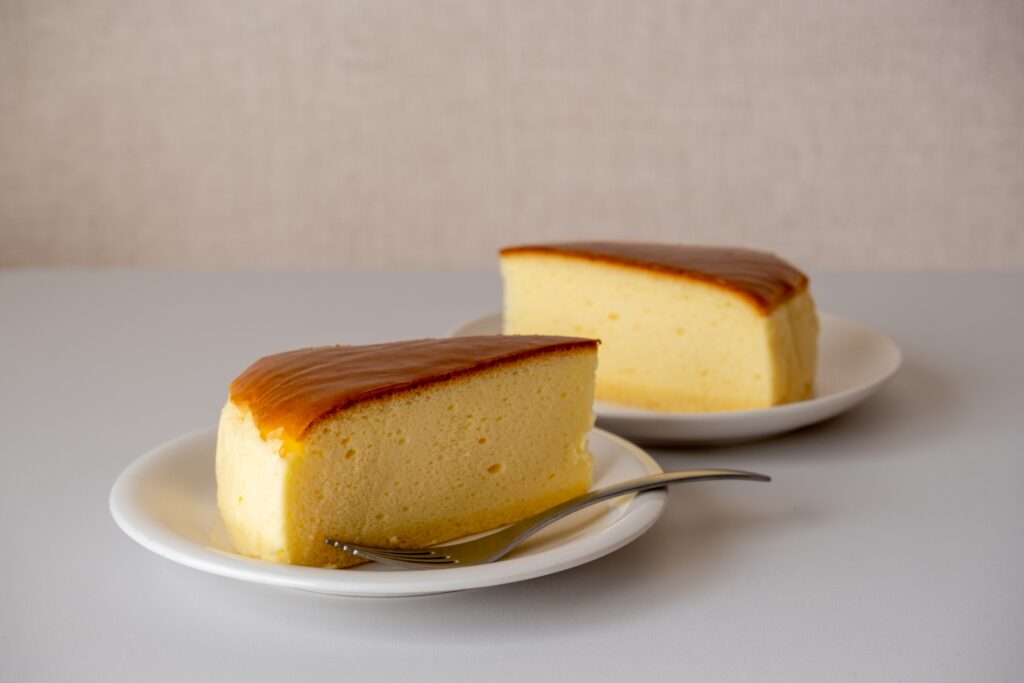
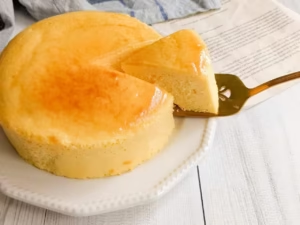
This Japanese creation is best defined by its delicate, airy structure, which is why it is often called “Japanese cotton cheesecake” or simply the “jiggly cheesecake.” The key characteristic is its gentle, fluffy texture that simply melts in your mouth, a clear contrast to the dense feel of American or Italian cheesecakes.
This cloud-like consistency is achieved through specialized baking science. The recipe uses less cream cheese and sugar than most Western versions, making the final flavor mild and slightly sweet. The essential element is the meringue: stiffly whipped egg whites are folded into the cream cheese base, trapping a large amount of air. Hence, this trapped air acts like a balloon, giving the cake its great height and signature jiggly movement.
Delicate Sweetness, Almost Ethereal
The taste is remarkably light and subtle. There’s a gentle cream cheese tang that never becomes sharp or overwhelming. I remember expecting something richer, closer to New York cheesecake perhaps, but this was almost cloud-like in flavor. The sweetness hovers in the background, present but restrained. You catch hints of vanilla and dairy, though nothing dominates. What surprised me most was how the flavor seemed to float away rather than linger, leaving just a whisper of creamy sweetness behind.
Impossibly Soft, Barely There
The texture is what makes this cake truly special. When your fork breaks through, there’s almost no resistance at all. It feels like eating sweetened air somehow. The interior trembles and jiggles with the slightest movement, which can be unnerving if you’re used to sturdier desserts. Each bite dissolves on your tongue immediately, melting away before you can really chew. You might wonder if something this delicate can even be called cake, but that’s precisely its charm.
Gentle Dairy Warmth
The aroma is soft and inviting without being assertive. Fresh from the oven, it releases a warm, eggy scent mixed with subtle cream cheese notes. There’s a hint of vanilla if you pay attention, though nothing jumps out aggressively. The smell reminds me more of a gentle custard than traditional cheesecake, which makes sense given all those whipped egg whites folded into the batter.
History: From Berlin to Kobe
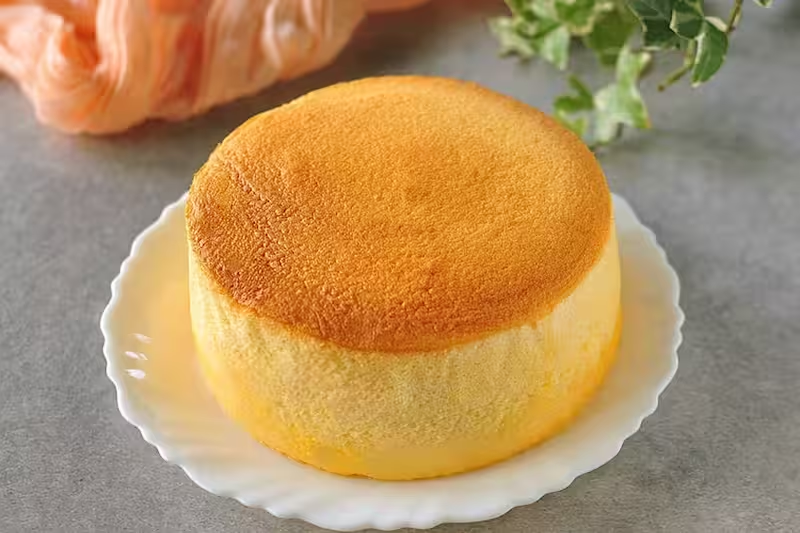
The story of the Soufflé Cheesecake is one of adaptation and refinement in Japan. The dessert was invented in 1969 by Japanese confectioner Tomotaro Kuzuno, who was working for the well-known cake company Morozoff, based in Kobe.
Kuzuno’s idea came after he visited Berlin in the 1960s, where he was inspired by a local version of käsekuchen, a traditional German cheesecake. Kuzuno took this European concept and specifically tailored it for Japanese taste preferences. His adaptation drastically reduced the amount of cheese and sugar, making the cake far less rich and sweet than its Western counterparts. This deliberate choice required the introduction of the rigorous soufflé technique—relying entirely on the meringue to create the cake’s structure. This change also secured the cake’s unique identity as a defining piece of Japanese yōgashi (Western-style confectionery).
Recipe and Preparation
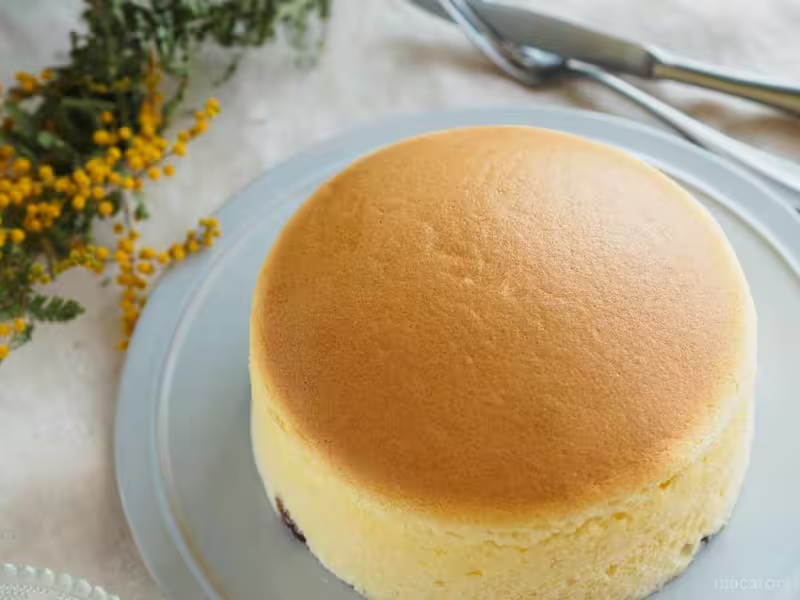
Achieving the perfect, light texture of this cake depends entirely on precise metric measurements and adherence to the unique baking method.
| Ingredient | Measurement (Grams) |
| Cream Cheese (Softened) | 250 g |
| Unsalted Butter | 60 g |
| Milk (Whole) | 100 g |
| Egg Yolks | 6 yolks (~120 g) |
| Caster Sugar (Total) | 140 g |
| Cake Flour / Superfine Flour | 60 g |
| Cornstarch | 20 g |
| Egg Whites | 6 whites (~260 g) |
| Cream of Tartar / Acid | 1/4 tsp |
How to make?
The recipe requires separating the eggs. The yolks are whisked into the warm, melted mixture of cream cheese, butter, and milk, followed by the sugar and sifted flours to create a smooth, dense base. Separately, the egg whites are whipped with the remaining sugar and cream of tartar until they form stiff, glossy peaks.
First, one-third of the stiff meringue is gently folded into the heavy cream cheese base to “loosen” or temper the mixture. Then, the remaining meringue is added and carefully folded using a light, cutting motion with a spatula until the batter is just combined.
The cake tin is placed inside a larger baking tray filled with boiling hot water (a water bath). This water creates steam, which keeps the cake moist and prevents the top from cracking while providing gentle, even heat. Baking requires precise temperature stages: start at a high temperature (around 200∘C or 400∘F) for a short time (18 minutes) to set the crust, then immediately reduce the heat (to 160∘C or 320∘F) for the remaining bake time. Finally, turn off the oven and leave the cake inside with the door cracked open for 30 minutes.
Conclusion
The Soufflé Cheesecake is a testament to the fact that technical precision can transform humble ingredients into a world-class confection. Its unique lightness, born from a German inspiration refined by Japanese culinary standards, offers a delicate experience that is a welcome alternative to overly rich desserts.
If the reader appreciates the exceptionally airy, creamy texture and subtle sweetness of Soufflé Cheesecake, similar light and refined desserts are recommended such as Melon pan, Cream bread and many more.
Comments