




There is a moment, usually in mid-November, when Kanazawa quietly announces that winter has arrived. It is not the snow, not yet. It is the thunder. Locals call it “buri-okoshi,” the rumbling that signals the start of yellowtail season off the Sea of Japan coast. And with the yellowtail comes Kabura Sushi.
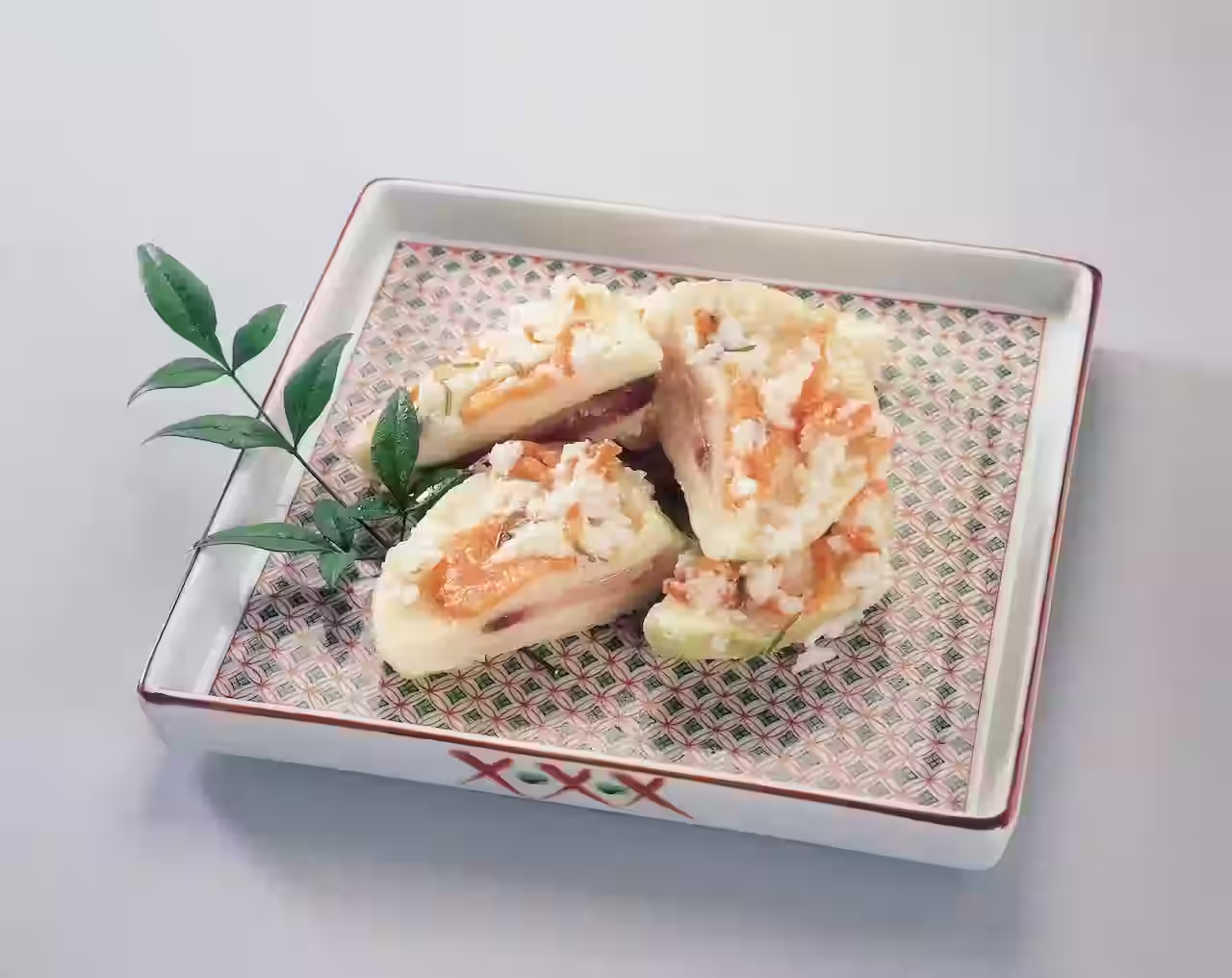
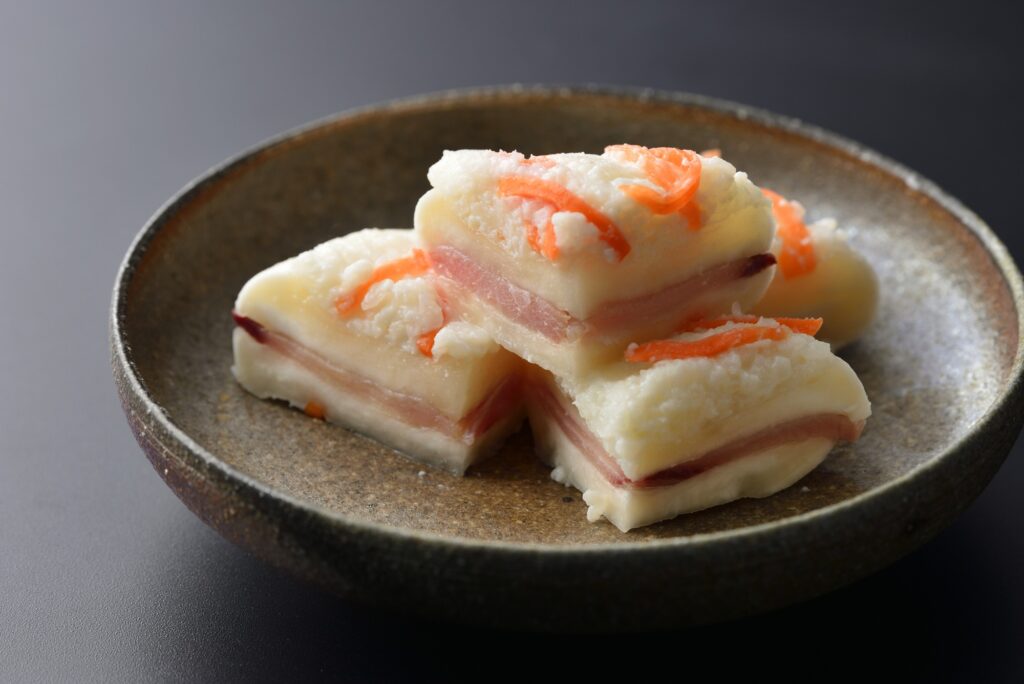
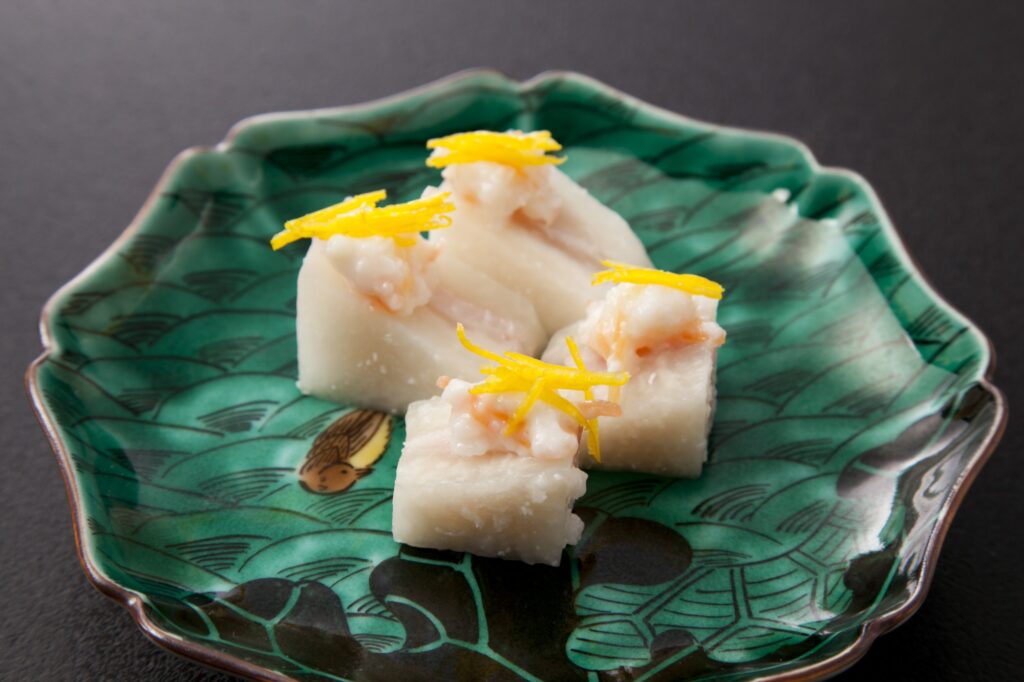
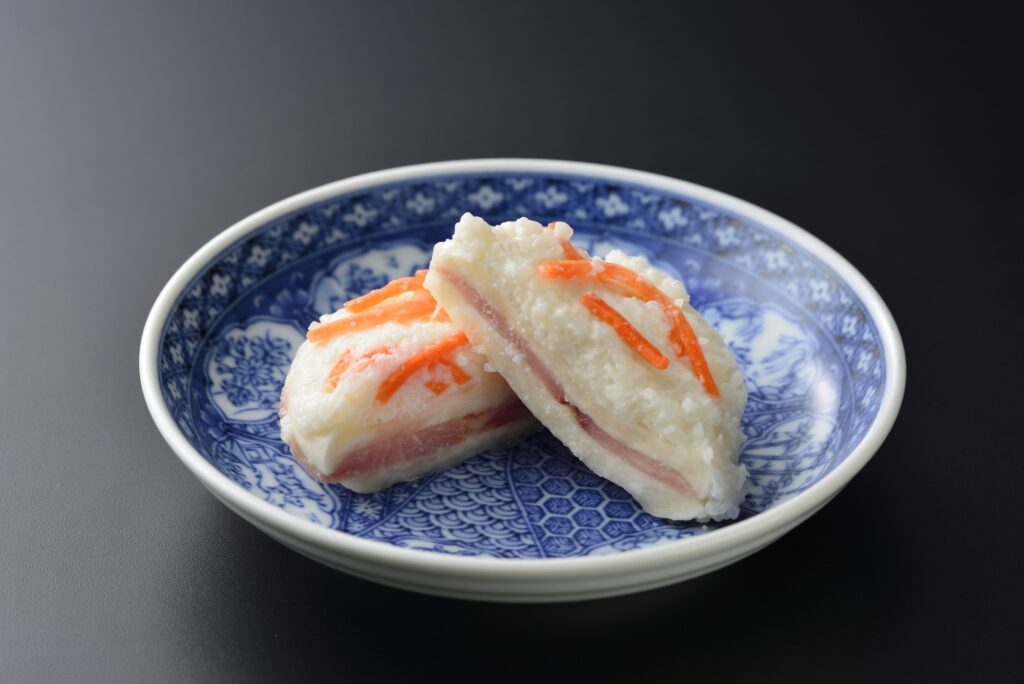
Kabura Sushi (かぶら寿し) is one of Japan’s most distinctive fermented foods. A thick round of salted turnip is sliced open like a book, a slice of salt-cured yellowtail tucked inside, then the whole thing is packed in sweet rice malt (koji) along with slivers of carrot and yuzu peel and left to ferment slowly in the cold. The result is something that defies easy description: sour and sweet, rich and clean, with a depth that comes only from time and care.
It is not sushi in the modern sense. It belongs to an older tradition entirely. And yet, to people from Kanazawa, it is the taste of winter. Some say the New Year has not properly arrived until they have had their first piece.
What Is Kabura Sushi?
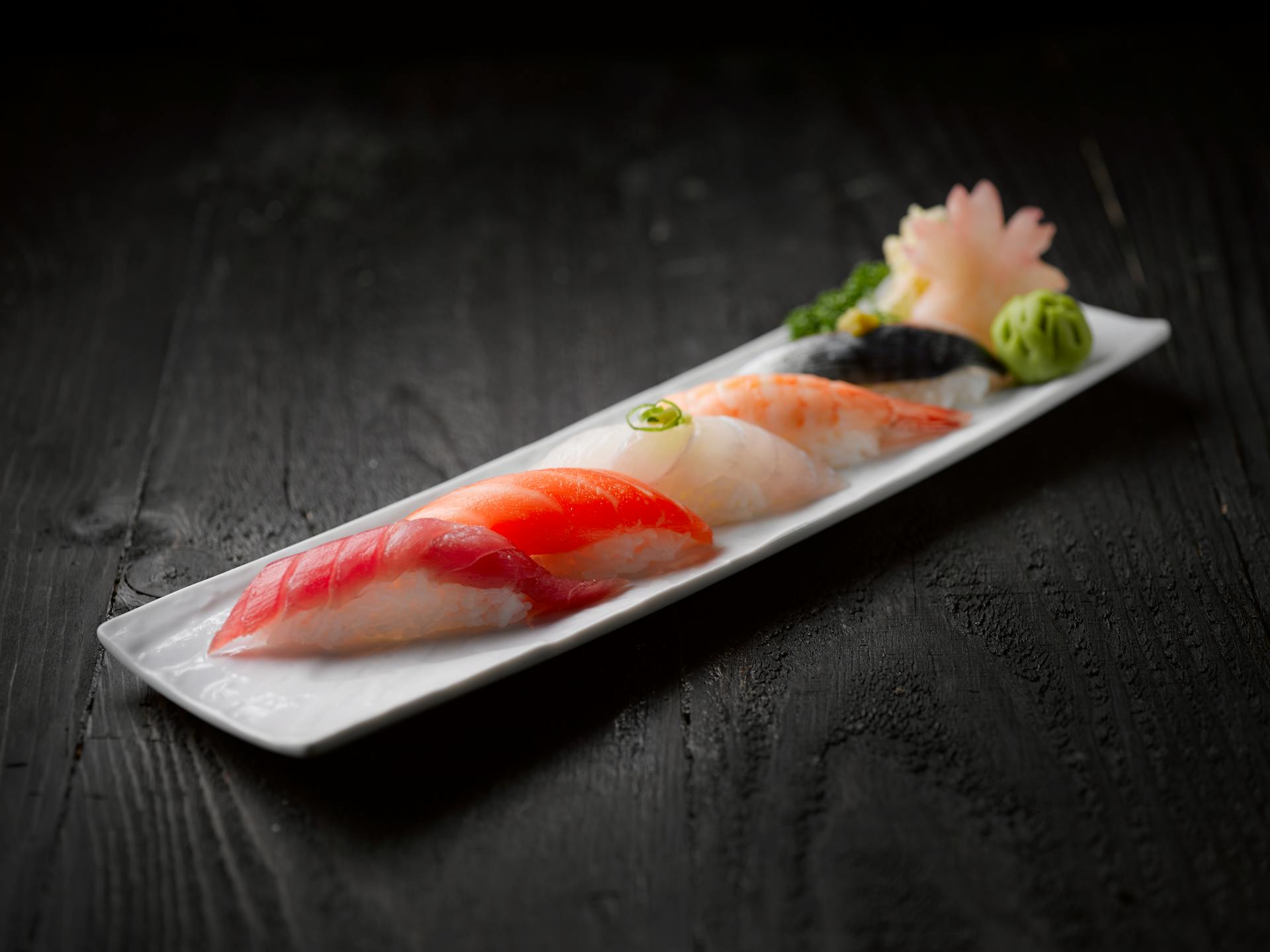
Kabura Sushi is a type of “narezushi,” one of Japan’s oldest fermented foods. The word “sushi” originally referred not to vinegared rice but to any food preserved through lactic fermentation with salt and rice. Narezushi is the direct descendant of that tradition, and Kabura Sushi is arguably its most refined surviving form.
The ingredients are few: a large round turnip (kabura), salt-cured yellowtail (buri), rice koji, carrot, and often yuzu peel or dried red chili for color and fragrance. But the process takes weeks. The turnips are first salted for several days to draw out moisture. The yellowtail is cured separately in salt, sometimes for as long as 40 days. The koji is prepared by mixing steamed rice with water and fermenting it overnight until sweet. Then everything is layered together in a barrel, weighted down, and left to ferment for one to two weeks in the cold air of a Hokuriku winter.
From Fermentation to Table: Flavor, Texture, and Why It’s Safe to Eat
The finished product has a soft, almost silky texture. The turnip retains a faint crunch. The fish no longer tastes raw. The koji brings sweetness, and the lactic bacteria bring a mild, wine-like acidity. It is eaten as it is, without soy sauce, without wasabi. Nothing else is needed.
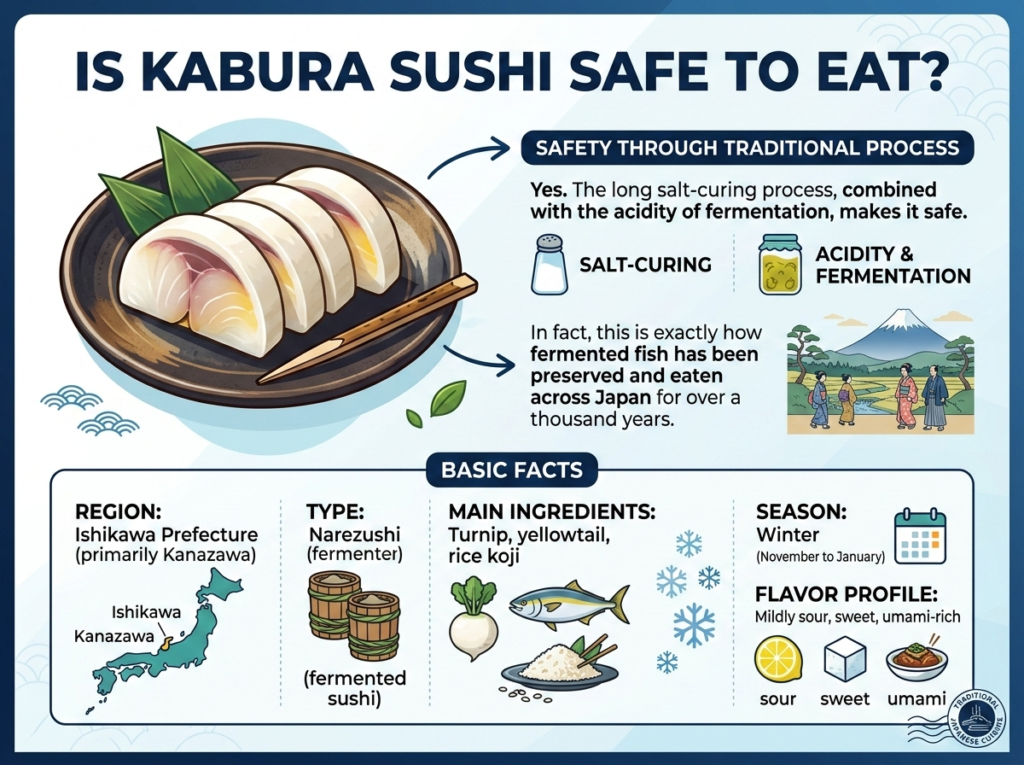
One question that often comes up: is Kabura Sushi safe to eat, given that the fish is not cooked? Yes. The long salt-curing process, combined with the acidity of fermentation, makes it safe. In fact, this is exactly how fermented fish has been preserved and eaten across Japan for over a thousand years.
| BASIC FACTS Region: Ishikawa Prefecture (primarily Kanazawa) Type: Narezushi (fermented sushi) Main ingredients: Turnip, yellowtail, rice koji Season: Winter (November to January) Flavor profile: Mildly sour, sweet, umami-rich |
The Characteristics and Taste of Kabura Sushi
Tasting Kabura Sushi for the first time is a slightly uncertain experience. The appearance, covered in white koji that resembles coarse snow, is unfamiliar. The smell is sour and fermented. Some people hesitate. Most are surprised by how good it is.
The turnip itself is the foundation. It should be firm but not hard, with a clean, slightly bitter edge that balances the richness of the fish. The yellowtail, by this point transformed by weeks of salt and fermentation, has lost any trace of rawness. It is dense, fatty, and deeply savory. Against the pale white of the turnip and the soft sweetness of the koji, it tastes almost like a cured meat. The carrot adds color and a mild crunch. The yuzu, if present, lifts everything with a citrus note.
What makes Kabura Sushi difficult to replicate is that every maker produces a different result. The ratio of salt, the length of fermentation, the temperature of the room, the size of the turnip, the quality of the koji: all of these variables shift the flavor. A barrel fermented in a cold stone cellar will taste different from one kept in a modern refrigerator. Some families prefer a stronger sour note; others lean toward sweetness. This is why locals have always sought out specific makers and protected their family recipes.
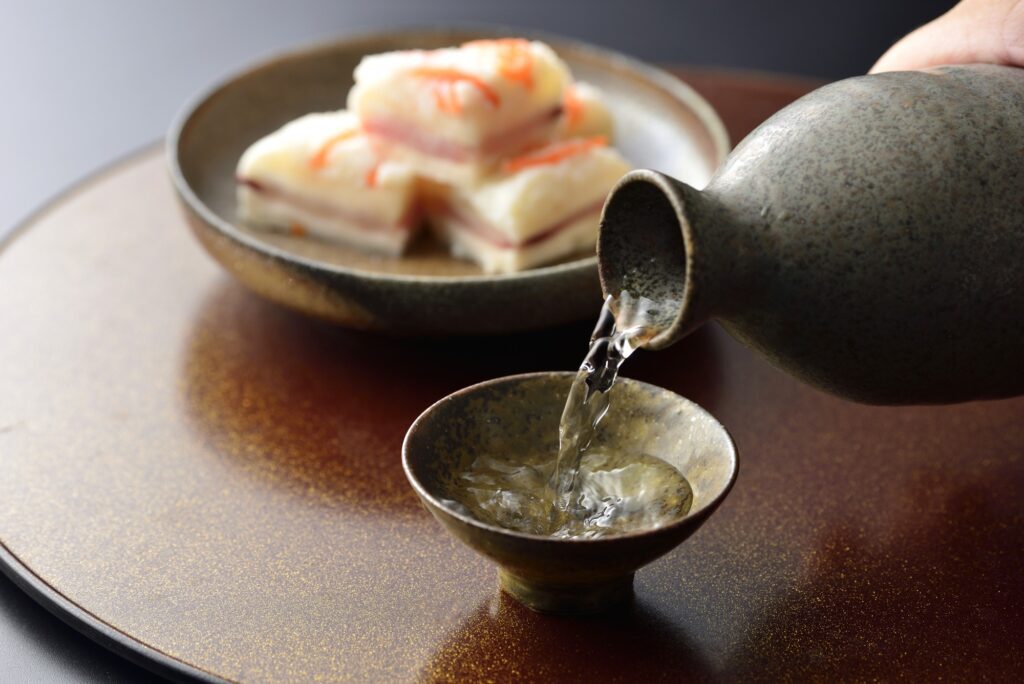
As a food pairing, Kabura Sushi works best with cold sake, particularly the dry junmai styles of Ishikawa. The acidity of the dish cuts through the rice wine’s weight, and the koji in both the sushi and the sake creates an underlying harmony that is hard to achieve with any other combination.
The History of Kabura Sushi: From Edo Period to Today
The exact origin of Kabura Sushi is not known. What historians can say is that a close ancestor existed by the mid-Edo period. A recipe from around 1729, recorded by Funaki Dennaikanehaya, a chef of the Kaga domain, describes salt-cured yellowtail fermented with turnip and daikon. Koji was not yet part of the picture, and the fermentation took longer. The dish we recognize today had most likely taken shape by the early 20th century.
Yellowtail in Edo-period Kanazawa was a high-status food, reserved first for the domain lord before reaching market. One popular theory holds that ordinary townspeople hid thin slices of the prized fish inside turnips to eat it discreetly. By the Meiji era the dish had become a New Year gift, carried door to door by fish sellers and merchants. The writer Izumi Kyoka described it lovingly in 1920, comparing the white koji to hailstones scattered across a winter courtyard. Akutagawa received it from Kyoka and passed it along with a poem. D.T. Suzuki had it specially ordered in Kamakura.
Today it is still made from November through January, sold by specialist producers rather than home kitchens. Quality varies widely. A barrel-fermented version from a long-established Kanazawa shop is a different thing entirely from a mass-produced one. That difference is part of what makes it worth seeking out.
Where to Try Kabura Sushi: Recommended Shops
Kabura Sushi is a seasonal product. Most shops begin selling in mid-November and continue through January or early February. Visiting Kanazawa in winter is the surest way to taste it at its best, directly from a specialist maker.
Shijimaya Honpo (四十萬谷本舗)
One of Kanazawa’s most storied producers, Shijimaya Honpo has been making Kabura Sushi for generations. Their flagship “Kinjo Kabura Sushi” uses carefully selected winter yellowtail and in-house rice koji. The balance of acidity and sweetness is precise, and the turnip retains a satisfying firmness. A premium “Takumi” line offers extra-thick cuts of yellowtail for those who want the fullest possible experience. Hands-on fermentation classes are available in season.
Ryotei Kaiseki Notoya (旅亭懐石のとや)
Notoya is a traditional inn and kaiseki restaurant in Komatsu whose washoku chefs produce Kabura Sushi with extra-thick cuts of yellowtail. Available as part of the winter kaiseki menu and as a mail-order item, the thickness of the fish sets Notoya’s version apart for those who prefer a richer, more substantial bite. A genuine restaurant interpretation of a folk tradition worth seeking out.
Omicho Market Producers (近江町市場)
Omicho Market, the covered food market at the heart of Kanazawa that has served the city since the Edo period, hosts several vendors who produce or stock Kabura Sushi during winter. Quality varies by stall, so it is worth browsing and asking. Some vendors allow tasting before purchase. Visiting in December, when multiple producers’ versions are available side by side, offers a rare chance to compare styles.
Summary
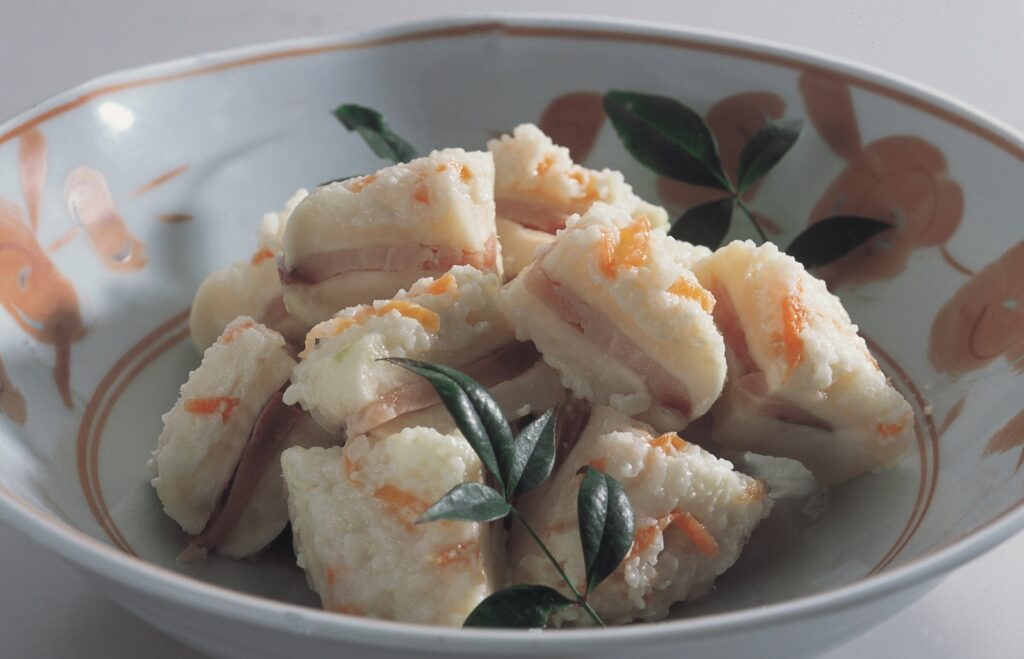
Kabura Sushi is a winter delicacy from Kanazawa that’s hard to forget. It’s not simply raw fish on turnip. it’s a living food, transformed by fermentation into something rich, mild, and deeply seasonal. The flavor is subtle and surprisingly approachable: a gentle sourness, softened by sweet koji, with yellowtail that’s lost all fishiness and gained a satisfying richness. Even skeptics usually want more.
It’s only available between November and January, best eaten fresh, and only in certain shops. That scarcity is part of its charm. If you’re in Kanazawa during the cold months, make it a priority. It won’t be the strangest thing you try, but it might be the most memorable.
References
1. Shijimaya Honpo — History of Kabura Sushi: www.kabura.jp/contents/history/
2. Ministry of Agriculture, Forestry and Fisheries — Our Local Cuisine, Kaburazushi, Ishikawa: www.maff.go.jp
3. Gokan Gochisou Kanazawa — Seasonal Foods: Winter / Kabura Sushi: gokan-gochisou-kanazawa.jp
Comments