




Not all somen noodles are the same. Most people assume they are, and that assumption sells Miwa somen short. This is Japan’s most historically respected hand-stretched somen, made in Nara Prefecture through methods that go back over 1,200 years.
Miwa somen (三輪素麺) is known for three things above all: extreme thinness, elegant firmness, and a smooth, silky texture that slides cleanly past the throat. The strands are hand-stretched in cold winter air, then aged in controlled storage. Many food historians consider Miwa the true birthplace of Japanese somen culture. That’s not marketing. It’s a claim backed by centuries of records tied to Omiwa Shrine, one of Japan’s oldest sacred sites.
If you’ve only eaten supermarket somen, Miwa somen will genuinely surprise you. This guide explains why it’s different, how it’s made, and how to enjoy it best. Whether you’re a traveler heading to Nara or a noodle enthusiast curious about traditional Japanese noodles, read on.
What Is Miwa Somen?
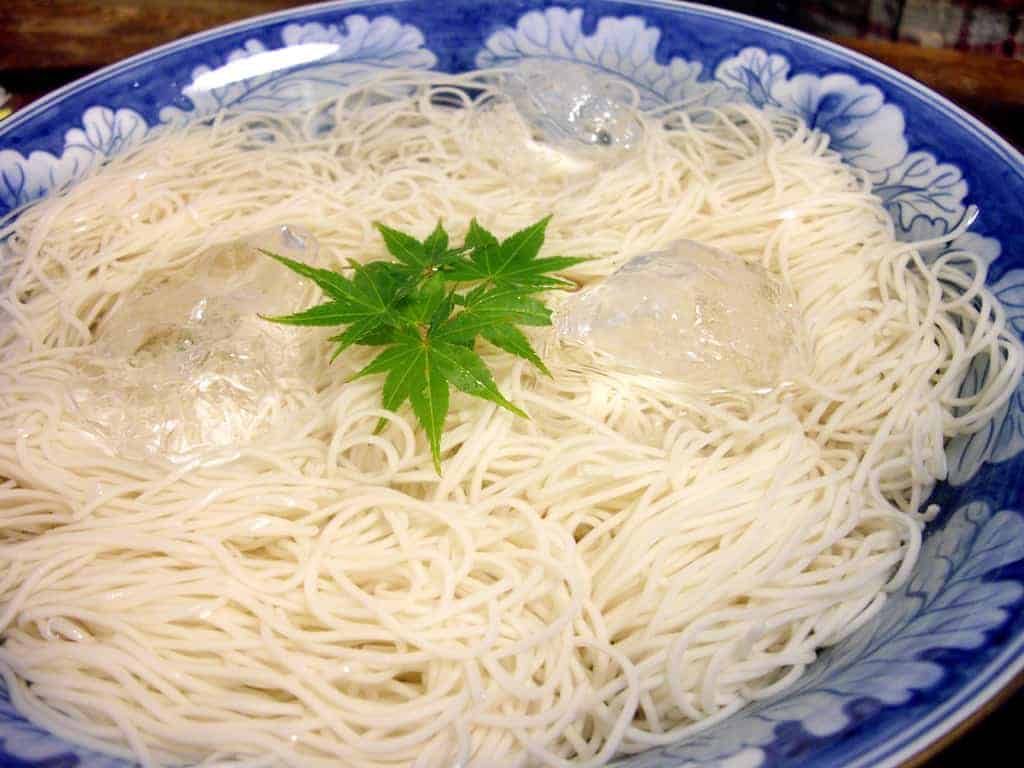
Miwa somen are ultra-thin wheat noodles produced in Sakurai City, Nara Prefecture. Artisans make them using a hand-stretching technique called te-nobashi (手延べ). The process involves folding and stretching dough repeatedly, using cottonseed oil to allow each pull to go further without tearing.
Standard Miwa somen strands measure around 0.7mm to 1.0mm in diameter. That’s already impressively thin. Premium grades go thinner. The finest grade, called kami-sugi (髪杉, meaning “hair-thin”), reaches as little as 0.3mm. To put that in perspective, a human hair is roughly 0.07mm thick. These noodles aren’t far off.
Miwa somen holds Geographical Indication (GI) protection in Japan. Only noodles made in the designated Miwa area of Nara carry the name legally. That protection reflects the genuine uniqueness of place, process, and tradition. For a broader look at Japanese thin noodles, check the Japanese noodles guide on Food in Japan.
Why Is Miwa Somen So Thin?
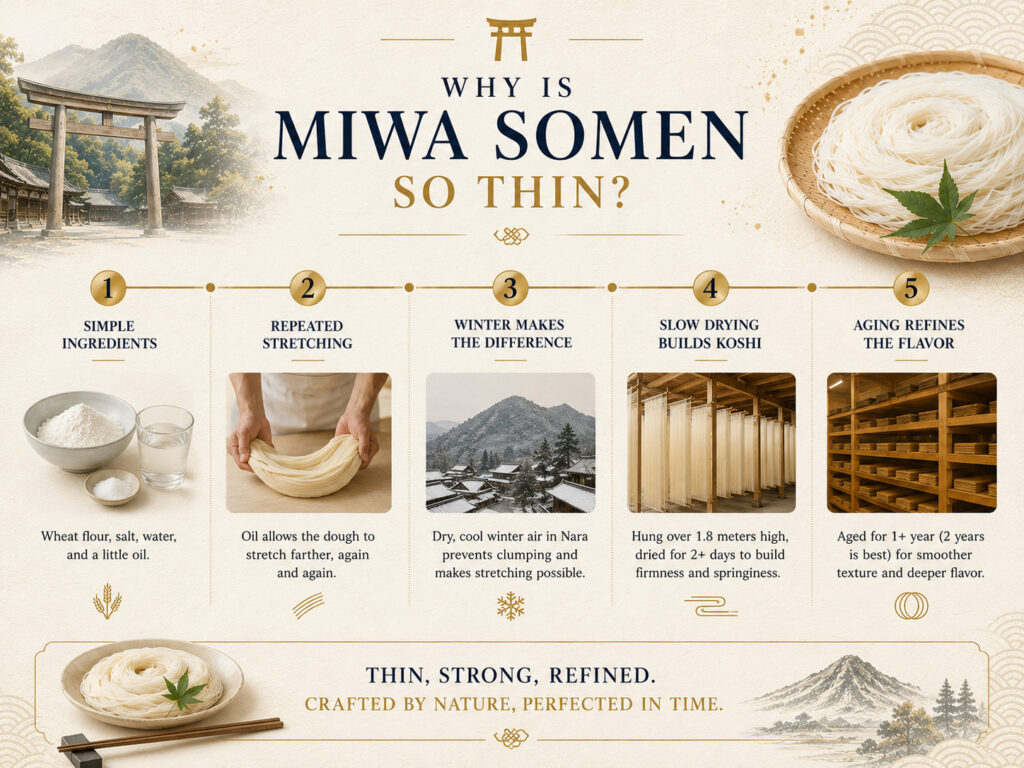
This is the question most people ask first. Thin noodles aren’t just an aesthetic choice. The thinness of Miwa somen comes from a specific combination of technique, climate, and time.
Makers begin with a simple dough of wheat flour, salt, and water. They add cottonseed or sesame oil as they work the dough. The oil prevents sticking and allows the strands to stretch much further than dough without it. Workers repeat the stretching process many times, gradually pulling the dough thinner at each stage.
Production happens almost entirely in winter. Nara’s dry, cool winter air is essential to the process. High humidity causes noodles to clump or break during stretching. The Miwa area’s climate, positioned in a basin surrounded by mountains, provides naturally low-humidity conditions that suit noodle-making perfectly.
After stretching, workers hang the noodles on tall wooden rods, over 1.8 meters high. Each strand hangs separately. The noodles dry slowly over two or more days, building structure and firmness as they do. This long drying is what creates the characteristic koshi (腰), the springy resilience that Miwa somen is famous for.
The finest noodles then go through aging, called hine (ひね). Producers store them in temperature-controlled warehouses for at least one year. Two-year aging is considered superior. Aging removes the slight oil note from production, deepens the texture, and refines the noodle’s overall flavor. Aged Miwa somen has a noticeably smoother, firmer bite. It costs more, and the difference is real.
A Short History: Omiwa Shrine and the Origin of Japanese Somen
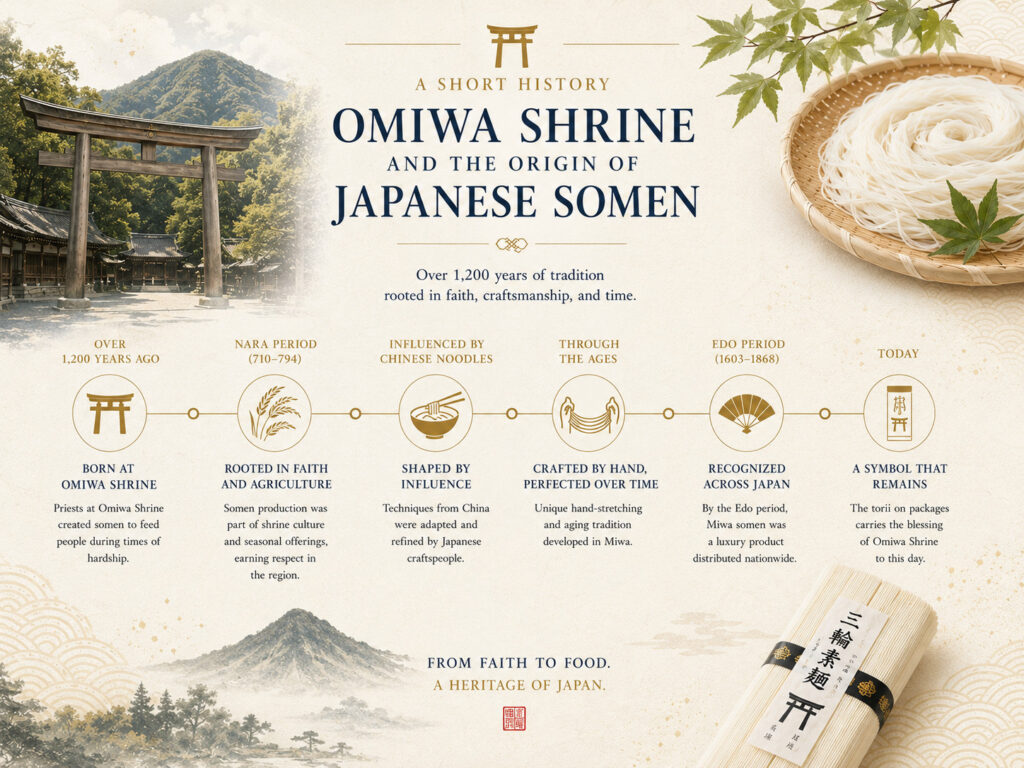
Miwa somen’s origins trace back to Omiwa Shrine (大神神社) in Sakurai City. This shrine is among Japan’s oldest, dedicated to the deity of Mt. Miwa (三輪山). The mountain itself holds deep spiritual significance in Japanese history. It appears in the oldest Japanese chronicles and was a center of religious life during the Nara period.
Historical records suggest priests at Omiwa Shrine created somen over 1,200 years ago. The original purpose was practical: feeding people during times of hardship. Early somen production was closely tied to shrine culture and seasonal ritual food offerings. That religious and agricultural context gave somen a respected status in the region from the very beginning.
The spiritual connection shows up on Miwa somen packaging to this day. Many brands display a torii gate as their symbol, representing the shrine’s blessing on the noodles. For visitors to Nara, seeing that torii on a bundle of somen is a reminder that this noodle carries centuries of meaning behind it.
Chinese noodle-making techniques likely shaped early somen. The word “somen” derives from the Chinese suomian. Japanese craftspeople adapted those ideas over centuries, gradually developing the hand-stretching method and aging tradition unique to Miwa. By the Edo period, Miwa somen was already a recognized luxury product distributed across Japan.
How Miwa Somen Is Made
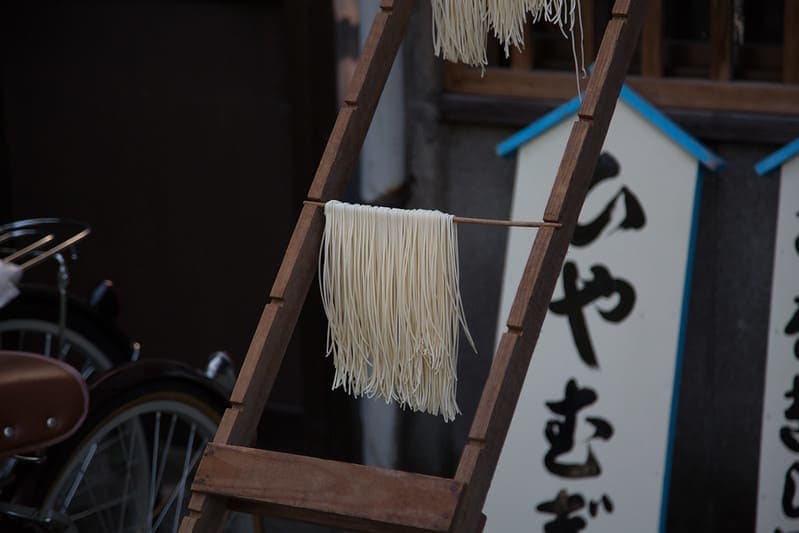
Traditional hand-stretched somen production follows a strict sequence. Makers knead wheat flour, salt, and water into a firm dough, then work in vegetable oil gradually. They stretch and fold the dough repeatedly over several hours, resting it between each stage. Each rest period allows the gluten to relax, letting the next stretch go even further.
Workers then wind the stretched strands onto tall wooden poles. Each noodle hangs separately, with careful spacing to prevent sticking. The drying environment matters enormously here. Low humidity, good air circulation, and cool temperatures are all necessary. Getting this wrong means broken noodles or uneven texture.
After two or more days of drying, workers cut the noodles to serving length. They bundle each portion carefully and wrap it in paper. Premium grades enter aging storage at this point, resting in warehouses for months or years.
Proper storage at home matters too. Miwa somen absorbs odors easily, so airtight containers work best. Keep them away from direct sunlight and high humidity. Stored correctly, dried Miwa somen lasts up to three and a half years, and aged noodles only improve within that window.
Taste and Texture: What Makes Miwa Somen Different
Clean, Delicate Wheat Flavor
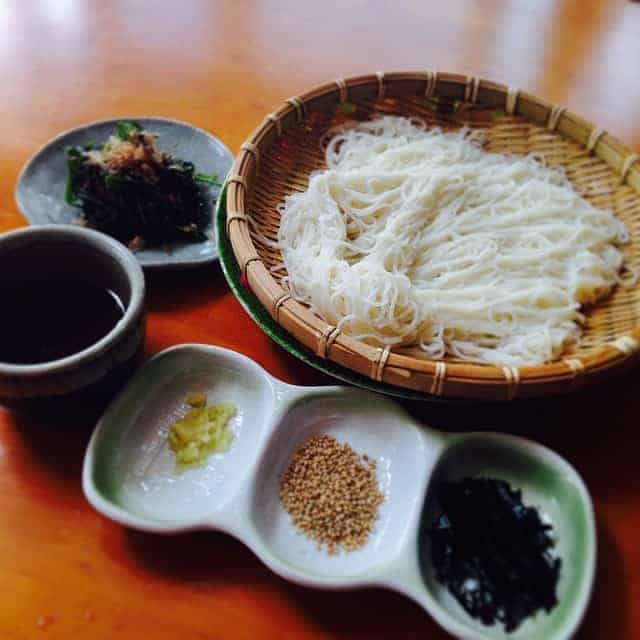
The flavor of Miwa somen is gentle and precise. Pure wheat with a subtle, almost sweet note. There’s no heaviness, no starchiness. The simplicity is deliberate. Aged noodles have an even cleaner taste, with the mild oil note from production completely gone. When you pair them with a well-made tsuyu, the noodle flavor doesn’t disappear. It holds its own quietly.
Silky Smooth with Real Firmness
The texture is where Miwa somen earns its reputation. Despite being extremely thin, the noodles stay firm after cooking. That firmness, called koshi, gives a satisfying spring when you bite through. The surface is smooth and slightly slippery. Japanese people describe the sensation as nodo goshi (喉越し), a pleasant gliding feeling as noodles pass the throat. Miwa somen does this exceptionally well.
Faint Aroma, Clean After Cooking
Dried Miwa somen has a faint, nutty wheat scent when you open the package. There may be a mild oil note too. Some people find this surprising at first. After boiling and chilling, the noodles smell clean and neutral. The oil note vanishes entirely. What remains is pure grain freshness, which lets your dipping sauce and condiments take the lead.
Miwa Somen vs Ibonoito: Key Differences
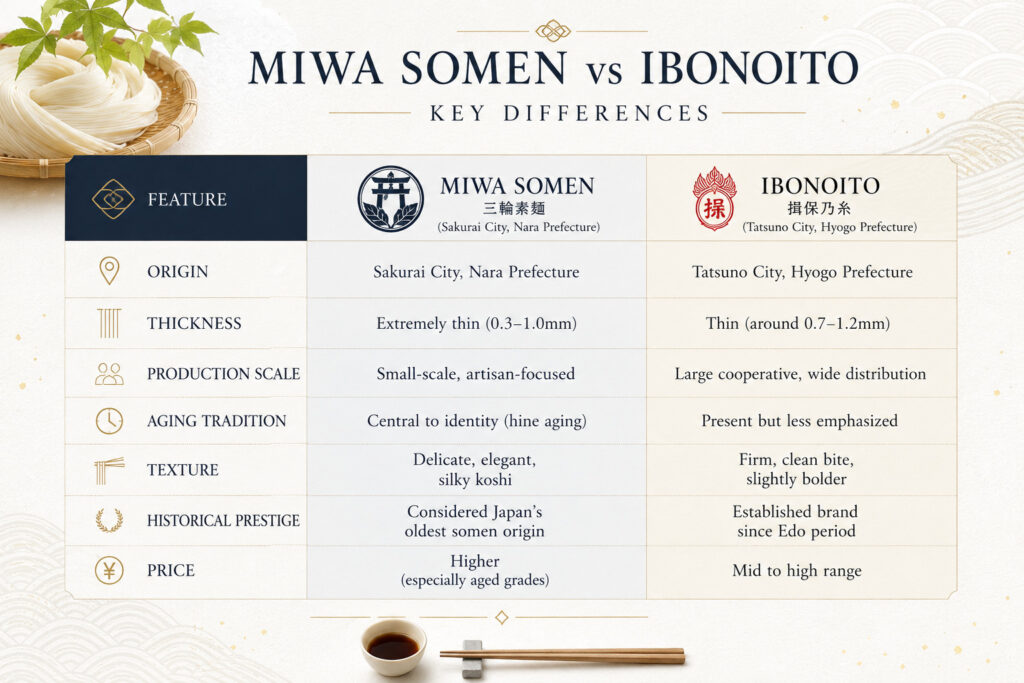
These two brands come up together constantly in Japanese food discussions, and the comparison makes sense. Both are premium hand-stretched somen with long histories. But they’re different products with different identities.
| Feature | Miwa Somen (三輪素麺) | Ibonoito (揖保乃糸) |
|---|---|---|
| Origin | Sakurai City, Nara Prefecture | Tatsuno City, Hyogo Prefecture |
| Thickness | Extremely thin (0.3–1.0mm) | Thin (around 0.7–1.2mm) |
| Production scale | Small-scale, artisan-focused | Large cooperative, wide distribution |
| Aging tradition | Central to identity (hine aging) | Present but less emphasized |
| Texture | Delicate, elegant, silky koshi | Firm, clean bite, slightly bolder |
| Historical prestige | Considered Japan’s oldest somen origin | Established brand since Edo period |
| Price | Higher (especially aged grades) | Mid to high range |
Neither is better in an absolute sense. Ibonoito suits people who want consistent quality at wider availability. Miwa somen suits those chasing craftsmanship, aging, and historical depth. For hand-stretched noodles at their most refined, Miwa is the natural choice.
Other somen varieties also exist across Japan. Handa somen from Tokushima Prefecture, for example, takes a different direction: thicker strands and a chewier bite, intentionally unlike Miwa’s delicate approach. For a comparison of Japanese thin noodles more broadly, the hiyamugi guide on Food in Japan covers how somen relates to similar noodle types.
How to Eat Miwa Somen: All-Season Serving Styles
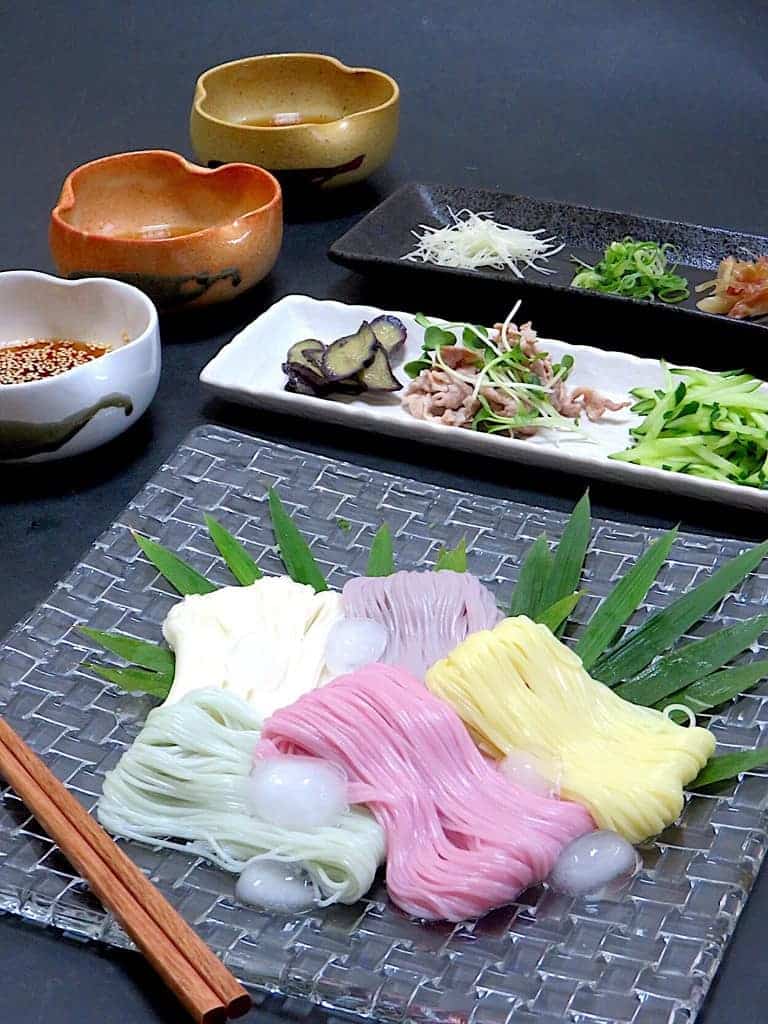
Most people think of Miwa somen as a summer food. That’s partially true, but the noodle has a full-year identity. Here are the main ways to enjoy it.
| Style | Season | What It’s Like |
|---|---|---|
| Hiyashi somen (chilled) | Summer | Classic cold style, dipped in chilled tsuyu with condiments |
| Nyumen (warm) | Autumn / Winter | Served in hot dashi broth with vegetables and tofu |
| Sesame sauce style | Year-round | Richer, nuttier dressing; pairs well with cucumber strips |
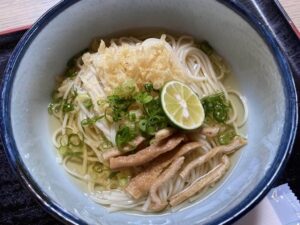
| Bukakke somen | Summer | Cold noodles with toppings poured directly on top |
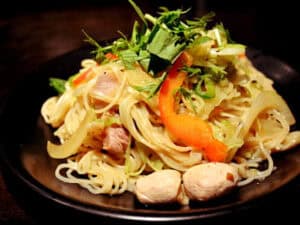
| Stir-fried somen | Year-round | Tossed with vegetables, tofu, and soy sauce; Okinawa-inspired |
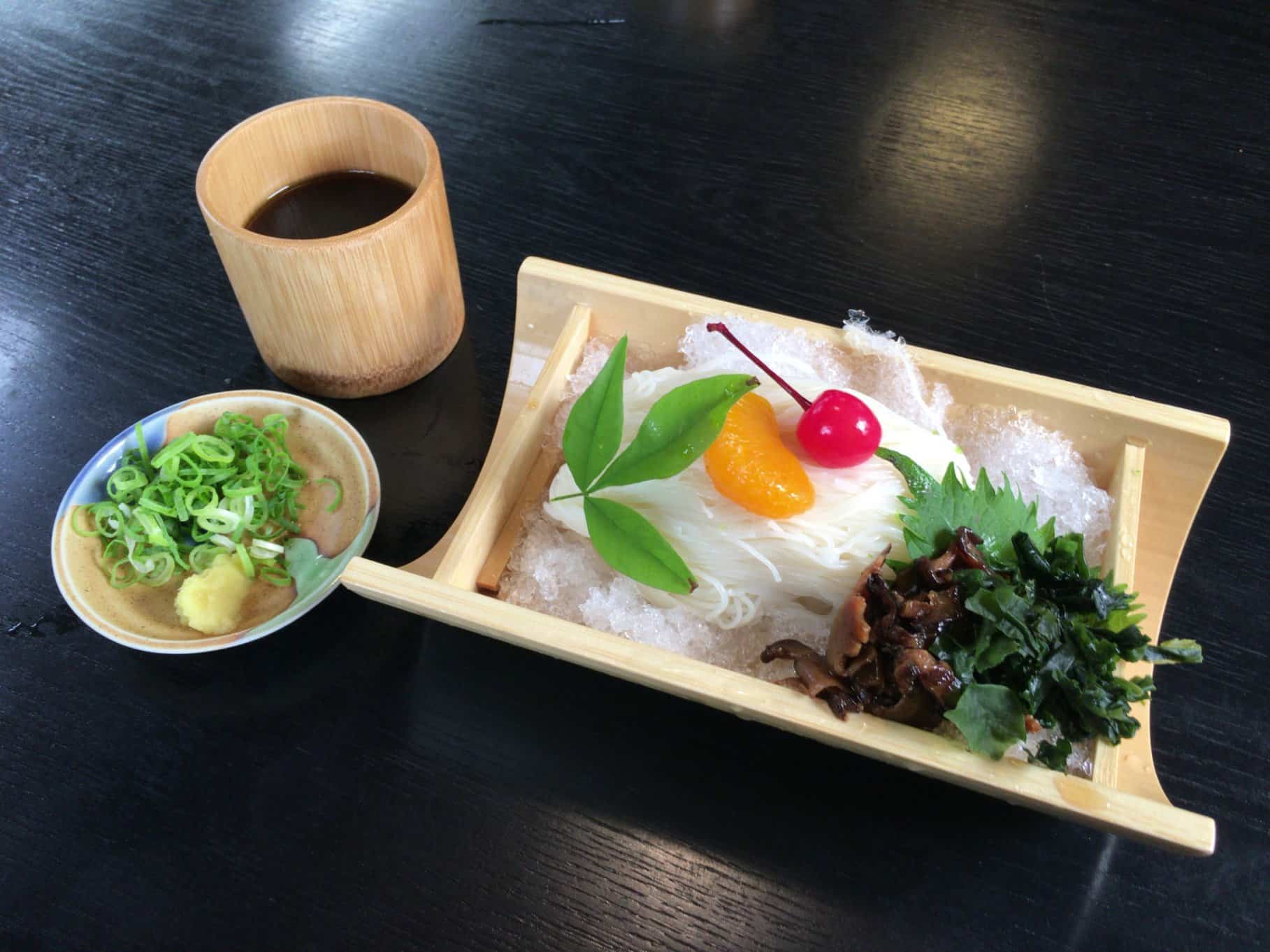
For cold somen, the technique matters. Boil noodles for one to two minutes only. Rinse immediately under very cold running water, then submerge in a bowl of ice water. This step firms the noodles and locks in their texture. Serve with a small glass of chilled tsuyu and condiments on the side. Classic condiments include grated ginger, thinly sliced green onion, myoga ginger blossom, sesame seeds, and torn shiso leaf. This style is the heart of Japanese summer food culture.
Adding shiitake mushrooms braised in soy and sugar is a classic Miwa pairing. The deep umami of the mushroom complements the delicate noodle perfectly. Grated daikon radish adds a cooling sharpness. Pickled plum (umeboshi) brings sourness and extra refreshing quality. These aren’t garnishes. They’re integral to the experience.
Nyumen: Warm Miwa Somen for Cooler Months
Nyumen (にゅうめん) is the warm version of somen, and it’s deeply connected to Nara. The name comes from the kanji for “boiled noodles” (煮麺). In this style, boiled somen goes directly into a hot dashi broth rather than ice water.
Nara-style nyumen typically uses a light, delicate dashi seasoned with miso or soy sauce. Common additions include silken tofu, shimeji mushrooms, sliced carrot, and mitsuba herb. The broth stays clear and gentle, allowing the noodle’s flavor to remain central. Some restaurants near Omiwa Shrine serve nyumen year-round as part of a set with persimmon leaf sushi.
Nyumen transforms somen from a seasonal summer dish into something you’d want on a cold November evening. Many visitors to Japan don’t realize this warm preparation exists. If you visit Nara outside summer, nyumen is absolutely worth seeking out. Several of the restaurants listed below serve it from autumn through spring.
Nagashi Somen: Catching Noodles as They Flow
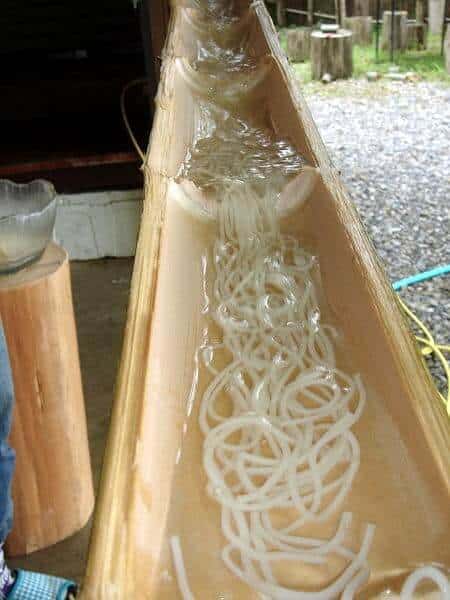
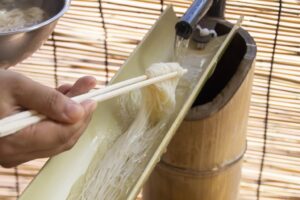
Nagashi somen (流しそうめん) is one of Japan’s most distinctive summer traditions. Workers set up a split bamboo chute filled with cold flowing water. Cooks drop somen noodles at the top of the chute. Diners catch them with chopsticks as they float past. Missing your noodles is more common than anyone admits. That’s part of the fun.
Miwa somen’s firm texture makes it particularly well-suited for this style. Softer noodles break apart in flowing water and become difficult to catch. Miwa somen stays intact even after traveling the full length of the chute.
Where to Eat Miwa Somen
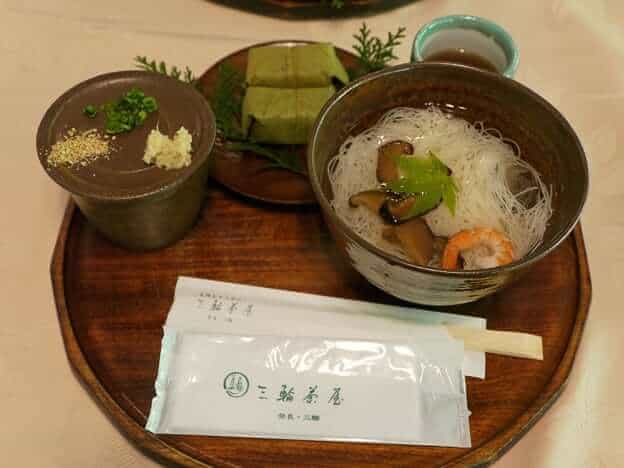
Several restaurants near Omiwa Shrine in Sakurai City specialize in authentic Miwa somen. Here are four worth knowing.
Senjutei
A well-regarded restaurant in Sakurai City run by Ikenori, an establishment founded in 1850. Senjutei offers a calm, traditional atmosphere and serves kaiseki-style somen sets. It’s a good choice for a sit-down lunch near the shrine area.
Somen Dokoro Morimasa
Located in an old folk house near the outer torii of Omiwa Shrine, Morimasa is known for its Hayashi Somen, served from April to November only. The setting and atmosphere make this one of the most atmospheric Miwa somen experiences in the area.
Fukujindo
Sitting at the foot of Mt. Miwa, Fukujindo is one of the area’s pioneer somen restaurants. Their Bukakke Somen, a summer-limited dish, won first place at the Sakurai Gourmet Grand Prix. Popular with both locals and visitors, it offers a reliable taste of traditional Miwa preparation.
Miwa Yamamoto
Founded in 1717, Miwa Yamamoto is one of the oldest and most established somen restaurants in Sakurai City. Their chilled somen with soy-based tsuyu is noticeably thin and firm, showcasing top-grade Miwa noodles clearly. The restaurant also serves a dish called “Manyo,” combining somen with persimmon leaf sushi, kuzu mochi, and kaji-no-ha zushi. During autumn and winter, they offer nyumen, which regulars strongly recommend for colder visits.
Miwa somen also travels well as a souvenir. Dried noodles are lightweight, long-lasting, and make an excellent gift from Nara. Most shops near Omiwa Shrine stock multiple grades, from everyday bundles to premium aged varieties. For broader Nara food recommendations, visit the Nara food guide on Food in Japan.
Miwa Somen FAQ
What makes Miwa somen different from regular somen?
Miwa somen uses traditional hand-stretching (te-nobashi) and winter air-drying to produce extremely thin, firm noodles. Many grades go through aging (hine) for one to two years. The result is a cleaner flavor and superior texture compared to mass-produced somen.
Is Miwa somen the oldest somen in Japan?
Many historians and food scholars consider Miwa the birthplace of Japanese somen, with production linked to Omiwa Shrine over 1,200 years ago. No other somen region has an earlier documented claim.
Why is Miwa somen so thin?
Artisans stretch the dough repeatedly by hand using vegetable oil, allowing each pull to go further without breaking. Dry winter air in the Miwa region enables this extreme thinness. Premium grades measure as little as 0.3mm in diameter.
Can Miwa somen be eaten hot?
Yes. Nyumen is the warm preparation of somen served in hot dashi broth. It originated in Nara and is especially popular in autumn and winter. Several Miwa somen restaurants serve nyumen as part of their seasonal menu.
What is nyumen?
Nyumen (にゅうめん) is somen served in warm dashi broth rather than chilled. It typically includes tofu, mushrooms, and herbs. The dish is closely associated with Nara Prefecture and is a practical way to enjoy Miwa somen year-round.
Is Miwa somen handmade?
Yes. All authentic Miwa somen uses hand-stretching (te-nobashi). Machines cannot replicate the subtle tension control that skilled artisans apply during each stretch. This is why the noodles develop their characteristic thinness and firm texture.
What is hine (aged) Miwa somen?
Hine refers to somen aged in storage for one to two or more years. Aging removes excess oil from production, refines the texture, and produces a noticeably smoother, firmer noodle. Hine grades cost more and are considered premium products.
What is the thinnest grade of Miwa somen?
The kami-sugi (髪杉) grade is the thinnest, measuring around 0.3mm in diameter. It requires the highest artisan skill to produce and is the most expensive Miwa somen grade available.
How do I cook Miwa somen properly?
Boil for one to two minutes only. Rinse immediately under very cold running water, then chill in ice water to firm the texture. Serve cold with tsuyu broth and condiments. For nyumen, add directly to hot dashi broth after boiling and rinsing briefly.
Where can travelers buy Miwa somen?
Shops near Omiwa Shrine in Sakurai City stock multiple grades of Miwa somen. Nara Prefecture souvenir shops and department stores also carry it. Dried somen is lightweight and long-lasting, making it one of the best edible souvenirs from Nara.
Why does the package show a torii gate?
The torii represents Omiwa Shrine, the spiritual origin of Miwa somen. Producers include the shrine symbol as a mark of authenticity and cultural heritage. Many somen brands in the Miwa area use it as their signature emblem.
Is Miwa somen gluten-free?
No. Makers produce Miwa somen from wheat flour, salt, water, and vegetable oil. It contains gluten and is not suitable for those with celiac disease or gluten intolerance.
References
Nara Prefecture Official Tourism: Miwa Somen Regional Specialty Profile (2023) — https://www.pref.nara.jp/miryoku/narakara/specialproducts/
Japan Patent Office: GI Registration No. 28, Miwa Somen Geographical Indication (2016) — https://www.jpo.go.jp/e/system/trademark/gi/index.html
Sakurai City Tourism: Omiwa Shrine and Somen History Overview (2022) — https://www.sakurai-kankou.jp
Ministry of Agriculture, Forestry and Fisheries (MAFF): Traditional Japanese Noodle Production Methods (2023) — https://www.maff.go.jp/e/index.html



Comments